REVIEW · VIENNA
Vienna: Historical Walking Tour – Hitler and the 1900s
Book on GetYourGuide →Operated by Prime Tours · Bookable on GetYourGuide
Vienna can be a shock when you look back. This 2-hour walk ties Adolf Hitler’s early Vienna to the city’s big shift through the early 1900s. You’ll move through central landmarks while your guide explains how politics and culture changed the streets you see today.
I like two things a lot. First, the tour uses actual city stops like Karlsplatz and MuseumsQuartier, so the story feels grounded in place instead of floating in theory. Second, the guide style matters here, and you can feel it in names like Joseph and Cristina, plus Ángeles and Mia, who come through as strong explainers with plenty of stories to keep the pace moving.
One drawback to consider: the subject matter is dark and controversial. This isn’t a casual sightseeing stroll where you can tune out if you want happy vibes the whole time.
In This Review
- Key things I’d pencil in before you go
- Why this Vienna walking tour works (even when it gets uncomfortable)
- Starting at the YELLOW Prime Tours umbrella: how the 2 hours flow
- Hitler’s early years in Vienna: what you’re really learning
- Karlsplatz: where the early-1900s story gets physical
- MuseumsQuartier: from imperial taste to modern culture
- The big storyline: Habsburg Empire to a modern metropolis
- Hidden spots, side stories, and why local guides matter
- Pace and comfort: walking matters, even when the sites are central
- Price and value: why $22 can make sense
- Who this tour is best for
- Should you book this Vienna historical walking tour?
- FAQ
- How long is the Vienna walking tour?
- What is the price?
- What language is the tour guide?
- Where does the tour start?
- Where does the tour end?
- Is the tour wheelchair accessible?
- Is food or drink included?
- Are museum or attraction entrance fees included?
- Is cancellation free?
- Is reserved seating or a spot included?
Key things I’d pencil in before you go
- Hitler’s early footsteps in Vienna put a real map to a notorious life story
- Karlsplatz and MuseumsQuartier connect street-level walking to art and culture changes
- Hidden spots and side stories help you go past the standard tourist checklist
- English live guide with plenty of anecdotes and scene-setting
- Reserved spot and instant confirmation reduce last-minute stress
Why this Vienna walking tour works (even when it gets uncomfortable)
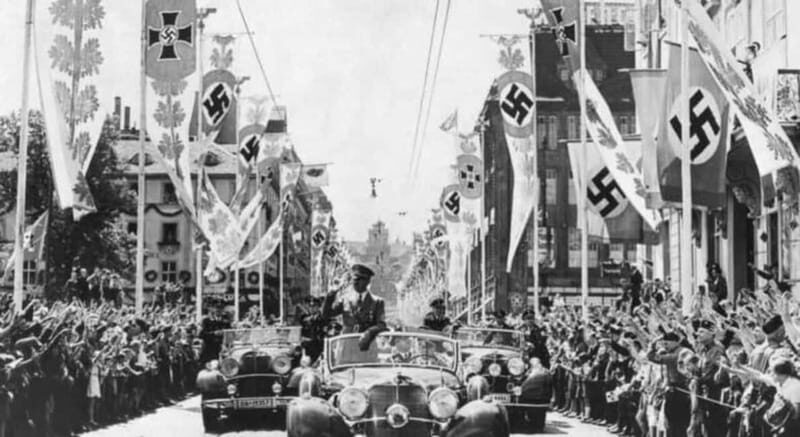
This tour is built on contrast. Vienna is known for music, museums, grand architecture, and coffeehouse culture. But the early 1900s also include political pressure, ideological thinking, and the kind of social tension that can shape a city for decades.
What makes the experience interesting is that it doesn’t treat history like a museum label. It uses the city as evidence. You look at streets, squares, and landmark districts, then your guide connects them to the broader shift from the Habsburg-era world to a modern, fast-changing metropolis. You’re not just hearing dates. You’re getting a sense of how people lived, argued, and created culture during that transition.
And yes, the “Hitler” part can feel heavy. A good guide keeps it factual and contextual, not sensational. If you’re the type who wants clean, cheerful stories only, this may not be your best match. But if you want to understand how a place can be both beautiful and consequential, it’s a strong use of your time.
You can also read our reviews of more walking tours in Vienna


Starting at the YELLOW Prime Tours umbrella: how the 2 hours flow
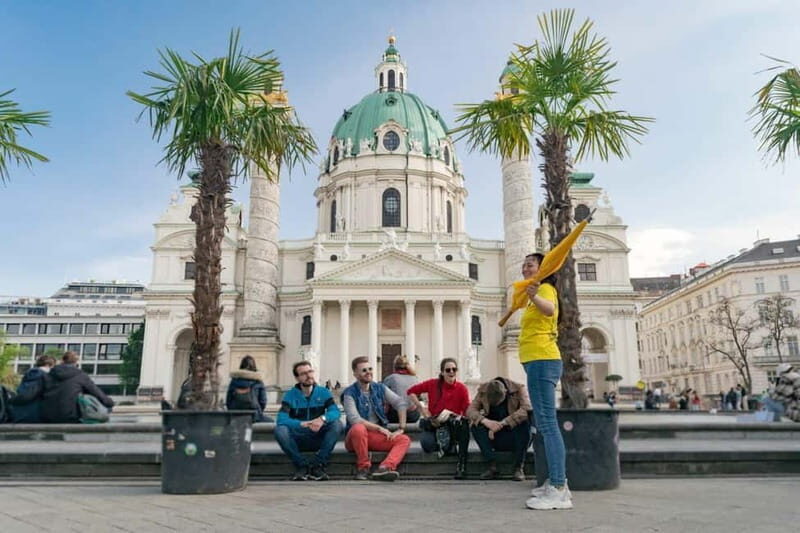
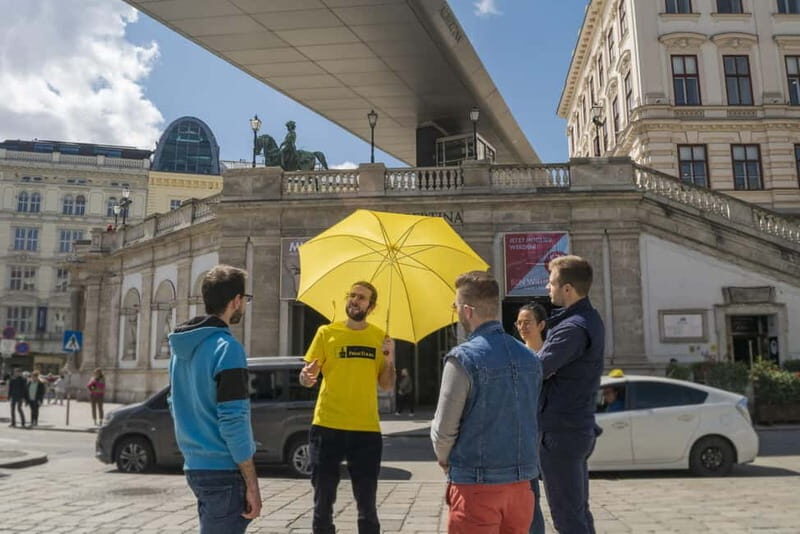
The tour meets at a very simple, easy-to-spot landmark: look out for the YELLOW PRIME TOURS UMBRELLA. That matters more than it sounds. Vienna is full of meeting points that blend into the background. Here, the color choice makes it easier to start on time.
It runs for 2 hours, and it ends back at the meeting point. That loop is practical. You can plan the rest of your day without guessing how far you’ll wander or where you’ll end up.
Language is English, and you’ll be walking through a set of historic sites in central Vienna. Since food and drinks aren’t included, I’d treat this like a smart mid-day or late-morning plan that fits around a meal before or after.
Also, the tour includes a reserved spot with your booking. That’s helpful when you’re traveling in peak season or your schedule is tight. No need to “hope” a guide still has room.
Hitler’s early years in Vienna: what you’re really learning
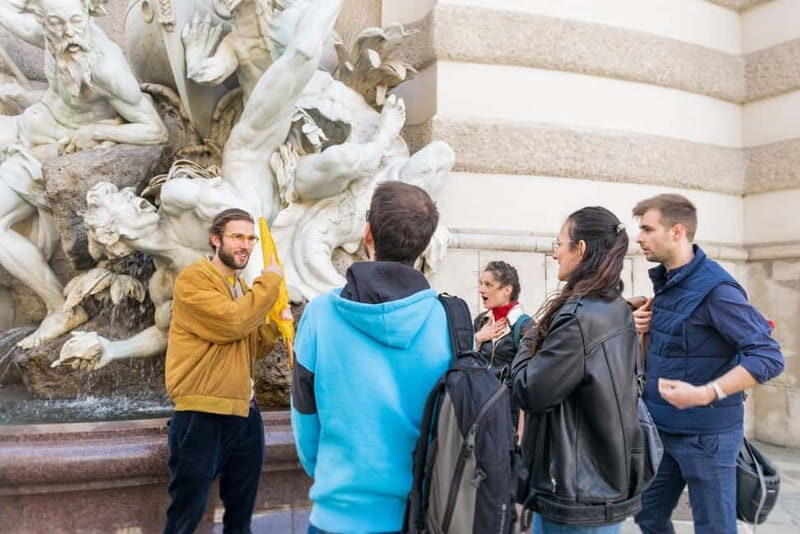
The big promise is following Hitler’s early footsteps through the city. That’s the headline, but what you’re likely to get is more than a timeline. You’ll connect his early presence in Vienna to the way the city at the time pulled people into cultural debates and political arguments.
Your guide frames it as cause-and-effect. You’ll hear how Vienna in the early 1900s wasn’t static. It was changing politically and culturally, and those shifts shaped how young people interpreted the world. That matters, because it helps you understand why Vienna influenced what happened later, without turning the tour into propaganda or a “fascination” detour.
The walking format helps here. When you move from one district to another, you start to sense the urban logic—how the city’s layout and landmark areas reflect its social layers. Instead of just reading about it later, you’ll remember the feeling of moving through those neighborhoods while the story explains what was at stake.
One practical note for your brain: if you’re sensitive to dark topics, you might want to mentally plan a decompress moment afterward. Vienna’s central streets can look glamorous, which can feel strange after a heavy subject. Build in a breather so the contrast doesn’t rattle you.
Karlsplatz: where the early-1900s story gets physical
One of the named stops is Karlsplatz, and it’s a smart choice for a tour like this. It’s central and recognizable enough to anchor the walk. More importantly, it’s the kind of place where the city’s layers show up in real time: the kind of spot people cross daily, where history sits under foot traffic.
On this tour, Karlsplatz isn’t only a “look here” moment. Your guide uses it to explain Vienna’s transformation during the early 1900s. That means you’ll likely connect the area to how the city’s public space functioned—how people gathered, moved, and consumed culture during periods of change.
What I like about using a stop like Karlsplatz is that it prevents a common problem with history tours: they can become a string of indoor facts. Here, your feet are on the ground, and the guide is constantly linking what you see to what was happening politically and culturally.
Possible drawback: you might find yourself wanting to slow down and explore Karlsplatz on your own after the tour. That’s not a bad thing. It just means you’ll need to protect time, because this area can pull you into extra wandering.
MuseumsQuartier: from imperial taste to modern culture
The tour also includes MuseumsQuartier, which gives the story a “then and now” angle without needing a museum ticket. MuseumsQuartier works well for walking tours because it’s a clear marker of modern Vienna’s cultural life.
On a tour like this, MuseumsQuartier is useful in a specific way: it helps you compare the city’s earlier cultural identity with the one you see today. Vienna has always been a city of art and ideas, but the early 1900s brought major shifts in how art was made, promoted, and interpreted.
Your guide connects this to the broader cultural revolution mentioned in the tour concept, pointing you toward figures in the arts world, including the orbit of Klimt and Wagner. You don’t need to be an art expert to benefit. What you get is a sense of why cultural movements mattered in the same streets where political tensions were building.
And you’ll likely come away thinking about art as more than decoration. In this period, culture often carried arguments. It shaped public mood. It influenced how people imagined society should work.
You can also read our reviews of more historical tours in Vienna





The big storyline: Habsburg Empire to a modern metropolis
A good walking tour doesn’t just point out places. It gives you a map of ideas. This one aims to show how Vienna shifted from its imperial roots into a modern city.
During the walk, you should hear connections between:
- architecture and identity (how buildings and streets communicate power and taste)
- historical events (how changes in politics ripple into culture and daily life)
- the city’s evolution (how Vienna kept reinventing itself)
That’s valuable because Vienna can confuse first-time visitors. You can stand in one spot and see beauty that feels timeless, while the story underneath it is anything but calm. The tour helps you hold both truths at once: Vienna is elegant, and it has a complicated past that shaped what came next.
Also, the tour’s structure helps you avoid the common “big history” trap. Instead of trying to master the whole early 1900s in one go, you get it in walkable chunks. Each stop ties back to the transformation theme, so the city starts making sense as a timeline you can actually walk through.
Hidden spots, side stories, and why local guides matter
The best part of any walking tour is the guide. Here, the emphasis is on insider knowledge: hidden spots and stories beyond the usual tourist routes. That makes a real difference in Vienna, where the classic sights are well documented and easy to find.
The guide-driven storytelling is also a big theme in the strongest feedback tied to this tour. Names that come up include Joseph and Cristina, with additional mention of Ángeles and Mia. What they have in common is clear explanations and lots of scene-setting detail. That matters because the topic can be heavy, and you want someone who can keep the narrative coherent while also keeping you engaged.
If you’re the kind of person who learns best when a local draws a line between what you see and what it meant, this tour fits that style. And if you prefer “just show me the facts,” you’ll still get value from the way the guide organizes the walking story.
One small practical tip: keep your phone charged. Even if you’re mostly listening, you’ll probably want to snap a few references after stops. The tour is designed to connect places to context, so visual reminders help cement it later.
Pace and comfort: walking matters, even when the sites are central
This is a walking tour, so comfortable shoes are not optional. The tour content is dense enough that you’ll want your body to cooperate.
The good news is that it’s listed as wheelchair accessible. That’s a helpful sign for mobility planning. Still, because the route specifics aren’t provided here, I can’t promise how smooth the sidewalks will be or how steep certain segments might feel. If you’re using a wheelchair, you’ll be smart to plan for streets that can change character block to block.
The tour also says participation is voluntary and the guides are self-employed and freelance, with limited liability for injuries. I’m glad that statement exists because it reminds you to treat this as an active city walk, not a guaranteed experience immune to real-world hazards.
Price and value: why $22 can make sense
At $22 per person, this isn’t a budget-buster, but it also isn’t a “throwaway” add-on. The value comes from what you get bundled into that price:
- a local expert guide
- a structured walking route through historic sites
- insider tips and recommendations
- reserved spot and instant booking confirmation
- the tour being 2 hours, which is long enough to matter but short enough to fit into a day
What you don’t get is just as important. Food and drinks aren’t included, and there are no promises about museum or attraction entrance fees after the tour. Translation: this is mostly a storytelling walk. You’re paying for interpretation and city context, not for entry tickets or meals.
That’s good value if you’re the type who likes learning from streets. It’s less ideal if you wanted museum access as the main event.
A quick strategy: plan your meal around the tour, then use any guide recommendations afterward to spend your money wisely in areas you might otherwise skip.
Who this tour is best for
This one is best for:
- you if you want history tied to real places, not just a lecture
- you if you like guided storytelling with political and cultural context
- you if you’re curious about early-1900s Vienna and how art and politics intersected
It may be a tougher fit if:
- you strongly prefer light, purely recreational sightseeing
- you want to avoid controversial topics altogether
- you’re uncomfortable processing dark history in public spaces
But if you can handle difficult subjects with respect and want a thoughtful way to understand Vienna’s evolution, this tour can be a smart use of time.
Should you book this Vienna historical walking tour?
I’d book it if your goal is to understand Vienna as a living place shaped by the early 1900s—politics, culture, and city form all in one walk. The stops at Karlsplatz and MuseumsQuartier give the story clear anchors, and the guide-driven approach, with standouts like Joseph and Cristina (and mention of Ángeles and Mia), suggests you’ll get strong explanations rather than a rushed script.
I would think twice if you’re seeking an upbeat tour with no heavy material, or if you want museum entrances included. Since food isn’t included and there’s a pure walking format, it’s best for travelers who enjoy walking and listening.
If that sounds like you, this tour is a good “two hours well spent” pick.
FAQ
How long is the Vienna walking tour?
It lasts 2 hours.
What is the price?
The price is $22 per person.
What language is the tour guide?
The live tour guide speaks English.
Where does the tour start?
You should look out for the YELLOW PRIME TOURS UMBRELLA at the meeting point.
Where does the tour end?
The activity ends back at the meeting point.
Is the tour wheelchair accessible?
Yes, it is listed as wheelchair accessible.
Is food or drink included?
No, food and drinks are not included.
Are museum or attraction entrance fees included?
No, entrance fees to museums or attractions after the tour are not included.
Is cancellation free?
Yes. You can cancel up to 24 hours in advance for a full refund.
Is reserved seating or a spot included?
Yes. Your booking includes a reserved spot, and you get instant booking confirmation.