Vienna clicks after a brisk guided walk. This is a smart fit if it’s your first day or you’re short on time, with a small-group cap of 15 and audio headsets so you never miss the guide’s stories. I like how guides such as Giselle and Dace keep things clear, funny, and easy to follow, with plenty of chances to ask questions. One thing to consider: it is mostly an outside tour, and it does not include museum interiors.
You start at Maria-Theresien-Platz, then you work your way around the grand Ring Road, through the Hofburg area, and end near Stephansplatz and St. Stephen’s Cathedral. It’s a “get your bearings fast” kind of walk, but still detailed enough to make Vienna’s buildings feel personal instead of just postcard views.
In This Review
- Key highlights and what to notice
- A 2.5-Hour Vienna Primer Built for First-Time Visitors
- Starting at Maria-Theresien-Platz and Getting the Ringstrasse Mindset
- Art, Government, and Big Buildings Along the Ring Road
- Hofburg Palace: Imperial Power, Court Life, and One Uncomfortable Balcony
- Churches, Courts, and the Small Atmosphere of Vienna’s Old Streets
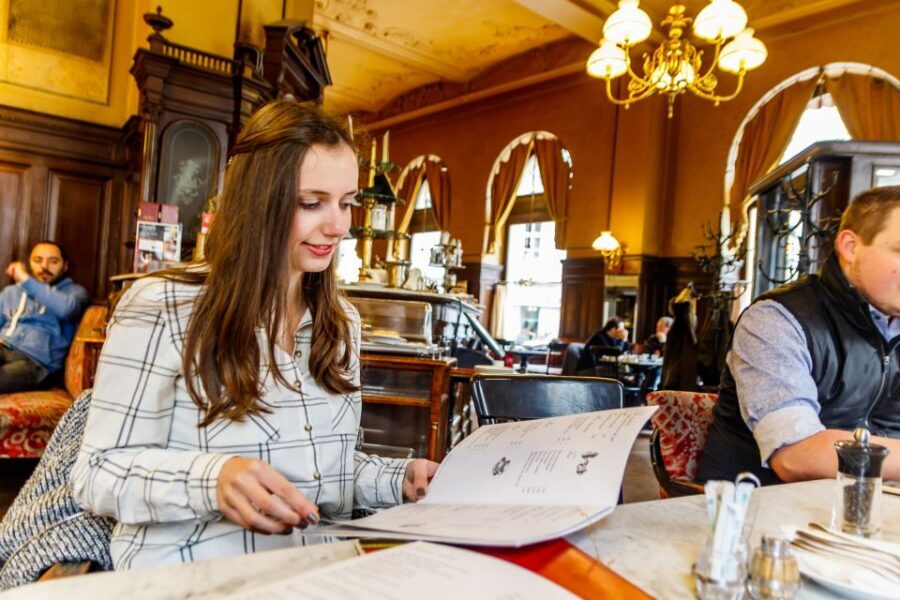
- Beethoven, Coffee Houses, and the Walk Through Vienna’s Taste
- St. Stephen’s Cathedral and the Choice to Keep Exploring
- Price and Value: Is $72.56 Worth It?
- What’s Included vs. What You Won’t Do
- Pace, Physical Needs, and What to Wear
- Who Should Book This Walking Tour (and Who Might Skip It)
- Should You Book This Tour?
- FAQ
- How long is the Vienna Historic Center Small Group Walking Tour?
- What is the group size?
- Where does the tour start and end?
- Is the tour offered in English?
- Does the tour include museum entrances?
- What’s included in the price?
- Is there a mobile ticket?
- Do I need good weather for this tour?
- Are service animals allowed?
- What’s the walking requirement?
Key highlights and what to notice
- Small-group size (max 15): easier questions, tighter pacing, and less crowding at major sights
- Audio devices: you can hear the guide clearly even in busy squares and along the Ring Road
- Ringstrasse in UNESCO context: you’ll understand why this boulevard is such a big deal
- Hofburg focus: imperial power, courtyards, and a few dark corners of 20th-century history
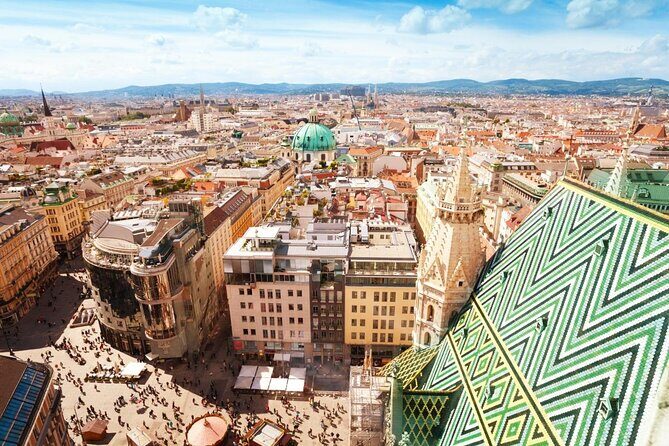
- St. Stephen’s Cathedral finale: you end right where you’ll want to keep exploring on your own
A 2.5-Hour Vienna Primer Built for First-Time Visitors
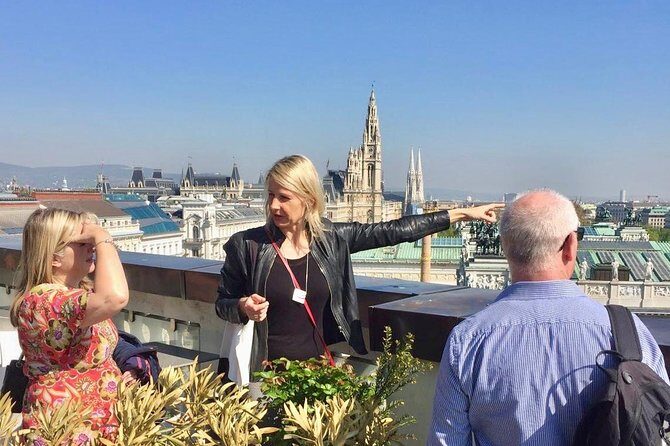
This walking tour is designed for people who want structure. You’re not wandering randomly. You’re getting a guided route that strings together Vienna’s biggest storylines: Habsburg power, the 19th-century grand urban makeover, the city’s political backbone, and the commercial energy right around the cathedral.
At about 2 hours 30 minutes, it’s long enough to feel like a real introduction, but short enough that you still have a lot of daylight left for museums, coffee houses, or a night out at the opera area. And because it’s capped at 15 people, it stays conversational. In practice, that matters. Vienna can get crowded, and a big group can turn into a line you can’t think in.
The top reason this tour keeps scoring high is simple: the guide’s delivery. Names you’ll see echoed again and again include Giselle, Dace, Beatrice, and Gabriela, and the common thread is how they mix facts with humor and keep the group together on a brisk schedule. If you’re the type who likes understanding what you’re seeing, this tour gives you that mental map fast.
You can also read our reviews of more walking tours in Vienna

Starting at Maria-Theresien-Platz and Getting the Ringstrasse Mindset
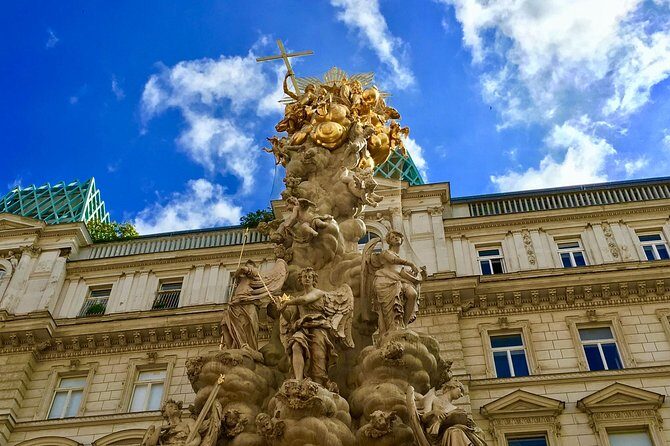
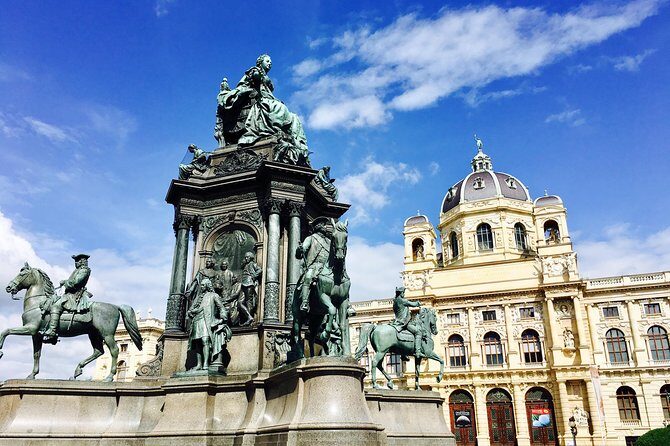
You begin at Maria-Theresien-Platz, a wide public square between the MuseumsQuartier side and the Ringstrasse. Two twin buildings face each other across the square, and the big central visual cue is the statue of Empress Maria Theresa. Even from the start, you get the feeling Vienna likes grand gestures.
From there, you move to a monument that stands out on the Ringstrasse: the Maria Theresia Denkmal. It’s not just one statue. It’s a whole sculptural statement with figures tied to major names like Mozart. The tour doesn’t ask you to memorize every detail. It helps you understand the logic behind the monuments: who Vienna wanted to celebrate, and why it mattered.
Then comes the core “Vienna lesson”: the Ring Road, the circular boulevard that replaced older fortifications in the second half of the 19th century. This is where Vienna’s architecture turns into a timeline. Classical, Gothic, Renaissance, and Baroque elements sit side by side, and it’s part of a UNESCO World Heritage Site. The guide’s job here is to make the buildings read like chapters, not just facades.
Art, Government, and Big Buildings Along the Ring Road
After you set the Ringstrasse framework, the walk shifts into major civic landmarks.
You pass by the Kunsthistorisches Museum Vienna area, next to a building that holds Vienna’s royal art collection identity. You won’t be going inside museum galleries on this tour. Still, seeing the exterior up close helps you connect the “museum district grandeur” with the rest of the city’s layout.
A quick stop at the Burgtor adds a nice visual contrast. This neoclassical gate was built after the Napoleonic Wars, and it’s a reminder that Vienna’s monumental style often grew out of conflict and rebuilding.
Then you move into the political center of the city’s story:
- You see the Austrian Parliament Building as you go
- You pass the neo-Gothic Town Hall (Rathaus) area
- You walk through spaces that feel like the city’s stage for leadership, law, and public life
What I like about this part of the tour is that it doesn’t treat politics like trivia. It connects why these buildings exist and how the city organized itself around them.
Hofburg Palace: Imperial Power, Court Life, and One Uncomfortable Balcony
The walk around the Hofburg is a highlight for a reason: it’s the physical center of centuries of Habsburg influence.
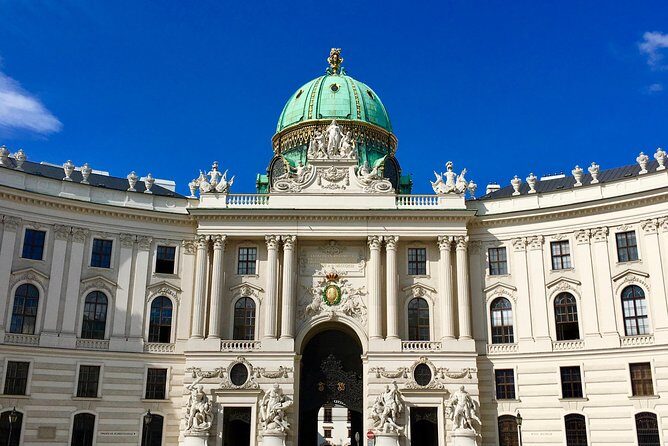
You spend time at Hofburg’s exterior spaces, including the Neue Burg / New Castle area, where you can see how the complex houses major institutions and how the palace functions as a city within a city. The guide points out the Habsburg story as a long project of power—how it evolved, how courtyards and facades communicate status, and how court life shaped Vienna’s image for centuries.
One stop you should be ready for emotionally is the darker historical note tied to the Hofburg complex. The guide references how Adolf Hitler proclaimed the Anschluss from a balcony of the New Castle. Even if you’re not deep into 20th-century European history, this is the moment where Vienna’s grandeur meets a hard historical reality. The tour treats it as part of the city’s truth, not something to skip.
You also get Heldenplatz (Heroes Square) nearby, created after demolishing the old bastion during the Napoleonic Wars. It’s green space next to imperial stone, which makes it feel both open and heavy at the same time.
Churches, Courts, and the Small Atmosphere of Vienna’s Old Streets
After the Ring Road and Hofburg concentration, the tour softens its tone with smaller, more human scale sights.
You get St. Michael’s Church, with roots dating back to around 1220. The guide’s commentary helps this stop feel like a living part of the city rather than another “old building.” You also pass by the Office of the Federal Chancellor of Austria, which keeps the government theme alive while you move through the center’s mix of official power and everyday life.
Then you shift toward theater culture with Burgtheater, often described as one of the best theaters in the world. You won’t be buying tickets on this tour, but standing outside gives you the chance to notice Vienna’s performance culture. The city treats the arts like a serious civic identity, not just entertainment.
A great thing here is pacing. The walk stays energetic, but there are enough stops—short and efficient—that you don’t feel trapped. One review detail you’ll likely feel in your own legs: people report very high step counts for a tour this length. Comfortable shoes aren’t optional.
You can also read our reviews of more historical tours in Vienna



Beethoven, Coffee Houses, and the Walk Through Vienna’s Taste
Vienna isn’t only palaces and parliaments. It’s also music, writers, and café culture. The route includes stops that connect those dots.
At Beethoven Pasqualatihaus, you see a former residence associated with Ludwig van Beethoven, set in an exposed position on the ramp of the old town fortifications. This helps you understand Vienna’s “composer map”: you’re not just walking from one famous name to another—you’re walking through the city’s musical memory.
You also pass Palais Ferstel, originally linked to Austro-Hungarian banking and the stock exchange. It’s an easy stop to overlook if you’re tired, but it’s a useful reminder that Vienna’s elegance also came from money, institutions, and city planning.
Near Fre yung, you reach one of those older central squares that feels intimate and picturesque, the kind of space where Vienna’s everyday rhythm mixes with its grand identity. And then it opens back up into the elegant pedestrian streets toward Graben and Kohlmarkt, classic shopping lanes that feel like the city’s “public living room.”
St. Stephen’s Cathedral and the Choice to Keep Exploring
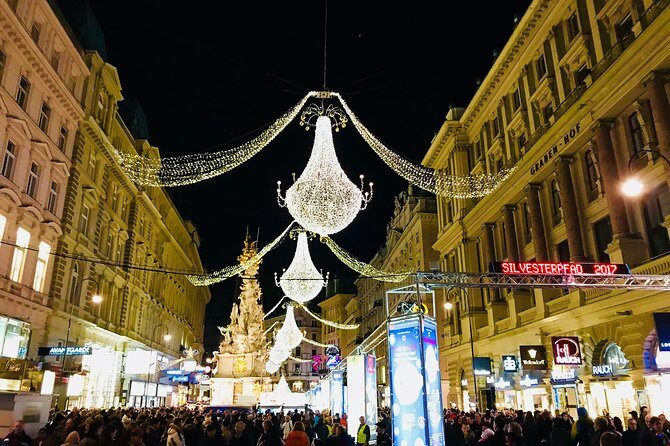
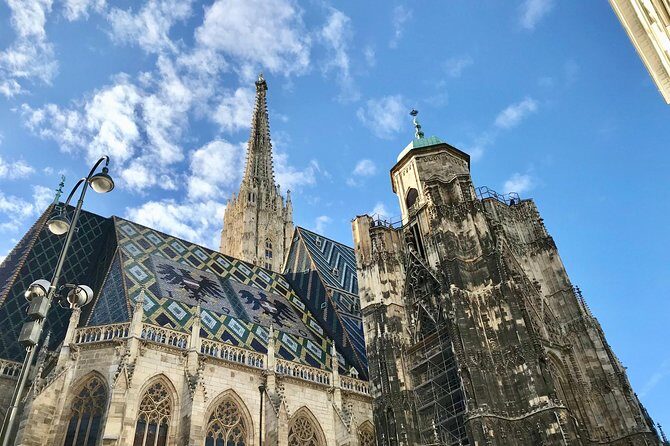
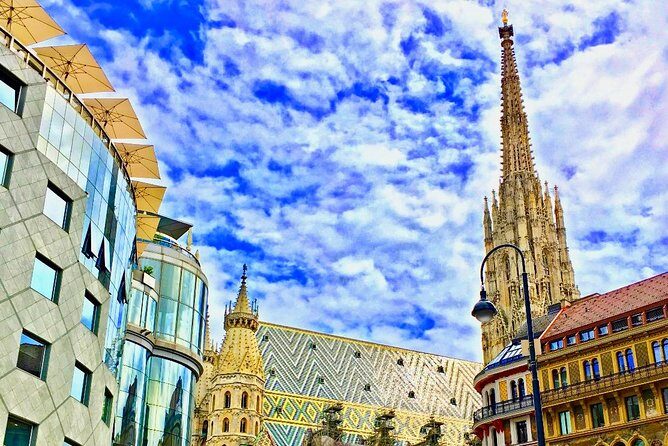
The final stretch lands you at Stephansplatz and St. Stephen’s Cathedral, Vienna’s central landmark. You end here with freedom to explore further on your own.
This ending matters because it sets up your next move. After the walk, you can decide whether you want:
- more time photographing the cathedral area
- a long wander through shopping streets like Graben and Kohlmarkt
- a café break to process all the names and historical references you just absorbed
Also, because this tour doesn’t promise museum interiors, it gives you a clean path to add those later if you want. You’ll leave with context, which makes museums feel less like isolated rooms of art and more like chapters that connect to the city’s big story.
Price and Value: Is $72.56 Worth It?
At $72.56 per person for about 2.5 hours, you’re paying for three things: a real guide, a tight route through the center, and sound support via audio devices.
For first-time visitors, that value is strongest when you treat it as your “orientation investment.” If you come in knowing little about Vienna, the guide’s explanations save you the time cost of trying to figure it out alone. If you already know some history, it can still be worth it because the tour turns key sites into a connected narrative and gives you good “where to go next” recommendations.
The small-group cap of 15 also affects value. It’s not just comfort. It tends to lead to better flow—more chances to ask questions, and fewer moments where you’re shouting over strangers.
The main value trade-off is also the clearest: you’re paying for a guided walk and commentary, not for museum entry. If you want inside access to major attractions, this tour won’t match that expectation.
What’s Included vs. What You Won’t Do
Here’s the practical divide you should understand before you book.
Included:
- a local certified tour guide
- a carefully designed route through the historic center
- audio devices for group hearing
- personal suggestions for where to eat and drink
- insider tips on Vienna culture and traditions
- a mobile ticket
Not included:
- no museum interior visits
- church and some indoor stops can happen depending on weekday, but museum entry is not part of the plan
This is exactly the kind of format that works well when your schedule is tight. You get to cover a lot of ground, take in major buildings from the outside, and still leave feeling informed instead of overwhelmed.
Pace, Physical Needs, and What to Wear
This is a walking tour. It’s not a sit-down lecture.
The tour is best for people with moderate physical fitness, and it’s not recommended for travelers with walking disorders. People report big step counts over the full stretch, and the walk can feel brisk on a busy day. If you’re cold easily or weather changes fast, plan layers. Some tours include short opportunities to warm up when needed, and having warm clothing helps you enjoy the day instead of just surviving it.
Also, because you’ll be moving through central Vienna squares and along major routes, bring:
- comfortable shoes with good grip
- a light rain layer if skies look uncertain
- a charged phone for maps and quick photo checks (even if the tour uses a mobile ticket)
Who Should Book This Walking Tour (and Who Might Skip It)
This tour is ideal for:
- first-time visitors who want a guided orientation without time-consuming planning
- people who like history explained in plain language with humor
- travelers who appreciate small-group attention and clear audio
It may not be the best choice if:
- you’re expecting museum entry tickets or long interior visits
- you have limited mobility or struggle with sustained walking
- you dislike fast pacing and prefer slow, self-guided wandering
One plus: it’s offered in English and includes several start times, which helps when you want to shape the rest of your day around it.
Should You Book This Tour?
If you want to understand Vienna quickly and walk away with a mental map you can actually use, I’d book it. The value is strongest for first timers, and the consistent praise for guides like Dace and Giselle points to the real payoff: great storytelling that turns famous places into something you remember.
If your main goal is museum interiors, save your money for a museum-focused plan instead. But if you want a guided spine for your trip—Ringstrasse to Hofburg to St. Stephen’s—this is a high-satisfaction way to start.
FAQ
How long is the Vienna Historic Center Small Group Walking Tour?
The tour runs for about 2 hours 30 minutes.
What is the group size?
The experience has a maximum of 15 travelers.
Where does the tour start and end?
It starts at Maria-Theresien-Platz, Wien, Austria and ends at Stephansplatz, 1010 Wien, Austria near St. Stephen’s Cathedral.
Is the tour offered in English?
Yes, the tour is offered in English.
Does the tour include museum entrances?
No. The tour does not visit the inside of any museums. It does visit some churches, and on some weekdays it may include other indoor locations such as palaces, a university, or a café.
What’s included in the price?
Included are a local certified guide, historic center walking tour, audio devices, route planning through the center, personal restaurant and café recommendations, and insider tips.
Is there a mobile ticket?
Yes, the tour includes a mobile ticket.
Do I need good weather for this tour?
Yes. The tour requires good weather, and if it’s canceled due to poor weather you’ll be offered another date or a full refund.
Are service animals allowed?
Service animals are allowed.
What’s the walking requirement?
You should have moderate physical fitness. It is not recommended for travelers with walking disorders.