REVIEW · VIENNA
Historical Hitler Walking Tour of Vienna
Book on Viator →Operated by Good Vienna Tour GMBH · Bookable on Viator
Hitler’s Vienna is still written into the streets. This guided walk links the 1938 Anschluss era to what Vienna built in art, religion, and public life, then points you toward the places where Austria remembers the victims. You start in the Albertina area and finish near Schwedenplatz, with stops that range from major landmarks to quieter memorials you might miss alone.
I like the balance of locations: the tour doesn’t only chase the Hitler storyline. You also spend real time on Jewish Vienna sites like the Judenplatz Holocaust Memorial and the hidden Seitenstettentempel area, plus reminders of persecution and war like Morzinplatz and the Memorial Against War & Fascism. I also really appreciate the guide-driven pacing. In English, guides such as Dieter and Wolfgang are repeatedly praised for keeping the walk moving and adding context, including occasional indoor stops to warm up on cold days.
The main drawback to consider is the length in winter and wind. At about 2 hours 30 minutes on foot, you will cover ground, and you should plan for hearing to be a little tricky in a busy street corner unless you keep your device volume up and stay close.
In This Review
- Key highlights worth knowing before you go
- Vienna’s 1938 story lives in plain sight
- The walking route: from Albertina to Schwedenplatz
- Vienna State Opera: when fascism touched the arts
- Memorial Against War & Fascism: Alfred Hrdlicka’s reminder
- Akademie der bildenden Kunste: the school that rejected Hitler
- Heldenplatz and March 15, 1938: the speech moment
- Judenplatz Holocaust Memorial: remembrance tied to everyday Vienna
- Morzinplatz: the Metropole hotel turned Gestapo HQ
- Infopoint Jewish Vienna and the hidden Seitenstettentempel
- What this tour actually does well (and what to expect)
- Cold-weather reality: group size, indoor breaks, and hearing tips
- Price and value: is $32.65 a fair deal?
- Who should book this walk?
- Should you book the Historical Hitler Walking Tour of Vienna?
- FAQ
- How long is the Historical Hitler Walking Tour of Vienna?
- What does the tour cost?
- Where does the tour start and end?
- Is the tour offered in English?
- Do I get a mobile ticket?
- What’s included in the price?
- Is it free to enter the stops?
- FAQ
- Is cancellation free if I change my plans?
Key highlights worth knowing before you go
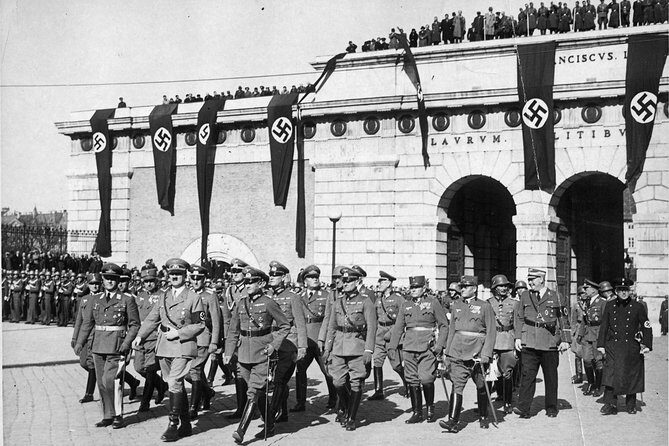
- Albertina meeting point, Schwedenplatz finish: easy to continue to dinner right after.
- State Opera context: Hitler’s 1938 visits and how National Socialism disrupted Vienna’s arts world.
- Memorial Against War & Fascism: a clear, free, downtown reminder of the era’s damage.
- Heldenplatz and the March 15, 1938 speech: why one balcony moment still shapes how people talk about Austria today.
- Judenplatz Holocaust Memorial: focused remembrance for Austrian Jewish victims, tied to everyday city history.
- Seitenstettentempel hidden behind apartments: a powerful example of how public rules shaped religious life.
Vienna’s 1938 story lives in plain sight
Vienna is gorgeous, but this tour asks you to look past the postcard view. It’s built around a simple idea: you can understand how power spreads when you connect the politics to the places where people worked, prayed, performed, and built community.
What makes it work is the mix of famous buildings and specific memory sites. You’ll see Vienna State Opera-era changes, then move into memorials that don’t try to shock you with spectacle. Instead, the stops are designed to help you link the rise of fascism to real streets, real institutions, and real consequences.
You can also read our reviews of more walking tours in Vienna
The walking route: from Albertina to Schwedenplatz
The tour starts at Albertinaplatz outside the Albertina Museum and ends near Schwedenplatz, close to U line stops and lots of places to eat. That layout is practical. You get a clear beginning point, then you can seamlessly transition into a meal without needing another ride.
The route also matters because it threads Vienna’s center in a way that feels logical: big cultural landmarks first, then memorials and Jewish Vienna sites across the historical center, ending with another cluster of city life at Schwedenplatz. The day runs about 2 hours 30 minutes with short stops, so you don’t feel like you’re stuck listening for hours in one spot.
For comfort, wear good walking shoes and plan for Vienna’s unpredictable weather. A raincoat or umbrella and a little sun protection go a long way. The tour is capped at 25 people, which usually keeps the group easier to manage when you’re stopping at busy corners.
Vienna State Opera: when fascism touched the arts
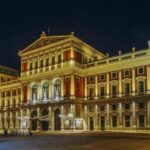
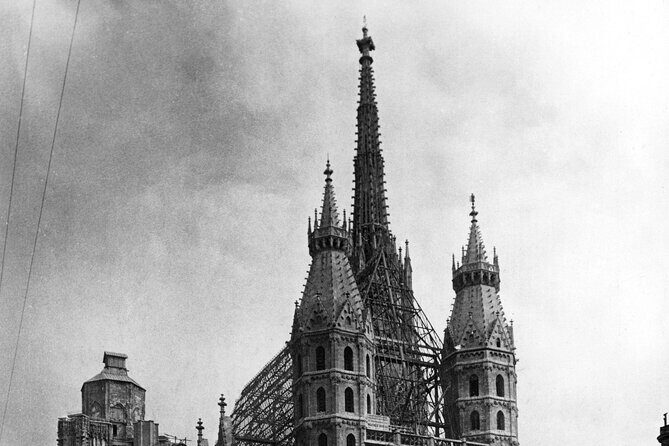
Your first major stop is Vienna State Opera. The building is tied to grand cultural moments long before 1938, including the opening celebration in the late 1860s with Emperor Franz Joseph and Empress Elisabeth present.
Then the story turns. Under Anschluss, the tour focuses on how National Socialism disrupted Vienna’s arts world. Adolf Hitler visited the opera in June 19, 1938 and again on October 27, 1938. From there, the guide explains what happened to artists and employees: departures, persecution, and murder, plus bans on performances for certain works.
Why I like this stop for first-time Vienna visitors is that it’s not abstract. The State Opera gives you a familiar visual anchor, and the guide connects that grandeur to coercion and cultural control. You also get time with a free-entry style stop (the tour lists admission ticket free time), so you can focus on the interpretation rather than a ticket scramble.
Memorial Against War & Fascism: Alfred Hrdlicka’s reminder
Next you’ll reach the Memorial Against War & Fascism at Albertinaplatz. This piece by Austrian sculptor Alfred Hrdlicka has stood since 1988, with Albertinaplatz named after Helmut Zilk in 2009.
What the tour aims for here is clarity. The memorial is meant to remind you of the darkest era of Austrian history, and it’s dedicated to victims of war and fascism broadly. That matters because the day can otherwise start to feel like a single person story. This stop widens the frame so you remember that systems harm people at scale.
It’s also a good pause point. You’ll likely be cold and walking a while, and the stop keeps the atmosphere grounded. The tour lists it as about 10 minutes, with free admission, so it fits naturally into the flow.
Akademie der bildenden Kunste: the school that rejected Hitler
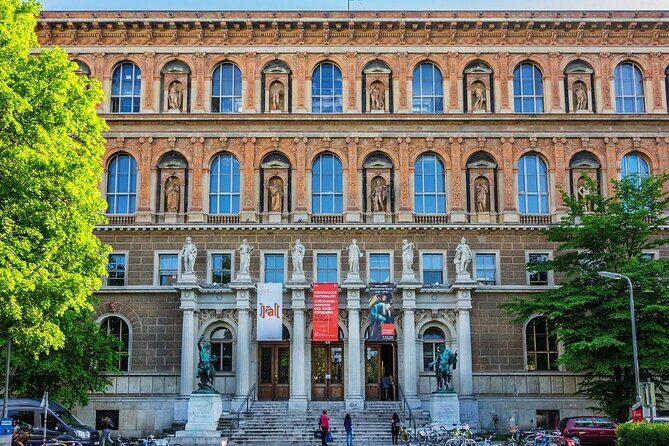
One of the stops is at the Akademie der bildenden Kunste, described as the art school that did not accept Hitler. Even if you already know parts of Hitler’s early life, this location helps you connect an individual rejection to the wider social conditions that shaped his path.
The emotional power here is subtle. Instead of chasing a sensational detail, the tour frames rejection and opportunity in a city context. Vienna was a cultural magnet, and its institutions were not just buildings. They represented who belonged and who would have access to training, status, and networks.
The stop is brief (listed as about 10 minutes) and free. Still, it sets up later moments by grounding the day in what Vienna did—or didn’t—offer.
You can also read our reviews of more historical tours in Vienna

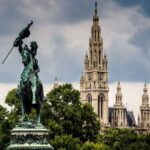
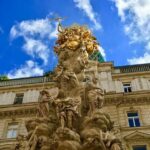
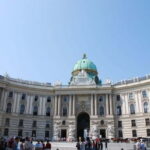
Heldenplatz and March 15, 1938: the speech moment
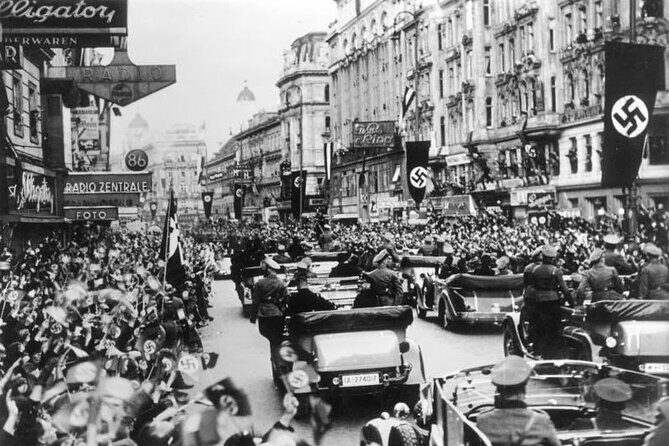
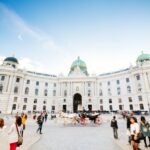
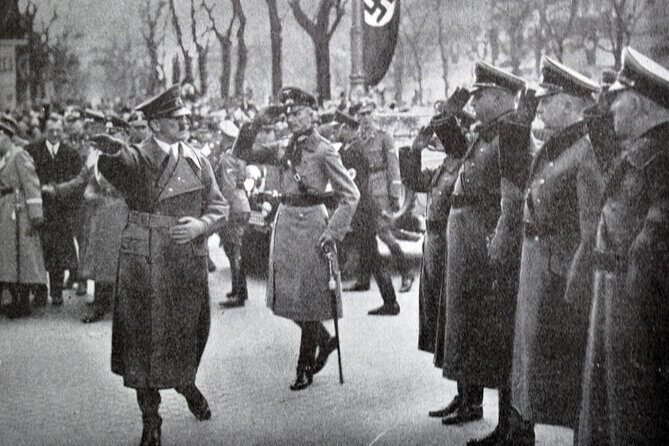
Heldenplatz is where the tour sharpens its focus. You learn about what’s tied to March 15, 1938, when Hitler delivered a significant speech from the balcony of the Neue Hofburg.
The guide’s emphasis is important: the speech became an emblem of the National Socialist seizure of power and the broad approval that helped make it possible. The tour also frames Heldenplatz as a place that carries trauma for the Second Republic, not just a historic photo opportunity.
This stop is worth your attention because it changes how you read a city square. After you’ve stood here in the context of 1938, you’re no longer seeing a scenic public space. You see how public settings can amplify political theater and how quickly approval can become complicity.
Judenplatz Holocaust Memorial: remembrance tied to everyday Vienna
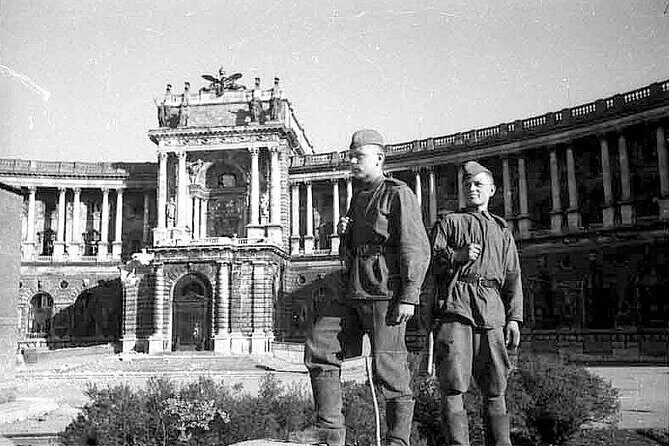
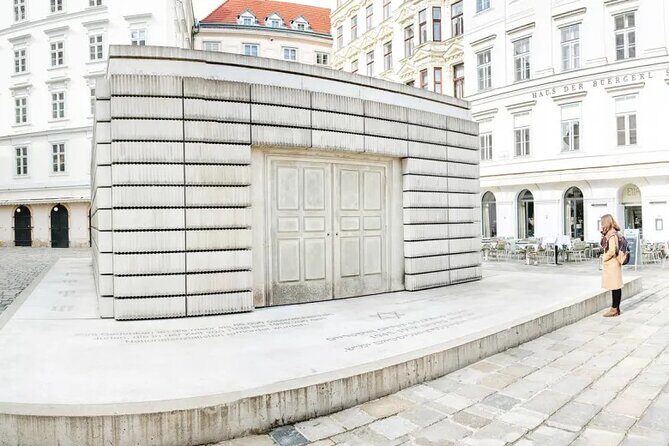
Across the historical center, you get to the Judenplatz Holocaust Memorial. The tour uses the German name for the memorial as well as its purpose: remembrance for Austrian Jewish victims of the Shoah, including more than 65,000 Austrian Jews murdered by National Socialists between 1938 and 1945.
This stop is one of the most direct forms of respect on the route. The guide connects the memorial to Vienna’s Jewish population and helps you understand that this community wasn’t something far away. It was part of the city’s daily life before persecution and mass murder.
What makes it especially effective is that the memorial doesn’t ask you to memorize dates only. It turns your attention to the human cost and to the disruption of a whole community. You’re also in a central location, which helps if you’re hoping for meaningful history without getting stuck on the city’s edges.
The tour lists it as about 10 minutes and free admission, so it stays focused.
Morzinplatz: the Metropole hotel turned Gestapo HQ
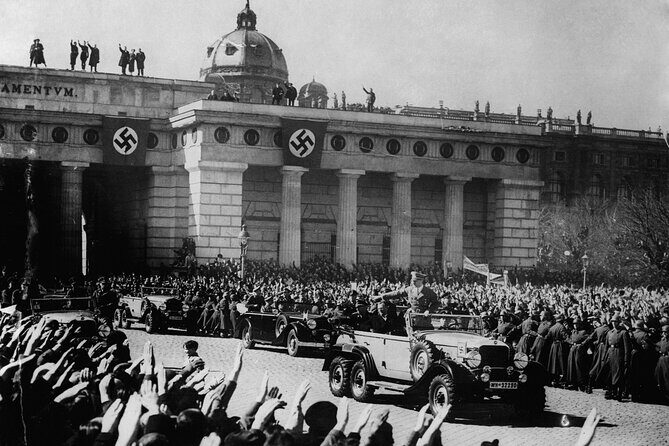
Another key stop is Morzinplatz, where there was formerly a luxury hotel, the Metropole, later used as one of the most brutal Gestapo headquarters in the Third Reich.
This is a heavy location, and the tour treats it as such. You’re asked to connect private buildings with public power. A hotel suggests hospitality, comfort, and travel—then the story flips into surveillance, terror, and confinement.
I find this kind of contrast valuable. Vienna can look polished, even pristine, but the tour keeps reminding you that the city’s infrastructure was used by the regime. Morzinplatz helps you see how control is built into ordinary places.
Infopoint Jewish Vienna and the hidden Seitenstettentempel
The last stretch brings you to the Infopoint Jewish Vienna, tied to the Seitenstettentempel. The tour explains that the synagogue is hidden behind a tenement building due to rules in force at the time. Non-Catholic places of worship had to be hidden and not visible from the street.
The main synagogue location is given as Seitenstettengasse 4, and the tour notes an inscription above the gate that includes a call to come with thanksgiving and praise. The point isn’t just architectural trivia. It shows how rules shaped visibility, belonging, and the public presence of religious communities.
This is also a smart end-of-tour topic because it gives you a different lens on the theme. Earlier stops focus on persecution and memorials. This one reminds you that Vienna’s Jewish life had to adapt under constraint—sometimes literally under apartment façades.
You finish near Schwedenplatz, where the tour ends just a short walk away. That’s a practical place to shake off the emotional weight and keep moving.
What this tour actually does well (and what to expect)
This walking tour is designed for history-minded visitors who want Vienna connected to Hitler’s rise and its effects on Austria. You get early-life context, but the emphasis stays on Vienna’s social and cultural environment around the late 1930s.
The best-reviewed guides tend to do two things well:
- They keep a relaxed pace while staying factual and grounded in place.
- They use context to connect the arts scene, institutions, and Jewish landmarks into one story.
There’s also a recurring theme in the experience itself: it’s long enough that you’ll want to stay mentally present, but it’s broken into short stops (many around 10 minutes) that keep the day from dragging.
One word of caution: the tour’s name can make some people expect it to be a nonstop Hitler biography. The route is clearly also about Vienna’s institutions and what happened to artists, communities, and civic life under National Socialism. If you want something strictly chronological about Hitler’s personal life only, this may feel broader than you expect.
Cold-weather reality: group size, indoor breaks, and hearing tips
Vienna weather can be brutal, especially on a late afternoon start time like 2:30 pm. The tour notes you should bring water and plan for sun, rain, and wind, and the experience is set up for comfortable shoes and moderate physical fitness.
In practice, some guides build in small indoor stops to help you warm up and recharge. If you’re sensitive to cold, arrive dressed for it. Also, keep your ears on. If the audio device is hard to hear through crowds and traffic noise, raise the volume and stay positioned close to the guide when you’re moving between stops.
The group size limit of 25 also helps. It keeps the walk manageable when you need to cross streets or pause at memorials.
Price and value: is $32.65 a fair deal?
At $32.65 per person for about 2.5 hours, this tour is priced like a value-focused city walk. You’re paying for a licensed guide, a guided route across central Vienna, and the interpretation that connects major landmarks to specific historical meaning.
The best value angle is that many stops are marked free admission. You’re not stacking paid entrances on top of the tour fee just to hear the story. And because the tour ends near Schwedenplatz, you can use the rest of the evening for dinner and exploring without needing another transport plan.
If you’re visiting Vienna for the first time and want a structured way to understand 1938 and its impact on culture and Jewish life, this price-to-time ratio makes sense. If you’re already an expert on Vienna’s Nazi-era history, you might feel it moves fast. The tour is built for learning through the streets, not for deep academic reading.
Who should book this walk?
I’d book this if you fit any of these:
- You like your history tied to real buildings and public spaces.
- You want to understand how Vienna’s cultural institutions were affected after 1938.
- You care about Jewish Vienna remembrance and want the memorials explained in context.
- You’re comfortable walking for about 2.5 hours and want a guided route that stays central.
I’d skip it if you’re looking for a purely light, relaxed sightseeing afternoon. The subject matter is intense, and the route includes memorial and persecution sites. Also, if hearing audio devices in crowds is a problem for you, plan to stand where you can hear clearly during stop talks.
Should you book the Historical Hitler Walking Tour of Vienna?
Book it if you want a guided way to see Vienna as a city of architecture and institutions with consequences, not just scenery. The route starts strong at the Vienna State Opera, then moves into memorial sites like Judenplatz and Morzinplatz, ending with the special lens of the hidden Seitenstettentempel. That combination is hard to assemble on your own without spending extra time researching and routing.
Pass if you expected a strictly Hitler-centered biography or if you know you can’t handle cold long walks. Otherwise, this is one of those tours that makes the city feel different for days afterward—in a thoughtful way, not a sensational one.
FAQ
How long is the Historical Hitler Walking Tour of Vienna?
The tour lasts about 2 hours 30 minutes.
What does the tour cost?
It costs $32.65 per person.
Where does the tour start and end?
It starts at Albertinaplatz (Albertinapl., 1010 Wien, Austria) and ends at Schwedenplatz (Schwedenpl., 1010 Wien, Austria).
Is the tour offered in English?
Yes, it is offered in English.
Do I get a mobile ticket?
Yes, the tour includes a mobile ticket.
What’s included in the price?
The price includes a licensed, knowledgeable guide. Hotel pickup and drop-off are not included, and food and drinks are not included.
Is it free to enter the stops?
The tour lists stops with free admission ticket times (for example the Vienna State Opera stop and several memorials).
FAQ
Is cancellation free if I change my plans?
Yes, free cancellation is available if you cancel up to 24 hours in advance for a full refund.