REVIEW · VIENNA
An Introduction to Vienna Walking Tour
Book on Viator →Operated by Insight Cities · Bookable on Viator
Vienna’s best stories run on sidewalks. This is a small-group walking tour that mixes big sights with human-scale details, guided by historians who can bring the city to life, whether you get Wolfgang, Katarina, Annelie, or Ilse. I especially love the way it links art, empire, and everyday Vienna in one smooth, walkable circuit, from the Secession building’s turn-of-century ideas to Stephansdom’s unmistakable presence.
One thing to weigh: at about $181.02 per person, this isn’t the cheapest way to check off monuments. And it’s a walk-first experience, so food and drinks are not included unless noted, meaning you’ll want to plan meals separately.
In This Review
- Key points before you go
- Entering Vienna’s story on foot
- Starting at Café Hawelka and getting your bearings near the Hofburg
- Secession building to Stephansdom: art’s ideas and Vienna’s iconic cathedral
- Hofburg and Michaelerplatz: the center of power since the 13th century
- Ringstraße luxury, palace walls, and the Loos House contrast
- Naschmarkt to Kohlmarkt and the Graben plague column
- Maria-Theresien-Platz and what to do after the walk
- What the historian guide actually changes for you
- Group size, pace, and comfort: your shoes matter
- Price and value: is $181.02 per person justified?
- Who this tour fits best (and who should skip it)
- Final call: should you book this Vienna walking tour?
- FAQ
- How long is the Vienna Walking Tour?
- What’s included in the price?
- Is food or drinks included?
- Where does the tour start?
- Does this tour operate in English?
- How large is the group?
- Is there a mobile ticket?
- What is the cancellation policy?
Key points before you go
- Historian-led walk that aims for context, not just photo stops
- Small group size (max 8, with up to 6 per booking) for more questions
- Perfect first-day orientation across major neighborhoods and architecture
- Art + empire + street life: Secession, Stephansdom, Hofburg, Naschmarkt, Ringstraße
- Practical local guidance like where to eat and what to skip for less hassle
Entering Vienna’s story on foot

This is the kind of tour that helps Vienna stop feeling like a postcard. You’re not just looking at landmarks—you’re learning how different eras shaped the buildings, the streets, and even the mood of the city. Expect a guided pace that leaves room to ask questions, especially with the small group limit.
You’ll also get a guided mix of glamorous and heavy themes. Some guides go beyond the postcard version, including hard moments tied to wartime memories around major cultural sites. The effect is that Vienna feels more complete—beautiful, yes, but also complicated.
You can also read our reviews of more walking tours in Vienna

Starting at Café Hawelka and getting your bearings near the Hofburg
The tour starts at Café Hawelka, Dorotheergasse 6 (1010 Wien). That location matters because it puts you close to the historical core fast, so the walk doesn’t feel like you’re spending the first chunk just getting oriented.
You’ll also be near public transportation, which helps if you’re combining this with other plans that day. And because the tour is offered in English, you can follow the story without straining or guessing.
The tour ends somewhere in Vienna, so after booking, it’s smart to confirm the finish point with your guide on the day—especially if you want to connect to museums, lunch, or transit immediately.
Secession building to Stephansdom: art’s ideas and Vienna’s iconic cathedral
A major early stop is the Secession building, a key site for turn-of-century avant-gardism. The guide ties in the cultural figures you’ve likely heard before—Klimt and Mahler—which makes the architecture feel like part of a bigger conversation, not just another façade.
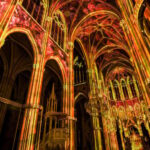
Then you move to Stephansdom, Austria’s national architectural icon. Even without technical details, the building’s presence is hard to miss, and the guide’s job is to help you see it in context—why it matters to the city’s identity.
If you love architecture, this pairing works well: modern ideas first, then the cathedral’s long-lasting gravity. It’s a quick reminder that Vienna always had more than one story running at once.
Hofburg and Michaelerplatz: the center of power since the 13th century
From the Hofburg area—anchored by Michaelerplatz—you get the scale of imperial rule in a way that’s hard to absorb from a distance. The Hofburg has been the seat of power since the 13th century, and the walk keeps pointing you back to how authority shaped the streets around it.
You’ll learn about the Habsburg dynasty and its long impact on Austria—one guide storyline even frames it as an experience over roughly 700 years. That kind of timeline helps you connect the dots when you later visit palaces, churches, or museum exhibits on your own.
A practical benefit here: once you understand where the Hofburg sits in the city, you’ll navigate easier for the rest of your trip. Vienna’s center can feel dense, so having a guided map in your head is a real payoff.
Ringstraße luxury, palace walls, and the Loos House contrast
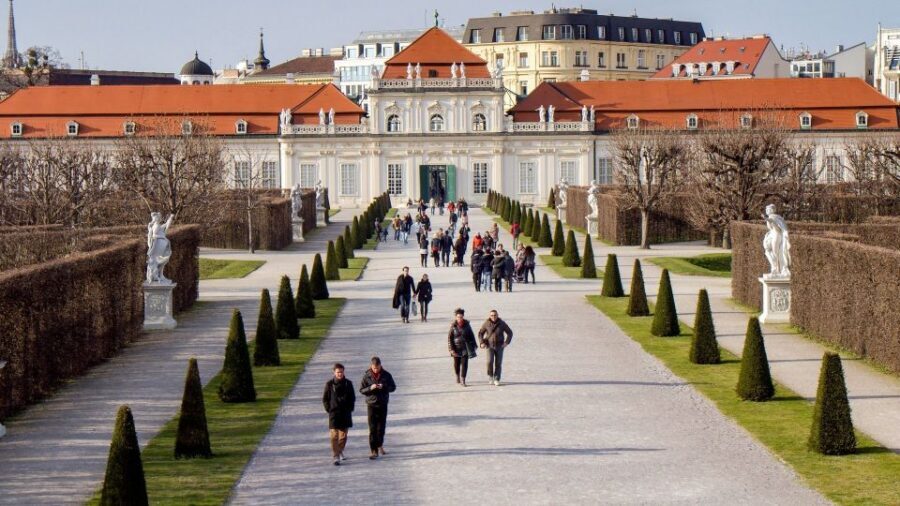
Next comes the Ringstraße, the grand boulevard built in the mid-19th century. The tour’s version of this street isn’t just a pretty walk—it’s an explanation of how Vienna’s power and wealth expressed themselves through urban design.
As you go, you’ll notice that many of the luxury hotels are set within the walls of old palaces. That helps you see why the Ring feels different from smaller streets: it’s curated by history at a city scale.
Then you’ll pass the Loos House, designed by Adolf Loos (1870–1933). The contrast is the point. One moment you’re in the language of grand urban style; the next you’re looking at a building linked to a more modern architectural attitude. It’s a useful reminder that Vienna’s identity isn’t stuck in one style.



Naschmarkt to Kohlmarkt and the Graben plague column
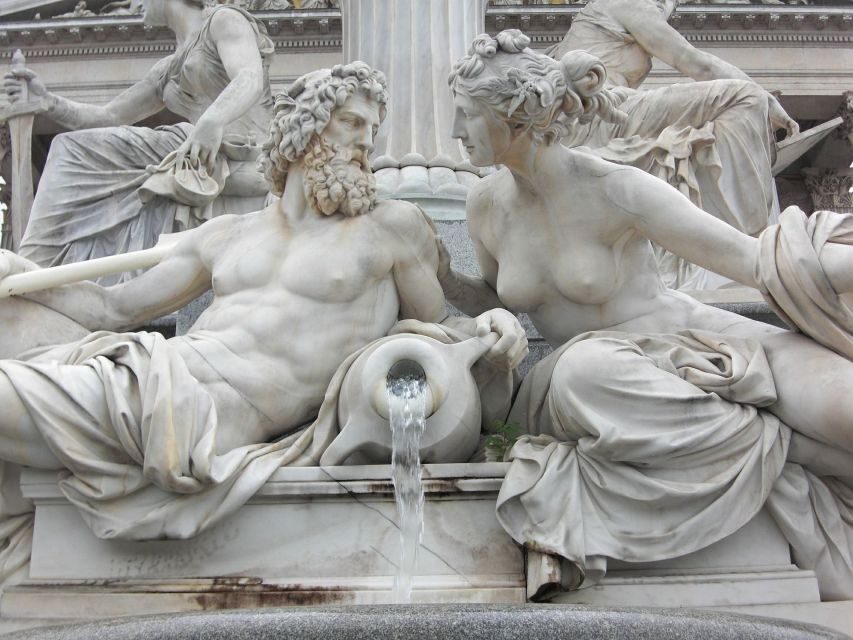
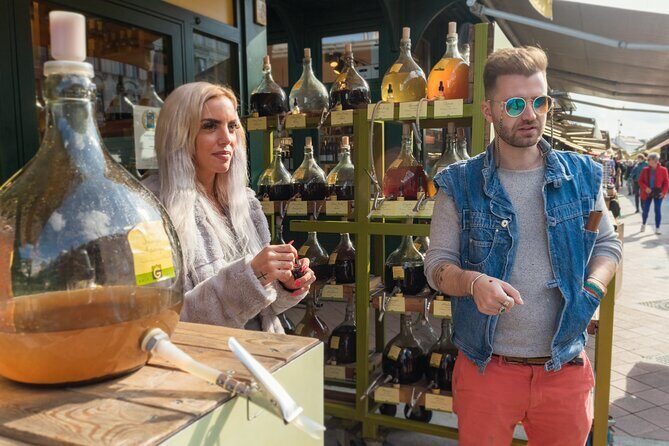
The walk includes time passing by Naschmarkt, the colorful traditional food market where locals mingle and shop. Even if you don’t stop for a snack, the market is a helpful reality check: Vienna’s history is big, but daily life still plays out in public spaces like this.
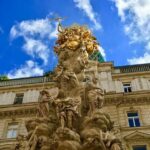
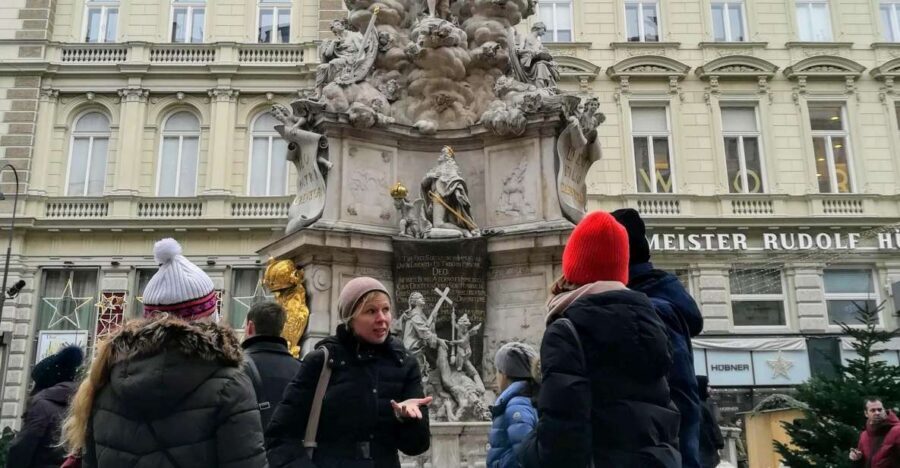
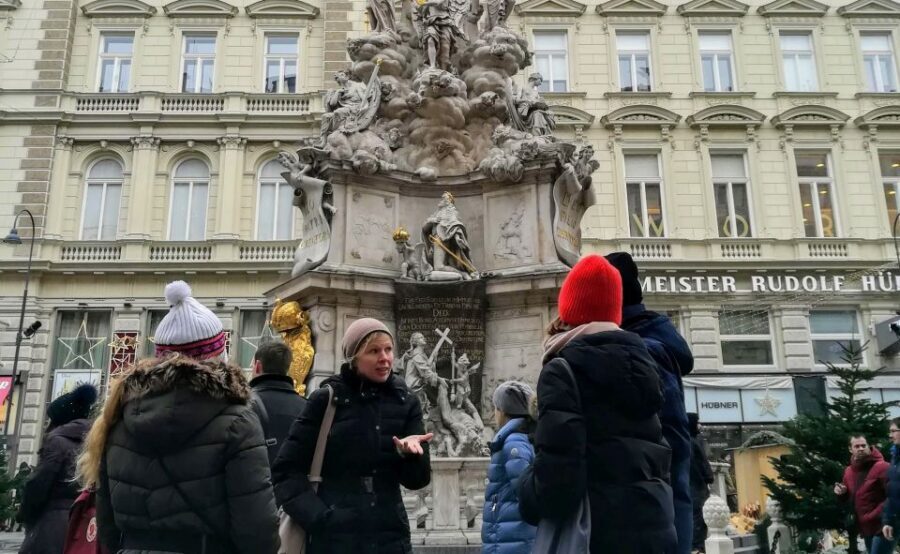
Then you move toward Kohlmarkt and the Graben, now known as fashionable shopping areas. These streets are more than retail routes—the guide points out a striking piece of memory tied to crisis: a plague column commemorating a 17th-century bubonic plague outbreak.
That’s one of the tour’s strengths. You don’t just take in beauty; you also see how public monuments preserve fear, survival, and civic response. It’s the kind of detail that makes later sightseeing feel more meaningful.
Maria-Theresien-Platz and what to do after the walk
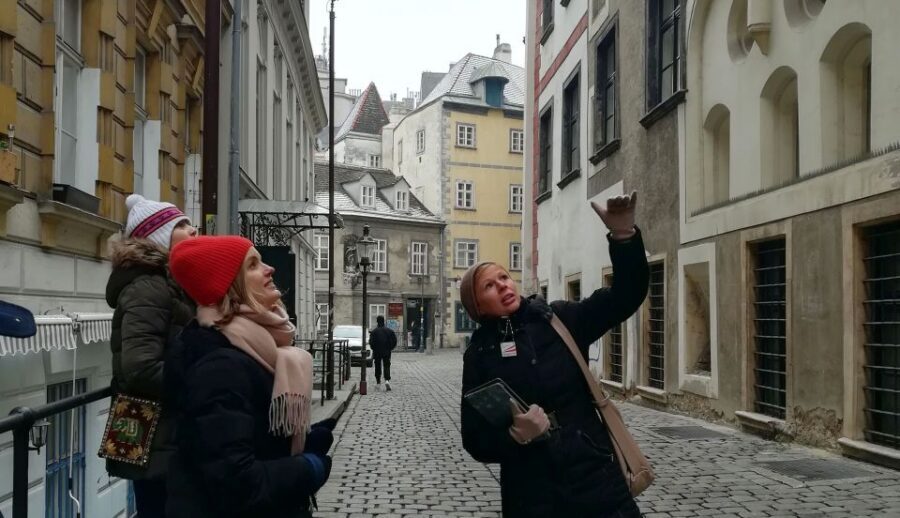
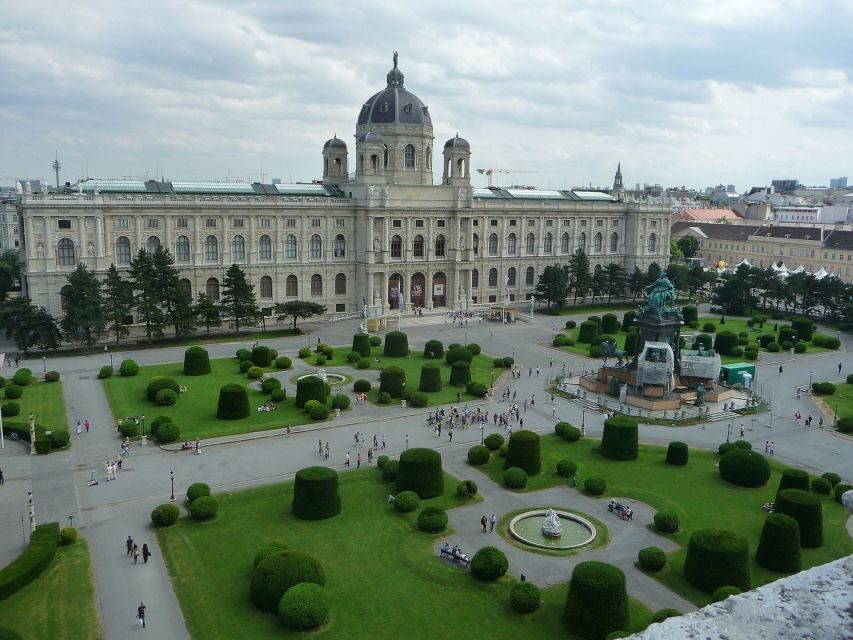
The route touches Maria-Theresien-Platz, home to the city’s largest concentration of museums. This is a great place to end your guided orientation because it naturally connects to your next step: choosing what to see in the afternoon or next morning.
If you’re on a tight schedule, this stop helps you prioritize. Museums can be overwhelming when you first arrive, so it’s useful to come away knowing where that big cluster is and how the surrounding area fits into the city’s layout.
Also, this is where the tour’s orientation mindset pays off. By the time you reach the museum district, you’ve already learned how major sights connect across different parts of the center.
What the historian guide actually changes for you
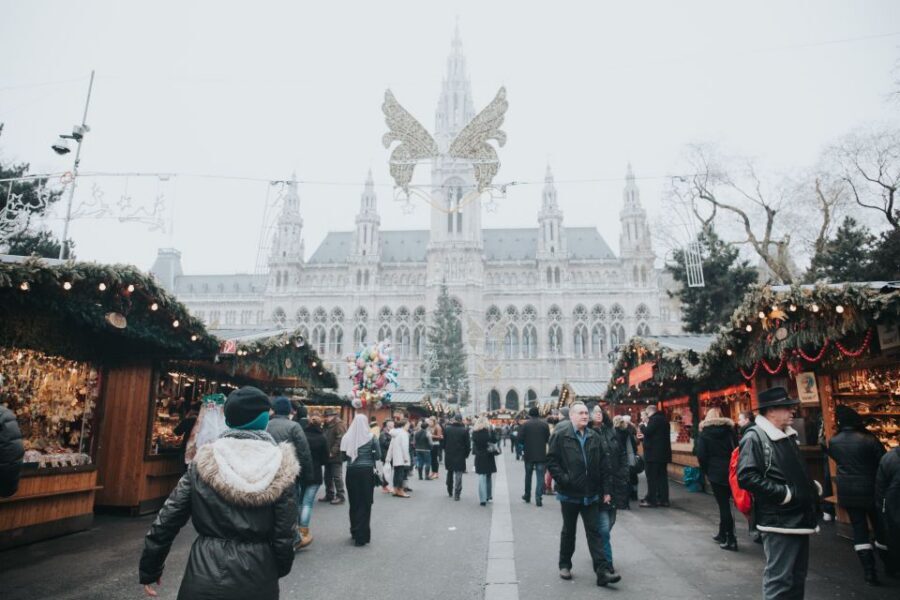
The biggest difference on this walk is the storytelling approach. Many of the best moments are the small connections that turn a building into a scene.
Some guides add music as part of the atmosphere, with examples like playing Mozart and Haydn during the walk. Others include small touches like Sisi’s favorite candies, which makes the imperial storyline feel personal instead of distant.
Then there’s the practical side. Several guides are willing to answer real questions about what to eat and where to go next. For example, you may get pointers like how to get Sacher torte without lining up at the most famous hotel spot, plus restaurant suggestions for things such as schnitzel and sausages.
Most important: the tour format supports questions. With a group that can be as small as a couple of people, you’re not stuck listening through a one-way lecture. That kind of interaction often leads to better planning once you head off on your own.
Group size, pace, and comfort: your shoes matter
This is built as a walking tour, so comfortable shoes are non-negotiable. The good news is that the route focuses on the compact central areas around major landmarks, so you’re not spending the day crossing huge distances.
The group limit is a major value driver. With up to 8 travelers total for the activity—and up to 6 per booking—you’re more likely to get a human conversation rather than just headlines. It’s also easier for the guide to adjust the pace if you ask lots of questions.
Weather can be a factor in Vienna. The tour’s format is designed to keep moving through typical conditions, so dress in layers and be ready for rain gear if your day looks questionable.
Price and value: is $181.02 per person justified?
At $181.02 per person for about 2.5 hours, you’re paying for more than basic sightseeing. You’re paying for a historian-led walk, a small group experience, and the added value of guide-led context plus practical local advice.
This can be great value if:
- you’re visiting for the first time and want orientation fast
- you like history that connects buildings to people and events
- you want room for questions instead of rushing from stop to stop
- you’re okay planning meals separately
It may feel overpriced if your main goal is purely to see the highlights with zero extra explanation, or if you specifically want food included. In that case, you may prefer a cheaper larger-group option or add a meal stop on your own after the walk.
A useful planning hint: this tour is commonly booked about 53 days in advance on average. If you’re traveling during peak season or on a busy weekend, book earlier so you don’t end up with awkward time slots.
Who this tour fits best (and who should skip it)
This walk is a strong match if you want:
- a guided overview across Secession, Stephansdom, the Hofburg, Naschmarkt, the Ringstraße, and museum territory
- a guide who can connect art, empire, and everyday life into one narrative
- practical next-step advice for eating and exploring afterward
I’d think twice if you want:
- a food-focused experience (food and drinks are not included unless specified)
- a very long list of extra sites beyond the core route
- a no-walking sightseeing day
Final call: should you book this Vienna walking tour?
Book it if you want a confident start to your Vienna trip. The mix of avant-garde ideas at the Secession building, the powerhouse presence of Stephansdom, the political weight of the Hofburg, and the street-level texture of Naschmarkt makes it feel like Vienna in one afternoon.
Skip it only if you’re chasing a deal and don’t care about context, or if you’re expecting meals included. Otherwise, the small-group format and historian storytelling give you a lot of value for your time.
FAQ
How long is the Vienna Walking Tour?
The tour lasts about 2 hours 30 minutes.
What’s included in the price?
It includes a 2.5-hour guided walk with a historian guide.
Is food or drinks included?
Food and drinks are not included unless specified by the tour.
Where does the tour start?
The tour starts at Café Hawelka, Dorotheergasse 6, 1010 Wien, Austria.
Does this tour operate in English?
Yes, it’s offered in English.
How large is the group?
The maximum is 8 travelers for the activity, and up to 6 people per booking.
Is there a mobile ticket?
Yes, the tour offers a mobile ticket.
What is the cancellation policy?
Free cancellation is available up to 24 hours in advance for a full refund. If you cancel less than 24 hours before the start time, the amount paid won’t be refunded.