REVIEW · VIENNA
Private Klimt & Vienna Art Walk — From Baroque to Secession
Book on Viator →Operated by SCHINDL Local Services & Day Tours · Bookable on Viator
Vienna’s art styles walk in sequence. This private half-day route stitches together Baroque splendor at Belvedere and the Art Nouveau “rebel artists” energy of the Secession Building, with skip-the-line entry to key moments for Klimt. You get a tight, understandable arc of Vienna’s taste changes, without spending your day bouncing between tickets and long lines.
I especially love how Belvedere’s wrought-iron gates and garden design lead you straight toward Klimt’s Kiss in the Austrian Gallery. And I like the city stops that show you Vienna around 1900—like the Otto Wagner station at Karlsplatz and the Wiener Musikverein concert hall—so Klimt doesn’t feel like an isolated art “fact.”
One consideration: it’s a walking-heavy 4 hours, and while the tour includes skip-the-line access, museum entries for the Upper Belvedere and the Secession are not included—so budget for those tickets separately.
In This Review
- Quick reasons this art walk is worth your time
- First stop: Belvedere Museum and gardens that guide your eye
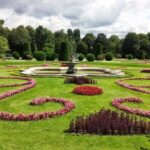
- Decoding three levels of garden design at Belvedere
- Schwarzenbergplatz to the baroque stage: street Vienna between styles
- Karlsplatz’s Otto Wagner metro station: Art Nouveau in your line of sight
- Wiener Musikverein: why this hall matters even if you’re not going to a concert
- Secession Building: an Art Nouveau manifesto you can stand in front of
- The smart lunch stop idea: Naschmarkt for a 1915-era break
- Price and tickets: what you’re really paying for
- Timing and logistics that affect your comfort
- Who this walking-and-art mix fits best
- Should you book this Vienna Klimt & Art Walk?
- FAQ
- How long is the private Klimt and Vienna Art Walk?
- How many people are in a group?
- Where does pickup take place?
- What’s included in the price?
- Are museum admissions included?
- What time does the tour start?
- Is the tour offered in English?
- Is public transportation included?
- Is the tour suitable for people with limited mobility?
Quick reasons this art walk is worth your time
- Skip-the-line help at Belvedere so you can spend more time looking and less time waiting
- Belvedere gardens decoded, including visual tricks and how the palace garden is designed to be read
- Art Nouveau outside the museum, with stops like the Otto Wagner Karlsplatz metro station
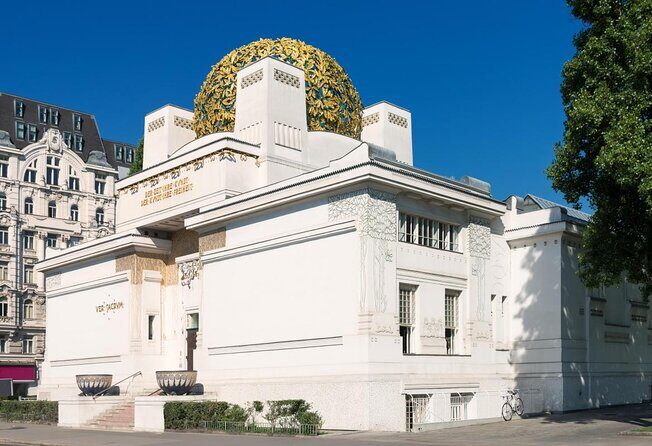
- The Secession Building as an artistic manifesto, not just a pretty façade
- Klimt’s Beethoven Frieze context, including how it was painted and what it’s meant to culminate in
- A built-in “food pause” idea at the Naschmarkt for a practical snack or lunch break
First stop: Belvedere Museum and gardens that guide your eye
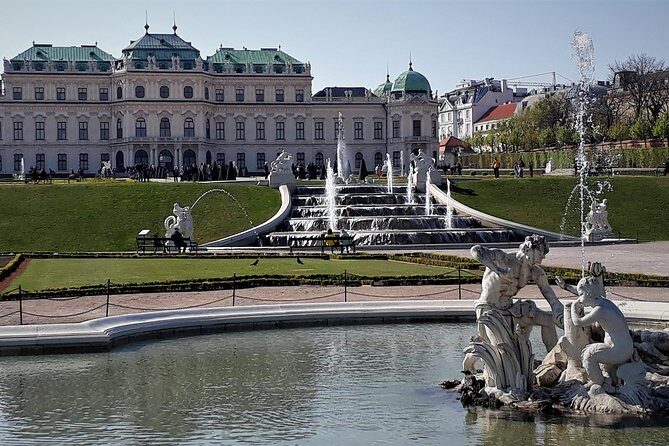
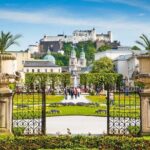
Start with the Belvedere Museum grounds, where the experience begins before you even reach the main buildings. Those wrought-iron gates do exactly what good design should: they slow you down and set expectations. Belvedere is famous for a reason, but the more interesting part for me is how the gardens and palace work like a visual lesson plan.
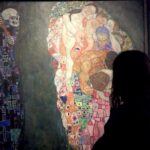
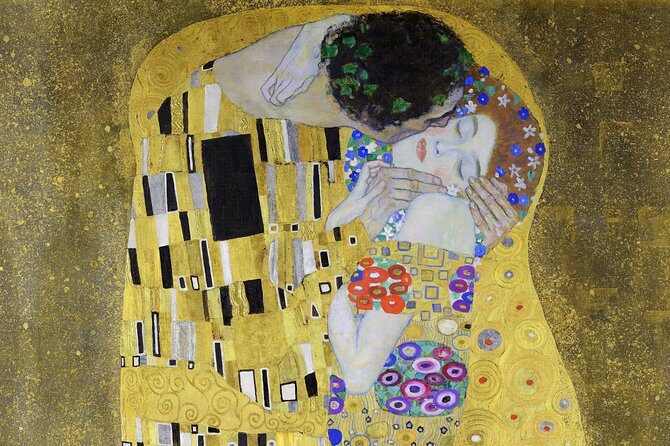
You’ll have skip-the-line support to reach the garden palace and connect what you’re about to see with how Vienna liked to stage power and taste. The tour is aimed at getting you to Klimt’s Kiss (embedded in the Austrian Gallery) while crowds are still building. That matters because Klimt moments go fast when lines and viewing bottlenecks form.
The pacing here is built for attention. You’re not just “in and out.” You get time to notice how the garden spaces change as you move, which makes Klimt’s Kiss feel less like a single photo you collect and more like a piece of a larger Vienna conversation.
Practical note: museum time plus palace grounds can feel longer than you expect, so plan for a steady walking tempo from the start. Comfortable shoes are not optional.
You can also read our reviews of more walking tours in Vienna
Decoding three levels of garden design at Belvedere
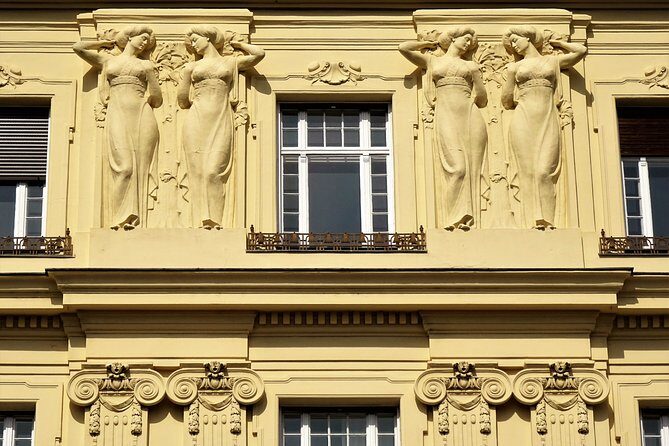
A big part of what makes this walk satisfying is that Belvedere isn’t treated like a backdrop. The gardens get explained in a way that helps you understand why the layout works.
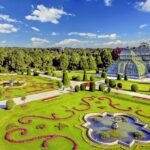
As you move down, you’re encouraged to “read” the property. You’ll get help interpreting the three-leveled garden structure and how visual tricks play into your perception—basically, how the place controls your viewpoint. This is the kind of detail that turns a pretty palace setting into something you actually remember.
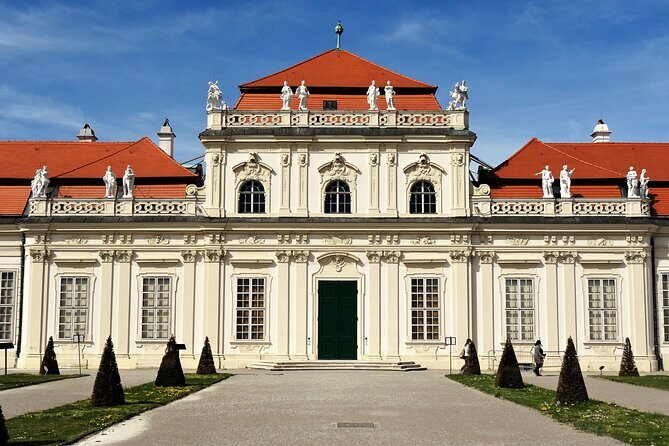
Then you go into the Lower Belvedere, where the tour helps you notice how the garden-palace world connects to court culture. The “honor court” and the garden rooms help explain how Prince Eugene brought Versailles-like ideas to Vienna—on a smaller but still telling scale. That comparison matters, because it gives you a yardstick: Vienna wasn’t copying blindly. It was adapting.
If you like architecture and design that you can experience with your feet (not just study from photos), you’ll enjoy this segment. It gives you a mental map before you enter the art spaces.
Schwarzenbergplatz to the baroque stage: street Vienna between styles
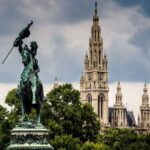
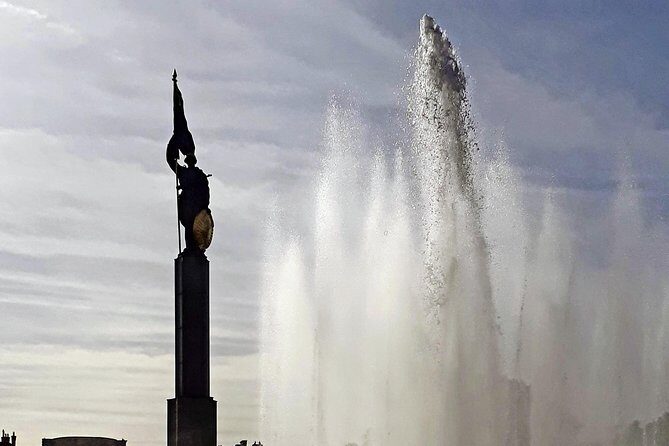
After Belvedere, the walk shifts into the city, and that’s where the tour earns its keep. The route includes a stop around Schwarzenbergplatz, where you’ll see the Soviet Memorial and a ring of buildings tied to Vienna’s late 1800s boom period. It’s a reminder that Vienna’s art story doesn’t float above real history—it sits in the middle of it.
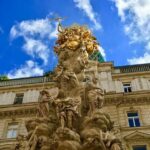
Then you move toward one of Vienna’s big baroque statements. The church stop is about theatrical distance: built to impress from afar, it sets the stage for Austria’s glorious 1700s epoch—baroque at its best. Even if you don’t consider yourself a church person, this pause works because it helps you understand what “Baroque” means in practice: drama, scale, and designed impact.
Two small but useful benefits here:
- You get style-to-style contrast without long travel breaks.
- You get Vienna’s “how the era looks” part, not just the “what the era produced” part.
Karlsplatz’s Otto Wagner metro station: Art Nouveau in your line of sight
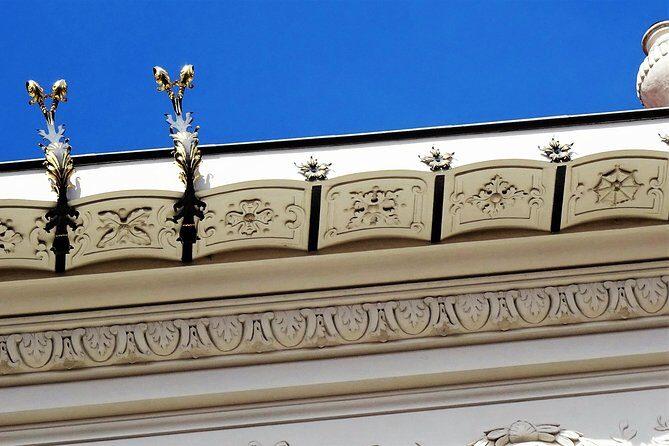
One stop I think you’ll appreciate is at Karlsplatz, where the tour highlights the Otto Wagner metro-station. This is the kind of detail many visitors miss because it’s functional, not museum-labeled.
The guide framing makes it easier to see Art Nouveau as a mindset rather than a costume. Around 1900, Vienna leaned into new materials, new forms, and a clean break from older ornament rules. Seeing that in the urban setting helps you connect the dots between the decorative world of Klimt and the built environment you’ll walk past every day.
This is also a good moment to slow down and look around. The tour doesn’t only point at one object; it shows you how the look of an era shows up in transit and city design.
If you’re short on time in Vienna, these street-level stops are the difference between seeing art and understanding a city.
Wiener Musikverein: why this hall matters even if you’re not going to a concert
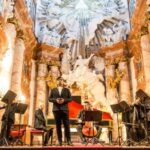
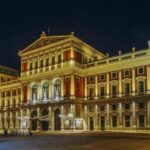
Next comes a cultural anchor: the Wiener Musikverein, home of the Vienna Philharmonic orchestra. The focus here is on the Großer Saal, often described as having highly regarded acoustics and being considered among the finest concert halls in the world.
You might be thinking, cool, but I’m not here for a performance. That’s fine. The point of the stop is to show how Vienna’s artistic ambitions were not limited to painting and architecture. Music mattered, and the city built spaces to make it work.
In practical terms, this is a great timing stop too. You can regroup for a few minutes, stretch your legs, and refuel your eyes before moving into the Secession Building segment.
And if you ever do catch a concert here later, you’ll already know why people talk about this hall with that extra seriousness.
You can also read our reviews of more private tours in Vienna


Secession Building: an Art Nouveau manifesto you can stand in front of
The second major highlight is the Secession Building (Secessionsgebaude), where Art Nouveau shows up like a declaration.
This building is explained as an architectural manifesto—built by a group of rebel artists who broke away from a long-established fine arts institution. That background helps you read the façade and interior without needing to be an art historian. You’re looking at a place made to say, we’re done with the old rules.
From there, Klimt enters the story again, but in a different way. Klimt painted the Beethoven Frieze for an exhibition celebrating the composer. Importantly, it was made for that show, painted directly on the walls with light materials, and it climaxes in the idea of a kiss to the world.
That technical bit—light materials, directly on the walls—makes the work feel more intentional and time-bound. It’s not only a painting. It’s part of a display moment, tied to a specific purpose and space.
You get a shorter visit time here, so treat it like a focused viewing stop. If you love details, give yourself a little extra time inside rather than rushing back out for photos.
Admission note: skip-the-line support is included, but entry is not included for the Secession, so plan to buy that ticket separately.
The smart lunch stop idea: Naschmarkt for a 1915-era break
Between big monuments, the tour makes room for something practical: the Naschmarkt area. The stop is placed at the market’s current transitional stage dating to 1915, and it’s described as a mix of traditional market life and international food.
For your day, this is valuable because it gives you options without forcing a sit-down restaurant plan. You can grab a quick snack, do an al fresco-style lunch, or just use it as a reset before the final museum/architecture emphasis wraps up.
If the weather turns, a market can be a lifesaver. You can stay flexible: walk a bit, stop for something warm, then get back into the art rhythm.
Price and tickets: what you’re really paying for
At $372.47 per group (up to 8), this tour isn’t priced like a bargain, but it’s not aimed at solo budget travelers either. It’s built for value in the things that eat time in Vienna: access, pacing, and expert guidance.
Here’s the clearest way to think about it:
- Included: live guiding by a licensed Austria Guide, pickup from hotels/vacation rentals and key stations/locations, and skip-the-line help.
- Not included: admissions for Upper Belvedere and the Secession.
So if you’re traveling as a group, the private structure can feel more reasonable fast: the guide time and skip-the-line value get shared. If you’re a solo traveler, you’ll likely feel the ticket add-ons more strongly, but the day can still be worth it because the tour ties together Baroque and Secession in one coherent arc.
My advice: if you’re budget-conscious, price it like a “guided experience package,” not like free sightseeing. Then compare your alternative: buying tickets separately, navigating on your own, and losing time while lines form.
Timing and logistics that affect your comfort
The tour runs about 4 hours and offers two start times: 09:30 and 14:00. That flexibility is more than just scheduling convenience. Morning and afternoon light changes how buildings and gardens “read,” especially at Belvedere.
Pickup is also part of the value. You can meet your guide at hotels and vacation rentals in town, the Reichsbruecke pier, or major train stations like Vienna Hbf and Vienna West. That helps if you don’t want to spend your morning figuring out where to start.
One more note: it’s near public transportation, and the tour expects moderate physical fitness. You should assume plenty of walking and museum time—this isn’t the kind of tour where you can comfortably shuffle along with frequent long stops.
Who this walking-and-art mix fits best
This is a strong match if you want:
- A half-day that connects styles from Baroque to Secession without feeling scattered
- Focused viewing at two big Klimt-related stops (Belvedere for Klimt’s Kiss and the Secession for the Beethoven Frieze context)
- Street-level context between monuments, including Art Nouveau touches like Otto Wagner’s Karlsplatz station
- A pace that’s meant to help you look carefully, not just collect selfies
You might want to skip this tour (or ask for adjustments) if you:
- Prefer mostly indoor time with minimal walking
- Get annoyed by art explanations that go beyond quick facts
- Want admissions fully bundled into one price (since Upper Belvedere and Secession tickets are separate)
Should you book this Vienna Klimt & Art Walk?
I’d book it if you’re the type of traveler who likes patterns: how one era leads to another, and how buildings and gardens communicate ideas. The biggest draw for me is the logic of the route—Belvedere sets up the Baroque world, Vienna’s streets show you the transition, and the Secession Building makes the Art Nouveau break feel real.
I would hesitate only if you dislike walking for about four hours or you strongly prefer all-in pricing with admissions included. If those are your two dealbreakers, you’ll likely feel the friction of separate tickets and steady movement.
If you can handle a moderate walking day and you want a tight, high-signal introduction to Vienna’s art styles, this private walk is a very practical way to spend a half-day.
FAQ
How long is the private Klimt and Vienna Art Walk?
It’s about 4 hours.
How many people are in a group?
It’s a private tour/activity with up to 8 people in your group.
Where does pickup take place?
Pickup is offered at hotels and vacation rentals in town, Reichsbruecke pier, or train stations including Vienna Hbf and Vienna West.
What’s included in the price?
The price includes live guiding by a licensed Austria Guide and skip-the-line access. Mobile tickets are offered.
Are museum admissions included?
No. Admissions for the Upper Belvedere and the Secession are not included.
What time does the tour start?
Tours start at 09:30 and 14:00, depending on the option you choose.
Is the tour offered in English?
Yes, it’s offered in English.
Is public transportation included?
Public transportation is not included.
Is the tour suitable for people with limited mobility?
The tour is listed for travelers with moderate physical fitness. It also includes walking and museum time. Pets are not permitted in certain areas visited, while service animals are allowed.