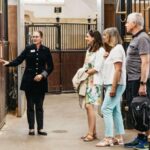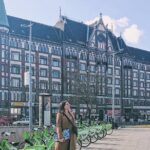
Vienna rewards slow attention, and this walk is built for it. You’ll get a private 3-hour route that strings together the big names (St. Stephen’s) and the off-to-the-side stories (mural legends, court-y architecture, memorials). I love that it mixes famous landmarks with quieter corners, and that the guide can explain what you’re looking at on the street level. One caution: expect a lot of walking for 3 hours, with some stairs, so it’s not ideal if mobility is limited.
I also like the way pickup is handled. You can meet at a hotel, or they’ll coordinate pickup near major access points like the Handelskai pier, which makes this easy to plug into a short Vienna stay. You’ll move at a real walking-tour pace, but the private format means the guide can respond to your questions as you go.
In This Review
- Key Points That Make This Walk Worth Your Time
- Why This Walk Works Better Than a Checklist Tour
- Price and Logistics: What You Actually Get for $344.80
- Stop 1: Stubentor Gate and Vienna’s City-Wall Mindset
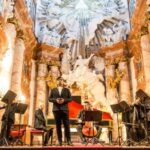
- Church of the Jesuits: Reading Faith Through Architecture
- Schönlaterngasse Side Stories: Basilisk Mural, Schnitzel Legend, and a Rooftop Moment
- Sala Terrena im Deutschordenshaus: Mozart’s Vienna in a Courtyard-Style Space
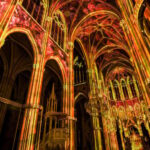
- St. Stephen’s Cathedral: Outside Details First, Then a Real Chance to Look Inside
- Judenplatz and the Holocaust Memorial: A Square That Carries Time
- Palais Daun-Kinsky: Power, Patronage, and a Birth Announcement in Stone
- Café Central, Ferstel Passage, and Rathausplatz: Vienna’s Mindset in Public Space
- Who This Tour Suits Best (And Who Should Think Twice)
- Tips to Make Your 3 Hours Go Smoothly
- Should You Book This Private Vienna Walk?
- FAQ
- How long is the Private Hidden Vienna Walk?
- What is the price for this tour?
- Is this a private tour or a shared group?
- Does the tour offer pickup?
- What time of day does it run?
- Is the tour in English?
- Do I need to pay admission tickets at the stops?
- Is a mobile ticket used?
- Is the cancellation policy flexible?
- Are pets allowed, and what about service animals?
Key Points That Make This Walk Worth Your Time
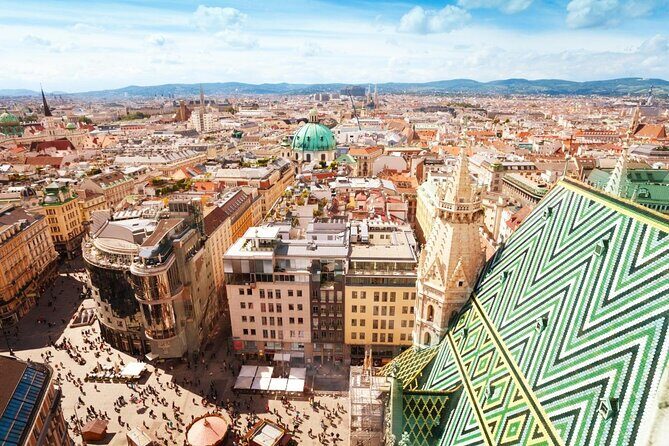
- Secret rooftop views that add a wow factor without turning it into a long detour
- St. Stephen’s Cathedral plus the smaller architectural clues outside, so the building makes more sense
- Judenplatz and the Holocaust Memorial, placed in an atmospheric square with centuries of context
- Mozart and Beethoven tie-ins woven into places you’ll pass anyway
- Café stops in the wider city story, including Freud-linked Landtmann and Central-area lore
- Private guide time with flexible morning or afternoon departures
Why This Walk Works Better Than a Checklist Tour
This is the kind of Vienna walk where the route feels like it has a brain, not just feet moving from one photo spot to the next. The stops are famous enough to orient you, but they’re chosen for what they teach when you look closely: religious symbolism in building details, how empires leave fingerprints, and how everyday street life sits right next to major history.
I like that the “quiet corners” angle isn’t vague. You’re not just going down random alleys. You’re going to specific places with a story: a gate that shows the city’s original defense thinking, a Jesuit church where the design language matters, and small architectural landmarks that make the center feel layered rather than flat.
The best part is that your guide can steer the emphasis based on what you care about that day. Some guides are funny, some go extra deep on architecture, but the common thread is that you walk away understanding how Vienna became Vienna.
You can also read our reviews of more walking tours in Vienna

Price and Logistics: What You Actually Get for $344.80
This costs $344.80 per group, for a private tour up to 10 people, lasting about 3 hours. That pricing is great value when you’re traveling as a small group of friends or a family unit, because your cost per person drops quickly when you fill the group.
To sanity-check the math:
- If you book as 2 people, you’re essentially paying about $172 per person for a private, 3-hour walk.
- If you’re 6 people, it’s more like $57 per person.
- If you can fill it closer to 10 people, it can land near $35 per person.
Pickup is offered, which matters in Vienna because the center is compact but not always simple to navigate from every ship or hotel area. Meeting points can be arranged, and they specifically mention coordination near Handelskai for the A’Rosa dock. You’ll also get a mobile ticket.
One practical drawback: this is still a walking tour. The tour description calls for moderate physical fitness, and one guide note in recent feedback referenced an average of around 8,000 steps for the 3-hour format. If your plan involves long stairs, tight timing, or limited stamina, you’ll want to choose a pace that fits you from the start.
Stop 1: Stubentor Gate and Vienna’s City-Wall Mindset
The walk starts at the eastern gate area, Stubentor. This is a clever opening because it flips your thinking. Before you get seduced by domes and façades, you see how Vienna was once defined by walls and controlled movement.
What I love here is that this stop gives you a reference point for everything that comes after. When you look at later buildings, you start noticing the practical choices too: where power concentrated, what needed protection, and how the city’s shape influenced later growth.
Spend the short time wisely. Look for the scale and the idea of fortification, not just the gate itself. Even if you only get a few minutes here, it sets the mood: Vienna wasn’t always a postcard.
Church of the Jesuits: Reading Faith Through Architecture
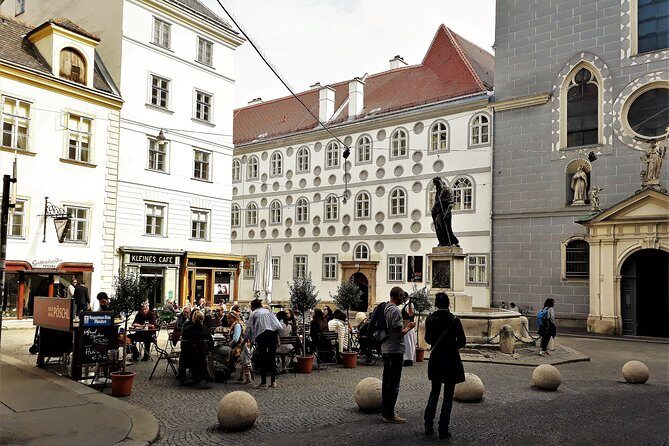
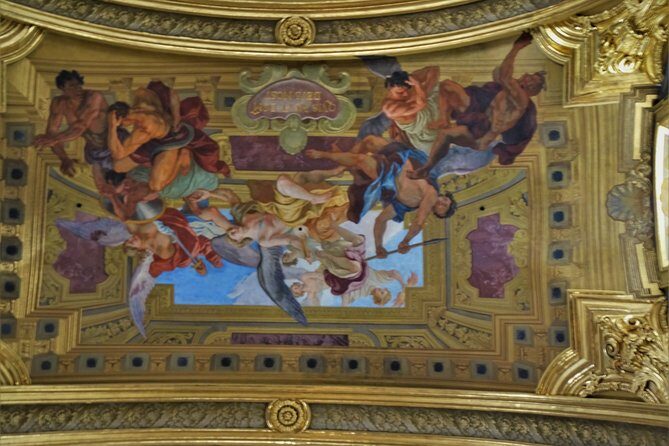
Next is the Church of the Jesuits. The guide’s job at this stop is not to throw facts at you. It’s to help you read the church’s spiritual concept through architecture and decoration—basically, how design choices try to steer your eye and your emotions.
This is one of those places where a guide can make a huge difference in how quickly you “get it.” Outside, you might see a grand church. Inside, you might see ornament. With the right narration, you understand why the ornament is there and how it supports the religious message.
A practical note: the time here is short. So if you’re the type who likes to sit and absorb, plan to ask your guide for a focused route inside or a place to pause. Private tours work best when you use that control.
Schönlaterngasse Side Stories: Basilisk Mural, Schnitzel Legend, and a Rooftop Moment

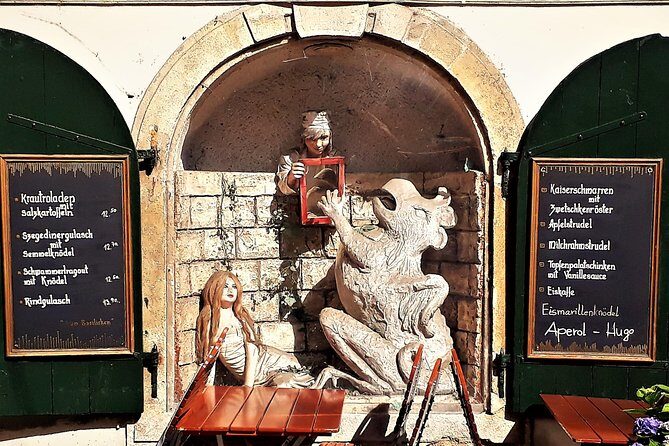
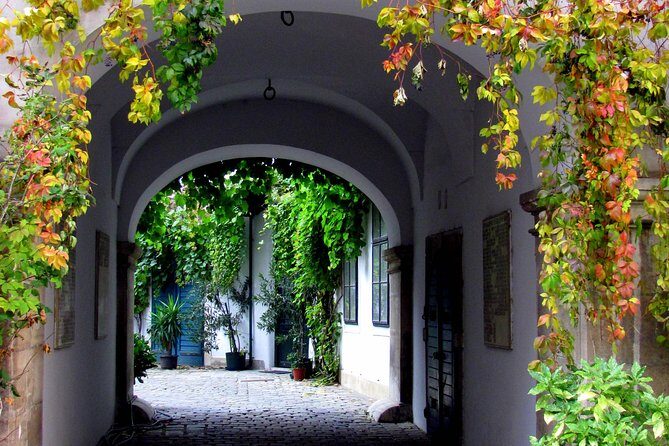
Schönlaterngasse shows up as one of the walk’s signature “stories behind quiet corners.” You’ll see a mural legend of the Vienna basilisk, a local myth with a long shadow—one of those images that turns a street into a stage.
Then you’ll hit another piece of everyday Vienna identity: a place tied to schnitzel lore, described as the home since 1905 of one of the city’s most famous schnitzels. This is a fun pivot because it grounds the walk back into food culture, not just monumental history. Vienna does both—grand and ordinary—sometimes on the same block.
The rooftop stop is the reward here. You’ll head up to a secret rooftop for great views, and it changes the way you see the whole center. Rooftops are where the city’s layers become obvious: older streets, newer rooflines, and the way spires and roofs compete for attention.
If you’re doing this in a warmer season, bring water. Rooftops can feel more exposed than you expect.
You can also read our reviews of more private tours in Vienna



Sala Terrena im Deutschordenshaus: Mozart’s Vienna in a Courtyard-Style Space
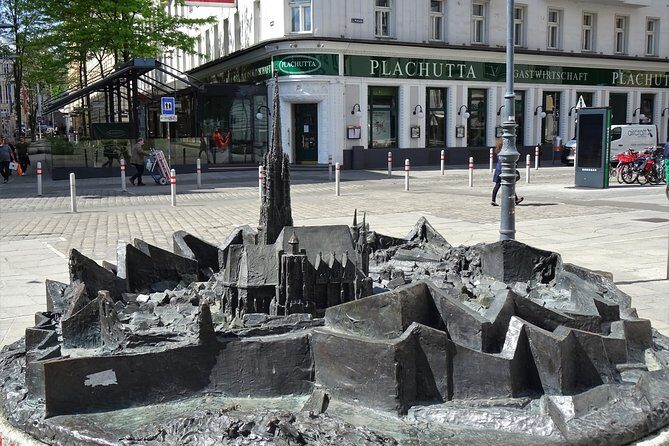
One of the tour highlights is the link to Mozart through the Teutonic Order setting, specifically Sala Terrena im Deutschordenshaus. You’ll learn about the “sala terrena” played while Mozart lived in the house of the Teutonic Order in 1781.
This stop works well because it connects music to place. Instead of treating Mozart as a name on a museum wall, you get a built-world sense of how Vienna’s spaces shaped performance and daily life.
Time is limited here, so the best strategy is to listen for what the guide says matters, then look for the cues in the setting. Think about acoustics and social space: where music could carry, where gatherings might happen, and why an order-connected building would matter culturally.
St. Stephen’s Cathedral: Outside Details First, Then a Real Chance to Look Inside
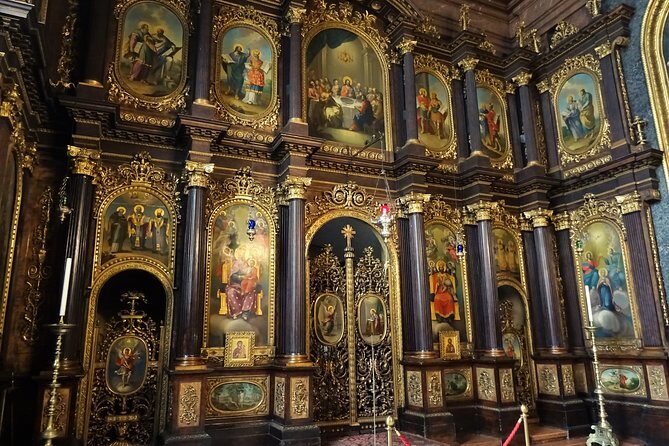
St. Stephen’s Cathedral is the anchor stop where Vienna’s scale hits you. The format here is smart: you’ll first understand outside details, then find time for a look inside.
This order matters. If you go inside immediately, you might miss how the exterior design sets up what you’ll notice later. If you only see the exterior, you miss the emotional impact of standing in a major church.
You’ll likely have a short window for inside time, so don’t plan on a full cathedral marathon. Go in with a short list: one element outside you want to connect to an interior detail, and one place you want to sit or stand quietly for a minute if that’s available.
This is also a good spot to slow down just enough to reset your energy before the walk continues.
Judenplatz and the Holocaust Memorial: A Square That Carries Time
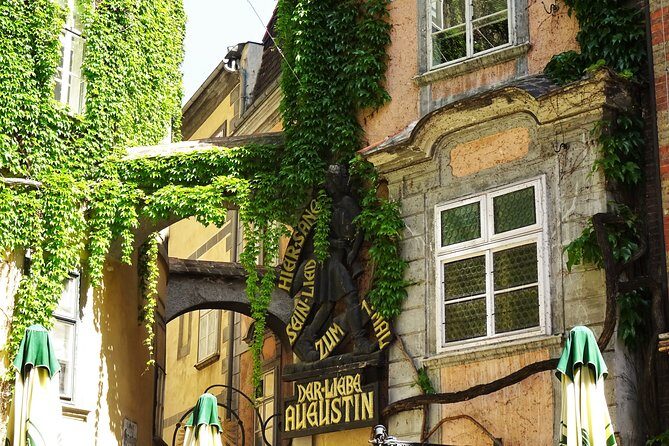
Judenplatz and the Holocaust Memorial are placed together in an area described as one of the city’s most atmospheric neighborhood squares. The point isn’t just to see a monument. It’s to understand how the square tells a story of around seven hundred years.
This is the “heavy silence” segment of the walk. The more you let the guide frame the context, the more the square feels like a living record rather than a stop on a route.
If you’re sensitive to memorial content, you’ll want to match the pace. This kind of stop isn’t about rushing to the next photo. It’s about taking in what the place communicates and letting it land.
Palais Daun-Kinsky: Power, Patronage, and a Birth Announcement in Stone
Palais Daun-Kinsky is another stop that makes Vienna feel less like decoration and more like politics. You’ll hear that the palace was commissioned by Count Wirich Philipp von Daun, with construction starting in 1713 under architect Johann Lucas von Hildebrandt.
Then comes a very human link: Prince Józef Poniatowski, a Polish general and Marshal of France, was born in the palace on 7 May 1763.
I like this stop because it reminds you that great buildings often start with specific decisions, specific people, and specific ambitions. Even if you don’t know the details, you can sense the intent in how the palace presents itself.
Time is brief, so focus on how the guide helps you connect the architecture to patronage. That connection is what turns stone into meaning.
Café Central, Ferstel Passage, and Rathausplatz: Vienna’s Mindset in Public Space
After the palace, the walk pulls you toward the city’s public-life layers: café culture, passageways, and the “who didn’t meet whom” kind of urban lore.
You’ll see Café Central and the Ferstel Passage, plus you’ll hear a story framed around famous names that did not become friends. It’s the kind of trivia Vienna does well—history reframed as something people talk about in everyday space.
Then you’ll get Rathausplatz, where the guide points out Café Landtmann, described as Freud’s favorite. Freud in a café is a perfect example of Vienna’s blend: philosophy and psychology living in the same streets as everyday consumption.
Even if you don’t stop for coffee, you’ll come away with a better sense of how Vienna’s intellectual life played out in public spaces.
Who This Tour Suits Best (And Who Should Think Twice)
This walk is a strong fit if you want:
- a private guide who can answer questions and adjust emphasis
- a route that balances major landmarks with smaller side-street stories
- architecture, city symbolism, and music-in-place connections
It’s also a great choice if you’ve already seen the obvious highlights and want the center to feel more personal. A repeat visitor can get a lot from this because the “quiet corner” approach tends to use the same famous area while changing what you notice.
Think twice if:
- you have limited mobility or get worn out quickly by walking and stairs (the tour is described as requiring moderate physical fitness, and walking volume has been noted around 8,000 steps for the 3-hour format)
- you’re expecting a slow, sit-and-stretch pace the entire time
Private tours can adapt, but physics still applies: the route is built to cover a lot in 3 hours.
Tips to Make Your 3 Hours Go Smoothly
- Wear comfortable shoes. This is not a minimal-walk stroll.
- Decide in advance what matters most: architecture, memorial context, music history, or café culture.
- Use the private format. If there’s a church you want extra time in, ask early so the schedule can shift.
- Bring water if you’re doing this in warmer weather, especially before any rooftop time.
Should You Book This Private Vienna Walk?
If you like Vienna when it feels human and specific, I’d book this. It’s priced for a private experience, and it gives you a strong mix of landmark grounding plus quiet-corner storytelling: Stubentor’s defense thinking, the Jesuit church’s design language, basilisk and schnitzel lore, Mozart-linked spaces, and the moral gravity of Judenplatz and the Holocaust Memorial.
I also like that the guides handling this type of walk often focus on explanations that help you see what’s right in front of you, and recent feedback includes guides such as Walter, Hannas, Sabine, Brigitte, and Danielle. That variety can be a plus because you can end up with a guide who matches your style of learning.
Just be honest with yourself about walking stamina and stairs. If you can handle a moderate walking pace for 3 hours, this is a smart, story-driven way to understand Vienna beyond postcard mode.
FAQ
How long is the Private Hidden Vienna Walk?
It runs for about 3 hours.
What is the price for this tour?
The price is $344.80 per group, up to 10 people.
Is this a private tour or a shared group?
It’s private. Only your group participates.
Does the tour offer pickup?
Yes. Pickup is offered, and you can also request other meeting points within Vienna. They specifically mention meeting at the A’Rosa pier area in Handelskai for that ship.
What time of day does it run?
It’s offered with morning or afternoon departures.
Is the tour in English?
Yes, it’s offered in English.
Do I need to pay admission tickets at the stops?
The listed stops show admission ticket free entries for the points described in the route.
Is a mobile ticket used?
Yes, a mobile ticket is included.
Is the cancellation policy flexible?
Yes. You can cancel up to 24 hours in advance for a full refund.
Are pets allowed, and what about service animals?
Service animals are allowed. Pets are not permitted in certain areas visited.