REVIEW · VIENNA
Private Vienna Art Nouveau Walking Tour
Book on Viator →Operated by Insight Cities · Bookable on Viator
Art Nouveau Vienna goes underground and inside. This private walking tour makes Vienna’s Jugendstil feel personal, not like a museum label. I love the mix of metro-station architecture and big-name design landmarks like the Secession Hall and Otto Wagner buildings. You’ll also like how your guide ties the details together, from Klimt’s Beethoven Frieze to why the Secession artists broke away. The main drawback to plan for: entrance fees cost extra, and the Otto Wagner Pavillon visit depends on the season.
The guides can really make a difference. Barbara, Wolfgang, and Annelie have been praised for knowing the Art Nouveau movement and for answering lots of questions in a clear, useful way. You get a professional guide for a group of up to 10, and the mobile ticket helps on the day.
You’ll start at Operngasse 7 and finish at two metro stations, so you’re not stuck at the end of a long walk with no easy way home.
In This Review
- Key things that make this tour worth your time
- Art Nouveau Vienna on the metro line and on the street
- Secession Building: Joseph Maria Olbrich and Klimt’s Beethoven Frieze
- City Park as a reset, then onward to Karlsplatz Jugendstil
- Karlsplatz Stadtbahn and the Otto Wagner Pavillon (season check)
- Postsparkasse and Otto Wagner’s Art Nouveau authority
- Naschmarkt and two Wagner apartment houses: Majolikahaus and Zacherlhaus
- The final metro stations, including the Emperor’s small stop
- Value of $490 for a private group (up to 10)
- Practical tips for walking, tickets, and timing
- Should you book this private Art Nouveau tour?
- FAQ
- How long is the Private Vienna Art Nouveau Walking Tour?
- What is the meeting point for the tour?
- Where does the tour end?
- Is this tour private?
- How much does it cost?
- Is hotel pickup included?
- Are entrance fees included?
- Does the tour include the Otto Wagner Pavillon?
- What’s the cancellation policy?
Key things that make this tour worth your time
- Secession Building stop with Klimt’s Beethoven Frieze: you’ll get context before you see it.
- Otto Wagner’s station and building work: Vienna’s modernity shown in everyday structures.
- A private format for up to 10: better pace and real Q&A instead of a rushed group.
- Seasonal add-on at the Otto Wagner Pavillon: check dates so expectations match reality.
- Finish at metro stations (including an Emperor-related stop): the tour ends where you can keep exploring.
Art Nouveau Vienna on the metro line and on the street
Vienna has a talent for making design feel practical. On this tour, you’ll see Art Nouveau choices built into places you’d normally treat as transit or background—stations, civic buildings, and neighborhood streets.
This is the kind of walk where the story changes how you look at the city. Instead of just spotting decorative details, you start asking why those shapes, materials, and lines show up there. And because it’s private, you can steer the conversation toward what you care about most—Klimt, Otto Wagner, the Secession movement, or what this design era was pushing against.
You’re also walking for about 3 hours, so it works best if you’re comfortable on your feet and want your sightseeing to have a focused theme. If you only want a quick photo loop, you may find the pace a bit concentrated.
You can also read our reviews of more walking tours in Vienna

Secession Building: Joseph Maria Olbrich and Klimt’s Beethoven Frieze
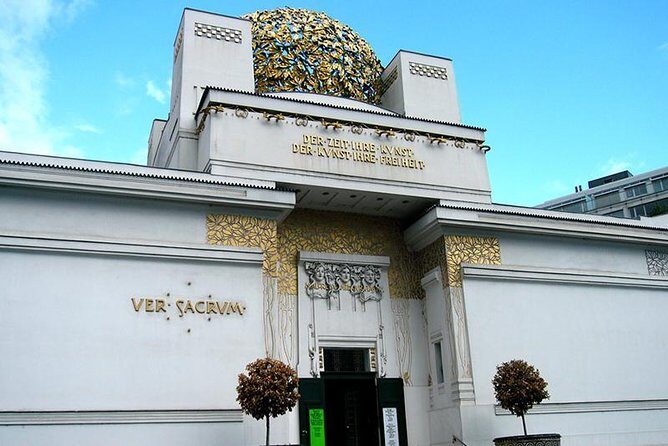
Your first major stop is the Secession Building (Secessionsgebaude), completed in 1898 by Joseph Maria Olbrich. This wasn’t meant to be a quiet, formal hall. It was built as a manifesto for the Vienna Secession, a group of artists who broke away from the long-established art institution.
Inside is the famous Beethoven Frieze by Gustav Klimt. Even if you’ve seen images before, seeing it with the right explanation helps you notice what Klimt is doing—how the work fits into the Secession’s mindset and why this building mattered beyond its looks. You’ll spend around 30 minutes here, so plan to do more than a glance.
Important cost note: admission isn’t included for this stop. If you tour from Tuesday to Sunday, the Secession House entry is €9.50 for adults and €6 for students and seniors. Your guide will help you pay.
Practical tip: wear layers. Interiors like this can feel different from the street temperature, and you’ll want to stay comfortable while you look closely.
City Park as a reset, then onward to Karlsplatz Jugendstil
After the big design statement of the Secession Building, you get a breather at Stadtpark (City Park). It’s free, and you’re only scheduled for about 15 minutes, so think of it as a palate cleanser before more architecture.
This short pause helps your eyes too. After looking at detailed façades and interior art, a simple stretch of greenery and open space lets your brain reset. It also gives you time to catch your bearings so the next section of the walk feels smoother.
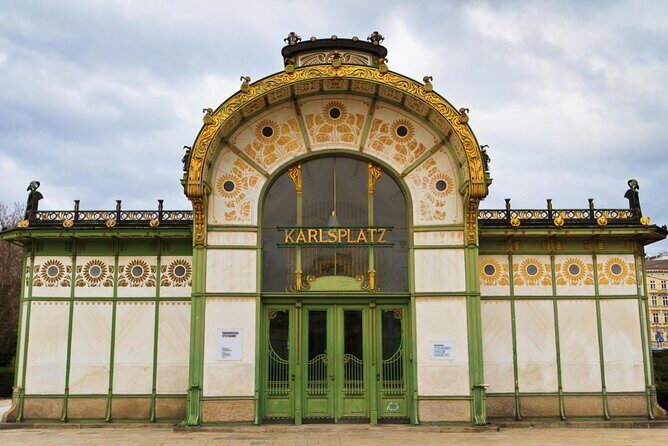
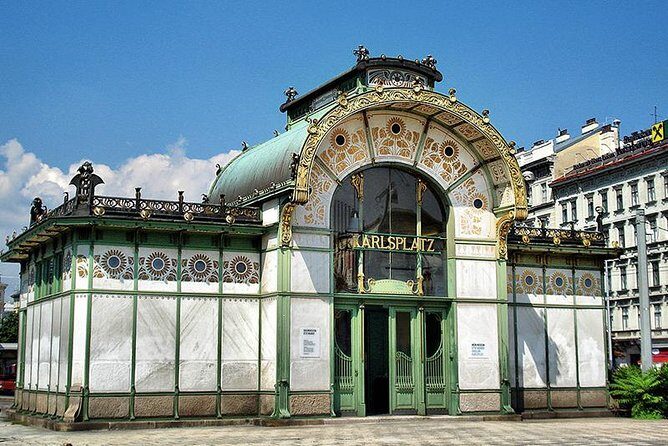
From there, you head to Karlsplatz, specifically the Karlsplatz Stadtbahn Station area. The above-ground station buildings here are a well-known example of Jugendstil, designed by Otto Wagner (and with Joseph Maria Olbrich involved as well). This is one of those places where Art Nouveau doesn’t feel like a one-off landmark—it looks like a serious design program applied to everyday infrastructure.
The scheduled time is about 20 minutes, and that’s usually enough to slow down, spot key details, and still keep the tour’s flow.
Karlsplatz Stadtbahn and the Otto Wagner Pavillon (season check)
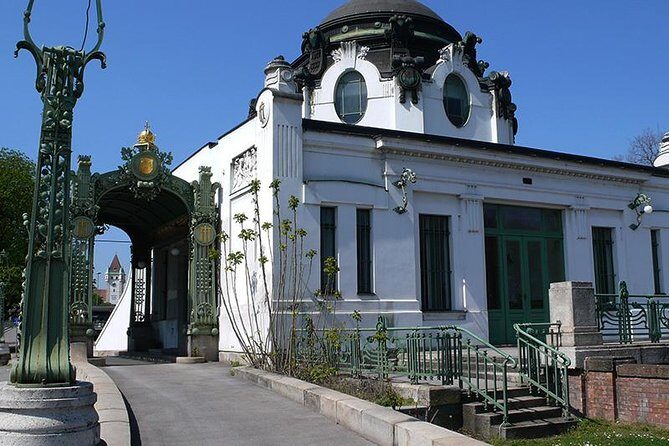
Right near Karlsplatz, you’ll also visit the Otto Wagner Pavillon. This is an exhibit focused on the life and work of Otto Wagner, and it sits inside an Art Nouveau station building designed by him in 1898.
Here’s the timing reality you should know: the tour only incorporates this Pavillon visit from April to October, when the museum is open. Admission fees apply: €5 for general admission and €4 for senior citizens, students, holders of a Vienna Card, and persons with disabilities.
Admission still isn’t included as part of the tour price, so bring that extra budget line into your planning. If you’re traveling outside April–October, you may still see the station architecture around Karlsplatz, but the Pavillon stop may not happen.
This is one of the most rewarding parts of the day because it connects Otto Wagner to what he actually built, not just what people say about him. You start to see how “modern” Vienna was trying to be. And since it’s only about 15 minutes scheduled, it doesn’t eat your whole afternoon.
Postsparkasse and Otto Wagner’s Art Nouveau authority
Next up is Postsparkasse, the Austrian Postal Savings Bank building. Otto Wagner designed it, and it’s regarded as an important work tied to Vienna Secession / Art Nouveau.
This stop is free, and it’s scheduled for about 25 minutes. That time matters. Facades like this don’t reward a 30-second walk-by. You want a little breathing room to look at the façade as a system—how the ornament relates to structure and how the building expresses civic importance through design.
If you like architecture that feels both practical and artistic, this is a great moment in the tour. You can walk away understanding why Wagner’s influence shows up not only in grand venues, but in the buildings that served everyday city life.
Photography tip: try different angles. Station blocks and civic buildings can look flat from one side, then more dimensional when you step back or look up from the sidewalk.
You can also read our reviews of more private tours in Vienna



Naschmarkt and two Wagner apartment houses: Majolikahaus and Zacherlhaus
You’ll then reach Naschmarkt, Vienna’s best-known culinary market. It’s free, and the scheduled stop is short—about 10 minutes.
This is the part of the tour where you get a feel for the neighborhood energy. You can see the market’s mix of stalls and restaurants without being forced to spend money inside the tour itself. Food and drinks aren’t included unless specified, so if you want snacks, plan to buy them on your own or save it for before or after.
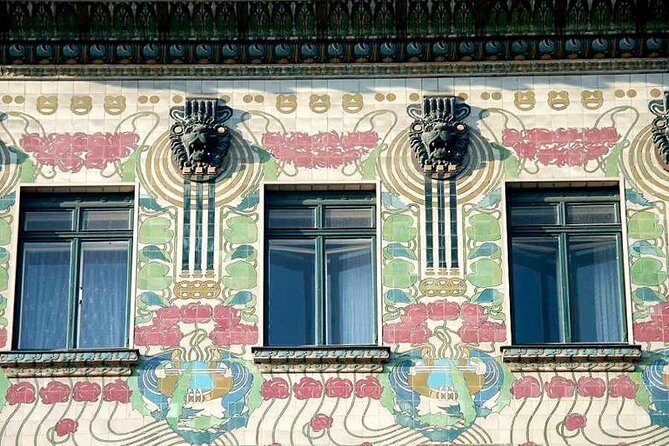
Just beyond the market area, you’ll also see two apartment houses designed by Otto Wagner. The names that often come up around this area include the Majolikahaus and the Zacherlhaus. Even though they’re residential, these buildings show off the same Art Nouveau problem-solving: how do you make a city feel modern, beautiful, and still livable?
Why this matters for your trip: apartment-house design tells you what “style” really meant in that era. It wasn’t just for palaces and exhibition halls. It reached ordinary streets and people’s daily routines.
If you’re sensitive to crowds or weather, keep in mind that markets can feel busy. Ten minutes gives you enough time to register the look and then move on before it becomes a traffic jam.
The final metro stations, including the Emperor’s small stop
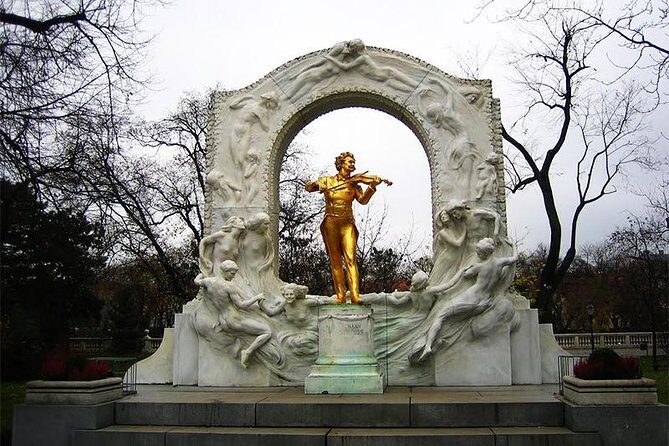
To close the tour, you finish at a pair of metro stations. One includes a tiny stop built just for the Emperor—an unusual detail that makes the ending memorable. Even if you don’t know Vienna’s transit history deeply, you’ll leave understanding how power and prestige shaped the city’s infrastructure.
Ending at metro stations is a smart design choice for you as a visitor. Vienna is easiest when you can hop back into transit quickly. You won’t feel stranded at the end, and you can keep exploring whatever you’re most curious about next.
Think of the last segment as a shortcut into Vienna’s systems: you’ve spent the day looking at architecture, and now you get to see how that architecture lives in the places people actually use.
Value of $490 for a private group (up to 10)
The price is $490.00 per group, up to 10 people, for about 3 hours. That’s private-tour pricing, so your value depends on your group size and what you want from the guide.
Here’s the practical way to think about it:
- If you’re traveling as a couple or small group, you’re paying for a guide who can slow down at your pace and answer your exact questions.
- If you have a group up to 10, the per-person cost drops fast, and the private format still lets you stay together.
Also, entrance fees are not included. Secession House has specific costs on Tuesday to Sunday, and Otto Wagner Pavillon has seasonal rules and its own admission fees from April to October. That doesn’t make the tour bad—just be aware you’ll likely pay for at least one paid stop depending on your dates.
Pickup is offered, but hotel pickup and drop-off aren’t listed as included. If that matters to you, confirm the details when you book so you don’t assume it’s automatic.
The mobile ticket is a plus. It means less fumbling around with printed passes and fewer chances for day-of mix-ups.
Practical tips for walking, tickets, and timing
This tour is built around walking and design-focused stops, so small planning choices make a big difference.
Wear comfortable shoes. You’re looking at architecture close up, stepping in and out of station areas, and spending time indoors at the Secession Building. If your feet get tired, your attention goes first.
Plan for admission costs in advance. Secession House costs €9.50 for adults and €6 for students/seniors when open Tuesday to Sunday. Otto Wagner Pavillon costs €5 general and €4 for seniors/students/Vienna Card holders and persons with disabilities, and it’s tied to April–October museum opening.
Keep your questions ready. If you want to understand the Secession movement, ask how it related to the established institution it broke away from. If you care about Otto Wagner, ask how his work connects station architecture to his bigger modernist ideas.
If you’re traveling with kids or someone who just wants the highlights, this can still work, but you may want to set expectations. It’s not a quick-hit “see everything” route. It’s a focused Art Nouveau day, designed for people who want to learn while they walk.
Should you book this private Art Nouveau tour?
Book it if you want a guided, architecture-first day in Vienna that uses the city’s own transit and buildings as your classroom. The private format makes it easy to ask questions and adjust your pace, and the stops around the Secession Building, Otto Wagner sites, and the station architecture are a strong mix.
Consider skipping or adjusting expectations if you hate paying extra for entrances or you’re visiting outside April–October (when the Otto Wagner Pavillon museum visit is included). Also, if you only want light walking and lots of free time to wander, a design-focused 3-hour route may feel too structured.
If your group is made up of design fans, first-time visitors who want context, or anyone who likes seeing art and architecture in real city life, this is an excellent match.
FAQ
How long is the Private Vienna Art Nouveau Walking Tour?
It runs for about 3 hours.
What is the meeting point for the tour?
The tour starts at Operngasse 7, 1010 Wien, Austria.
Where does the tour end?
The tour ends in Vienna, Austria, at the pair of metro stations included in the final part of the route.
Is this tour private?
Yes. It’s a private tour/activity, and only your group participates.
How much does it cost?
It’s $490.00 per group (up to 10 people).
Is hotel pickup included?
Pickup is offered, but hotel pickup and drop-off are listed as not included.
Are entrance fees included?
No. Entrance fees for the Secession House and, seasonally, the Otto Wagner Pavillon are not included. The guide helps with payment for the Secession House, and the Otto Wagner Pavillon has admission fees as well.
Does the tour include the Otto Wagner Pavillon?
It incorporates a visit from April to October when the museum is open, with admission required.
What’s the cancellation policy?
You can cancel for a full refund up to 24 hours in advance of the experience’s start time, with cut-off times based on local time.