Vienna has a cruel side, written in stone. This offbeat walking tour follows lesser-known history through inner-city streets, and I love how each case feels like a breadcrumb trail. I also love the complimentary smartphone audio guide, which keeps you oriented as the stories get darker. The downside: some of the crimes are gruesome, so it’s better for teens and adults than sensitive kids.
The guide for this tour is Ben, and his style is part storyteller, part researcher. It’s a small group, capped at 20, so the walk doesn’t feel like cattle herding and you get room for real questions.
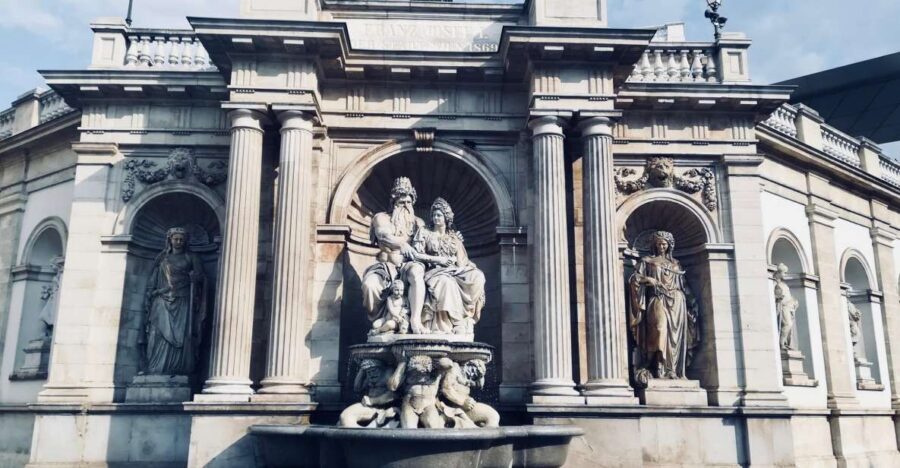
You’ll start near Helmut-Zilk-Platz by Albertinapl. 2-3 and finish in Rauhensteingasse, all while using a mobile ticket. The tour runs about 2 hours, is offered in English, and you’ll be on and off the main historic core where public transport is nearby.
In This Review
- Key highlights worth your attention
- Why this Vienna walk feels different from the usual city tour
- Price and what you actually get for $46.13
- Logistics in plain English: meeting point, walking time, and pace
- The story starts at Tegetthoffstraße: the Capuchin monastery dungeon and Father Innocentius
- Trattnerhof’s murder case: the Jaroszynski story and Theres Krones’ ruined career
- Palais Bathory at Augustinerstraße: legend, horror, and why the rumor mattered
- Graben and Kohlmarkt: Demel’s place in the Udo Proksch insurance fraud plot
- Ferstel Palace and the “Zu den Fünf Morden” house: medieval murder and an execution that dragged on
- Hotel Klomser opposite Ferstel: Colonel Redl and the spy affair that shook the monarchy
- Molker Bastei: the Anna Gaugisch murder and Raimund Lewisch’s dismemberment story
- Am Hof: the 1848 war minister Theodor Baillet de Latour and political violence in Vienna
- Hannaken-Brunnen: the fountain story of the Hannakenkönig surgeon and fake injuries
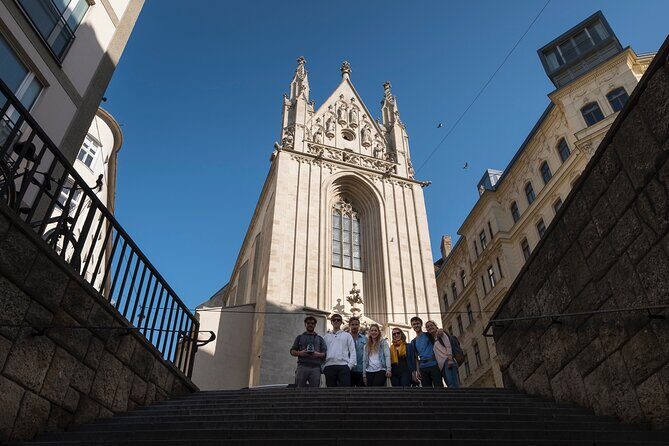
- Maria Am Gestade: the city wall section and Joseph II’s hard-to-ignore death penalty
- Hoher Markt and St. Stephen’s area: torture, jealousy, and the medieval “baptism of bakers”
- Steffl and Himmelpfortgasse: the executioner’s dungeon and the nun walled in for love
- Who should book this Vienna crime tour, and who should skip it
- Should you book? My practical take
- FAQ
- How long is the tour?
- What language is the tour offered in?
- Is there a smartphone audio guide included?
- Do I need a printed ticket?
- Are there admission fees at the stops?
- Where does the tour start?
- Where does the tour end?
- How large is the group?
- Is public transportation nearby?
- Is the tour dependent on weather?
- Is the tour suitable for most people?
Key highlights worth your attention
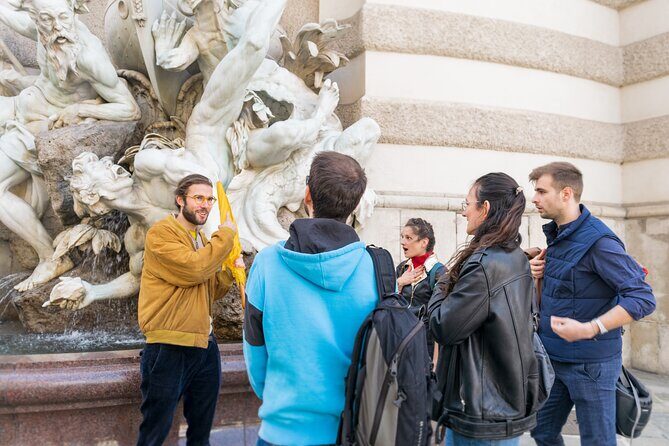
- Offbeat true-crime route across the city center, not the usual museum circuit
- Ben’s storytelling ties each case to its time period, so the history lands faster
- Free smartphone audio guide to help you follow the narrative while walking
- All listed stops are admission-free, so you’re not paying repeatedly at each site
- Small group size (up to 20) for a calmer pace and better atmosphere
Why this Vienna walk feels different from the usual city tour
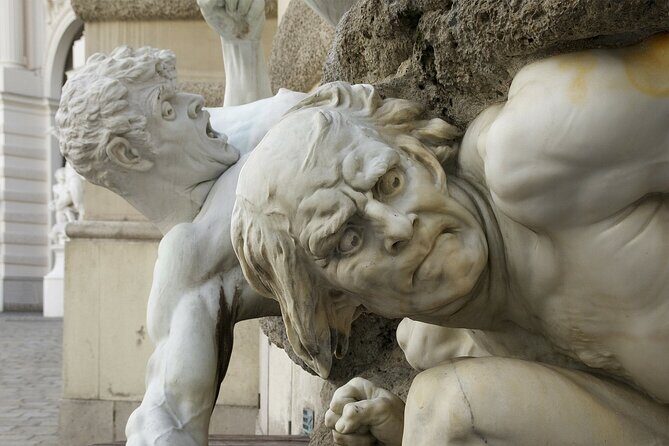
Most Vienna sightseeing is all music, marble, and smiling pastries. This tour keeps the same beautiful streets, but it uses them like a crime map. Instead of grand speeches about emperors, you get incidents that explain how power worked when people were desperate, jealous, greedy, or simply dangerous.
The value is in the mix. You’re not just hearing one era’s scandal. The route stretches across centuries, so you can see patterns in Vienna’s institutions, punishments, and rumors—then watch how the tone changes over time.
And yes, the stories can be heavy. You’re dealing with murder, torture, and alleged serial-killer myths. If you prefer your travel history clean and tidy, you may find this one too dark. If you like human behavior—messy, sometimes awful—this works really well.
You can also read our reviews of more city tours in Vienna

Price and what you actually get for $46.13
At about $46.13 per person for roughly 2 hours, you’re paying for three main things: a guided walk in English, Ben’s research-led storytelling, and a complimentary smartphone audio guide. The practical bonus is that the stops are listed as free entry points, so you’re not forced into extra ticket costs just to keep going.
Also, small-group format matters here. Up to 20 people means fewer distractions, and the pacing stays comfortable. You’re still walking, but the tour doesn’t drag, and the short site-to-site segments help the stories build momentum.
If you’re trying to decide whether this is worth it, ask yourself this: do you want Vienna’s history explained through human conflict, or through monuments and facts alone? This tour is very much the first option.
Logistics in plain English: meeting point, walking time, and pace
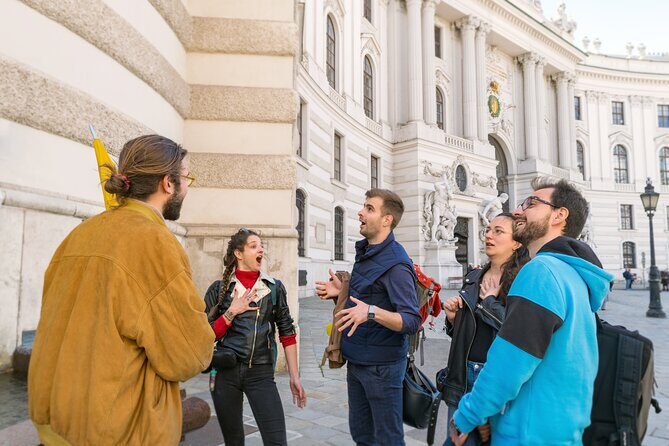
You meet in the area of Albertinapl. 2-3, at Helmut-Zilk-Platz, and the walk ends on Rauhensteingasse. The tour is offered in English and runs about 2 hours, with frequent short stops.
Because you’re in the inner city, you’ll be near public transportation, which makes it easier to plug into your day. You’ll also have a mobile ticket, so you don’t need to hunt down printed vouchers.
One reality check: you’ll spend plenty of time looking at buildings along streets. If you’re hoping for nonstop jaw-dropping interiors, plan for a walking- and story-based experience more than a gallery hopping one.
The story starts at Tegetthoffstraße: the Capuchin monastery dungeon and Father Innocentius
The tour kicks off at Tegetthoffstraße 2, tied to the Capuchin monastery. Here, the big theme is confinement—and how normal rules could turn absurd fast. You’ll hear about the discovery of the monastery dungeon by Father Innocentius, and the claim that monks could be locked up for decades.
What makes this stop interesting is the mix of power and petty enforcement. The reasons for incarceration are described as sometimes absurd—things like unauthorized afternoon walks and even a one-time abuse of monastery officials.
Then the story widens. Father Innocentius reportedly announced the dungeon to Emperor Joseph II, who had it closed and shifted Father Innocentius away to Lviv for safety. The tour also connects this figure’s later life to major ideological change, including religion and politics, ending up as a Protestant, a Freemason, and an advisor to the tsar. Even if you take the details with caution, the point lands: institutions in old Vienna could be both rigid and surprisingly improvable when someone in authority cared.
Trattnerhof’s murder case: the Jaroszynski story and Theres Krones’ ruined career
Next you’ll be in the Trattnerhof area at Augustinerstraße 12. This section centers on the Jaroszynski murder case, which the tour frames through actress Theres Krones’ involvement.
This is the kind of story that teaches you how crime becomes public theater. You’ll hear that Krones was drawn into a murder case she supposedly had little to do with, and that her career took serious damage. Rumors played their role too, including the idea that extravagant desires pushed Jaroszynski toward despair and crime.
Then the tour corrects the narrative with a more grounded explanation: Jaroszynski is presented as addicted to games and heavily in debt. That shift—from sensational rumors to ordinary human weakness—helps you understand why scandals spread and why court cases can become moral shows.

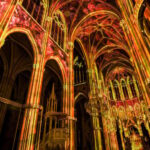
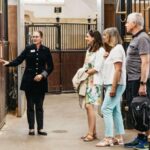


Palais Bathory at Augustinerstraße: legend, horror, and why the rumor mattered
At Augustinerstraße 12 you also reach Palais Bathory, associated with Elisabeth Bathory. This is where the tour’s tone gets famously dark, built around the legend of the “blood countess.”
The story says Bathory was alleged to have murdered more than 600 virgins and that the tale claims she bathed in their blood to preserve youth and beauty. Even if you’re skeptical about the exact number or method, the tour uses the legend to show something important: some stories survive because they fit a culture’s fear and fascination.
This stop is valuable because it reminds you that crime stories aren’t always just crimes. They can become myths that reflect what people wanted to believe—about women, power, and the boundaries of acceptable behavior.
Graben and Kohlmarkt: Demel’s place in the Udo Proksch insurance fraud plot
Moving through the Graben and Kohlmarkt area, the tour brings you to Place of the Demel. Here, you get a much more modern kind of “terrible”: conspiracy tied to money, insurance, and influence.
The story focuses on Udo Proksch, described as the authorized signatory in the 1970s, and a plan involving an over-insured freighter chartered for Asia. An explosive charge was said to be hidden on board, with the scheme leading to mass murder and massive insurance fraud.
What I like about this stop is the investigative angle. The tour explains that the investigation took years, and that Proksch benefited from relationships in many directions. That’s a reminder that justice isn’t just about what happened—it’s also about who can interfere, obscure, or stall.
Ferstel Palace and the “Zu den Fünf Morden” house: medieval murder and an execution that dragged on
At Herrengasse you reach Ferstel Palace, described as the former location of the Zu den Fünf Morden house. The tour ties this to one of the most notorious mass murders of medieval Vienna.
The narrative says the murderer was impaled because the act was considered uniquely terrible, including five murders and a seven-year-old. Execution details are part of the shock value, too: the executioner was reportedly not very experienced in this specific method, so it took extremely long.
This stop works because it shows how punishment served as public messaging. It wasn’t just about ending someone—it was about teaching the rest of society what the city believed was unforgivable.
If you don’t like graphic punishment stories, consider this the moment to brace yourself before you go further.
Hotel Klomser opposite Ferstel: Colonel Redl and the spy affair that shook the monarchy
Across from Ferstel Palace, the tour points you to the former Hotel Klomser, linked to Colonel Alfred Redl’s suicide and a major spy affair.
This section is framed as the greatest spy affair of the monarchy, with the claim that it could have been a decisive factor for World War I. The discovery of Redl’s espionage activity is said to have destroyed the reputation of the army and exposed the vulnerability of the underfunded Evidenzbureau (the secret service).
This is a key “less touristy” part of the route because Vienna is often presented as elegant and predictable. Here you get the opposite: intelligence failures, compromised loyalties, and how internal weakness can scale up into global consequences.
Molker Bastei: the Anna Gaugisch murder and Raimund Lewisch’s dismemberment story
At Molker Bastei, the tour turns to the Anna Gaugisch murder case, describing dismemberment by boyfriend Raimund Lewisch in 1861. The story includes details about body parts being found in the Danube and in a location near the bridge area referenced as Wrought.
The tour frames Lewisch’s motive as getting rid of an “uncomfortable” woman, especially one who was pregnant. There’s also a brief mention that prior to this, he had done violence by dissecting a cat—adding an unsettling pattern of cruelty before the human tragedy.
This stop is the clearest warning flag on the tour. If you want crime history without gore, you’ll want to pace yourself here.
Am Hof: the 1848 war minister Theodor Baillet de Latour and political violence in Vienna
At Am Hof, you’ll hear about a lynch murder of war minister Theodor Baillet de Latour during the revolution year of 1848. The tour describes it as one of the rare cases of political violence in Vienna, and it connects the event to the beginning of the Wiener October Revolution—the more violent later phase of the revolution.
This stop matters because it ties “crime” to ideology and public action. You’re not just dealing with one person’s crime. You’re watching how political breakdown can turn into physical punishment.
The tour also notes that a civil arsenal is located in the same place and was looted during the revolution. That detail helps you understand why this area became a flashpoint: it wasn’t only words and crowds, it was also weapons and access.
Hannaken-Brunnen: the fountain story of the Hannakenkönig surgeon and fake injuries
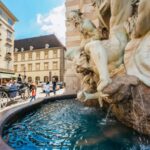
At Hannaken-Brunnen, the tour tells a chilling business practice legend about a surgeon called Hannakenkönig. The claim is that he caused broken bones himself to improve business—setting trip hazards to provoke injuries, then healing the injured afterward.
This stop is a strange kind of “social history.” You learn that Hannaken were a minority from Moravia who often came to Vienna for work, and the fountain representation is described as showing two men carrying an injured comrade to Hannakenkönig.
I like this stop because it’s not just about violence. It’s about how a city’s labor communities can get exploited—and how legends can build a moral warning into public art.
Maria Am Gestade: the city wall section and Joseph II’s hard-to-ignore death penalty
At Maria Am Gestade, you’ll see part of the city wall connected to the Zahlheim case. The story says it involved the death penalty method referred to as the last wheeled execution in Vienna.
The tour explains that the punishment was extremely cruel and became unacceptable in most countries later. It also points out Joseph II’s role: he usually rejected the death penalty, but the facts in this case forced him to make a different decision.
That’s an important takeaway. Vienna’s rulers could be seen as enlightened, but the tour shows the limits of enlightenment when the state feels threatened.
Even if you don’t care about execution methods, this is a strong example of how one case could override a ruler’s usual principles.
Hoher Markt and St. Stephen’s area: torture, jealousy, and the medieval “baptism of bakers”
The tour then brings you to Hoher Markt for the story of Thekla Riener. The tale says she was tortured there with instruments connected to the courthouse, including the detail that her husband Anton Grünborn carried out the torture.
The story is built around jealousy and false assumptions. Thekla was supposed to betray a supposed lover, but the tour says there was no lover at all—only imaginary ones. It culminates in an accidental killing, then adds that her parents became insane.
Next, you reach St. Stephen’s Cathedral, where the tour connects a legend about the city’s “standard bread loaf” to medieval quality control. The story explains that bakers could be punished through the famous baptism of bakers: placing bakers in a cage and dipping them multiple times into the Danube.
This stop is useful because it shows how everyday life and state control were tied together. If you love social history, it’s a reminder that punishment didn’t only target big criminals; it also aimed at compliance in ordinary trades.
Steffl and Himmelpfortgasse: the executioner’s dungeon and the nun walled in for love
At Steffl, the tour points to the former Malefizspitzbubenhaus, described as the executioner’s apartment and dungeon. The highlight here is the claim that the plainacher was the only witch burned in Vienna, and that she was held and tortured there.
The accusation includes an epileptic granddaughter being blamed for bewitched behavior and demons being summoned. The tour also explains that witch persecutions weren’t common in Vienna, but this case became an exception, tied to the city judge needing to avoid public pressure.
Finally, at Himmelpfortgasse, you hear about the former Himmelpfort monastery and a nun walled in in 1319 for refusing to separate from a lover her father hated. The tour frames it as a Vienna version of Romeo and Juliet: the mayor and his archenemy were the kids’ families, yet the lovers were friends.
This last stop gives you a different flavor. Instead of grand political forces, the conflict is family control versus personal loyalty. By the time you reach it, you’ve already learned how rigid systems can be. Here, you see them applied to something as human as love.
Who should book this Vienna crime tour, and who should skip it
I think you’ll enjoy this tour most if you:
- like true-crime style history, not just monuments
- want a smaller-group walk through the center with a strong narrative thread
- enjoy contrast—old punishments next to more modern conspiracies
I’d skip it if you:
- want a light, breezy intro to Vienna
- get squeamish about graphic violence
- prefer strictly factual history with no myths or legends mixed in
If you’re on the fence, the best way to decide is simple. Do you come to Vienna for the sparkle—or for the stories that explain what happened behind the doors?
Should you book? My practical take
If you’re spending a short time in Vienna and already plan the classics, this tour is a smart add-on. It gives you a second angle on the city—how power, rumors, punishment, and money shaped everyday life. At about $46 for two hours, with free entry points at each stop and a smartphone audio guide included, it’s strong value for an inner-city experience.
But go in with your expectations set. This is not a cute ghost walk. It’s a crime-and-history route with heavy material. If that’s your kind of travel, book it. If you want cozy history, choose something lighter.
FAQ
How long is the tour?
It lasts about 2 hours.
What language is the tour offered in?
The tour is offered in English.
Is there a smartphone audio guide included?
Yes. You get a complimentary smartphone audio guide.
Do I need a printed ticket?
No. The tour uses a mobile ticket.
Are there admission fees at the stops?
The stops listed are admission ticket free.
Where does the tour start?
It starts at Helmut-Zilk-Platz, Albertinapl. 2-3, 1010 Wien.
Where does the tour end?
It ends on Rauhensteingasse, 1010 Wien.
How large is the group?
The maximum group size is 20 travelers.
Is public transportation nearby?
Yes, it’s near public transportation.
Is the tour dependent on weather?
Yes. The tour requires good weather.
Is the tour suitable for most people?
Most travelers can participate.