REVIEW · VIENNA
World War II History Vienna Old Town Private Walking Tour
Book on GetYourGuide →Operated by Rosotravel Austria · Bookable on GetYourGuide
WWII history is close enough to touch. This 2-hour private walking tour threads the story from Franz Ferdinand’s assassination to the bombing and liberation of Vienna, using real street-side anchors. You’ll get a clear timeline, plus the kind of place-based context you usually miss when you wander solo.
I especially like how your licensed guide builds the cause-and-effect story in plain language. Expect expert commentary on WWI, WWII, Austrofascism, the Holocaust, and key figures like Adolf Hitler and Ernst Kaltenbrunner, with room for questions in your chosen language.
One thing to consider: it’s a walking route through Inner Stad, so if you want lots of indoor museum time or a very slow pace, you may feel a bit rushed in just two hours.
In This Review
- Key Highlights You’ll Actually Notice
- Why Vienna’s Old Town Fits a WWII Story So Well
- Morzinplatz: The Tour Starts at a Nazi-Terror Memorial
- Inner Stad Walk: Propaganda, Daily Life, and Holocaust Remembrance
- Hofburg and Heldenplatz: Imperial Power Meets War Dead
- Burggarten and the Franz Joseph I Monument: Seeing the Past in One Frame
- Ending at the Monument Against War and Fascism Near the State Opera
- How Guides Make This Tour Worth It (And Why Questions Matter)
- Price and Value: What $214 Buys in Two Hours
- What to Expect From a 2-Hour Private Walk
- Who Should Book This WWII Old Town Tour
- Should You Book This WWII Vienna Old Town Tour?
- FAQ
- Where does the tour start?
- How long is the WWII history walking tour?
- Is this a private tour or group tour?
- What languages are available for the guide?
- Which places and monuments do you see?
- What topics does the guide cover?
- What is the maximum group size per guide?
- Is payment required immediately?
Key Highlights You’ll Actually Notice
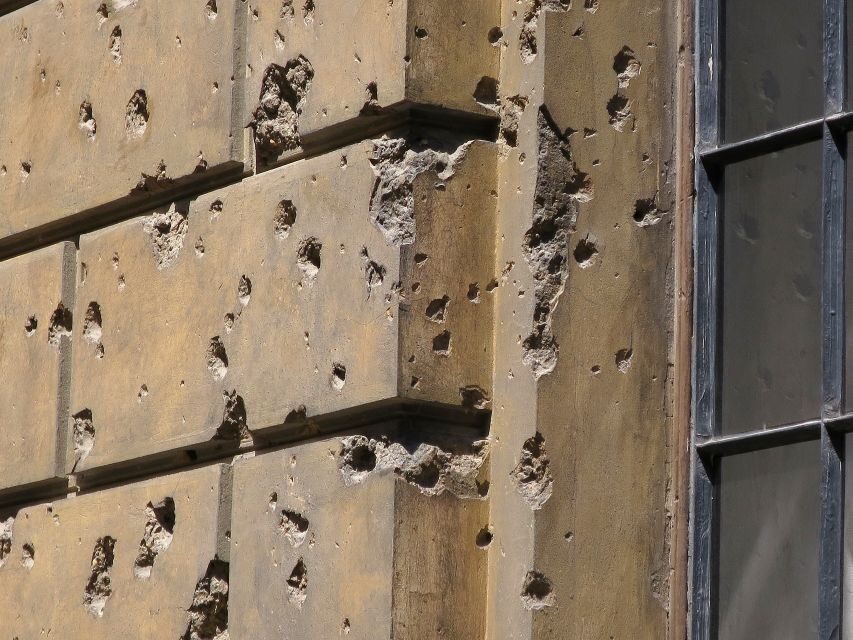
- Morzinplatz start linked to the Gestapo HQ: you begin at the memorial to Nazi terror victims near where Hotel Metropol was used in 1939 as the Gestapo headquarters
- A guided timeline, not a random stop list: your guide connects events leading up to and after both world wars
- Holocaust remembrance you can reach on foot: you pass the Holocaust Memorial and Remembrance Stones while the guide explains what they mean
- Hofburg and Heldenplatz as WWI/WWII markers: exterior views plus the Memorial Crypt for WWI and WWII victims
- Franz Joseph I and the Burggarten context: you see the imperial monument while the guide frames the broader political shifts
- An end point tied to the 1945 bombing: the Monument Against War and Fascism near the Vienna State Opera
Why Vienna’s Old Town Fits a WWII Story So Well
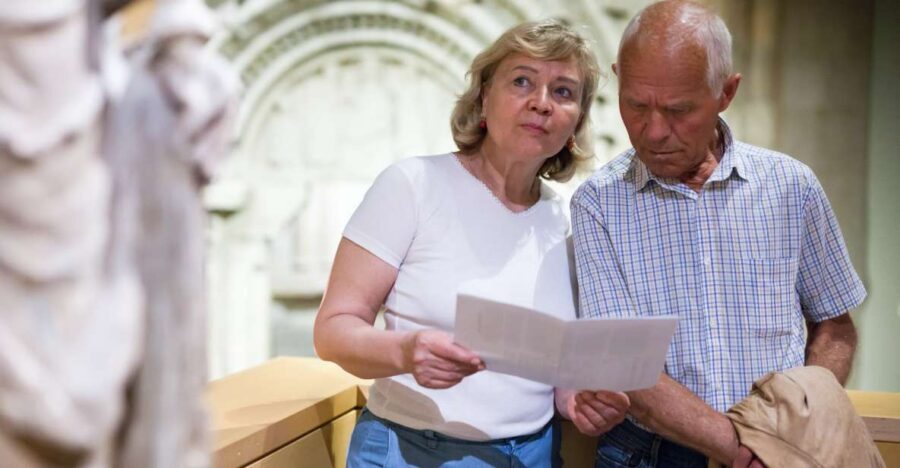
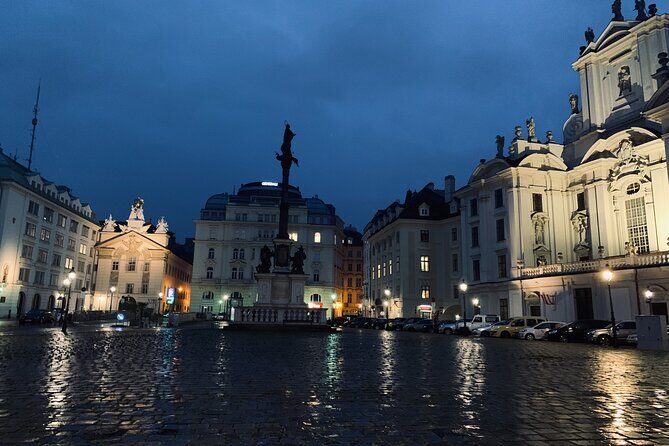
Vienna’s center is built for walking, and that matters for a WWII tour. The guide isn’t just pointing at “important-looking” buildings. They’re using the city’s visible layers to explain how power changed hands, how propaganda shaped everyday life, and how tragic events unfolded.
In two hours, you’ll cover a long sweep of time. The tour tracks major beats from the assassination of Franz Ferdinand through Hitler’s annexation of his homeland, and then onward to the bombing and liberation of Vienna. That broad timeline is helpful because it shows you the buildup, not just the ending.
This is also a tour where you learn while you’re still moving. You pass from imperial sites to remembrance spaces without switching cities or losing your momentum. You’ll feel the transitions, and your guide can point out why Vienna’s different corners carry different memories.
You can also read our reviews of more walking tours in Vienna
Morzinplatz: The Tour Starts at a Nazi-Terror Memorial
The meeting point is Denkmal der Opfer des Faschismus (Memorial to the Victims of Nazi Terror), Morzinpl. 4. Right away, you’re in a place that frames the whole walk with moral clarity. This is not a tour that treats WWII as distant history.
The guide begins here because of what stood nearby. In 1939, Hotel Metropol was used as the Gestapo headquarters in Vienna. Having that connection at your first stop changes how you look at the surrounding streets. Even if the buildings have shifted over time, the location still carries meaning, and your guide helps you connect the dots.
I like tours that start like this, because it keeps the story grounded. You’re not waiting 45 minutes to learn what the tour is actually about. You start with the impact of Nazi terror and then follow the consequences through the Old Town.
Inner Stad Walk: Propaganda, Daily Life, and Holocaust Remembrance
Once you head through Inner Stad, the tour becomes a story of how history shows up in everyday life. Your guide focuses on German-occupied Austria and how daily routines, public messaging, and fear shaped behavior. That angle is powerful because it’s not only about battles or leaders. It’s about how people lived under pressure.
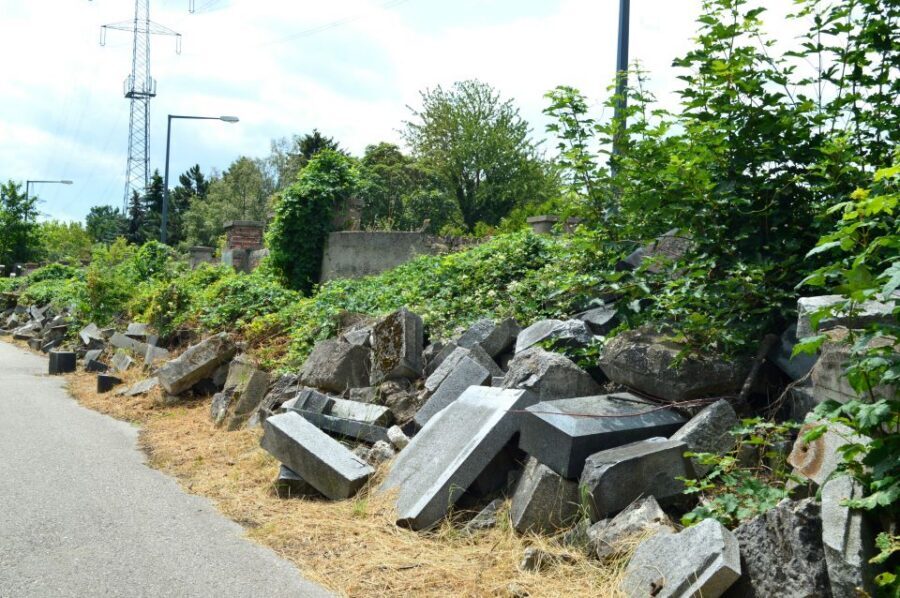
As you walk, you’ll pass the Holocaust Memorial and some Remembrance Stones. Those are the kinds of stops that can feel abstract if you see them alone. With a guide, they become concrete: you understand who the memorials honor and why remembrance was placed where it is.
Your guide also covers tragic fate of Vienna’s Jewish citizens. You’ll hear it framed inside the larger WWII timeline, not as a separate topic floating by itself. That’s an important choice for a 2-hour tour. It keeps the story connected, instead of turning Holocaust education into a quick detour.
You’ll also hear about major Nazi figures, including Adolf Hitler and Ernst Kaltenbrunner. I find that when a guide names people like this and connects them to specific places, it reduces the feeling of chaos. You start to see roles and mechanisms, not just headlines.
Hofburg and Heldenplatz: Imperial Power Meets War Dead
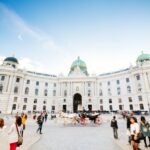
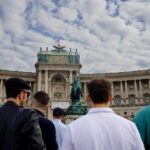
The imperial palace complex of Hofburg appears as an exterior stop on this walk. That outside view is deliberate. It reminds you that Vienna was a center of authority long before WWII. Then your guide links that imperial backdrop to the turmoil that followed.
Next comes Heldenplatz, where the Memorial Crypt is dedicated to WWI and WWII victims. This is where the tour’s “why” becomes clearer. You’re not only learning about events; you’re seeing how Vienna marked loss across both world wars in one complex space.
It’s a sober stop, but it’s also practical for understanding history. When you learn WWI and WWII timelines back to back, your mind starts making comparisons: how ideas spread, how violence escalates, and how societies cope with aftermath. The memorial crypt helps you hold onto the human cost as you learn about causes and consequences.
Your guide ties these themes into the walking route, so the imperial setting doesn’t feel like a random backdrop. It becomes part of the story structure.
Burggarten and the Franz Joseph I Monument: Seeing the Past in One Frame
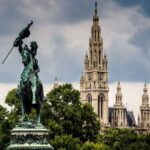
Near Hofburg, you’ll also see the monument to Emperor Franz Joseph I in Burggarten. This is one of those stops that can look like classic Vienna sightseeing. The trick is that your guide reframes it so it’s not only aesthetic.
By placing you in front of the Franz Joseph I monument during a WWII-themed walk, the guide points out that political history in Vienna didn’t start in 1939 and it didn’t end in 1945. Long-term governance, symbolism, and shifting legitimacy all feed into the bigger story.
If you’ve ever wondered why certain cities seem to carry political meaning in their stone and statues, this is where you’ll feel the answer. You’re reading history with your eyes, while the guide supplies the context that turns a photo spot into a timeline anchor.
You can also read our reviews of more private tours in Vienna




Ending at the Monument Against War and Fascism Near the State Opera
The walk ends at the Monument Against War and Fascism near the Vienna State Opera. This is a fitting finish: it points forward, toward the warning sign of what happens when societies choose authoritarianism and war.
The State Opera area also carries the memory of WWII damage. The tour notes the opera was heavily damaged by the 1945 bombing. Even if you don’t go inside, the end point connects your learning to a visible reminder of how the city was hit.
I like ending here because it changes the emotional tone from explanation to reflection. You still get facts, but the message is harder to ignore: the walk didn’t just teach you what occurred. It pushes you to think about what should be prevented.
How Guides Make This Tour Worth It (And Why Questions Matter)

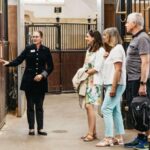
This tour lives and dies by the guide. It’s private, so you’re not stuck listening to a script that fits nobody. You can ask questions, and the guide can adjust the flow to what you care about most.
The best signs show up in how flexible guides have been in challenging situations. One guide, Peter, earned praise for explaining everything in detail and answering questions thoroughly, with patience when a small child needed pauses. Another guide, Sanda, was described as highly professional. Alexander also received strong feedback, and Frau Heuberger was praised for balancing the tour with well-timed pauses, even during heavy heat.
You also have multi-language support, with options including English, German, Italian, French, Spanish, Russian, Polish, Chinese, Japanese, Croatian, Portuguese, Arabic. That matters for emotional topics. When you can understand every nuance, you stay engaged instead of translating in your head.
Price and Value: What $214 Buys in Two Hours
At $214 per person for a 2-hour private walking tour, you’re paying for three things you can’t easily DIY.
First, you’re paying for a 5-star licensed guide who provides expert commentary on WWII, WWI, and the Holocaust. That’s not trivia. It’s interpretation, timeline stitching, and careful explanation of why specific places matter.
Second, you’re paying for private routing through key WWII markers in the Old Town. The tour covers multiple meaningful sites: Morzinplatz, the Holocaust Memorial and Remembrance Stones, Hofburg exterior, Heldenplatz’s Memorial Crypt, Burggarten’s Franz Joseph I monument, and the final anti-war monument near the State Opera.
Third, you’re paying for a tailored experience. The tour is designed to match your interests, and the guide’s language skills help you keep up without losing the thread.
Could you walk these places on your own? Sure. But you’d likely miss how the stops connect into a coherent timeline from Franz Ferdinand to annexation to bombing and liberation. In a city like Vienna, that “connective tissue” is where the real value lives.
What to Expect From a 2-Hour Private Walk
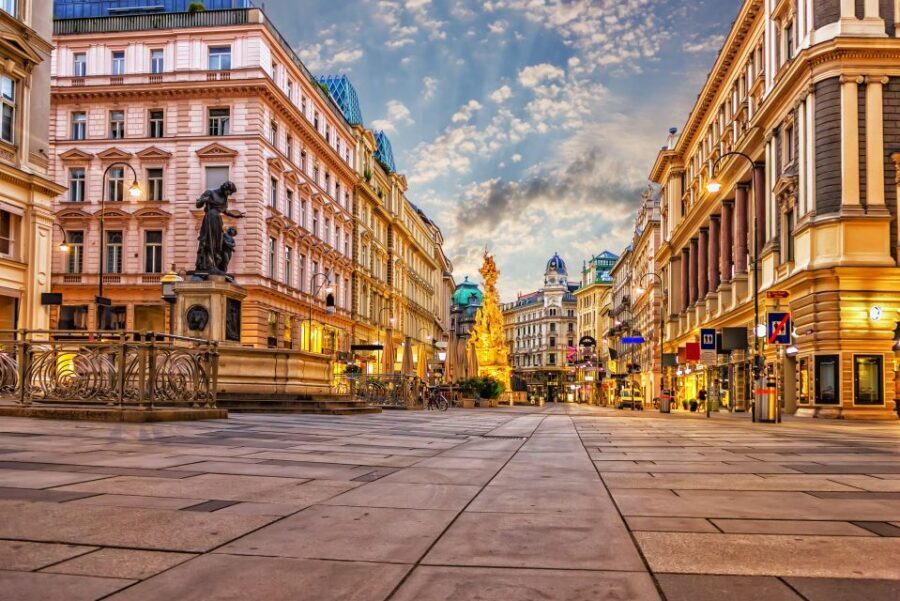
Two hours moves faster than most people expect. The good news is that the route is dense: you cover major anchors in central Vienna without needing transit. The walking pace is realistic, but it’s still a walking tour, so comfortable shoes are a must.
Also, plan for weather. Vienna can feel extreme, and one guide was praised for finding a smart balance between touring and shaded pauses during intense heat. That kind of practical pacing is a real quality-of-experience factor.
You’ll also want to keep an eye on the pre-tour email you receive the day before. The tour notes that important information comes by email. I’d treat that as part of the process, not an afterthought.
Who Should Book This WWII Old Town Tour
This is a strong choice if you want WWII history with real place connections and you prefer a guide who can explain the timeline clearly.
You’ll especially like it if:
- You care about the overlap between WWI and WWII and want the buildup explained.
- You want Holocaust remembrance explained in context, not treated as a standalone stop.
- You like asking questions and having answers shaped to your interests.
- You’d rather walk through Vienna’s historical anchors than spend your time searching for context on your own.
If your priority is a long museum day with lots of indoor exhibits, this might feel too short. But if you want a fast, focused understanding of how Vienna’s center holds WWII memory, this walk fits well.
Should You Book This WWII Vienna Old Town Tour?
Yes, if you want a coherent WWII narrative anchored in Vienna’s most meaningful central sites. The combination of the Morzinplatz start, the Holocaust remembrance stops, Heldenplatz’s Memorial Crypt, and a finish near the State Opera’s WWII damage creates a tight story arc.
I’d book it sooner rather than later if you:
- prefer a private format with a licensed guide,
- need the timeline explained in your language,
- and like learning while walking through the city instead of only reading plaques.
If you’re sensitive to heavy subject matter, give yourself permission to take breaks. The fact that some guides have handled breaks well during hot conditions suggests the experience can be paced thoughtfully.
FAQ
Where does the tour start?
The tour meets in front of Denkmal der Opfer des Faschismus (Memorial to the Victims of Nazi Terror), Morzinpl. 4, 1010 Wien, Austria.
How long is the WWII history walking tour?
It lasts 2 hours.
Is this a private tour or group tour?
It is a private group tour.
What languages are available for the guide?
The live guide is available in English, German, Italian, French, Spanish, Russian, Polish, Chinese, Japanese, Croatian, Portuguese, Arabic.
Which places and monuments do you see?
You’ll see Hofburg (exterior only), St. Stephen’s Cathedral, and multiple WWII & Holocaust monuments, including the Holocaust Memorial and Remembrance Stones. The tour also includes the Memorial Crypt at Heldenplatz and ends at the Monument Against War and Fascism near the Vienna State Opera.
What topics does the guide cover?
The guide covers WWI and WWII timeline, causes and consequences, Austrofascism, Holocaust remembrance, and key historical figures such as Adolf Hitler and Ernst Kaltenbrunner.
What is the maximum group size per guide?
The experience limits the group size to 1–25 people per guide.
Is payment required immediately?
You can reserve and pay later, meaning you can book your spot and pay nothing today.