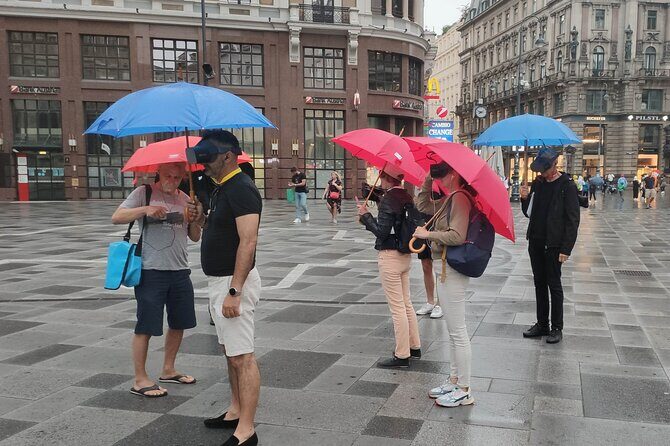
Vienna turns into a time machine on your feet. What makes this walk different is the VR 360-degree 3D animation that plays at key spots as you stroll through the Old Town. You also get an audio guide that explains the stages of Vienna’s evolution while you’re moving between landmarks.
I like that the experience stays focused and manageable: the total walk is about 2 to 3 km over roughly 2 hours, so it feels like a real strolling plan rather than a marathon. One thing to think about before you book: the tour is not suitable for people with epilepsy, since it uses VR visuals.
In This Review
- VR History Stops at St. Stephen’s Cathedral, Graben, Hofburg, and the Opera
- Walking Tour Rhythm: How the Audio Guide Keeps the Story Moving
- Route Logistics From Johannesgasse 21 to Stephansplatz
- What Each Stop Feels Like in Real Life (Not Just on a Map)
- St. Stephen’s Cathedral: Your first “then and now” anchor
- Graben: A story-friendly pedestrian corridor
- Hofburg: Where authority meets architecture
- Opera: Cultural identity with a modern landmark as the base
- Stephansplatz: Finish strong, not abruptly
- Price and Value for a 2-Hour VR Walking Tour
- Who Should Book This VR Old Town Walk in Vienna
- Weather, Timing, and Smart Day Planning
- Should You Book Walking Tours for Time Travelers in Vienna?
- FAQ
- How long is the Walking Tours for Time Travelers tour in Vienna?
- Where do you meet, and where does the tour end?
- Is the tour offered in English?
- Does the tour include VR?
- Is the tour suitable for children?
- Is the tour suitable for people with epilepsy?
- How big is the group?
VR History Stops at St. Stephen’s Cathedral, Graben, Hofburg, and the Opera
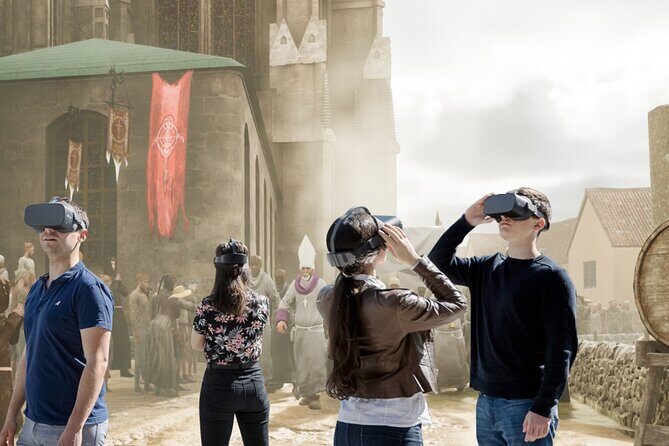
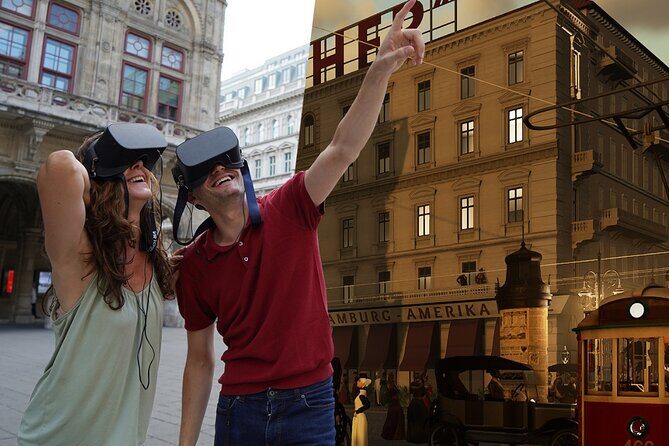
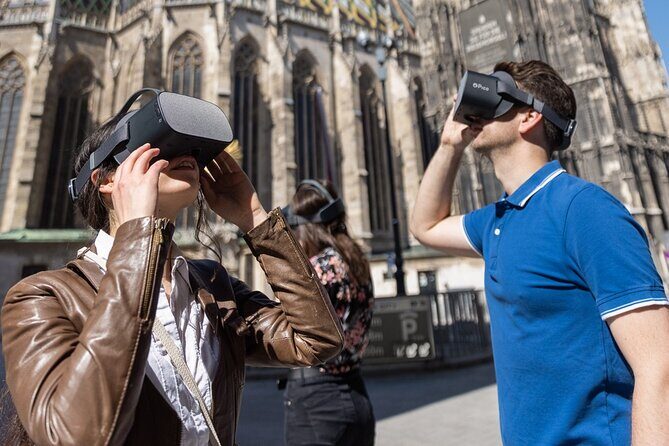
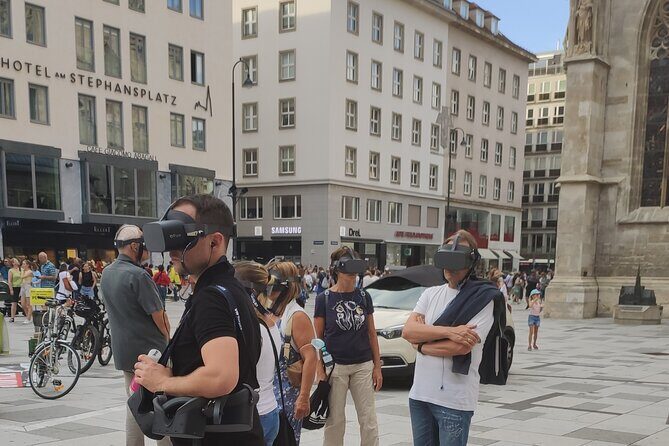
The core idea is simple. You walk Vienna’s center, and at specific landmarks you pause to experience what the area looked like in earlier eras using VR glasses. That means the street-level view stays real, but your eyes also get a layered “then and now” version of the same place.
St. Stephen’s Cathedral is where the time-travel effect makes instant sense. It’s one of Vienna’s most recognizable anchors, so when VR adds historical scenes around a familiar silhouette, your brain has an easy time connecting the story to the skyline you see in front of you. It’s also a good starting point for newcomers, because the cathedral already gives you a mental map for the rest of the route.
Next is Graben, a central street that’s perfect for “city evolution” storytelling. Even if you’ve only been in Vienna for a day, you can feel how important this kind of pedestrian core is to how the city functions. The VR sequences here are timed to the walk, so you’re not stuck in one spot listening to facts with no visual payoff.
Then you head to the Hofburg, the former imperial center area. This is a natural place to show “how power shaped the city.” In a normal walking tour, you’d get architecture and anecdotes. With the VR scenes added, you get a stronger sense of what the space may have been like during earlier stages, not just what it looks like today.
After that comes the Opera area. This stop is interesting because it’s not just about buildings; it’s about Vienna’s cultural identity. Seeing how the city’s artistic life is represented through VR while you’re standing near the modern landmark helps tie the stories together.
Walking Tour Rhythm: How the Audio Guide Keeps the Story Moving
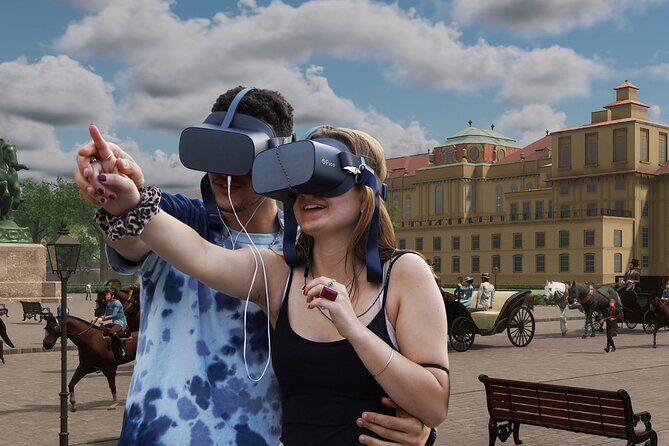
What you’re really buying here is not only landmark sightseeing. You’re buying pacing. The audio guide talks you through Vienna’s different stages of evolution while you walk, so the information lands as you pass the places it refers to.
In practice, that pacing matters. Too many walking tours feel like you’re doing two things at once: listening hard while trying to keep your footing through crowds. Here, the tour design spreads the attention out. You move between stops, you pause for the VR scenes, and the audio guide gives context so you’re not just watching effects without meaning.
The tour is offered in English, and the experience is built around audio, not jargon. That’s a big deal if you want something that works even when you’re not fully tuned into German names or fast local pronunciation.
Also, the group size is capped at seven travelers, which changes the feel. It’s easier to hear the audio when the group isn’t too spread out, and it’s simpler to take brief moments to look around when you’re not being swept along.
You can also read our reviews of more walking tours in Vienna


Route Logistics From Johannesgasse 21 to Stephansplatz
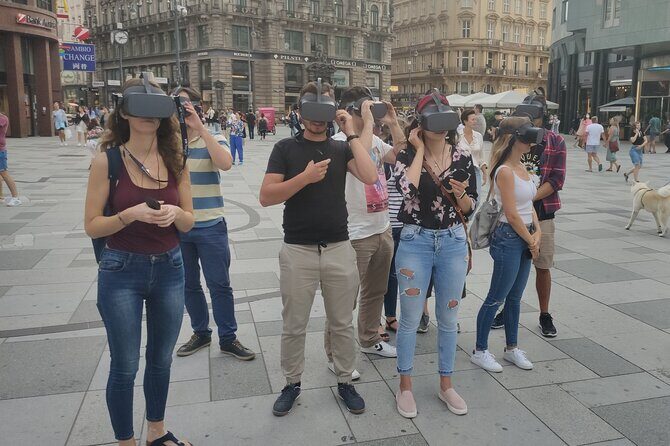
This tour is a clean Old Town loop with clear bookends. You meet at Johannesgasse 21, 1010 Wien and end at Stephansplatz, 1010 Wien. It’s a format that helps you plan the rest of your day, because you’re not stuck wondering where you’ll be when it’s over.
Starting at Johannesgasse also puts you close to the kind of central Vienna streets that make wandering easy afterward. Ending at Stephansplatz is practical because it’s a natural place to pause for photos, grab a snack, or continue exploring on foot.
Duration is listed as about 2 hours, and there’s an important detail: the walk is typically around 2 to 3 km. For many visitors, that’s the sweet spot. It’s long enough to feel like you did something meaningful, but short enough that you won’t dread the “one more corner” feeling.
You’ll also want to plan for the fact that the experience uses VR visuals. Even if each VR moment is short, you’re still stepping into a different attention mode than normal sightseeing. Think of it as a walk with mini “time portals,” not a constant VR experience the whole time.
What Each Stop Feels Like in Real Life (Not Just on a Map)
St. Stephen’s Cathedral: Your first “then and now” anchor
St. Stephen’s Cathedral sets the tone. You’re in the kind of location where details feel layered even without technology. With VR 360-degree scenes added, you’re essentially given a guided way to notice how Vienna has changed across time while you stay oriented in the present.
Good fit if you like iconic sites, fast orientation, and a strong first impression. If you prefer totally unbroken walking with no pauses, the cathedral stop will likely feel like the tour’s first structured break.
Graben: A story-friendly pedestrian corridor
Graben is where the walk starts to feel like a guided stroll. You’re still moving through central Vienna, but you’re also getting context that makes the street feel less random. When the VR scenes show historical stages here, you can better imagine what this type of space meant back then.
A small drawback to keep in mind: this is a busy, central area. The tour is designed for walking and pausing, but you may be sharing space with regular foot traffic.



Hofburg: Where authority meets architecture
At Hofburg, the experience shifts naturally toward governance, public spaces, and the way grand complexes shape a city. The VR visuals help you connect the scale and purpose of the area to historical evolution, not only present-day stone and layout.
If you love big landmark complexes, this is one of the best stops. If you prefer smaller local streets, you might find the imperial-feeling scale more dramatic than intimate.
Opera: Cultural identity with a modern landmark as the base
The Opera stop adds a cultural layer. This is the part of Vienna that many people associate with performances, tradition, and artistic life. VR here works because you can look at the landmark you recognize while the audio and visuals suggest what the city’s cultural rhythm has been through.
You’ll likely enjoy this stop more if you like arts and architecture stories, not just royal or religious ones.
Stephansplatz: Finish strong, not abruptly
Ending at Stephansplatz gives you a satisfying landing zone. You’ll have a familiar central location to reset your senses after the VR moments and audio narrative.
It’s also practical. You’re finishing where it’s easy to keep exploring without needing extra transport.
Price and Value for a 2-Hour VR Walking Tour
At $47.17 per person, this isn’t a “budget only” walking tour. But it also isn’t priced like a full-day excursion either. Here’s how I’d think about value in plain terms.
You’re paying for three things:
- A 2-hour Old Town walk with a set route and landmarks
- English audio guidance for interpretation while you move
- VR 360-degree 3D history scenes, which is the real cost driver
If you’re already interested in Vienna’s landmarks and you’re curious about tech used to tell historical stories, this price can feel fair because the VR element isn’t a gimmick tacked on at the end. It’s built into the flow at multiple stops.
If you only want a classic walking tour with no tech component, you may find the price harder to justify. The upside is that the experience still works as a regular guided walk with audio explanation, and you won’t be totally stuck relying on VR to get something out of it.
One more detail that affects value: the group cap at seven. That means you’re not competing with a crowd for attention or clarity, and the experience is more personal than the big-bus-style feeling you sometimes get in central Vienna.
Who Should Book This VR Old Town Walk in Vienna
This is a good fit if you want Vienna in a way that’s not only photos and facts. You’ll enjoy it if you like structure, landmark pacing, and the idea of seeing historical interpretation tied to real streets.
It’s especially suitable if:
- You’re visiting Vienna and want a tight Old Town overview in one go
- You like immersive audio and guided storytelling
- You want the VR component even if you’re not a tech expert
It’s less suitable if:
- You have epilepsy (the tour explicitly isn’t for that)
- You’re traveling with kids under 10 (not suitable below 10)
- You’re looking for a fully flexible walk with no planned stops (this one follows a set route and timed moments)
Good to know: service animals are allowed, and most travelers can participate. If you’re concerned about comfort with VR visuals, it’s smart to evaluate how sensitive you are to VR-style experiences before booking.
Weather, Timing, and Smart Day Planning
This tour needs good weather. If conditions are poor enough that it’s canceled, you’ll be offered a different date or a full refund. That matters because it’s a walking-based experience and the VR moments are part of the outdoor schedule.
Timing-wise, the tour runs about 2 hours, so you can slot it into a morning or afternoon plan without wrecking the rest of your itinerary. Vienna’s Old Town is easy to combine with other nearby activities once you know your finish point at Stephansplatz.
Also note that this tour is often booked ahead, on average 24 days in advance. If you’re traveling in a busy season or you have limited hours in the city, booking early helps you lock in an English session and the timing that fits your day.
Finally, bring your expectations in line with the format. This is not a “wandering for hours” stroll. It’s a guided route with VR moments at specific landmarks. If you like getting from stop to stop with a story attached, you’ll probably have a great time.
Should You Book Walking Tours for Time Travelers in Vienna?
If you’re excited by the idea of walking Vienna’s Old Town and seeing historical scenes through VR 360-degree animation, I’d say this is a strong choice. The stop order is logical, the walk length is reasonable, and the English audio guide helps you understand what you’re looking at without needing extra research.
I’d skip it if VR visuals are a problem for you, or if you’re traveling with kids under 10. And if your goal is maximum spontaneity with no scheduled pauses, it may feel a bit structured.
But if you want your Vienna sightseeing to feel like more than a photo tour, this format makes sense. You get landmarks like St. Stephen’s Cathedral, Graben, Hofburg, and the Opera, plus a story that tries to show how the city changed over time instead of only describing what exists today.
FAQ
How long is the Walking Tours for Time Travelers tour in Vienna?
The tour lasts about 2 hours.
Where do you meet, and where does the tour end?
You meet at Johannesgasse 21, 1010 Wien, Austria, and the tour ends at Stephansplatz, 1010 Wien, Austria.
Is the tour offered in English?
Yes, it is offered in English.
Does the tour include VR?
Yes. VR scenes with 360-degree 3D animation are used at the tour’s landmark stops.
Is the tour suitable for children?
It is not suitable for children below 10.
Is the tour suitable for people with epilepsy?
No, it is not suitable for people with epilepsy.
How big is the group?
The tour has a maximum of 7 travelers.