REVIEW · VIENNA
Vienna: City of Music Private Walking Tour
Book on Viator →Operated by Insight Cities · Bookable on Viator
Music walks best in Vienna. This private route strings together Mozart and Beethoven’s most famous settings, then adds short headphone listening moments while you move between sights.
What I really like is the personal style of the guide, with the tour described as something that works even if you are not a classical-music person. In the reviews, a historian guide named Annelie comes through as fun, engaging, and good at making connections that feel like real stories, not trivia.
One thing to plan for: a couple major stops do not include admission, like Mozarthaus Vienna and the Wiener Staatsoper area, so you may need extra time and money if you want to go inside.
In This Review
- Key highlights to know before you go
- The private feel: up to 10 people with real city-side guidance
- St. Stephen’s Cathedral: where Mozart and Haydn sounded
- Mozarthaus Vienna and Figaro House: Mozart’s 1784–1787 creative chapter
- Beethoven’s route: a statue, the Pasqualati-House area, and sixty different addresses
- Wiener Staatsoper: Vienna’s musical power still runs today
- Hofburg and Archduke Rudolph: patronage, friendship, and Missa Solemnis
- Inner City headphone listening: short stops that make the sites sing
- Price and value: what $564.72 buys your group
- Should you book this Vienna City of Music private walking tour?
- FAQ
- How long is the Vienna City of Music Private Walking Tour?
- Is this a private tour?
- Does the tour offer pickup?
- Are entrance tickets included for the stops?
- What language is the tour offered in?
- Can I cancel for a full refund?
Key highlights to know before you go
- Private tour for up to 10 people: flat per-group price means groups can split cost and still keep it personal.
- Hotel or holiday flat pickup: you avoid the awkward start-line scramble.
- Headphones during the walk: you pause to listen to music while you explore major sites in the inner city.
- Mozart and Beethoven in specific locations: Mozart’s residence years and Beethoven’s Vienna moves shape the story.
- Great fit for non-experts: the narration is built to work even if your music background is basic.
The private feel: up to 10 people with real city-side guidance
This is a private walking tour, so it’s just your group. That matters in Vienna, where music sites are packed together and you want your guide to steer the pace, answer questions, and keep the walk from turning into a hop-on-hop-off sprint.
The setup is designed to be easy. You get a mobile ticket, and you can also request pickup where the historian guide meets you at your hotel or holiday flat. If you prefer a central rendezvous, the alternative meeting point is Café Mozart, Albertinaplatz 2. Either way, you should be able to start without wasting time.
Group size is capped at 10, which is a practical sweet spot. It’s large enough for families or friend groups, but small enough that the guide can still talk to you directly. Morning or afternoon departures are offered, which helps you plug the tour into a day when your feet and attention are at their best.
One practical note: the tour is in English, and it’s near public transportation. If you are using transit, the guide can help you figure out what to buy if you do not have a pass, but tram/metro tickets are not included. So budget a little for transit convenience if that’s your usual mode.
You can also read our reviews of more walking tours in Vienna

St. Stephen’s Cathedral: where Mozart and Haydn sounded
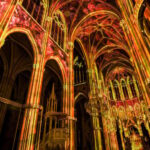
The walk begins at St. Stephen’s Cathedral (Stephansdom). This is one of those places where you can feel how Vienna used to stage music in real public life. The tour frames the cathedral as an important performance venue in previous centuries, connecting it to composers like Haydn and Mozart, plus Salieri and Vivaldi.
You are scheduled for about 20 minutes here, with admission listed as free. That makes this stop a strong opener: you get a dramatic setting, and you do not need to plan for a paid ticket just to start the story.
What makes this stop work for your experience is the way the guide ties the building to the sound. St. Stephen’s is visually striking, but the main value is hearing how a landmark church also functioned as a cultural stage. Even if you have never studied classical music, this kind of location-based explanation helps your brain build a map: this is where people gathered, listened, and moved from worship into performance culture.
Tip for your timing: if you tend to get photos done fast, use this stop to get your bearings and then let the guide steer the rest of the day. The tour is designed as a sequence, and the earlier context makes later Beethoven and Mozart details land better.
Mozarthaus Vienna and Figaro House: Mozart’s 1784–1787 creative chapter
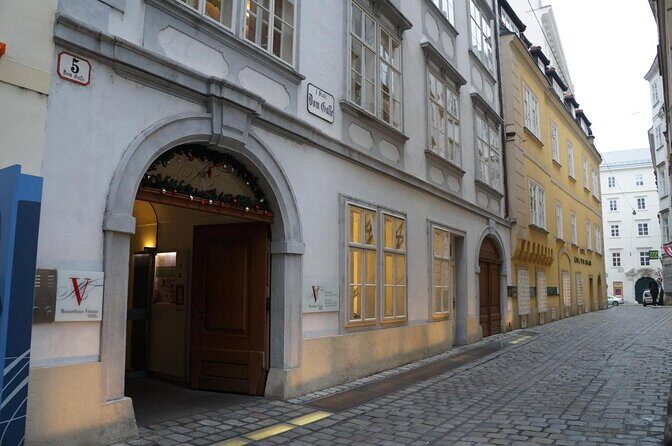
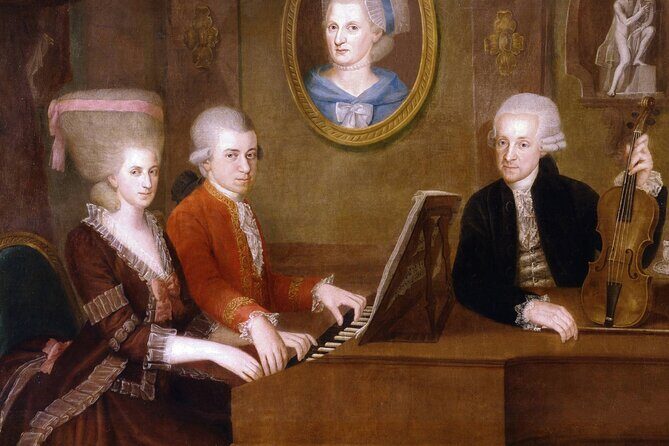
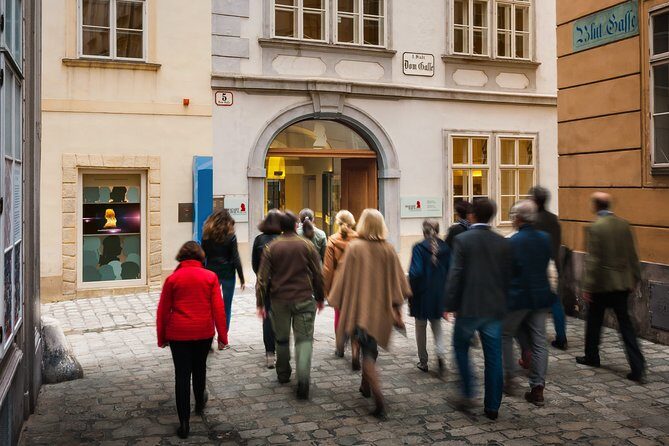
Next up is Mozarthaus Vienna, with a stroll that includes Figaro House (also referenced as Mozarthaus). This stop focuses on Mozart’s residence from 1784 to 1787, years when he wrote many of his most famous operas and instrumental pieces.
You’re given about 20 minutes here, and admission is not included. That doesn’t mean this stop is a waste if you do not want to pay for entry. It’s more like an orientation to where the creative work happened, with the guide’s story doing the heavy lifting even if you only view from the outside or spend time in the surrounding area.
This is also a nice place to reset your listening expectations. At Stephansdom, the story is about music in a major performance venue. At Mozarthaus, it becomes personal and practical: where a composer lived, worked, and produced output that still echoes today. If you like understanding how genius had an address, not just a reputation, this part will click.
Consideration: since admission is not included, you should decide ahead of time whether you want to spend extra money to go inside. If you skip entry, you still get the key location story without derailing the 3-hour pace.
Beethoven’s route: a statue, the Pasqualati-House area, and sixty different addresses
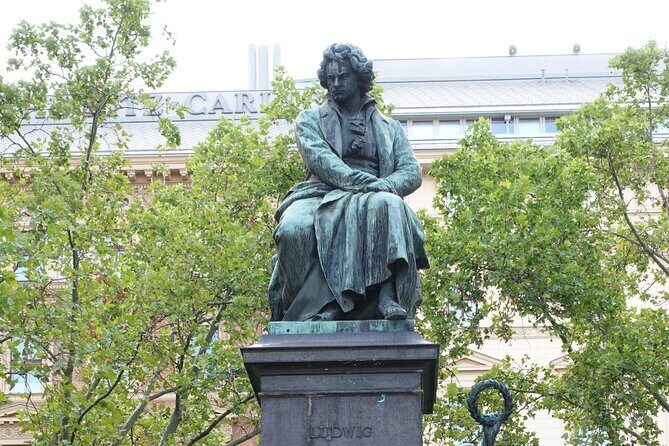
After Mozart, the tour pivots hard into Beethoven territory. You pass by a Beethoven statue, then keep moving into the patterns of his life. The narration highlights his erratic living in Vienna, with references to him living in sixty different apartments. Even without sounding like a biography lecture, it’s a clever way to make Beethoven feel human instead of untouchable.
You’ll then head toward Mölker Bastei, where the tour frames Beethoven’s restless life again, this time connecting it to the Pasqualati-House at the Mölker-Bastei, located directly opposite the University of Vienna. This stop emphasizes how his constant changes shaped the story people tell about his music, describing Beethoven’s work as reaching an apex of the Classic era and helping herald important developments of the Romantic era.
This segment is scheduled for about 20 minutes. Several of these stops are likely more observational than museum-like, and that can be a good thing. It keeps momentum and lets the guide use the neighborhood itself as a “timeline.”
Why I think this works for you: Beethoven’s story can feel abstract if you only hear music in headphones at home. But hearing that he shifted addresses again and again makes his compositions feel less like distant art objects and more like output from a real person navigating real Vienna.
Practical note: because these are primarily location-based stops and some admissions are not included, wear shoes that handle uneven sidewalks. You will be doing a lot of close-up walking and quick photo opportunities.
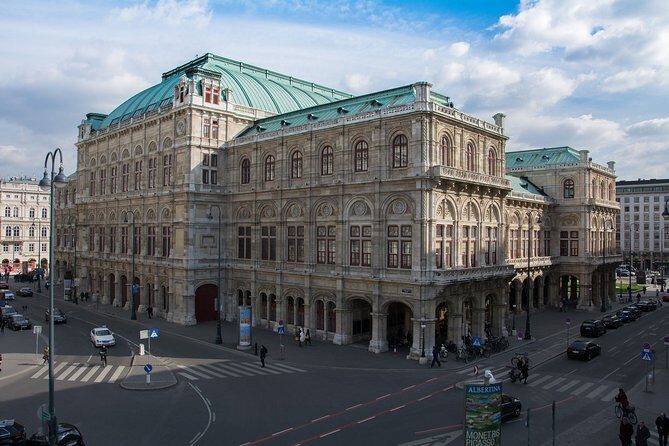
Wiener Staatsoper: Vienna’s musical power still runs today
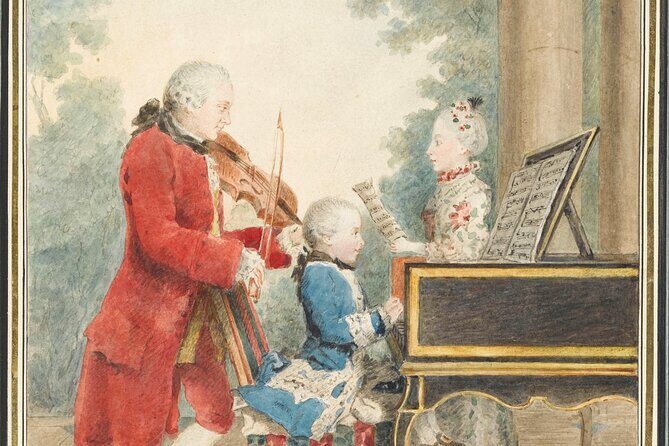
From Beethoven’s world, the tour takes you to Wiener Staatsoper. The message here is not just nostalgia. It’s about continuity—how Vienna’s musical dominance is still visible outside the legendary State Opera House, while also connecting to other major performance spaces.
The framing includes the Musikverein concert hall and its link to the Vienna Philharmonic. This is a solid “big picture” moment in the walk, where your brain shifts from historical composers to Vienna as a living music machine.
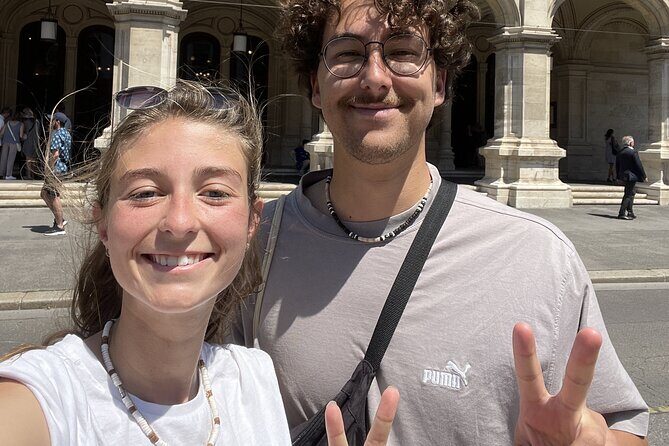
You spend about 20 minutes in this stop, and admission is listed as not included. Again, that shapes your expectations. You are not being asked to buy another ticket to keep going. You’re being shown where the musical ecosystem lives now.
If you are the kind of person who likes to pair history with a sense of where culture stands today, this stop will help. It also makes the headphone listening later feel more relevant, because you can tell the tour is treating music as a present-day thing, not a museum only.
You can also read our reviews of more city tours in Vienna


Hofburg and Archduke Rudolph: patronage, friendship, and Missa Solemnis
The tour finishes its major landmark sequence at the Hofburg area. This is where the story turns to connections—Beethoven and the Habsburg world, and specifically his relationship with Archduke Rudolph, described as the youngest son of Emperor Leopold II.
You’ll hear that Beethoven had strained moments with aristocratic life, but Rudolph was one of his best friends and a supporter. The tour adds an important detail: Rudolph took piano lessons with Beethoven at the residence, tying the composer’s life directly to a place of patronage and training. It also highlights that Beethoven dedicated the Missa Solemnis to Archduke Rudolph, describing the piece as representing the interaction between the Habsburg family and major musicians in Vienna during the 18th and 19th centuries.
This stop is about 20 minutes, and admission is not included. But the value here is the story line you’ve already built. If you’ve followed Mozart’s living years and Beethoven’s shifting addresses, the Hofburg chapter can feel like the moment the narrative “clicks” into place: public survival, private creation, and powerful support all in the same city.
Tip: ask your guide how they connect Missa Solemnis to the broader idea of court influence. You are not required to know everything about form or religious music to appreciate why dedication matters. It’s also a chance to connect what you heard in the morning or afternoon to the day’s bigger theme.
Inner City headphone listening: short stops that make the sites sing
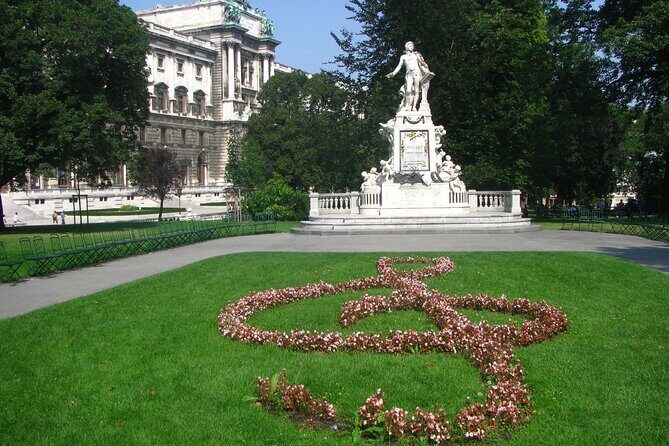
The last part is a longer 45-minute segment in the Inner City. This is where the tour’s most enjoyable trick shows up: you pause to listen to selections of Vienna’s musical masterpieces on headphones while exploring major sites.
This approach is simple and surprisingly effective. It stops the walk from becoming only sightseeing. Instead, you get to attach sound to sight as you move through the urban fabric. The headphones can also help you keep pace with the group without losing the story.
The tour’s headphone listening is also where the reviews’ praise makes sense. One reason people loved it is that music playing while you walk through meaningful streets feels like you’re stepping into the composer’s world rather than reading about it after the fact.
One practical point: keep your volume at a comfortable level so you can still hear the guide’s commentary when you’re not actively listening. If you try to crank the music to full blast, you will miss the narration that ties each sound to each place.
Price and value: what $564.72 buys your group
The price is $564.72 per group, up to 10 people, for about 3 hours. That’s the key value math. This is not a per-person price that can become painful once you factor in a family or a friend group. A flat per-group fee is often the best deal in cities where a private guide can be expensive.
So what are you paying for, beyond the guide’s time? You’re paying for a specialized tour theme—Vienna as the city of music—with the storytelling aimed at making classical references feel real. You’re also paying for the structure: specific site stops, plus the headphone listening segment that changes the feel of a walking tour.
Where cost sensitivity can matter is admissions. St. Stephen’s Cathedral is listed with admission ticket free, but Mozarthaus Vienna and the Wiener Staatsoper area are marked as not included. If you decide you want to go inside those locations, you may need to add ticket costs on your own. For many people, though, the story can still land strongly without additional entries.
If you are comparing this to a self-guided walk, the difference is time and interpretation. In a city like Vienna, you can find plaques and basic facts. A good guide helps you understand why Mozart and Beethoven matter in each exact spot, and you get to ask questions instead of guessing.
Should you book this Vienna City of Music private walking tour?
Book it if you want a music-focused Vienna experience that stays understandable, even if your classical knowledge is light. This tour is built for people who want stories tied to real addresses, and it uses headphones to connect sound to place in a way that feels fun rather than lecture-heavy.
You might skip or adjust your expectations if you are planning to spend most of your time inside ticketed attractions. Several major sites on the route list admission as not included, so if your dream itinerary is door-to-door museum time, you may want to pair this walk with separate entry plans.
My final practical take: this is a smart choice for a small group, especially if you can split the per-group cost and you like walking with a guide instead of reading alone. The morning or afternoon options, hotel pickup or Café Mozart meeting point, and the built-in headphone listening make it easy to treat as a centerpiece experience rather than an extra.
FAQ
How long is the Vienna City of Music Private Walking Tour?
It lasts about 3 hours.
Is this a private tour?
Yes. It’s a private tour/activity, and only your group participates. The group size is up to 10.
Does the tour offer pickup?
Yes. The historian guide can meet you at your hotel or holiday flat. If you want a central meeting point, the guide can meet you at Café Mozart, Albertinaplatz 2.
Are entrance tickets included for the stops?
St. Stephen’s Cathedral is listed with an admission ticket free. Mozarthaus Vienna and the Wiener Staatsoper are listed as admission ticket not included. Other stops on the route are also listed as not included.
What language is the tour offered in?
The tour is offered in English.
Can I cancel for a full refund?
Yes. You can cancel for a full refund up to 24 hours in advance of the experience start time.