REVIEW · VIENNA
Private Vienna Highlights History Walk — WWII and Post War Vienna
Book on Viator →Operated by SCHINDL Local Services & Day Tours · Bookable on Viator
Vienna’s WWII scars are right on the street. I love the hotel pickup, which makes starting the day easy, and I love the way this walk links post-war memory to major Vienna sights like Belvedere, Soviet-era remembrance, and the Judenplatz Holocaust Memorial. It’s a smart mix of grand architecture and the darker chapters that still shape the city.
One possible drawback: it’s an active 3 hours mostly on foot, with a short tram segment, so you’ll want comfortable shoes and a rain plan.
In This Review
- Key Highlights You’ll Actually Feel
- Price and Logistics: What You Pay for a Private 3-Hour Window
- The Guide Factor: Why Private Format Matters in Vienna
- Starting Easy: Pickup, Mobile Ticket, and the First Read of Belvedere
- Belvedere Gardens as a Political Map (Not Just Pretty)
- Schwarzenbergplatz and the Soviet War Memorial: Liberation With a Complicated Shadow
- Hochstrahlbrunnen and the French Embassy: Two Allies, Two Messages
- A Short Tram Ride on the Ringstraße: Where Vienna Rebuilt Itself
- Burggarten and the Academy Fine-Arts Thread to 1938
- MuseumsQuartier and the FLAK Towers: Concrete That Didn’t Give Up
- Heldenplatz and Hofburg: Ceremonies, Anschluss, and Seven Centuries of Power
- Judenplatz Holocaust Memorial: The Quiet Stop That Makes the Whole Walk Meaningful
- St. Stephen’s Cathedral and the April 1945 Fire Story
- Who This Tour Is For (And When to Pick Something Else)
- Should You Book This Private Vienna WWII and Post-War Highlights Walk?
- FAQ
- How long is the Private Vienna Highlights History Walk?
- What does it cost, and how big is the group?
- Is hotel pickup included?
- What language is the tour in, and do I get a ticket?
- Are admission fees included for the sights on the route?
- Can I get a full refund if I cancel?
Key Highlights You’ll Actually Feel
- Private guide, small-group pace: up to 10 people, with a route that can flex to your interests.
- Belvedere’s WWII-to-republic context: imperial terraces, then the political meaning that came later.
- Schwarzenbergplatz Soviet War Memorial: a tough reminder that liberation and occupation can both live in memory.
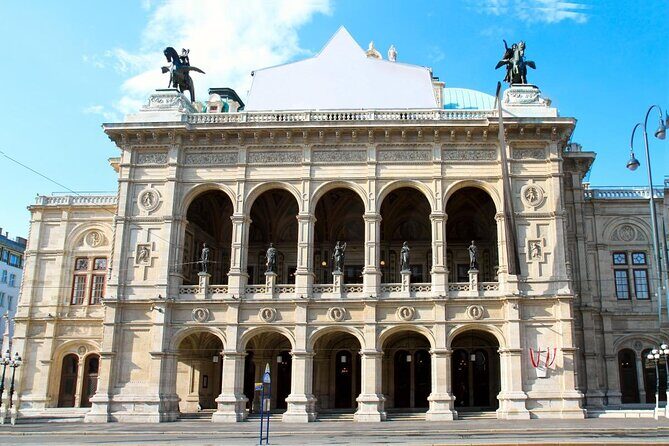
- Ringstraße by tram: a quick ride past the rebuilt State Opera and 19th-century power-building.
- Judenplatz Nameless Library: quiet, essential reflection tied to the site’s history.
- St. Stephen’s during wartime: the cathedral’s Gothic heart with a very specific April 1945 story.
Price and Logistics: What You Pay for a Private 3-Hour Window
This is $342.40 per group for up to 10 people, running about 3 hours. That pricing is the big reason to consider it for families, small groups of friends, or anyone traveling with a couple who wants their own pace. If you fill it with 6–10 people, the per-person cost drops a lot compared with paying for individual tickets to multiple guides.
You also get hotel pickup, but you should know what’s not included: public transport to and from the sights is on you, and there’s no hotel drop-off at the end. That means you’ll want to plan your own ride back—usually easy in Vienna, but it’s still worth thinking through before you commit.
The tour starts at 09:30 or 14:00, and meeting points can be your hotel or a station/port. If you’re staying near the river, you may meet at Reichsbrücke pier or Vienna Hbf / Vienna West. The company notes a specific pickup point for A’Rosa guests at Handelskai 265 (1020 Wien), which is helpful if that’s your situation.
You can also read our reviews of more walking tours in Vienna
The Guide Factor: Why Private Format Matters in Vienna
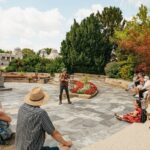
I like guided walks best when they do two things at once: they get your bearings fast and they help you read what you’re seeing. This one aims for that, with a licensed guide who meets you from your doorstep or transit point and stays with your group for the full time.
It also helps that guides here are praised for being active and personal—not just a lecture. People name guides like Walter (often highlighted for clear organization and strong city skills), Brigitte (praised for warmth and thoughtful handling of questions), and Alex (fun, engaging, and willing to chase down answers beyond the exact route). Even Andrea and Hannes come up as examples of guides who adapt and answer patiently.
In practical terms, that can mean:
- You ask a question that changes where you focus for 10 minutes.
- You get quick suggestions for what to do next that fit your energy level.
- You spend less time “figuring out Vienna” and more time actually seeing it.
Starting Easy: Pickup, Mobile Ticket, and the First Read of Belvedere
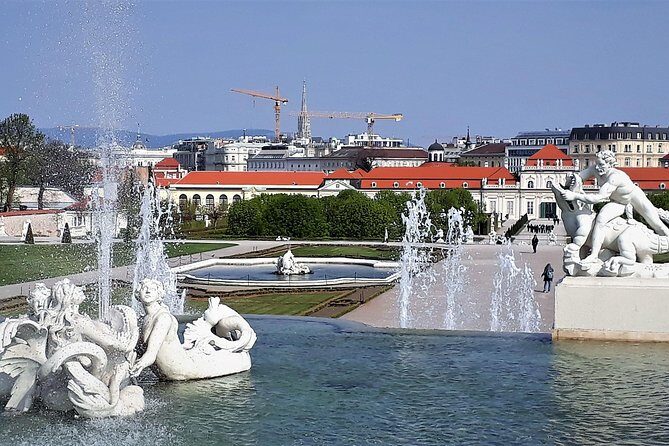
The walk’s tone is set right away at Upper Belvedere. If you’re used to arriving in Vienna and immediately losing an hour to transit, this tour’s setup is a relief: the guide meets you, and you go.
Upper Belvedere is a big deal visually, but it’s also a smart starting point for this specific theme—WWII and what came after. You’re on terraces with wide views, then you’re guided through the meaning of what Prince Eugene built and what later became symbolic for the country. The palace is described here as linked to the symbolic birthplace of Austria’s Second Republic in 1955—a date that helps anchor the post-war story in something real, not abstract.
A small note on admission: the tour includes free admission for key points like this one, so you’re not stuck managing tickets mid-walk. That keeps the pace humane, especially if your group has mixed ages.
Belvedere Gardens as a Political Map (Not Just Pretty)
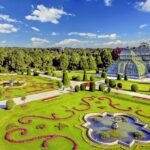
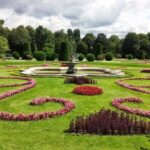
The tour doesn’t treat the gardens like filler. Descending the baroque garden axis, you’re taught to read the space as a statement about order, hierarchy, and power. That’s one of the reasons I like this stop for first-timers: you learn how Vienna designs meaning into the everyday view.
From there, the walk continues toward the Lower Belvedere area, staying focused on the idea that architecture and landscape aren’t neutral. They can be used to project authority—or to mark a break from it.
If you’re thinking, yes, I want the art and the views, but I also want something more substantial than postcards: this is where you’ll feel it.
Schwarzenbergplatz and the Soviet War Memorial: Liberation With a Complicated Shadow
At Schwarzenbergplatz, the tone shifts. The Soviet War Memorial is tied to 1945 and honors Red Army soldiers who died ending Nazi rule in Vienna. It’s not presented as one-note “good guys.” The guidance frames it as a reminder that liberation and occupation can coexist in memory.
This kind of stop is not everyone’s comfort zone, and that’s the only reason it might feel heavy for some groups. But if you’re in Vienna to understand the real 20th century—this is exactly the kind of place your guide can make sense of the way history is layered into the city.
Also: the tour notes free admission here, so you’re not paying extra to sit with something important.
You can also read our reviews of more private tours in Vienna




Hochstrahlbrunnen and the French Embassy: Two Allies, Two Messages
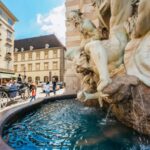
Right near there, you’ll see the Hochstrahlbrunnen (a monumental fountain connected to Vienna’s alpine tap water) framed by the French Embassy. It’s a quick stop, but it’s a clever one for this theme.
The lesson is subtle: you’re looking at Allied connections through architecture and symbolism. The fountain represents a kind of civic pride tied to water and life; the embassy represents state identity and authority, expressed through building style. Even if you don’t care about fountains, this pairing helps you notice how cities communicate politics without text.
A Short Tram Ride on the Ringstraße: Where Vienna Rebuilt Itself
Vienna’s Ringstraße is one of the easiest places to get lost in if you don’t know what you’re looking at. Here, you get a short tram ride that helps link the big streetscape story to something you can actually see from street level.
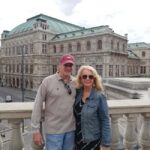
The tour passes the rebuilt State Opera, which matters in a WWII/post-war context because it’s a symbol of continuity after wartime destruction. This isn’t just nostalgia. It shows how culture can become a kind of repair work.
And since the tour doesn’t include public transport to/from the attractions, you’ll want to be ready to cover your share for that tram segment yourself. The upside is that the guide handles the flow so you’re not negotiating routes during your limited time.
Burggarten and the Academy Fine-Arts Thread to 1938
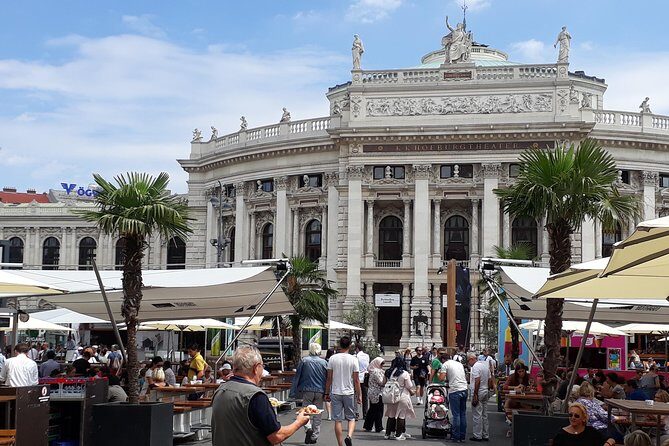
At Burggarten, Mozart presides over a garden that once belonged to the imperial court. That’s the kind of Vienna contrast that works well for this tour: a peaceful, elegant setting right next to a story that connects to ugly decisions that changed Europe.
Right nearby is the Academy of Fine Arts, described here as rejecting a young Adolf Hitler—a small historical footnote that later became headline material once he was in power. It’s a strange kind of lesson: you’re reminded how tiny turns and institutional decisions can become world-changing markers after the fact.
This stop is short, and that’s good. It keeps the pace moving without turning history into a nonstop lecture.
MuseumsQuartier and the FLAK Towers: Concrete That Didn’t Give Up
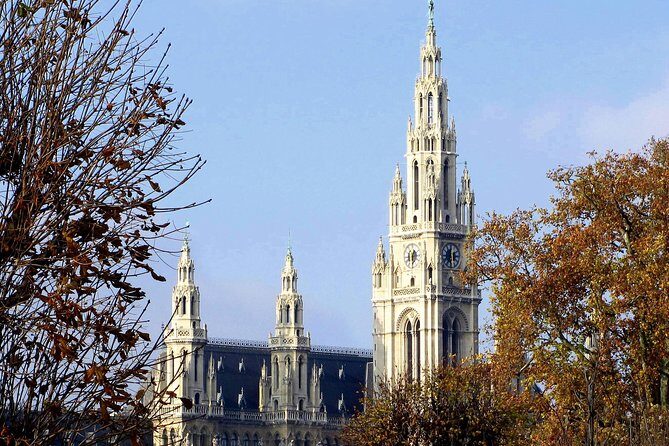
At MuseumsQuartier Wien, the focus lands on Maria Theresa’s square and the twin museum areas, but the most striking WWII detail is in the background: one of Vienna’s six FLAK towers—presented as indestructible concrete witnesses to the city’s militarized final months.
I like this stop because it’s proof you don’t need a dramatic ruin to feel war’s imprint. The city kept going, but parts of it still carried the physical marks of the late-war world.
If you’re the kind of person who likes to “see the proof,” this is a strong moment.
Heldenplatz and Hofburg: Ceremonies, Anschluss, and Seven Centuries of Power
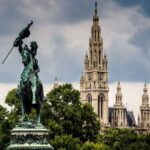
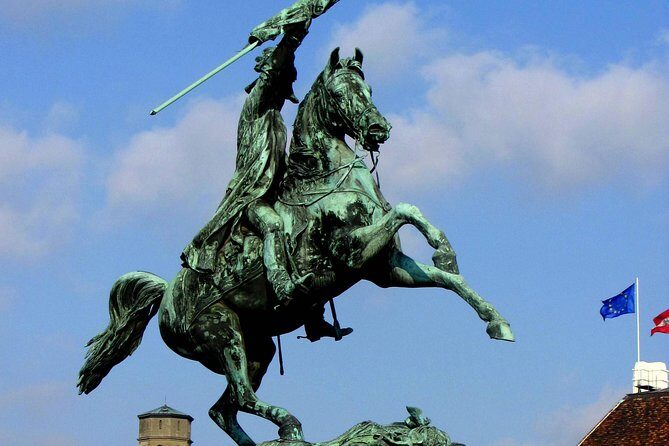
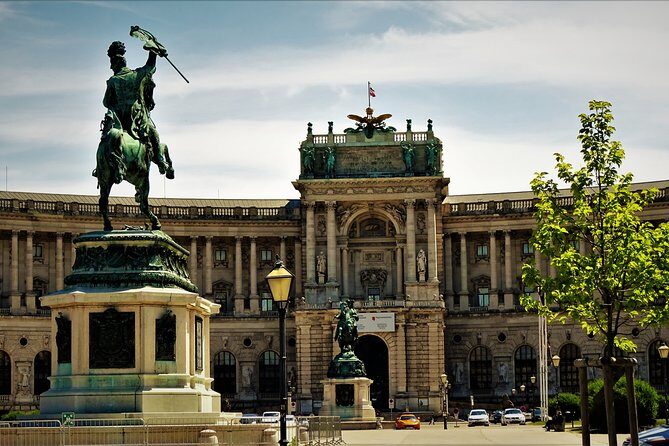
Heldenplatz is a big square, and it carries big weight. Here, the walk ties the site to imperial ceremony and military pride. You also get the reference point you need for 1938: the Anschluss speech delivered by Hitler in March 1938.
The square today is framed by parliament, city hall, museums, and the Burgtheater. That contrast is the point. You’re watching a place evolve from political spectacle to civic and cultural functions—while the past still rings.
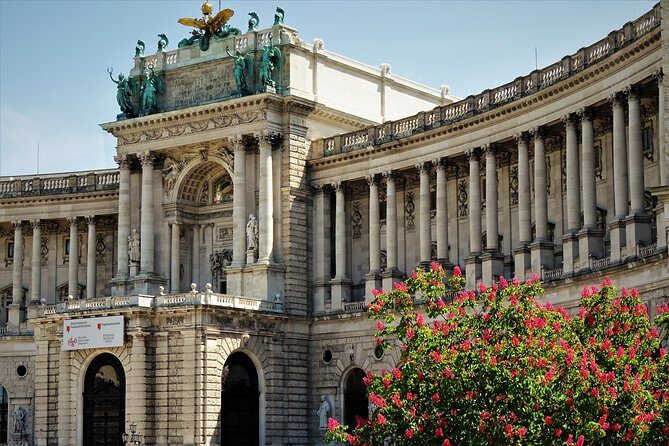
Next comes the Hofburg, described as a palace-city that served as the seat of power for seven centuries. The guide connects the dots from dukes and emperors to the modern presidency. Whether you’re a monarchy fan or not, the building scale makes the concept click: Vienna didn’t just have rulers; it had institutions built to last.
A practical note: the tour spends time in this central area with plenty to look at, but you’re still in a walk format, so don’t assume you’ll have long solo time to wander. You get the context, then you move on.
Judenplatz Holocaust Memorial: The Quiet Stop That Makes the Whole Walk Meaningful
If there’s one moment that I think you should protect your attention for, it’s Judenplatz Holocaust Memorial. The tour notes the site of a medieval Jewish community destroyed in 1421, and then it points to the Nameless Library, commemorating 65,000 Austrian Jews murdered in the Shoah.
This is described in the tour notes as a quiet, essential stop—and it really is. If you only take one piece of this experience, take that: the walk uses the city itself as evidence of what was lost, not just what survived.
St. Stephen’s Cathedral and the April 1945 Fire Story
The tour ends with a return to a Vienna icon: St. Stephen’s Cathedral, Vienna’s Gothic heart. But the point here is not just the postcard exterior.
Parts of the cathedral burned in April 1945 when looters set fire to nearby shops. That detail matters because it places wartime destruction in a specific human chain of events, not only bombs and battles. It’s a reminder that war changes behavior everywhere, not only at the front lines.
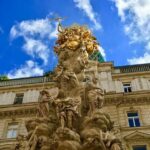
Right before that, you’ll also see the Colonna Della Peste (Pestsaule), the Plague Column—framed here as Counter-Reformation marble art and devotion used to reclaim a city after crisis. It’s a short stop, but it widens the theme beyond the 20th century so you can sense how Vienna processes trauma through monuments.
Who This Tour Is For (And When to Pick Something Else)
This works best if you like guided structure and you want to understand how Vienna’s landmarks connect to the 20th century. If you’re the type who visits museums but also wants street-level meaning—this is your match.
It’s also ideal for:
- First-timers who have limited time and want a clear narrative.
- Groups that want a single guide who can answer questions and adjust focus.
- People who prefer learning while walking, not sitting.
It might be less ideal if:
- You want a strictly light, party-on-the-Ringstraße style day.
- Your group hates memorial sites or prefers less emotional context.
- Your schedule can’t handle a few hours of moving and standing.
Should You Book This Private Vienna WWII and Post-War Highlights Walk?
I’d book it if your goal is to see famous Vienna and also understand why the city looks the way it does after the 20th century. The value isn’t only the landmarks—it’s how the guide links them into a readable story, from Belvedere’s terrace viewpoints to Judenplatz’s memorial meaning, with the Soviet monument and Anschluss-era context guiding the pacing.
I’d skip it if you want only scenic hits and nothing heavy. And I’d be careful if you’re very tight on time, since this is a walking plan that needs shoes and patience.
If you do book: pick the start time that fits your energy, wear comfortable shoes, and plan your own return ride since hotel drop-off isn’t included.
FAQ
How long is the Private Vienna Highlights History Walk?
It runs about 3 hours.
What does it cost, and how big is the group?
It costs $342.40 per group, up to 10 people.
Is hotel pickup included?
Yes. Hotel pickup is offered, but hotel drop-off is not included.
What language is the tour in, and do I get a ticket?
The tour is offered in English, and you receive a mobile ticket.
Are admission fees included for the sights on the route?
The tour notes free admission tickets for the major stops listed.
Can I get a full refund if I cancel?
Yes. You can cancel up to 24 hours in advance for a full refund.