REVIEW · VIENNA
Vienna: Romantic Classics Piano, Violin, and Cello Concert
Book on GetYourGuide →Operated by Konzerte im Mozarthaus KG · Bookable on GetYourGuide
A night of classic music, right by St. Stephen’s. This Vienna concert brings piano, violin, and cello together in a historic room with expressive frescoes, built for close listening.
You’ll get a carefully stacked set of Beethoven, Chopin, Mozart, Liszt, Schubert, and Brahms-adjacent favorites, with a program that moves from hush to fireworks without feeling rushed. The real draw is how the intimate space keeps you close to the emotion in the notes.
What I like most is the combination of excellent acoustics and the performers’ precision, so even fast passages land clean. I also like that the Romantic Classics format mixes famous works with crowd-pleasing showpieces, so classical newcomers aren’t lost. One thing to consider: seating choices matter, and the back row will naturally feel less close than seats nearer the musicians.
In This Review
- Key things to know before you go
- Romantic Classics at Mozarthaus: what the Sala Terrena setting changes
- Finding the entrance near St. Stephen’s Cathedral (Deutschordenskirche gate)
- The program’s emotional arc: from moonlight to bold keyboard brilliance
- Beethoven’s Moonlight Sonata: why the adagio hits harder up close
- Chopin and Liszt: lyric melancholy followed by sparks
- Violin and cello moments: Paganini fireworks and a swan-song interlude
- Haydn, Mozart, and Schubert: the “glue” that makes the night feel whole
- The performers: Claudio Bentes, Dushan Sretovic, Teodora Miteva
- Ticket value: 90 minutes for about $69, and where your seat counts
- Comfort and practical details for a short evening out
- Who should book this concert, and who might skip it
- Should you book Vienna Romantic Classics for $69?
- FAQ
- How long is the Vienna Romantic Classics concert?
- How much does it cost?
- Where is the meeting point?
- What time should I arrive?
- What languages are used?
- Is the venue wheelchair accessible, and can I cancel?
Key things to know before you go
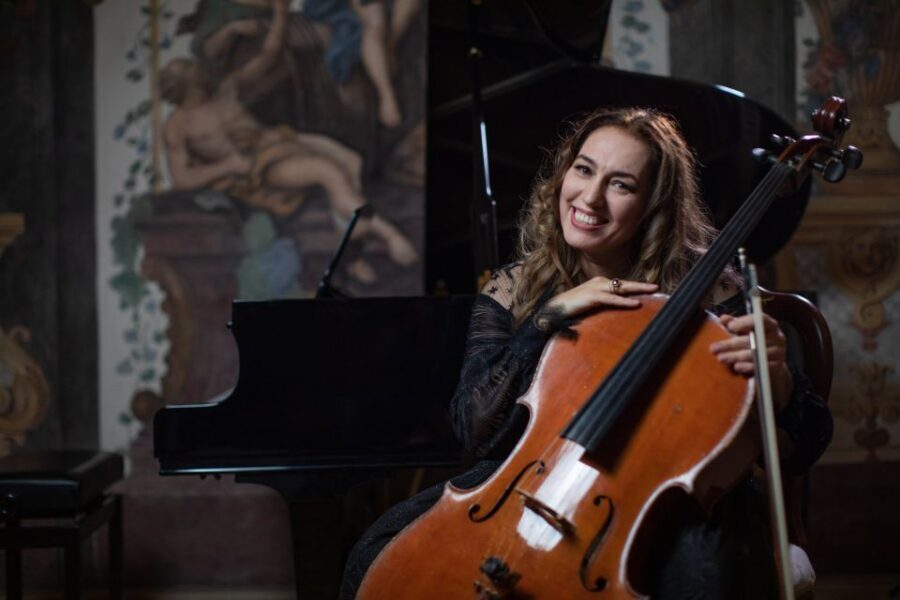
- Intimate Mozarthaus setting that makes you feel close to the performers
- Frescoes in the Sala Terrena add atmosphere without distracting from the music
- A tight 90-minute program with big-name composers and recognizable melodies
- Claudio Bentes, Dushan Sretovic, and Teodora Miteva anchor the performance
- Choose your seat: student tickets, back row, or closer options change how personal it feels
Romantic Classics at Mozarthaus: what the Sala Terrena setting changes
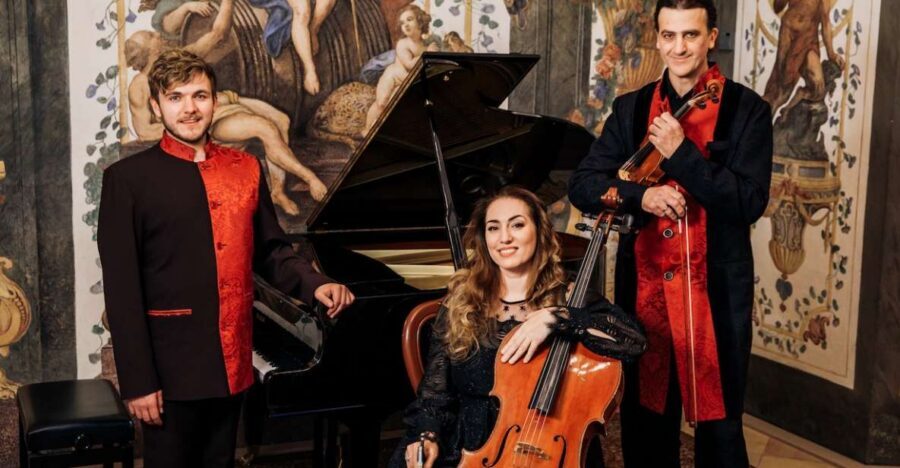
Vienna’s best concerts often happen in rooms that feel made for listening, not just watching. Here, the mood starts with the location inside the Mozarthaus and continues in the Sala Terrena, where you can see beautiful, expressive frescoes. It’s not just decoration. The visuals tell your brain you’re in for something old-world and emotional.
The other big factor is how the room sounds. Multiple accounts put the spotlight on clear, detailed acoustics. That matters because a lot of the “magic” in classical music isn’t only in the melody. It’s in timing, articulation, and balance between instruments. In a strong acoustic room, the piano doesn’t cover the strings, and the strings don’t flatten into background.
And because the concert runs just 90 minutes, you get a focused arc. You’re not sitting through long stretches of “maybe I’ll follow along.” The music keeps a forward pulse, and the program’s variety helps you stay engaged.
You can also read our reviews of more tours and experiences in Vienna
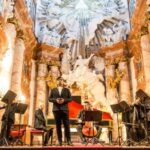


Finding the entrance near St. Stephen’s Cathedral (Deutschordenskirche gate)
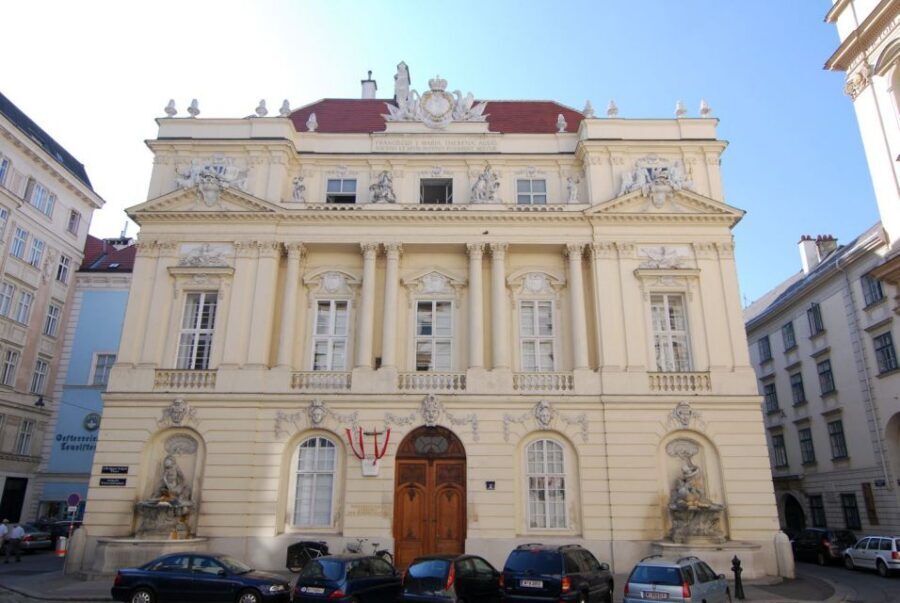
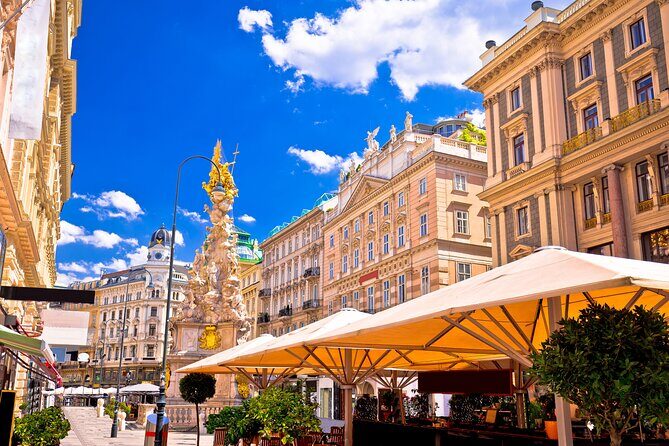
Location-wise, you’re close to the postcard center of Vienna. The venue is about 150 meters from St. Stephen’s Cathedral, so you can line this up with a pre-dinner walk through the area.
Your practical move is simple: arrive about 15 minutes early. Then go to the gate at Deutschordenskirche, where you’ll also find a poster stand for Concerts at Mozarthaus. This saves you from wandering when you’re trying to stay on schedule.
If you’ve ever shown up at a concert venue and spent 10 minutes trying to find the right door, you’ll appreciate how straightforward this setup is.
The program’s emotional arc: from moonlight to bold keyboard brilliance
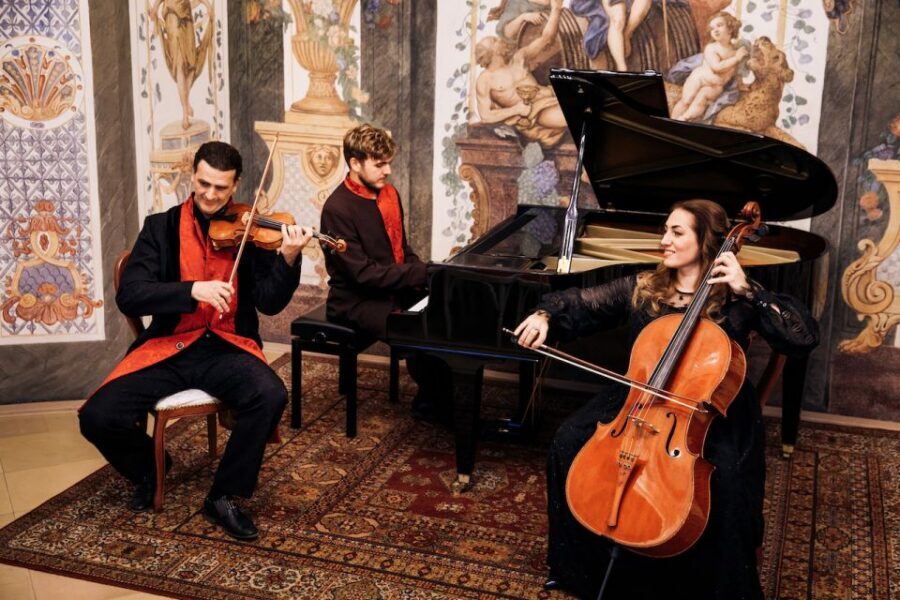
This concert’s real strength is pacing. The instrument mix of piano, violin, and cello gives the program room to breathe, and the repertoire creates a clear emotional trail.
The music sequence is built around contrast. You get:
- reflective, singing lines (perfect for quiet focus)
- virtuosic keyboard or string moments (perfect for “how did they do that?”)
- dramatic romantic colors that feel very Vienna, very night-time
You’ll hear an opening trio by Haydn, then shift into Beethoven’s famous Moonlight Sonata atmosphere. After that, the program moves through Mozart and Beethoven with a lighter touch, then pushes into romantic and virtuosic territory with Liszt, Chopin, and beyond. The end lands on Schubert, which is usually a good sign when you want a final emotion that lingers.
Beethoven’s Moonlight Sonata: why the adagio hits harder up close
Beethoven’s Moonlight Sonata (Adagio) is the kind of piece that tests a concert venue and a performer’s control. It’s slow, yes, but it’s also incredibly detailed. The notes have to float evenly. Any wobble in timing or dynamics shows fast in an exposed movement like this.
That’s why it’s a smart pick for this setting. When acoustics are good, you hear the fine gradations in touch and phrasing. You don’t just recognize the tune. You hear the shape of it. The result is that the famous “moonlight” mood becomes more than a label. It feels like atmosphere you can lean into.
Chopin and Liszt: lyric melancholy followed by sparks
If you love romantic piano, you’re in the right place. The program includes Liszt’s Un sospiro, Chopin’s Nocturne in c minor, op. 48/1, and Chopin’s Étude op. 10/1 in C Major.
Here’s what that combination does for you:
- Liszt gives you a breath-like intensity. It’s romantic, but also tightly controlled.
- The Chopin nocturne leans into nocturnal emotion, where balance and softness matter.
- The Étude is a technical and musical test at the same time, so you get both brains and heart.
You don’t need to be a “serious pianist” to enjoy it. But if you are, you’ll probably notice how cleanly the performer navigates phrasing and rhythm through the faster work.




Violin and cello moments: Paganini fireworks and a swan-song interlude
The concert isn’t only piano-centered. You also get a cello spotlight with Bach’s Cello Suite in G Major (BWV 1007), followed by Paganini Caprice 13. That’s a strong one-two punch: Bach gives lyrical structure, and Paganini brings daring speed and flair.
Then the program turns even more romantic with Saint-Saëns, The Swan and Massenet Thais – Meditation. These are the “oh wow” pieces that many audiences love because they’re so instantly emotional. They’re also a good reminder that classical music isn’t one mood all night. You get tenderness, then virtuosity again.
In a smaller, well-sounding venue, these string moments can feel surprisingly immediate. You don’t just hear notes. You hear the edges of bowing and the clarity of transitions between phrases.
Haydn, Mozart, and Schubert: the “glue” that makes the night feel whole
A lot of classical programs feel like separate tracks. This one works harder than that. Haydn, Mozart, and Schubert help tie the romantic heavy hitters together.
You’ll hear:
- Haydn’s Trio all’ungarese (Hob XV:25) with Andante, Poco Adagio, and Finale Rondo
- Mozart’s La tartine de beurre – Das Butterbrot
- Schubert’s Trio in Es Major, op. 100 (Andante con moto)
Haydn is often a quiet genius move for a concert opener. He adds structure and movement without turning it into a history lecture. The Mozart piece also helps keep the mood human and light, which is valuable in a night that includes serious emotional landmarks.
Then Schubert at the end gives you a warm, reflective landing. If you like leaving concerts with a gentle afterglow instead of feeling “done,” this is a good choice.
The performers: Claudio Bentes, Dushan Sretovic, Teodora Miteva
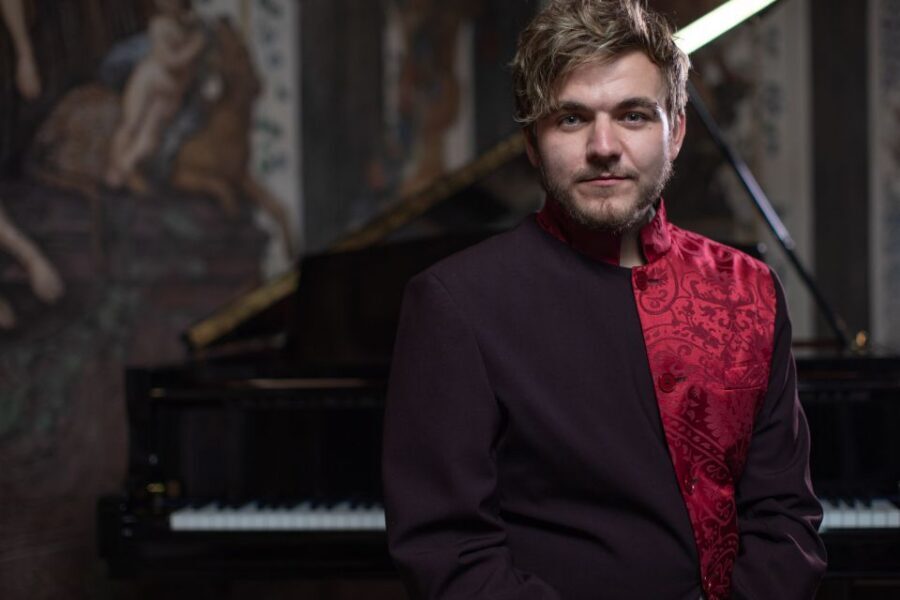
A big part of why this concert works is the roster. You’ll see Claudio Bentes performing on violin, Dushan Sretovic on piano, and Teodora Miteva as a soloist.
From what’s been shared about their playing, the common thread is expressiveness with control. That’s exactly what you want for a program that swings from delicate adagio writing to fast virtuosic passages. If one performer leaned only “showy” or only “pretty,” the night would feel uneven. Here, the balance seems intentional, which makes the whole set feel cohesive.
Ticket value: 90 minutes for about $69, and where your seat counts
At $69 per person for a 90-minute concert, this is the kind of price that feels reasonable if you care about a real performance more than a tourist badge. You’re paying for:
- a focused program length (less time, more impact)
- a professional lineup
- a historic, listening-friendly venue
The key value decision is seating. The option to choose student tickets, back row, or tickets closer to the performers tells you the organizers expect closeness to change your experience. If you can, I’d choose the option that puts you nearer the action, especially for piano and smaller string details. If budget is tight, the back row can still be worthwhile, but don’t expect the same face-to-face feel.
Either way, you’re getting a concert that covers a wide slice of the classical “greatest hits” universe: Beethoven, Chopin, Mozart, Liszt, Schubert, and more.
Comfort and practical details for a short evening out
The event includes a cloakroom, which sounds basic until you’re standing near St. Stephen’s with a coat you don’t want to carry. It’s one of those small choices that makes the evening flow.
There’s also a break. One account notes that toilets could have had clearer signing, and that refreshments were available with a cash-only approach outside the break area. That same account also mentioned a drink included, which would help reduce the hassle if you just want to grab something simple and return fast.
In a 90-minute concert, you don’t want to waste time. So my practical advice is: use the break smartly, and keep any cash needs in mind.
Who should book this concert, and who might skip it
Book it if you want:
- a high-quality classical concert without a full evening commitment
- a program built around major names and recognizable romantic moods
- a venue that prioritizes sound clarity and close listening
It’s also a good fit for couples and first-timers because the structure is engaging and the repertoire is popular enough that you’ll never feel totally out of place.
You might consider skipping if you’re very picky about staging or you need lots of “context” from a host. This is performance-first, and the set is designed to carry you through on music alone.
Should you book Vienna Romantic Classics for $69?
Yes, I’d lean toward booking if you like romantic-era music and you care about how it sounds in a real room. For roughly $69 and 90 minutes, the value is strongest when you pick seats closer to the performers. The venue reputation for strong acoustics and the performers’ tight, expressive playing are exactly what you want from this kind of program.
If you’re on a tight schedule and want something easy to fit into your day near St. Stephen’s, this also makes sense. You can arrive, settle in, and spend the night with music that ranges from moonlit quiet to virtuosic sparkle.
FAQ
How long is the Vienna Romantic Classics concert?
The concert lasts 90 minutes.
How much does it cost?
It’s listed at $69 per person.
Where is the meeting point?
The venue is about 150 meters from St. Stephen’s Cathedral. You should enter the gate at Deutschordenskirche, where there is a poster stand of concerts at Mozarthaus.
What time should I arrive?
Plan to arrive about 15 minutes before the concert starts.
What languages are used?
The host or greeter speaks English and German.
Is the venue wheelchair accessible, and can I cancel?
Wheelchair access is listed as available. Free cancellation is offered up to 24 hours in advance for a full refund.