REVIEW · VIENNA
Vienna: Classical Concert at Mozart’s First House
Book on GetYourGuide →Operated by Konzerte im Mozarthaus KG · Bookable on GetYourGuide
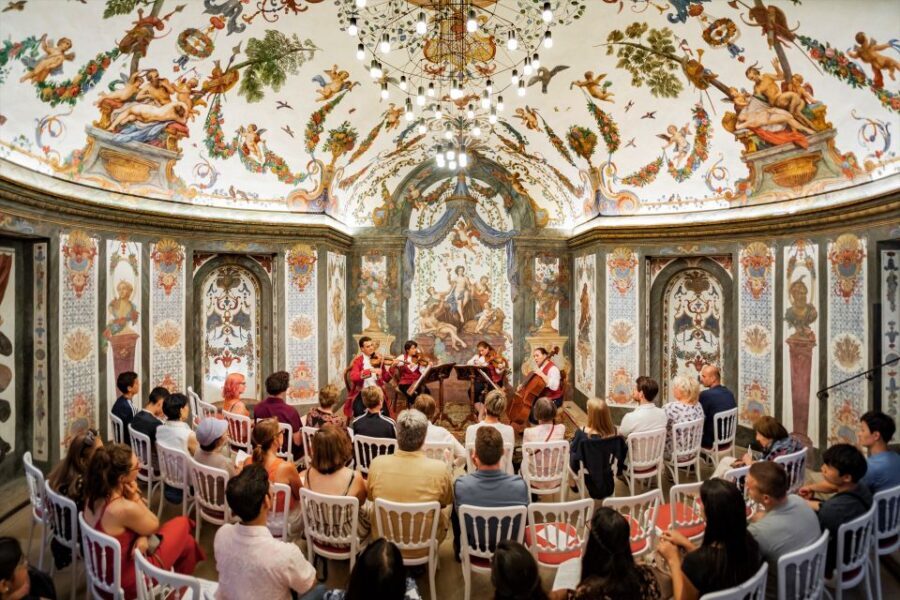
Mozart’s music, in Mozart’s own walls. This Vienna concert at Mozarthaus puts you in the Sala Terrena, where Mozart played while living in the monastery in 1781. The setting does a lot of the work for you: it’s not just a recital, it’s the chance to connect the notes to the room.
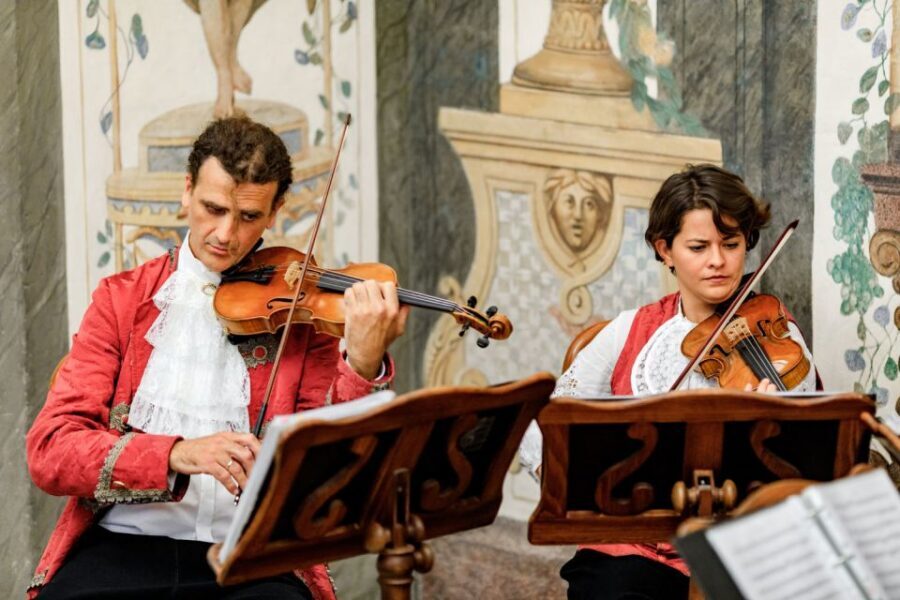
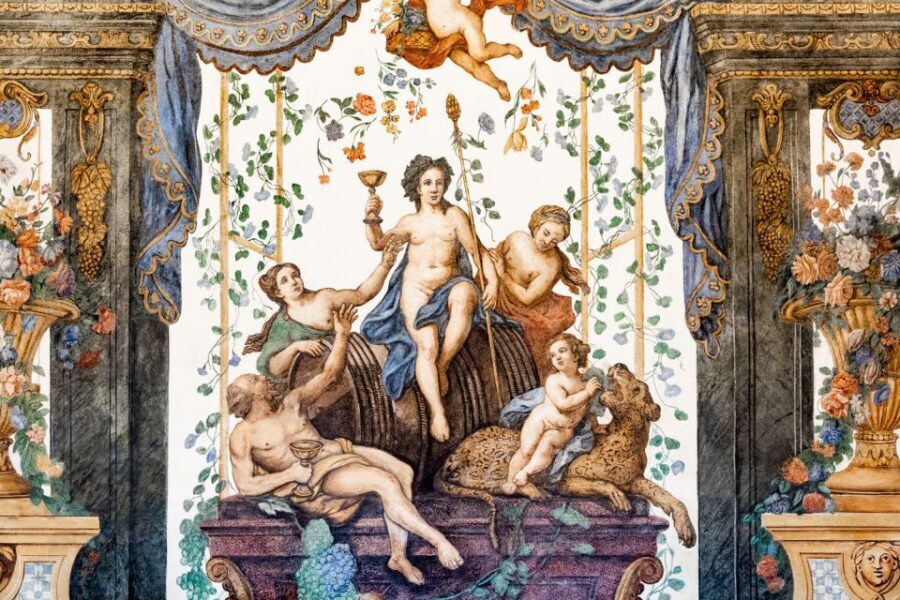
I especially like the promise of live music close by, with the Mozart Ensemble Vienna performing works from the Viennese Classical Period. And I love that you get to linger over the frescoes first, with ornamentation and mythical scenes that make the space feel expressive, not stuffy.
One consideration: the whole experience centers on a single venue, so if you’re chasing lots of varied sightseeing in one night, this may feel like a focused evening rather than a wide-ranging outing. Also, head to the meeting point carefully; you enter through the gate at Deutschordenskirche near St. Stephen’s.
In This Review
- Key things I’d focus on
- Finding Mozart’s First House Near St. Stephen’s Cathedral
- Deutschordenskirche Entrance: How to Get Oriented Fast
- Entering the Sala Terrena Frescoes Before the Music
- What You’ll Hear: Mozart Ensemble Vienna and Viennese Classical Period Favorites
- Why Hearing Mozart Here Feels Different Than a Typical Recital
- Practical Tips: Wardrobe, Timing, and Getting the Most From One Great Night
- Should You Book This Mozarthaus Classical Concert?
- FAQ
- Where is the concert venue?
- Where exactly should I enter for the concert?
- What is included with my ticket?
- What kind of music will I hear?
- Who performs at the concert?
- What is the Sala Terrena?
- What historical building is Mozarthaus?
- Why is Mozart’s connection to the building important?
- How close is the venue to major landmarks?
- Who is the experience provider?
Key things I’d focus on
- Mozarthaus in the city center: near St. Stephen’s Cathedral and Hofburg, about 150 meters from St. Stephen’s
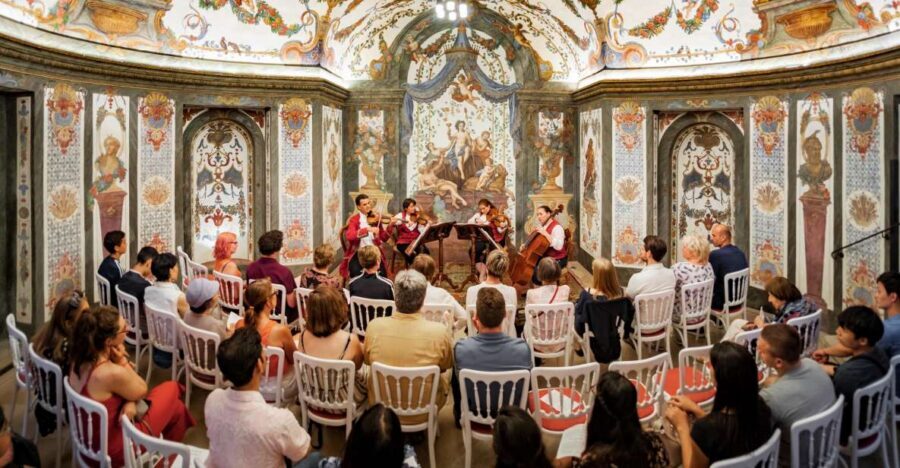
- Sala Terrena frescoes: expressive ornamentation and mythical scenes you’ll see as part of the experience
- Mozart’s lived-in setting: the building was part of a monastery from the second half of the 12th century, and Mozart lived there in 1781
- The Mozart Ensemble Vienna: live performances of music from Mozart and other Viennese Classical composers
- Close proximity live performance: a very personal way to hear the classical repertoire
Finding Mozart’s First House Near St. Stephen’s Cathedral
This is the kind of Vienna night that’s easy to add to your plans. The concert venue is about 150 meters from St. Stephen’s Cathedral, and you’re also close to Hofburg. That matters because Vienna evenings can swallow time quickly. Here, you can do a normal day, take your time getting dinner sorted, and then walk to a specific, historic address without a complicated commute.
The meeting point is simple but specific. Plan to look for the area around Deutschordenskirche, and enter the gate there. You’ll also find a poster stand for Mozarthaus concerts at the same spot, so you’re not left wandering with the hope that you chose the right door. If you’re the type who likes to show up early just to settle your nerves, this is a good one to arrive with a little cushion. Not for thrill-seeking, but for that calm moment of finding the entrance and getting oriented.
You can also read our reviews of more tours and experiences in Vienna

Deutschordenskirche Entrance: How to Get Oriented Fast
Here’s what I recommend for a smooth start: treat the Deutschordenskirche gate like your waypoint, not like a random church detail. The instructions are clear: you should enter the gate at Deutschordenskirche, where there’s also a poster stand for concerts at Mozarthaus.
Once you’re inside, the biggest difference from typical concert venues hits fast. You’re not just walking into a hall. You’re stepping into a building that’s tied to the monastery of the German Knightly Order, dating to the second half of the 12th century. That’s the backdrop for everything that follows—the kind of setting that makes even waiting feel historical.
If you arrive a touch early, use that time to look around with fresh eyes. In a place like this, small details help: carved, painted surfaces, the sense that the room has been used and reused over centuries. It’s not about pretending you’re back in the 1700s. It’s about noticing how the setting frames the music.
Entering the Sala Terrena Frescoes Before the Music
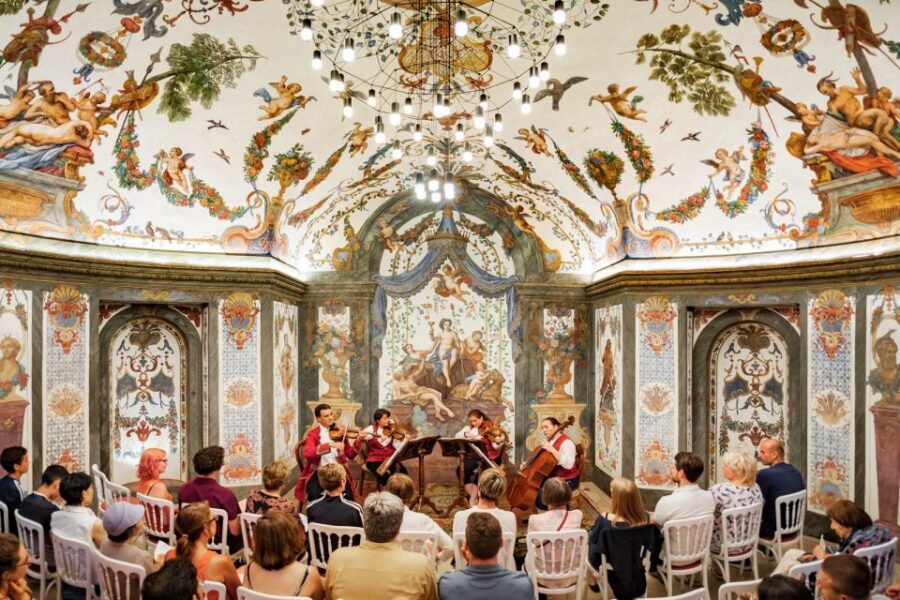
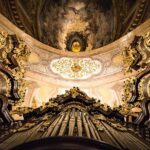
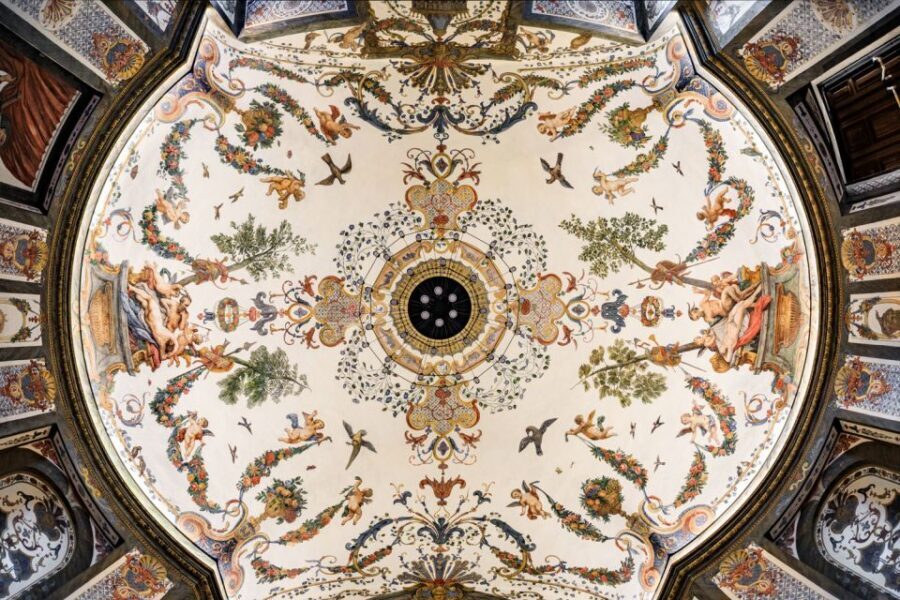
The standout visual element is the Sala Terrena—and it’s not decorative in a quiet, background way. The frescoes are described as beautiful and expressive, with rich ornamentation and mythical scenes. If you like classical music but you also like art that tells a story, this part will feel like bonus time with your brain switched on.
Why it’s worth your attention: music in Vienna often gets talked about like it exists only in scores. The Sala Terrena takes you out of that mindset. You see ornamentation and mythic scenes in the room itself, and it subtly reminds you that composers and patrons lived inside a world where art, symbolism, and spectacle all mixed. That context can make the listening more active, not passive.
This space also helps you understand the building’s role. Mozart lived in the monastery in 1781, and the concert experience is built around the idea of hearing the music where he once played. Even if you don’t treat that as literal proof of acoustics or authenticity, it still gives you a stronger emotional frame: you’re not only listening to history. You’re listening inside it.
What You’ll Hear: Mozart Ensemble Vienna and Viennese Classical Period Favorites
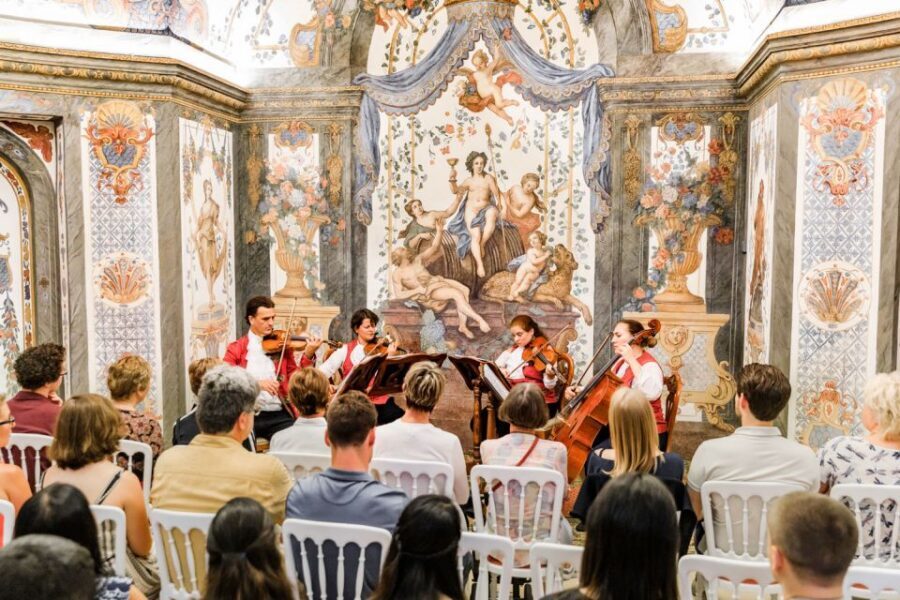
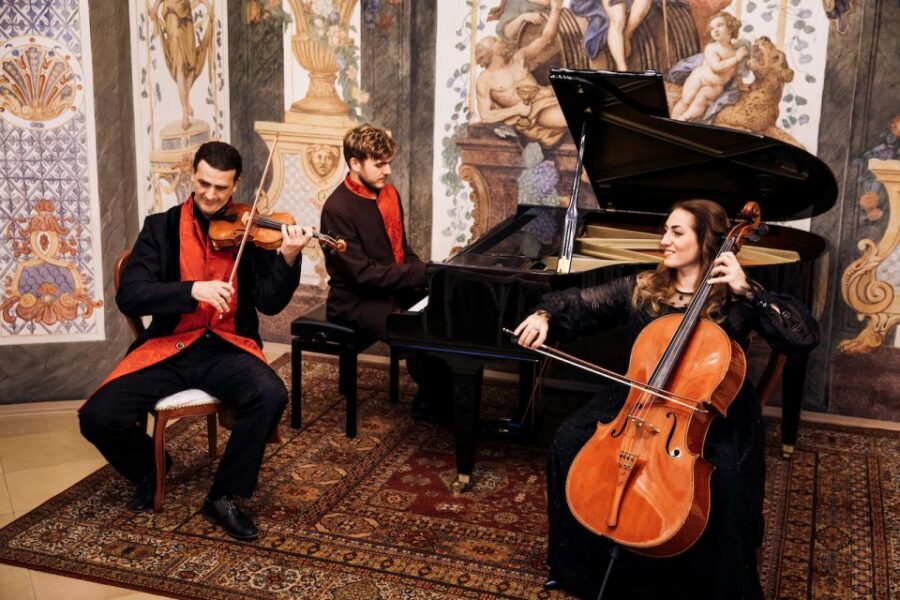
The concert focuses on the Viennese Classical Period, with music from names you’ll recognize and likely feel in your bones. Expect Mozart, Haydn, Schubert, Beethoven, and more, performed by the Mozart Ensemble Vienna.
That lineup is a big part of the value. You get the broad family of sounds associated with Vienna’s golden era: phrasing and clarity from Mozart, elegant wit from Haydn, and the dramatic lift you often hear moving toward Beethoven. Even without a detailed program list here, the promise is clear: this is not a random playlist. It’s anchored in the classical canon you came to Vienna for.
Also, the concert is described as close enough to feel personal. One of the highlights is live music in close proximity, the sort of detail that changes how you experience a piece. When sound feels connected to performers and not just floating at a distance, you tend to listen differently. You might catch subtleties you would miss in a larger hall. And even when you don’t, the feeling of presence can make the evening memorable in a way a recording can’t.
Why Hearing Mozart Here Feels Different Than a Typical Recital
There’s a reason people make a point of coming to Mozarthaus. It’s not just because Mozart is famous. It’s because the experience is built around the idea of place: Mozart’s first house, the Sala Terrena, and a monastery setting with roots stretching back to the 12th century.
When you hear classical music in a room with that kind of association, your brain stops treating the concert like a separate event. Instead, it becomes one chapter in a bigger Vienna story. You walk in the city center near St. Stephen’s and Hofburg, then you step into a quieter world where the walls themselves carry meaning. That shift helps you slow down. It’s harder to rush when the setting nudges you toward attention.
So the value isn’t only the performers or the composers. It’s the combination: world-class repertoire + meaningful setting + close-up live performance. That’s why this kind of concert can stick with you. It’s not just what you hear—it’s how the night unfolds around the music.


Practical Tips: Wardrobe, Timing, and Getting the Most From One Great Night
A few practical things can make this smoother.
First, check what’s included. Your ticket comes with wardrobe, which is a real convenience in Vienna. If you’re out in cool weather, it’s nice to know you won’t be juggling your coat and bag through the evening. It also means you can focus on listening instead of managing belongings.
Second, give yourself time to find the entrance. The meeting point is about 150 meters from St. Stephen’s, but Vienna streets can still trip you up when you’re searching for a specific gate. Use the Deutschordenskirche poster stand as your anchor.
Third, lean into the order of events. You’re set up to enter the Sala Terrena and take in the frescoes as part of the experience. That’s not wasted time. Viewing the frescoes first can make the music feel more integrated, like both the art and the sound are telling you something about the same world.
Finally, decide what you want from your evening. If you love classical music and you like real context—rooms, buildings, and details that connect to the composers—this is the right kind of “one big thing” night. If you’re looking for a packed schedule with multiple stops, you may find it too focused.
Should You Book This Mozarthaus Classical Concert?
Book it if you want an evening that’s built around Mozart’s world, not just Mozart’s name. The biggest reasons to choose it are the combination of the setting at Mozarthaus, the chance to see the Sala Terrena frescoes, and the live performance by the Mozart Ensemble Vienna with Viennese Classical Period works.
Skip it only if you’re expecting an all-purpose tour with lots of different sights. This experience is about one place and one concert experience done well. If that matches your travel style, you’ll likely enjoy how the music and the room work together.
If you like the idea of hearing classical favorites where Mozart once lived and played, this is exactly the kind of Vienna night that feels personal, not generic.
FAQ
Where is the concert venue?
The concert is at Mozarthaus in Vienna. The meeting point is about 150 meters from St. Stephen’s Cathedral.
Where exactly should I enter for the concert?
Enter the gate at Deutschordenskirche. There is also a poster stand there for Mozarthaus concerts.
What is included with my ticket?
Your ticket includes the concert ticket and wardrobe.
What kind of music will I hear?
You’ll hear music from the Viennese Classical Period, including works by Mozart, Haydn, Schubert, Beethoven, and more.
Who performs at the concert?
The concert is performed by the Mozart Ensemble Vienna.
What is the Sala Terrena?
It’s the room at Mozarthaus where the experience happens, known for its expressive frescoes with ornamentation and mythical scenes.
What historical building is Mozarthaus?
Mozarthaus is connected to the monastery of the German Knightly Order, dating to the second half of the 12th century.
Why is Mozart’s connection to the building important?
The experience is tied to the fact that Mozart lived in the monastery in 1781, and you hear music there where he once played.
How close is the venue to major landmarks?
It’s near both St. Stephen’s Cathedral and Hofburg, and the venue is about 150 meters from St. Stephen’s Cathedral.
Who is the experience provider?
The provider is Konzerte im Mozarthaus KG.