REVIEW · VIENNA
Vienna Highlight Tour – yue walk
Book on Viator →Operated by Vienna Highlight Tour · Bookable on Viator
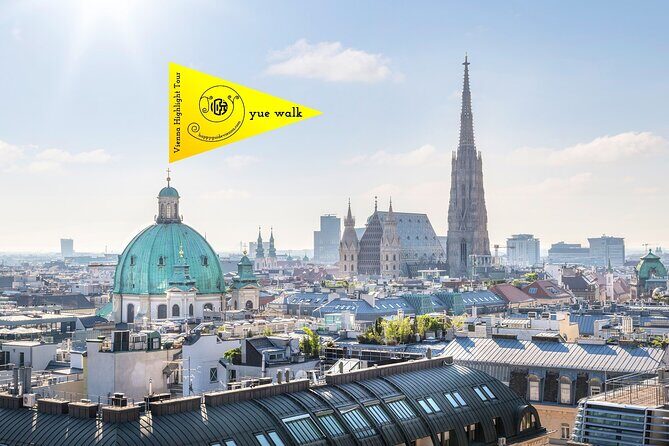
Vienna hits you fast. This 2-hour walk turns the center into a map you can actually use, with a licensed guide guiding you from major façades to the stories behind them. You’ll connect sights that look unrelated at first—opera, palaces, churches, memorials, and the Hofburg—into one clear picture of how Vienna developed.
I especially liked the small-group feel (max 6) because the guide can slow down for questions, and the pace stays human. I also loved how the tour mixes big landmarks with short “why it matters” context, so you’re not just ticking off buildings—you’re picking up the threads that link them.
One thing to watch: several major interiors are not included, including the Vienna State Opera and the Sisi Museum, so you’ll mostly see those from the outside unless you add tickets on your own. If you want deep museum time, plan that separately.
In This Review
- Key things that make this tour work well
- Starting at the Vienna State Opera area, then building your bearings
- Memorial stops that change the tone of the whole walk
- Lobkowitzplatz and the layers of Vienna architecture
- Josefsplatz: the best interior moment is included
- A quick look at the Lipizzaner horses
- Wiener Hofmusikkapelle and the imperial music world
- Hofburg: where the Habsburg story becomes visible
- Heldenplatz and the sweep of civic Vienna
- Maria Theresien Square and the woman who shaped the empire
- Sisi Museum: included in the route, but not ticketed
- Michaelerplatz and the surprise of the small details
- Kohlmarkt and Cafe Demel: luxury street energy in minutes
- Pestsäule (Colonna Della Peste): a plague monument you can actually read
- St. Stephen’s Cathedral: the walk ends where you’ll keep exploring
- Price and value: is $106.20 per person worth it?
- Who this tour suits best, and who might want a different plan
- What to do before and after your walk
- Should you book the Vienna Highlight Tour with Yue Walk?
- FAQ
- How long is the Vienna Highlight Tour?
- How much does the tour cost?
- Is the tour offered in English?
- What is the group size?
- Where do I meet and where does the tour end?
- What time does the tour start?
- Do I need separate tickets for any stops?
- Do I get a mobile ticket?
- Is the tour weather-dependent?
- Is free cancellation available?
Key things that make this tour work well
- A licensed guide who ties buildings to people and events, so you understand what you’re looking at
- Max 6 travelers, which keeps the walk flexible and question-friendly
- Lots of quick, high-value stops (5 to 10 minutes each) for a first-time “get your bearings” route
- Habsburg focus around the Hofburg and Heldenplatz, with practical context you’ll remember later
- English tour with a mobile ticket, easy to manage on the go
- You end near St. Stephen’s Cathedral, a great place to continue exploring after the walk
Starting at the Vienna State Opera area, then building your bearings
The tour starts at Herbert-von-Karajan-Platz by the Staatsoper (Vienna State Opera). This matters more than it sounds. Vienna’s historic center can feel like a maze of palaces, churches, and grand squares. Starting here puts you at a natural hub where multiple major sights are within walking distance.
Right away, you’re in the orbit of one of the city’s most recognizable buildings: the Vienna State Opera, a neo-renaissance landmark with origins going back to 1869. The guide doesn’t treat it like a random postcard. You get the kind of context that helps you notice details later, like how Vienna’s “serious” buildings sit right beside places tied to everyday fame and rivalry.
You’ll also hear stories that connect neighboring landmarks you’d otherwise ignore. For example, the tour nods to Palais Toldesco, where Johann Strauss supposedly “stole” his first wife, and it points out the significance of the Sacher Hotel (yes, the Sacher Torte is part of the story too). It’s quick, but it’s the kind of info that makes you look up from your phone and actually see the architecture.
Practical note: the State Opera stop is listed with an admission ticket not included, so don’t count on an interior visit during this walk. Expect outdoor viewing and photo time, not a ticketed performance.
You can also read our reviews of more walking tours in Vienna

Memorial stops that change the tone of the whole walk
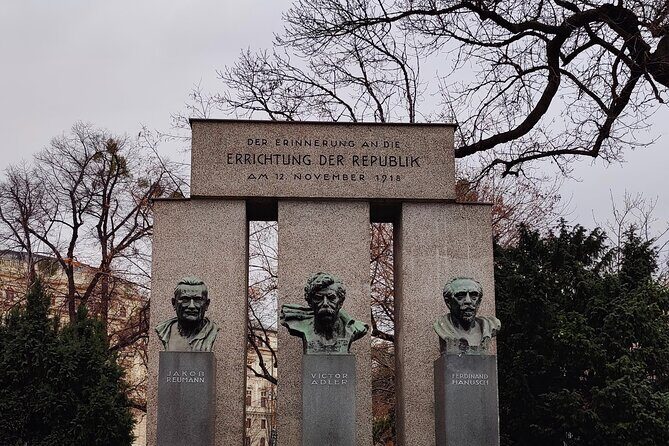
After the glamour begins, the tour shifts gears with the Memorial Against War & Fascism. This is a reflective pause in the middle of sightseeing, and it makes the rest of the walk land differently. You’ll see key elements including the Jewish statue and the Gate of Hell, plus the Independence Declaration Stone.
Even if memorials aren’t usually your thing, this stop helps you understand Vienna as more than beauty. The city’s story includes conflict, occupation, and the long aftermath. Having a guide explain what you’re looking at turns the memorial into something you can interpret, instead of a sculpture you simply pass.
This part of the route is free, which is also a nice way to balance the more ticket-dependent sights later.
Lobkowitzplatz and the layers of Vienna architecture
Next you’ll move into Lobkowitzplatz, a stop that works well for architecture lovers. Here the tour keeps it concise and points out contrast—baroque, museum culture, and modern design all within a short walk.
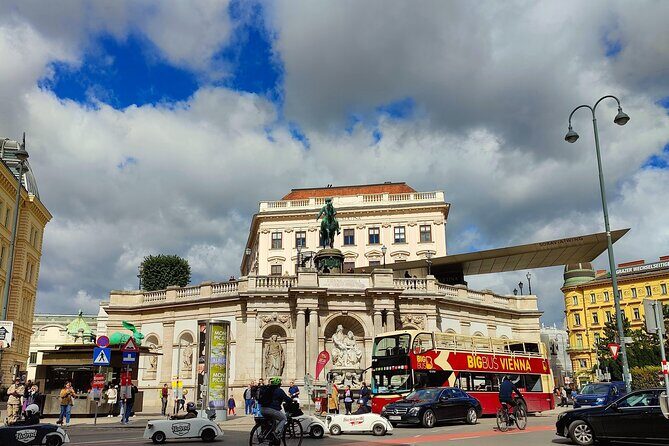
You’ll get exterior context around the Albertina Palace and Museum, then see the Augustina Church Tower area. The guide also calls out the Baroque Lobokowitz Palace and an Art Deco connection tied to Otto Wagner.
The value here is not just the names—it’s learning to spot different eras quickly. If you’ve ever wandered Vienna and thought, I don’t know what style this is, this is the kind of stop that teaches your eye. A few minutes at the right corners can do more than an entire day of guessing.
Josefsplatz: the best interior moment is included
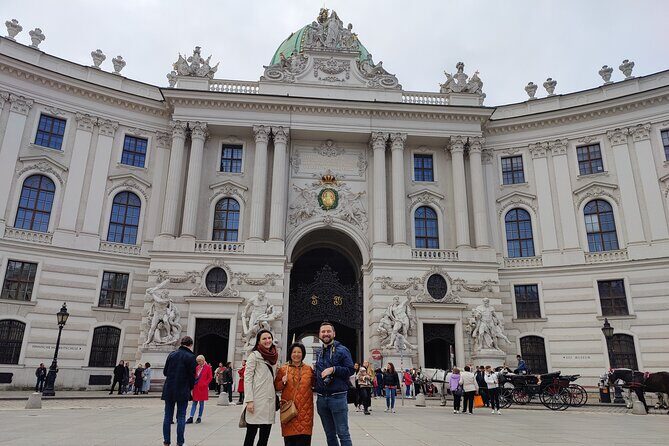
At Josefsplatz, the tour finally gives you a true inside visit: the Augustina Church. This is one of the clearer “included” moments because the stop is marked with admission ticket free, and it’s specifically described as a visit inside.
This is a good place for anyone who thinks walking tours are only about exteriors. You’ll see religious art and interior atmosphere right in the middle of the historic center, which helps break up the pace.
Outside around the same area, the tour also references the Josef statue and nearby landmarks such as the Court Library and Pallavicini Palace. The Spanish Riding School is also included as part of the viewing route. You’re not going in as a ticketed guest (that kind of experience would require separate planning), but you’ll see the setting that makes the horses and pageantry famous.
A quick look at the Lipizzaner horses
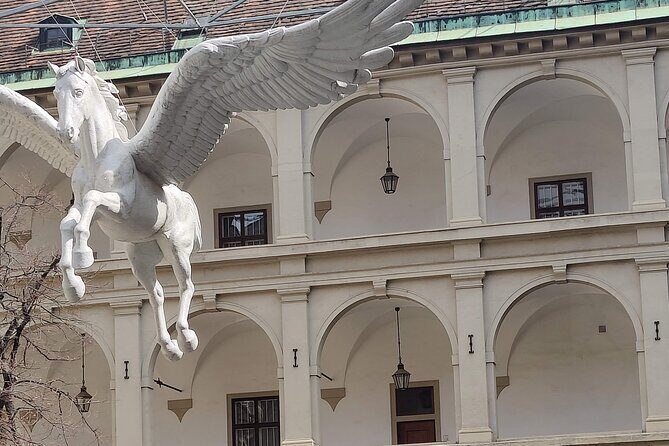
Then you’ll hit Stallburg for about 5 minutes. This is the stop tied to Lipizzanner horses. It’s brief, but it’s one of those Vienna moments people come for, especially if you like traditions that last for centuries.
Because the stop notes admission ticket not included, treat this as viewing time. If you want a longer horse-focused visit, you’ll likely need a separate plan. But as part of a highlight walk, it works because you’re not waiting all morning for one narrow moment.

Wiener Hofmusikkapelle and the imperial music world
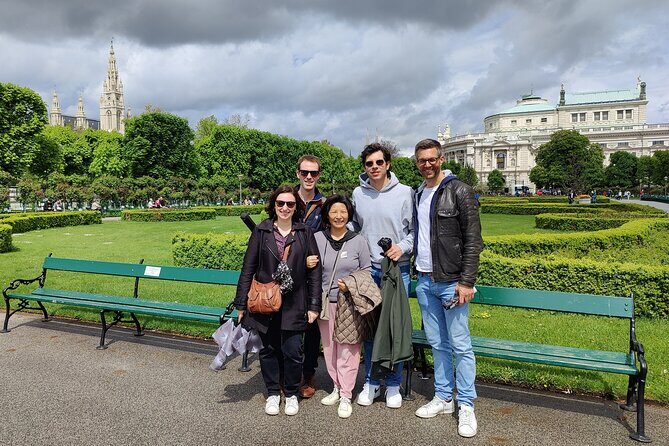
Wiener Hofmusikkapelle comes next, with a cluster of sights related to imperial music and court institutions: the Imperial Treasury Museum, the Court Music Chapel, and the Renaissance Gate.
This is another area where you’ll be able to see the feel of the place, but not necessarily go inside for the major collections. The stop is marked with admission ticket not included, so your expectations should be sightseeing and context, not a full museum visit.
Still, it’s an important switch in tone. Vienna’s identity isn’t only political power or grand squares—it’s also courts, music, and the institutions that kept culture at the center of daily life.
Hofburg: where the Habsburg story becomes visible
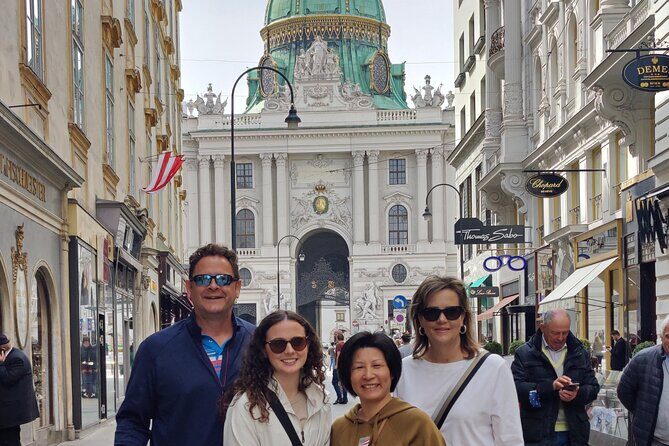
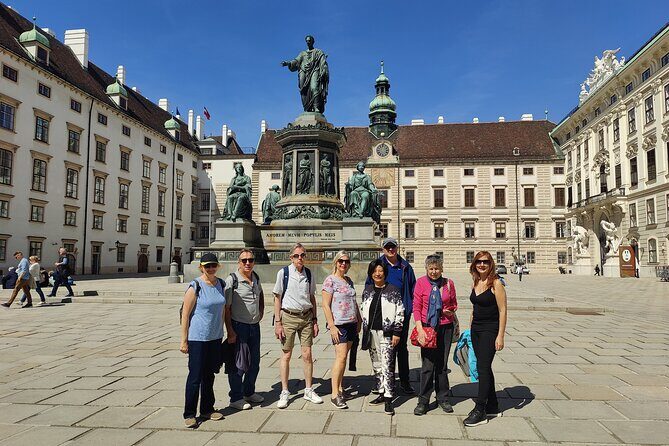
Now you step into The Hofburg, Vienna’s power center for the Habsburgs. You’ll walk through the Inner Court area, with references to the statue of Franz II/I and wings tied to the empire’s changing roles: the Amalien Wing, Leopoldinischer Wing, and Reichskanzlei Wing.
This part of the tour is especially useful if you want the “big picture.” Vienna’s grand buildings can look like separate attractions, but here you get the idea of one long story—political authority, administration, and ceremonial spaces under one roofline of architecture.
This stop is free, which is great because it’s one of the most rewarding places to understand without paying for an extra timed entry right now.
Heldenplatz and the sweep of civic Vienna
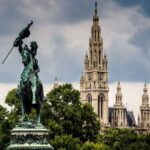
Heldenplatz is the wide-open square where imperial statues face you at the scale Vienna does best. You’ll see statues of Karl and Prince Eugen, plus several nearby power-and-public buildings including the National Library and OSCE presence, and you’ll spot structures like Burgtor, the City Hall, and the Parlament.
The guide keeps it moving, but you’ll get enough context to see why the square feels both monumental and political. It’s not only about “pretty buildings.” It’s about how power sits in public space.
You’ll also likely feel how the walk is designed: short stops, lots of orientation. This is exactly what makes a highlight tour valuable when your time is limited.
Maria Theresien Square and the woman who shaped the empire
Next comes Maria Theresien Square, framed around the powerful female ruler of the Habsburg world. You’ll hear how Maria Theresa changed the course of history, tied to the impressive statue surrounded by major buildings that house museums related to art and natural history.
This stop is free, and it gives you a moment to slow down and look outward. It also helps connect “power” to “culture,” since the square’s museum buildings aren’t just decorative—they’re part of the identity of learning and public institutions.
If you’re into European history, this is one of the cleanest narrative anchors on the route.
Sisi Museum: included in the route, but not ticketed
After that, the tour mentions the Sisi Museum. This is where you’ll hear about one of the most famous female figures tied to the Habsburg era, and why Sisi became an enduring Austrian icon after her death.
Important expectation setting: the Sisi Museum stop is marked with admission ticket not included. So you can see and hear the story, but if you want the full museum experience, you’ll need separate entry planning.
I like this approach because it keeps the highlight tour focused on getting you oriented. But if Sisi is your must-see, give yourself time later in the day or pick an additional ticketed slot.
Michaelerplatz and the surprise of the small details
Then you’ll move to Michaelerplatz. Here the tour starts paying attention to the odd-and-interesting edges of Vienna—the spots that feel less famous but still matter.
You’ll see Michaeler Church, Michaeler Gate, and references to the Loos House and excavations. This is the kind of stop that makes Vienna feel real instead of staged. The architecture around you may look grand, but the city also has layers beneath it—literal layers, in this case.
This is a free stop, and it’s a good chance to take a few photos and reset your brain before heading toward the most famous cathedral area.
Kohlmarkt and Cafe Demel: luxury street energy in minutes
Kohlmarkt is the luxury shopping street segment, and it includes a quick mention of Cafe Demel. This is one of those “you either love it or you just pass through” parts.
If you like spotting iconic brands and seeing how wealth shows up in street design, you’ll enjoy the stroll. If you’re more focused on history than shopping, use it as a short breather and maybe pick up a snack later near the end of the tour.
Either way, it keeps your walking route anchored to the real center of Vienna’s street life.
Pestsäule (Colonna Della Peste): a plague monument you can actually read
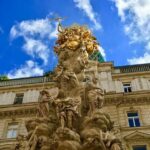
Colonna Della Peste, also known as Pestsäule, is a stop that adds meaning to the word monument. You’ll see the plague monument along with Grabenhof and Ankerhaus nearby.
Plague stories are part of Vienna’s history, and a guide explanation helps you understand why this isn’t just a decorative column. It turns it into a sign of how cities remember the hard times, not only the victories.
This is a free stop, so it’s an efficient way to get perspective without adding cost.
St. Stephen’s Cathedral: the walk ends where you’ll keep exploring
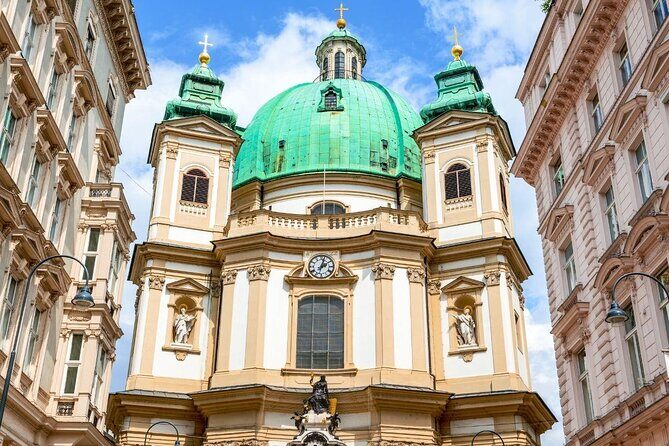
The final big highlight is St. Stephen’s Cathedral. The tour includes it with admission ticket free listed, and the stop is described as a building with origins stretching from the 12th century into the 16th century, with the tallest tower in the city center.
This is a great ending point because you’re back near Stephansplatz, a central transit and walking hub. The tour finishes near the Wien Museum Virgilkapelle area by the Stephansplatz U-Bahn station, so you can continue on foot, grab a drink, or hop to your next activity without friction.
It’s also the perfect moment to reframe what you saw earlier. The cathedral isn’t just a landmark. It’s a visual summary of Vienna’s long timeline.
Price and value: is $106.20 per person worth it?
At $106.20 per person for about 2 hours, the price makes sense if you value time and context. This tour is designed to cover a lot of ground quickly, but the real value is the ordering of sights: the guide helps you connect distant buildings into one coherent story.
You’re also paying for a licensed guide, and for a small group capped at 6. In a city where big areas can be confusing, having someone point out what to look for can save you from wasted wandering.
One fair caution: because some major entries are not included (like the opera interiors, Sisi Museum, and certain imperial institutions), you may end up wanting separate tickets anyway. If you’re planning to add those stops, this tour works as your orientation plan.
If you’re the type who loves museums for hours at a time, this walk won’t replace that. But if you want a smart first pass that makes the city readable, it’s strong value.
Who this tour suits best, and who might want a different plan
This tour is a great fit if:
- It’s your first time in Vienna and you want the historic center map in a couple hours
- You like history tied to real places, not only names and dates
- You want a manageable walking plan with short stops
- You travel with kids or just prefer steady, low-pressure explanations
- You appreciate photo help and a guide who keeps the mood light, as described in the experience feedback
You might want a different approach if:
- You want long museum time inside big sites during this exact window
- You already planned ticketed entries for multiple interiors and want a more focused itinerary
- You need language support beyond what’s listed (it’s offered in English)
What to do before and after your walk
Wear comfortable shoes. This is a walking highlight route with multiple short stops, and your payoff comes from staying steady enough to keep moving.
After the tour, you’re ideally positioned to continue around St. Stephen’s Cathedral and nearby streets. Use your new mental map to choose what’s next: a cathedral visit, a separate ticketed museum, or just the pleasant freedom of wandering without getting lost.
Should you book the Vienna Highlight Tour with Yue Walk?
Book it if you want your Vienna day to start with clarity. A small group capped at 6, a licensed guide, and a route that ends at Stephansplatz means you’ll leave with both stories and direction. The quick stops make it perfect for limited time, and the Habsburg focus helps you understand why the center feels the way it does.
Skip or plan extra tickets if you mainly want interiors. Several key sites are marked as admission ticket not included, including the Vienna State Opera and Sisi Museum. This tour is the orientation layer. Then you choose the parts that need ticketed access.
If you’re spending only a short time in Vienna or want the easiest way to connect major sights, this one is a strong pick.
FAQ
How long is the Vienna Highlight Tour?
It’s listed at about 2 hours.
How much does the tour cost?
The price is $106.20 per person.
Is the tour offered in English?
Yes, it’s offered in English.
What is the group size?
The maximum group size is 6 travelers.
Where do I meet and where does the tour end?
Meeting point: Herbert-von-Karajan-Platz, Staatsoper, 1010 Wien, Austria.
End point: Wien Museum Virgilkapelle, Stephansplatz U-Bahn-Station, 1010 Wien, Austria.
What time does the tour start?
The start time is 10:00 am.
Do I need separate tickets for any stops?
Yes. The tour lists admission ticket not included for the Vienna State Opera, Stallburg, Wiener Hofmusikkapelle/Imperial Treasury Museum area, and the Sisi Museum. Other stops are listed as admission ticket free.
Do I get a mobile ticket?
Yes, the tour includes a mobile ticket.
Is the tour weather-dependent?
Yes. It requires good weather. If it’s canceled due to poor weather, you’ll be offered a different date or a full refund.
Is free cancellation available?
Yes. You can cancel up to 24 hours in advance for a full refund.