REVIEW · VIENNA
Vienna: Freud, Mozart & Beethoven Exploration Game
Book on Viator →Operated by Questo · Bookable on Viator
Vienna can feel like a lot of monuments, fast. This self-guided puzzle game turns that pressure into a series of clue stops, ending at the Sigmund Freud Museum. I like that you can play without a human guide, so you control the pace and timing, and you get offline access once you download.
My second favorite part is how it nudges you into areas many first-timers skip, using problem-solving instead of a checklist. One drawback to plan for: the route can keep you in busy central areas, and bright sun can make phone reading harder if you’re there during peak hours.
In This Review
- Key things to know before you play
- A self-guided Vienna puzzle game that fits your day
- Price and what you really get for $7.21
- From St. Stephen’s Cathedral to your next clue
- How the puzzle checkpoints work in real life
- Sisi Museum stop: a worthwhile detour if you time it well
- Ending at the Sigmund Freud Museum
- Why this no-guide format can be a real advantage
- Practical tips: downloads, sun glare, and walking comfort
- Who should book this Vienna exploration game
- Should you book this Vienna: Freud, Mozart & Beethoven Exploration Game?
- FAQ
- How long does the Vienna puzzle game take?
- Can I play offline?
- What language is it offered in?
- Where do I start and where does it end?
- What’s included and what’s not included?
- Is this a guided tour with a person?
- Can I start at any time and take breaks?
- Is there free cancellation?
Key things to know before you play
- Start on your schedule: you can begin at any hour and take breaks, then resume later
- Offline gameplay: you don’t need internet once the game is ready on your phone
- Private, no-contact experience: only your group plays, with no human interaction
- Puzzle-based walking: you move clue to clue to reach each next stop
- A real museum finish: the journey ends at the Sigmund Freud Museum
- A Sisi Museum checkpoint: one stop includes Sisi Museum, but the admission ticket isn’t included
A self-guided Vienna puzzle game that fits your day
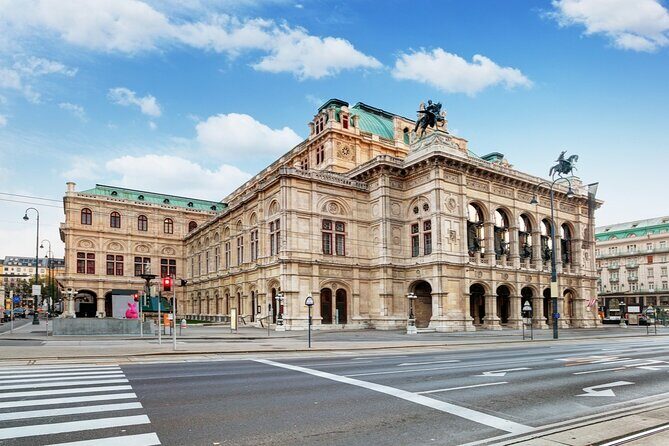
This is not a typical guided tour with a script and a crowd. It’s an exploration game that asks you to follow hints, solve puzzles, and then get directions to your next location. You’re using your phone as the brains of the operation, which is a surprisingly good match for Vienna. Old streets, street signs, façades—everything rewards slow looking.
You also get flexibility that you usually don’t with fixed tours. You can start whenever your day allows, pause when you want, and jump back in later. That matters if you’re juggling museum hours, meals, or a kid who suddenly needs a break.
The theme—Freud, Mozart & Beethoven—is carried through the story and the site stops. You’re not just walking. You’re piecing together ideas from place to place, which makes the city feel like it has a thread.
You can also read our reviews of more tours and experiences in Vienna

Price and what you really get for $7.21
At $7.21 per person, this is a low-cost way to add structure to a sightseeing day. You’re basically paying for a phone-based “route plus story” that you control. If you’ve ever spent more than that on one coffee line snack while doing nothing else, you’ll see why this price point works.
Also, the setup is designed for minimal friction. You get a mobile ticket, and the game is built so you can play offline after download. For a short outing of about 1 to 2 hours, that’s solid value—especially if you’re traveling with family or you want something that doesn’t require another person’s schedule.
One thing to note: the Sisi Museum admission ticket is not included. So think of your payment as covering the game experience, not the museum entries.
From St. Stephen’s Cathedral to your next clue
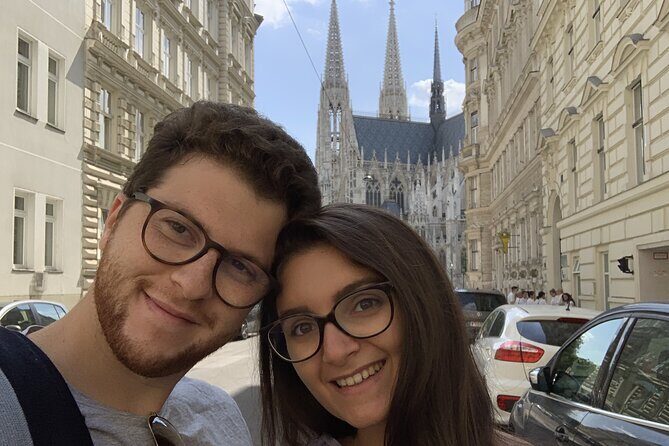
You start at St. Stephen’s Cathedral (Stephansplatz 3, 1010 Wien). It’s a smart starting point because it’s central, easy to find, and visually loud in the best way. Even if you’ve already seen the cathedral exterior, starting the game here gives you a clear “begin now” landmark.
From that first point, you don’t get a long briefing or a lecture. You get sent to a next stop via clue and puzzle. Each checkpoint works like a mini “choose-your-own-adventure,” where solving the current step tells you where to go next.
Because you’re not tied to a group walking pace, you can also do quick detours for photos or to confirm street names. It’s still a game, but it behaves more like a self-paced city walk than a rigid route.
How the puzzle checkpoints work in real life
The itinerary is built from multiple stops that follow the same pattern: follow a clue, solve a puzzle, then receive instructions for the next location. At each stop, you also learn about the place you’ve arrived at. That “puzzle first, facts second” rhythm is key. It keeps you active instead of just reading.
What I’d watch for is how long you end up spending on each puzzle. If a step is unclear, you might lose time in the street instead of enjoying the scenery. The game is meant to keep you moving, but if you’re expecting a laid-back stroll the whole way, you should treat this more like “walk and think” than “walk and drift.”
The best time to play is when your phone is easiest to use. If the sun is harsh, take a moment to adjust brightness and angle your screen. Vienna can throw glare off glass storefronts and pale stone, and it can make clue-reading slower.
Sisi Museum stop: a worthwhile detour if you time it well

One confirmed museum stop is the Sisi Museum, and it runs about 10 minutes in the flow of the game. The important practical detail: the admission ticket isn’t included, so you’ll want to decide whether you’ll pay for entry once you reach it.
This stop is a nice contrast in tone. The Freud-and-composers theme is intellectual and psychological. Sisi’s world is more courtly and visual, which can make the game feel varied instead of repetitive. If you like museum rooms with display-heavy storytelling, this is likely to be a good pause.
Drawback: if you don’t plan museum entry time well, the museum stop can slow your timeline. This isn’t a long tour, so budgeting your time matters.




Ending at the Sigmund Freud Museum
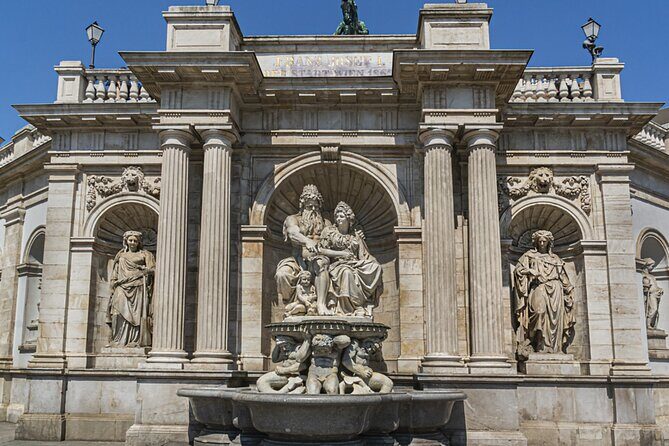
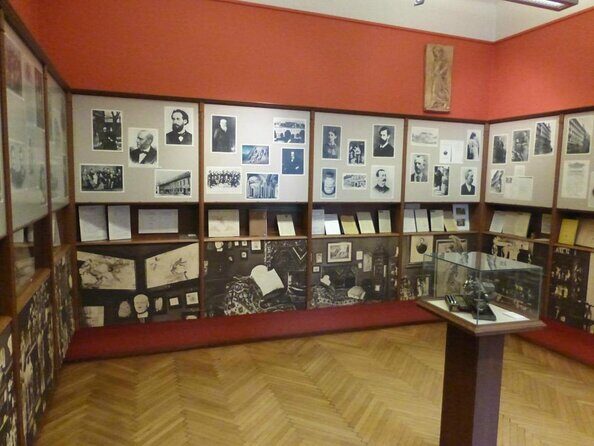
Your final stop is the Sigmund Freud Museum at Berggasse 19, 1090 Wien. That ending point gives the game a satisfying payoff. You finish in the exact place where Freud’s ideas are centered, not just somewhere “nearby.”
It’s also a strong way to connect theme to location. When you reach the museum, the earlier clues start to feel like preparation. Even if you only do a quick look inside (depending on what you choose to view), you’ll likely feel like the game has pointed you in the right direction.
The tour’s end location is also useful for planning your next move. Berggasse sits in a neighborhood that’s easy to extend from—coffee, snacks, and transit are typically straightforward in that part of Vienna.
Why this no-guide format can be a real advantage
This is private, meaning only your group plays. There’s no physical tour guide, and you avoid human contact. In crowded cities, that’s not just convenient—it can protect your attention span. You don’t have to hear over other people or wait for stragglers to catch up.
For solo travelers, it can feel like a guided experience without the awkwardness of speaking to strangers. For families, it can turn walking into a game kids actually want to do. One of the common wins here is puzzle difficulty that often works for a wide range of ages.
The trade-off is you’re responsible for pacing. If you hit a confusing clue, you have to figure it out. There’s no person standing beside you to say, Look this way.
Practical tips: downloads, sun glare, and walking comfort
The game is designed to work offline, but you still need to download it first. If you’re already out and about, make sure you have Wi‑Fi access for that initial setup. The most frustrating situation is starting, getting stuck at download time, and wasting your prime walking window.
Next, protect your phone readability. In a sunny city center, glare can make clues hard to read. I recommend lowering the reflection by changing your screen angle and using a brightness setting that lets you see without burning battery.
Bring comfortable shoes. Even at 1–2 hours, you’re doing a walk between multiple locations. The route can include busy pedestrian zones, so plan for that with patience and water.
If you’re traveling with a service animal, it’s allowed. And the start area is near public transportation, which helps if you want to arrive early, play a bit, then go straight to another stop.
Who should book this Vienna exploration game
You’ll probably love this if you want a structured way to see Vienna without committing to a fixed guided schedule. It’s especially good when you like puzzles, enjoy reading your phone on the go, and want the day to feel “yours.”
It’s also a smart pick for families who want to keep kids engaged while still getting cultural stops. Many people like that the game keeps moving and doesn’t drag like some audio tours.
However, consider your group’s preferences. The story tone can include surprises, and one family shared that the ending felt too intense for kids in their group. If you’re traveling with younger children, you may want to think about whether a dramatic storyline will be a good fit for your family.
Also, if you dislike crowds or hate phone-based reading, choose timing carefully. This can put you in central areas where foot traffic is heavy.
Should you book this Vienna: Freud, Mozart & Beethoven Exploration Game?
I think this is a good booking when you want value, flexibility, and a playful way to reach places like St. Stephen’s Cathedral and the Sigmund Freud Museum. For $7.21, the offline, no-guide format is a strong deal, as long as you’re okay with puzzle-solving and walking.
I would book it if you plan to download the game ahead of time and you’re willing to slow down just enough to read clues. If you’re very crowd-averse or you don’t want phone glare or mystery-solving, you might have a tougher time. But for many visitors, it turns a standard sightseeing day into something more memorable and personally paced.
FAQ
How long does the Vienna puzzle game take?
The game is listed as about 1 to 2 hours.
Can I play offline?
Yes. You can play offline and you don’t need an internet connection to play the city game.
What language is it offered in?
It’s offered in English.
Where do I start and where does it end?
You start at St. Stephen’s Cathedral (Stephansplatz 3, 1010 Wien) and end at the Sigmund Freud Museum (Berggasse 19, 1090 Wien).
What’s included and what’s not included?
The included items are the game/ticket experience features, while Sisi Museum admission ticket is not included.
Is this a guided tour with a person?
No. It’s private and there is no physical tour guide. Only your group participates.
Can I start at any time and take breaks?
Yes. You get full flexibility to start at any hour, take a break, and resume later.
Is there free cancellation?
Yes. You can cancel for a full refund up to 24 hours in advance. After that window, the amount paid isn’t refunded.