REVIEW · VIENNA
Vienna: The Great Plague Exploration Game
Book on Viator →Operated by Questo · Bookable on Viator
Vienna is full of drama, even when you walk slowly. This Great Plague Exploration Game turns a normal sight-walk into a clue-hunt, powered by a smartphone and designed to keep you moving at your pace. I like the no-guide format: you get audio stories, puzzles, and just enough structure to make the city feel new again.
My other favorite part is how the stops mix big-name places with small details you’d normally skip, like the nails ritual at Stock im Eisen and that quirky medieval mural on Bäckerstrasse. The one thing to consider is that the whole experience depends on your phone and the app setup, and a couple of people found it a bit tricky at first or wanted more straight-up history facts.
In This Review
- Quick hits before you start
- A smartphone quest that makes Vienna feel like a city game
- From Ruprechtskirche to the first puzzle: oldest bells, Roman stone, and a reason to look up
- Griechenbeisl: Mozart, Beethoven, and the tavern you find by playing
- Bäckerstrasse and the Wolf vs. Cow mural: the kind of detail tours miss
- Stephansplatz: a clue-led moment before you hit St. Stephen’s Cathedral
- Stock im Eisen (Nails Tree): the luck ritual that changes how you see a street corner
- St. Stephen’s Cathedral: Gothics, bells, and 230,000 tiles
- Café Frauenhuber: Mozart and Beethoven table music while you regroup
- Albertina at the end: art, prints, and a palace setting
- The Hofburg finish: power center history without rushing out
- Price and timing: why $7.23 feels fair
- Who this Vienna plague game is best for
- Small risks: the app, the puzzles, and getting unstuck
- Should you book the Great Plague Exploration Game in Vienna?
- FAQ
- FAQ
- What is the duration of the Great Plague Exploration Game in Vienna?
- How much does it cost?
- Do I need a physical guide?
- What language is it offered in?
- Are admission tickets included for the sites?
- Can I play at any time after booking?
- Where does the experience start and end?
- What if the app setup is tricky?
- Can I cancel for a full refund?
Quick hits before you start
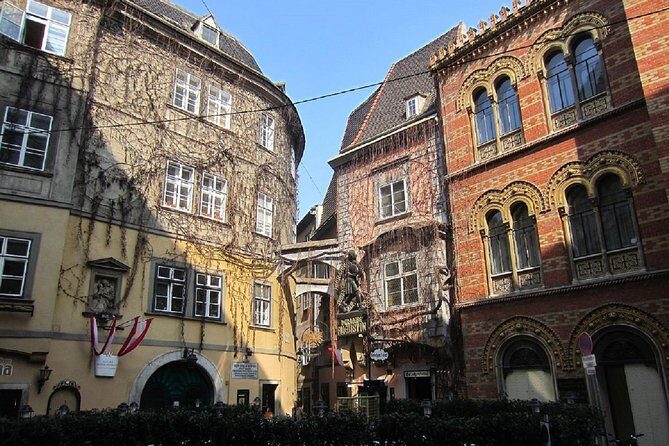
- Self-paced walking: you can play anytime after booking, pause for coffee, and restart when you’re ready
- No physical guide: you rely on audio stories and clues on your own device
- Puzzle-driven viewing: you’re forced to look closely at places like Ruprechtskirche and Stephansdom
- Value-heavy price: $7.23 per person with many stops free, while paid entries are your choice
- Family-friendly structure: built for kids who need something to do besides stare at stones
- Ends at Hofburg: the game finishes in the heart of Vienna, not out in the suburbs
A smartphone quest that makes Vienna feel like a city game
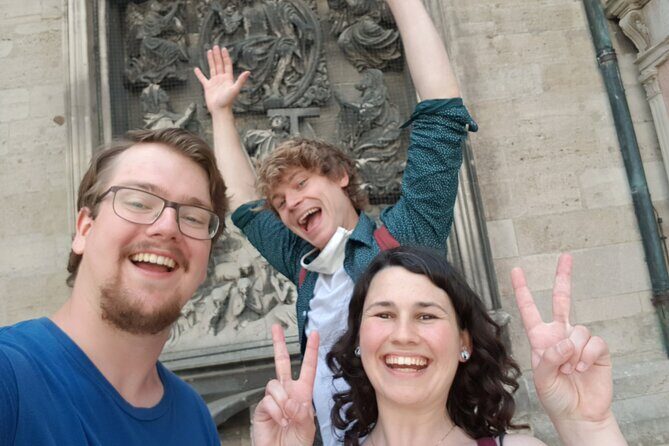
This isn’t a guided tour where you follow someone’s script. It’s more like Vienna turns into a map you play. You start at Ruprechtskirche (Ruprechtspl. 1), then work your way across central landmarks—churches, courtyards, a famous tavern, a cathedral area, and into the Hofburg complex.
The big idea is simple: you solve a question or puzzle at each stop, then the next clue tells you where to go. That format has two real benefits. First, you walk with purpose, so you cover ground efficiently without feeling herded. Second, you notice details because you need them to answer the next prompt.
You also get audio stories, which helps if you’re pausing at a bench or waiting for a museum moment. And because it’s private for your party, you don’t need to fit into anyone else’s group rhythm. That matters in Vienna, where people can swarm the same photo spots all at once.
You can also read our reviews of more tours and experiences in Vienna

From Ruprechtskirche to the first puzzle: oldest bells, Roman stone, and a reason to look up
Your adventure kicks off at St. Rupert’s Church (Ruprechtskirche), one of Vienna’s oldest churches. It’s said to be about 13 centuries old, built with stone taken from an ancient Roman settlement. That Roman-Vienna link is one of those details that sounds like trivia—until you’re standing somewhere that actually carries that past.
The church is dedicated to St. Rupert of Salzburg, patron saint of the Danube salt merchants. And it’s home to some Vienna firsts: the oldest stained-glass window and the oldest bells in Vienna. One stained-glass scene—Christ on the cross with the Madonna and Child—dates to the 13th century and has remained in the vaulted apse through renovations.
Here’s where the game trick works. You don’t just admire and move on. You look around for the answer to a question to advance—and that nudges you to actually scan the space. It’s also a nice fit if you’re traveling with kids or anyone who gets distracted easily. Instead of wrestling with attention, you give it a job.
Practical note: this stop is listed as free for admission, so you can spend your time here without budgeting extra tickets.
Griechenbeisl: Mozart, Beethoven, and the tavern you find by playing
Next you’ll reach Griechenbeisl, a tavern with legendary musical connections. The standout angle here is that Mozart, Beethoven, and Schubert are associated with dining there. The place keeps that fame visible with framed signatures and a dedicated Mark Twain room. (Other famous names connected to the tavern’s history include Luciano Pavarotti and Johnny Cash.)
It’s also tied to the neighborhood’s roots: the name comes from Greek tradesmen and Levant travelers who settled in the area. The tavern sits near the Holy Trinity Greek Orthodox Church, so the whole area feels like Vienna’s cultural layers are right next to each other.
Again, the game structure matters. You’ll search the space to answer a question/challenge before continuing. That pushes you to slow down, not just walk past a famous façade.
This stop is also marked as free for admission, which makes it a smart, low-cost win early in your route.
Bäckerstrasse and the Wolf vs. Cow mural: the kind of detail tours miss
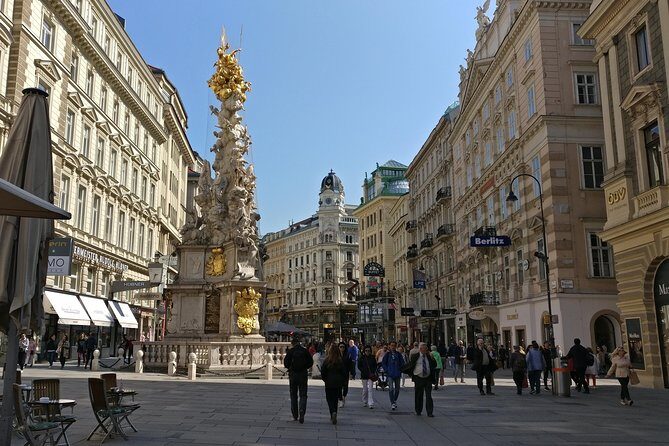
On Bäckerstrasse, you’ll work through a quieter stretch that feels like you’re peeking behind the city’s curtain. The highlight is a peculiar medieval mural on the façade connected with the Hasenaus (the game describes it around a building referred to as the Hare House).
The mural shows a wolf and a cow wearing spectacles playing a game of backgammon. Stories disagree on what you’re looking at: some say it’s part of an earlier painting depicting medieval life, while others interpret it as an allegory related to conflict between Protestants and Catholics.
I like this stop because it proves the game isn’t only chasing famous monuments. It gives you a reason to slow down in courtyards and side streets where the big tour buses don’t usually linger.
Most of Bäckerstrasse is open wandering time, and the mural stop itself is listed as free.
Stephansplatz: a clue-led moment before you hit St. Stephen’s Cathedral
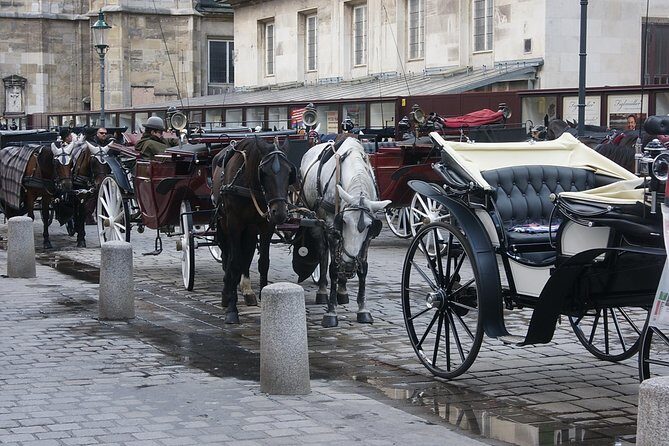
From Bäckerstrasse you move into the Stephansplatz area. The game uses a clue and puzzle step here, so you’re not just arriving at a square to take in the view—you’re actively solving the path forward.
That matters because the Stephansplatz area can feel visually overwhelming. Many people see a cathedral spire and then get stuck in a photo-queue. The game gives you a small mission, so you look around more intentionally and keep moving.
You’ll get indications on how to continue while learning about what you’ve found. This is one of those “small structure, big payoff” parts of the experience.


Stock im Eisen (Nails Tree): the luck ritual that changes how you see a street corner
Then comes one of Vienna’s best oddities: the Stock im Eisen (often called the Nails Tree). It’s on the corner of Karntner Strasse. At first glance, it looks like a spooky object. Historically, people even thought it was the work of Satan—until the tradition explained it.
Now you know the practical story: over generations, people hammered nails into the tree’s trunk for good luck. The mid-section of the old trunk sits on a 1.5-meter high pedestal, surrounded by an iron ring with a lock dummy.
Here’s a detail I really appreciate: the game lets you spend as much time as you wish at this stop, as long as you’re ready to follow the next clue when you’re done. In other words, this is your chance to linger, take photos, and read the atmosphere without feeling rushed.
Admission here is listed as free, so it’s a great stop if you want “character” without ticket costs.
St. Stephen’s Cathedral: Gothics, bells, and 230,000 tiles
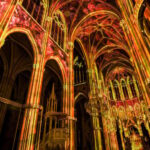
Your route brings you to St. Stephen’s Cathedral (Stephansdom), one of the city’s true anchors. It’s been standing since the 12th century and is described as one of Austria’s most important Gothic buildings.
If you only do the exterior, you’ll still get the cathedral’s drama. But the game pushes you toward the tower room and the roof story. The tower room offers views over Vienna and includes 13 bells. And the roof is where the facts get eye-opening: it’s about 38 meters high and made of 230,000 glazed tiles forming different patterns.
The mosaics show a double-headed eagle, historically tied to the Austrian empire during Habsburg rule. On the north side roof, there are two other eagles with coats of arms representing the City of Vienna and the Republic of Austria.
One key consideration: the cathedral stop notes admission not included. So you should treat any paid climb/view option as optional, not assumed. If you’re going for the tower, plan for that extra cost and extra time.
Café Frauenhuber: Mozart and Beethoven table music while you regroup
Right around this cathedral-and-square intensity, the experience gives you a breather at Café Frauenhuber on Rauhensteingasse. This is a classic Viennese coffeehouse stop, and it’s not a random pit stop—it’s one of the oldest coffeehouses in Vienna, dating back to 1746.
The reason it’s special is the famous music connection: Mozart and Beethoven are associated with playing table music for dining guests between 1782 and 1791. And the café’s reputation includes being peaceful and unpretentious, meaning it’s not designed to feel like a museum shop.
The game doesn’t put you in a rush here. This is where I’d recommend you reset. Get a coffee, take a bathroom break, and let your brain catch up after puzzle-solving and careful looking.
Also, you’re in good shape here because this is the kind of stop families often appreciate. The kids can sit, the adults get the atmosphere, and nobody feels like they’re dragging through another big landmark.
Albertina at the end: art, prints, and a palace setting
After the cathedral area, the route leads you to Albertina, an art museum in the Hofburg Palace complex. This is one of Vienna’s big cultural names, and it’s easy to spend time here if you like graphic art and drawings.
The experience describes a big collection: over 50,000 drawings and over 1 million master prints shown on a rotating display. Since 1805, the museum has featured multiple collections, including modern art, graphic art, architecture, and photography.
One specific highlight you can keep in mind is Monet’s The Water Lily Pond. The setting also helps: you’re in the largest Habsburg residential palace, so even walking between rooms can feel like you’re stepping into imperial spaces.
Admission is noted as not included, so again treat this as your optional spend. If you love museum time, you’ll probably want longer than the game’s basic pacing. If you don’t, you can use this as an ending landmark and keep moving at your own speed after the game finishes.
The Hofburg finish: power center history without rushing out
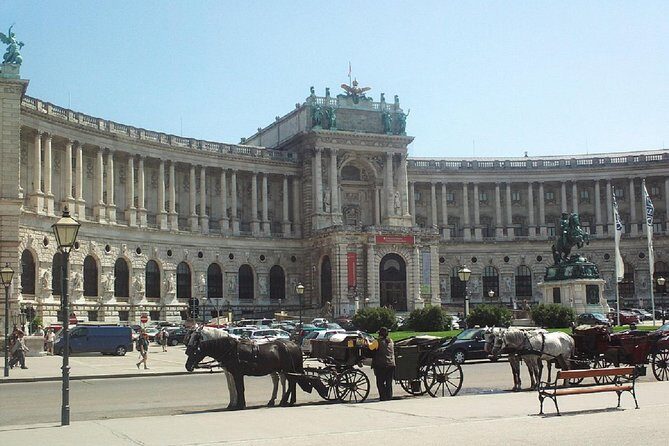
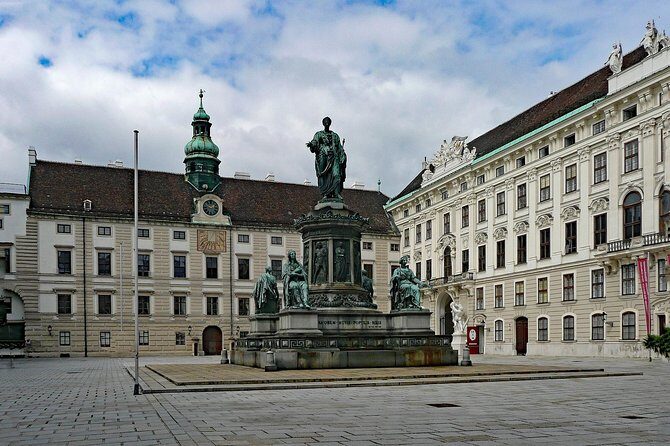
The last stop is the Hofburg, the former center of Habsburg power and still linked to the Austrian state today. The experience notes it as the home and workplace of the President of Austria, with roots back to the 13th century.
You also get context for why this place matters: it served as a residence and seat of government for the Habsburg emperors until 1918. The palace reflects its imperial past through richly decorated imperial apartments (24 rooms), the Sisi Museum dedicated to Empress Elizabeth, and lavish silver collections. The National Library is also located in the Hofburg complex, and the Hall of Ceremonies (built in the 19th century) is still used for Viennese balls.
Game-wise, this is where the city quest ends. After that, you can continue exploring at your own pace, which is a smart way to avoid that awkward scramble some group tours force at the finish.
Admission is listed as not included here, which is totally normal for a massive complex—you choose how deep you want to go.
Price and timing: why $7.23 feels fair
Let’s talk value. At $7.23 per person, you’re paying for a smartphone-driven experience: audio stories, puzzles, and a structured walking route from central old Vienna sites to the Hofburg.
Compare that to the cost of a traditional guided walk. You’re not paying for a live guide’s time. Instead, you’re paying for the content and the game mechanics that turn “just walking” into purposeful sightseeing.
What makes it even more reasonable is the mix of free and paid elements:
- Several stops are listed with admission free, including the churches/tavern/mural-style streetside sights.
- The cathedral and Albertina are marked as admission not included, so you control costs by choosing what to pay for.
Timing is flexible too. The experience can be played any hour after you book it, and you don’t need to reschedule. That matters because Vienna weather can change fast. It also helps you sync the walk with your museum plan.
Duration is roughly 1 hour 30 minutes, but in real life you might stretch it—especially at Stock im Eisen, where the game explicitly gives you freedom to linger.
Who this Vienna plague game is best for
This is one of those rare city activities that works for mixed travel groups.
- Families: it’s built for kids who get bored looking at signs. The puzzles keep attention active.
- Friends: if you like walking plus light competition, the clue format hits the sweet spot.
- Solo travelers: you get a structured route without the pressure of social conversation with strangers.
- Anyone who prefers control: there’s no guide pacing you, and you can stop for coffee whenever you want.
It’s also practical if you like using transit. The starting area is near public transportation, and your route keeps you in central walking territory.
In terms of comfort, most travelers can participate, and service animals are allowed.
Small risks: the app, the puzzles, and getting unstuck
A couple of real-world issues show up in feedback. The most common is that app setup and unlocking the game can be a little tricky. One person said they solved their problems in about 15 minutes thanks to support. If you get stuck, emailing [email protected] is the contact listed in the experience’s support responses.
Another small risk: puzzle answers can be picky. One report complained about names not matching formatting rules, like capitalization or joining names correctly. So if a puzzle won’t validate, re-check what you type in—spelling, capitalization, and any required conjunctions.
Finally, watch your phone battery. The whole route lives in your screen and audio. Carry a small charger if you tend to run low.
If you’d rather have a live human narrating every fact, this might feel lighter on straight lectures. One feedback comment was basically: it’s a good way to see sights, but you’ll want more history details than the game prompts provide. The fix is simple—use your own curiosity. If you spot something you want to know more about, look it up during breaks at cafés.
Should you book the Great Plague Exploration Game in Vienna?
Book it if you want:
- a smartphone quest that forces you to look closely instead of just pass by
- an efficient route from Ruprechtskirche to Hofburg
- a family-friendly walk with built-in momentum and plenty of chances to pause
Skip or reconsider if:
- you hate apps and prefer a live guide
- you want a heavier dose of spoken historical explanation at every stop
- you’re going during a time when you can’t comfortably stop, read, and solve prompts
If you’re deciding between this and a traditional sightseeing tour, I’d frame it like this: this game is a walking experience that teaches through discovery. Vienna is ideal for that style because the city rewards attention to small details.
If you do book it, give yourself time to wander. The best moments come when you’re not trying to rush the clues and you notice what’s around you.
FAQ
FAQ
What is the duration of the Great Plague Exploration Game in Vienna?
It’s listed at about 1 hour 30 minutes (approximately).
How much does it cost?
The price is listed as $7.23 per person.
Do I need a physical guide?
No. The experience is designed to be played with your smartphone, using audio stories and puzzles rather than a live guide.
What language is it offered in?
It’s offered in English.
Are admission tickets included for the sites?
Some stops are listed as admission free, while others note admission not included, including St. Stephen’s Cathedral and Albertina.
Can I play at any time after booking?
Yes. The experience can be played anytime after booking without rescheduling, and you can take breaks (like for coffee) and continue later.
Where does the experience start and end?
It starts at Ruprechtskirche (Ruprechtspl. 1, 1010 Wien) and ends at Hofburg (1010 Vienna).
What if the app setup is tricky?
If you have trouble unlocking or using the app, support is available; the provided support contact is [email protected].
Can I cancel for a full refund?
Free cancellation is available, with a full refund if you cancel at least 24 hours before the experience’s start time. Within 24 hours, refunds are not available.