Cooking Viennese comfort food at home beats tours. This shared cooking class lets you learn crisp schnitzel and apple strudel basics in a real apartment space tied to Vienna families, not a factory kitchen. I love the hands-on setup, where you cook a lot, plus the meal ends with sitting down together.
Two things I also really liked: the class menu is built around old-school Austrian comfort food (starter soup, schnitzel with salads, then strudel), and the English instruction is clear even if you’re a total beginner. You’ll also get to hear how these dishes fit into daily life and tradition, the kind you can actually recreate later.
One consideration before you book: this happens inside someone’s apartment, and the building has no elevator, so plan for stairs (even with a stroller).
In This Review
- Key highlights at a glance
- A Viennese Apartment Kitchen Where You Actually Cook
- The 3-Hour Menu: Soup, Schnitzel, and Apple Strudel
- Starter: Old Viennese potato soup
- Main: chicken schnitzel with cucumber and potato salad
- Dessert: apple strudel with homemade pastry
- How the Class Works: Steps You Can Repeat at Home
- Austrian Comfort Food With Traditions You Can Taste
- Diet Changes: Helpful, But Not Unlimited
- Price and Value: Why $144.18 Often Makes Sense
- Who Should Book This Class (and Who Might Hesitate)
- Should You Book Schnitzel and Strudel in Vienna?
- FAQ
- How long is the shared cooking class?
- Where do you meet in Vienna?
- What do you cook during the class?
- Is the class 2 courses or 3 courses?
- Is the class taught in English?
- What is included in the price?
- Are there options for vegetarian or dietary restrictions?
- Does the class happen in a restaurant?
- Is the building accessible by elevator?
- Can I cancel for a refund?
Key highlights at a glance
- Apartment-based class in a living neighborhood (meeting at Neumanngasse 7, 1040 Wien).
- Hands-on coaching for schnitzel and strudel, with lots of cooking time.
- Traditional menu: Viennese potato soup, chicken schnitzel with cucumber + potato salad, and apple strudel with whipped cream.
- Small group feel, capped at 6 people, with 2–12 allowed depending on the run.
- Diet options with limits: vegetarian, lactose-free, or gluten-free can be arranged, but vegan isn’t possible and gluten-free apple strudel can’t be made.
- Local-host vibe from guides like Lena, Nina, and Leah, who keep things organized while letting you do the work.
A Viennese Apartment Kitchen Where You Actually Cook
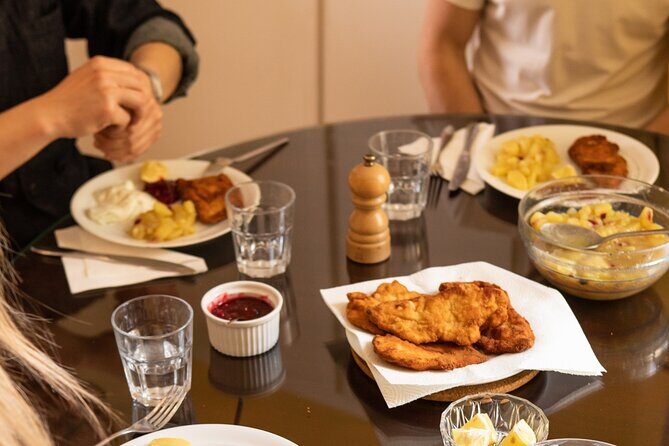
This is the kind of class that feels like it belongs to the city, not to a travel brochure. You meet at Neumanngasse 7, 1040 Wien, and the cooking happens in the host’s apartment—an apartment with family roots that go back generations. That alone changes the mood. You’re not dealing with restaurant traffic, big-group noise, or a “watch and take notes” format.
The apartment setting has a practical upside: everything is close and hands-on. One review vibe pops up again and again—people felt welcomed fast, like they were being guided into the kitchen rhythm instead of being managed like a bus tour group. Guides such as Lena, Nina, and Leah are described as organized and attentive, but still relaxed enough that you actually get your hands on the tasks.
The main drawback is very real: no elevator. If you’re traveling with mobility concerns, or you have a stroller, you’ll need to plan for stairs. The good news is that you can leave your stroller inside the apartment—but you’ll still have to carry it upstairs. If you can manage that, the apartment format is a big part of the charm.
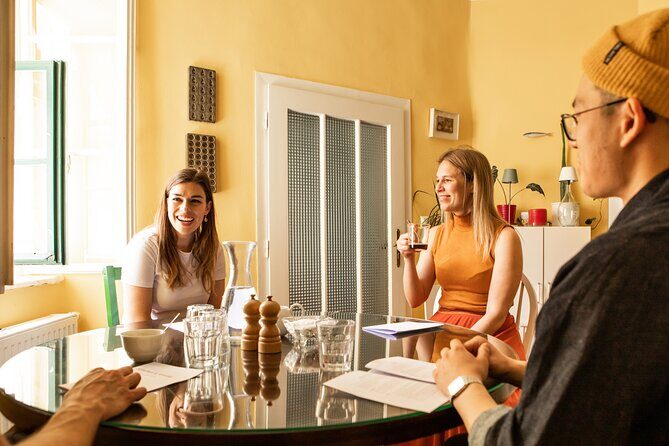
You should also know the group size matters here. The class is kept small (capped at 6 people), which helps with direct instruction and makes it easier for you to cook at your own pace. The class is about 3 hours, so it has enough time to learn, cook, and then eat what you made without feeling rushed.
You can also read our reviews of more cooking classes in Vienna


The 3-Hour Menu: Soup, Schnitzel, and Apple Strudel
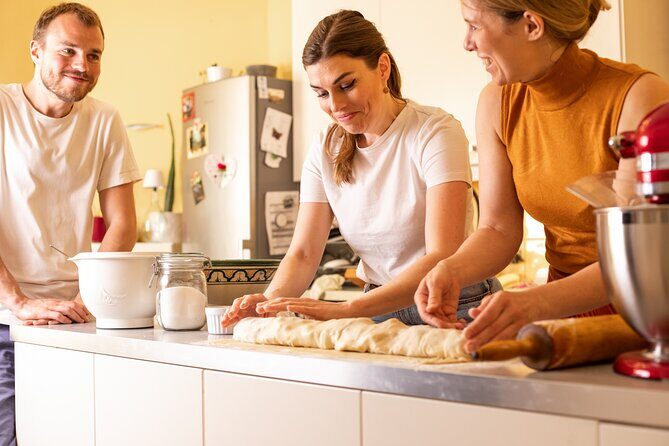
The class centers on an Austrian comfort-food sequence: starter, main, and dessert. Depending on how many people are signed up, you’ll do 2 or 3 courses. The menu is traditional and built around familiar flavors: potatoes, meat (most dishes), and that classic apple strudel finish.
Starter: Old Viennese potato soup
You start with the grandmother-style Viennese potato soup. It’s a gentle opener that gets you into the Austrian mindset right away: simple ingredients, lots of comfort, and flavors that feel like home cooking rather than fancy presentation. You’ll learn what makes it taste like Vienna, not just like soup.
If you’re the type who worries you’ll get stuck on hard techniques, this starter is a confidence-builder. It’s also a nice way to get used to the kitchen flow before moving to schnitzel and dessert.
Main: chicken schnitzel with cucumber and potato salad
The main course is chicken schnitzel served with potato salad and cucumber salad, plus lingonberry jam and a slice of lemon. That combo is classic for the Austrian schnitzel experience: the jam gives a sweet-tart kick, and the lemon keeps the whole plate from feeling heavy.
This is where you’ll understand what makes a schnitzel crisp and satisfying. The class promises the secret of crispy schnitzels and juicy results, and the structure is designed so you don’t just watch. You cook enough that you can recreate the dishes later.
One more practical note: because many components are involved (schnitzel plus two salads and the jam/lemon service), you’ll likely feel the benefit of a small group. With a cap of 6 people, there’s room for everyone to work without long waiting.
Dessert: apple strudel with homemade pastry
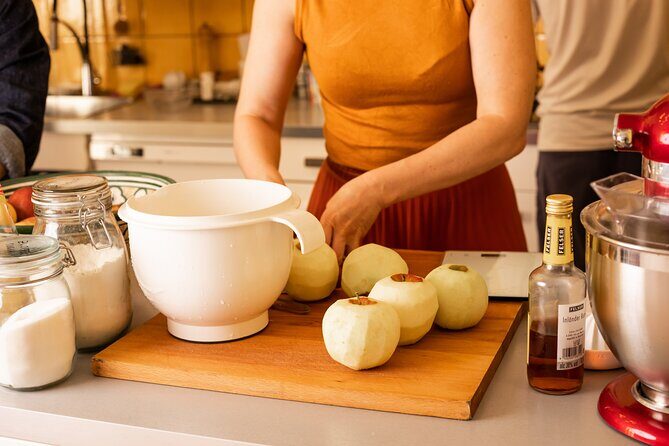
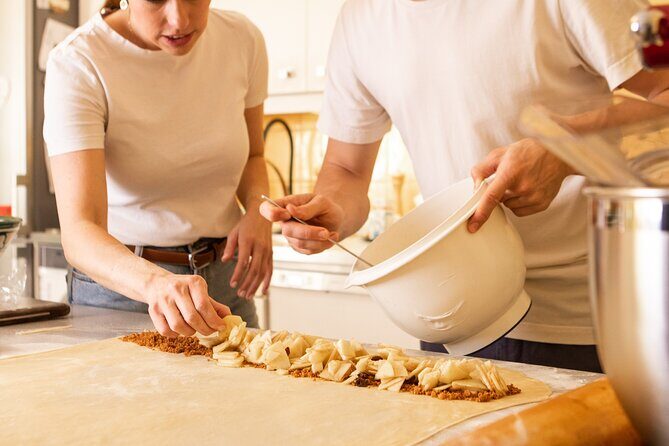
Dessert is apple strudel, made with home-made pastry and served with whipped cream. Strudel can look intimidating on TV, but the class format is set up to make it doable. You’ll learn how to handle the pastry and assemble the strudel so it bakes into that familiar Viennese-style dessert.
And here’s the key point for your planning: you’re not just tasting strudel. You’re learning how to make it, including the pastry. That makes it a souvenir you can eat at home later, not a memory you can only rewatch.
After everything, you sit down and eat the full meal together. It’s not a quick bite after class. It’s part of the experience.
You can also read our reviews of more tours and experiences in Vienna





How the Class Works: Steps You Can Repeat at Home
The best cooking classes don’t just teach recipes. They teach you how to think while you cook. This one is designed to do that.
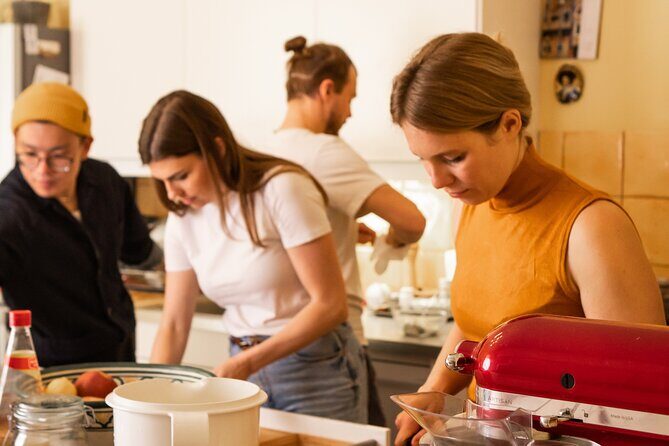
A big theme in the reviews is the balance between guidance and independence. Guides check in with everyone while still letting you do the real work. The aim is simple: every participant cooks as much as possible themselves, so you can recreate the dishes at home instead of relying on one-time class magic.
For you, that means a few things:
- You’ll get instruction before tasks, so you know what you’re aiming for.
- You’ll have enough time at the stove to practice, not just stand nearby.
- You’ll learn how multiple dishes fit together on the same clock (soup timing, schnitzel cooking, salad prep, then dessert).
Even people who hadn’t cooked in a while mention feeling comfortable and organized. One person described feeling walked through each dish, then sitting down as a group after cooking. That’s the sweet spot: you leave with actual confidence, not just a full plate.
Language is another practical win. The class is held in English, and the guide can also speak German. That matters because cooking vocabulary can be tricky—especially for breading, dough, and timing. If you miss a detail, you’re more likely to get it clarified quickly.
The pace can feel quick depending on participant numbers. One review mentioned it went fast because many people were in the class and each person did one thing more than doing every step. Still, the structure sounds designed to keep things moving so you finish cooking and eating within the ~3-hour window.
Austrian Comfort Food With Traditions You Can Taste
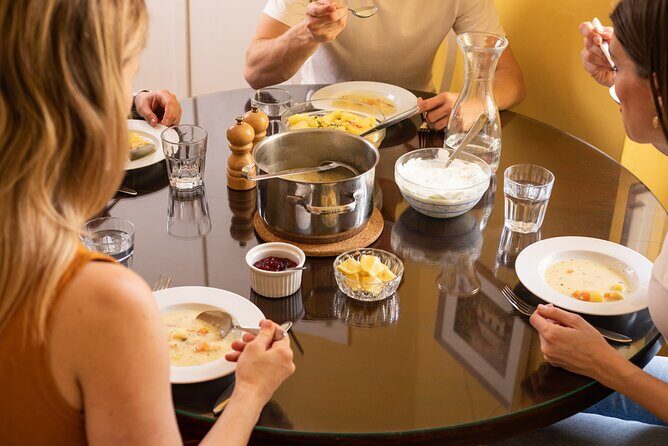
You’re not just learning recipes. You’re getting a taste of how Austrian food culture works—through stories and the way dishes get served.
One major reason this class feels authentic is the home setting and family connection: the host shares that the apartment is where great-grandparents once lived, and the recipes trace back to a grandmother style of cooking. You get context as part of the class flow—first an overview of Austrian cuisine, then the dishes you’ll cook together.
You also get to experience how schnitzel is meant to be served. Lingonberry jam and lemon aren’t random toppings. They’re part of the classic flavor logic: sweet-tart from the jam, bright acidity from lemon, and the crispy schnitzel acting as the base. Once you understand that, you’ll know what to do when you recreate it at home.
And then there’s the meal itself: you cook, then you eat together. That shared table is where the stories land. One review described the highlight as comfort cooking in a home and hearing about customs and traditions. That matches the real value here—food plus context, without turning the kitchen into a lecture hall.
If you like tours that teach you something practical, this is one of those experiences. You leave with a menu you can follow and a method you can repeat.
Diet Changes: Helpful, But Not Unlimited
If you have dietary needs, good news first: the host can arrange vegetarian, lactose-free, or gluten-free versions of the class. That’s explicitly offered, and it’s also supported by reviews noting accommodation for restrictions and allergies.
Now the limits, so you can plan without surprises:
- Vegan is not possible.
- You also cannot make gluten-free apple strudel.
Also, many of the dishes contain meat. The default menu is built around chicken schnitzel and meat-based Austrian dishes, so if you’re vegetarian, you’ll want to confirm exactly how the substitution will work when you book.
My practical advice: when you book, be specific. Don’t just say gluten-free or lactose-free. Mention what you need to avoid and what level of strictness you have. Since the class is small, the guide has a better chance to tailor your part of the meal.
If you’re lactose-free, the menu includes cheese-leaning components in some cuisines, but the class offer explicitly says lactose-free can be arranged, and reviews mention the guide being accommodating. That’s a reassuring combination.
If you’re gluten-free, you should know the apple strudel piece is the one restriction that cannot be swapped. If dessert is a must for you, plan around that fact before you commit.
Price and Value: Why $144.18 Often Makes Sense
At $144.18 per person for about 3 hours, this price might look high compared to a quick meal. But it’s not just a meal. You’re paying for instruction, equipment, and the time it takes to teach two major cooking skills (schnitzel and strudel) in a home kitchen.
Here’s what’s included:
- A 2- or 3-course lunch
- Coffee or tea
- An English (and also German) guide
- Kitchen equipment
That package makes the value clearer. You’re not going somewhere to eat and leave. You’re going somewhere to learn how to make the food you ate. And because the class ends with you eating what you cooked, your payment turns into an actual result: a full lunch and a recipe set you can use later.
If you’re comparing it to buying ingredients and teaching yourself, you’re also paying for the shortcut: someone helps you avoid the usual traps—timing, technique, and how to build the meal so everything finishes around the same time.
One more value angle: small-group instruction. With a cap of 6 people, you’re less likely to get ignored or stuck waiting for tools. That matters in cooking, where delays cost progress.
Who Should Book This Class (and Who Might Hesitate)
This experience is a great fit if you want real Vienna food without the tourist theater. It’s suitable for beginners and intermediates, and that matches the teaching style described in reviews: organized, clear guidance, and lots of chances to cook.
You’ll likely enjoy it most if:
- You want hands-on cooking, not just tasting.
- You like classic Austrian comfort food and want the real flavor logic behind it.
- You’d like a local apartment vibe with family-recipe storytelling.
- You’re traveling as a couple or small group and want an intimate experience.
You might hesitate if:
- Stairs are a problem for you (no elevator in the building).
- You need a fully vegan menu or gluten-free strudel (those aren’t possible).
- You want a purely meat-free menu with no adaptations.
If those drawbacks are manageable, this is the kind of class that makes your trip feel more personal. Vienna gets bigger when you learn it with your hands.
Should You Book Schnitzel and Strudel in Vienna?
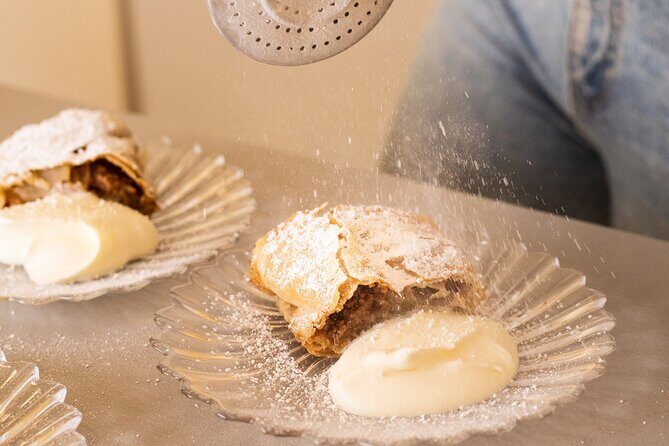
I’d book it if you want a practical Vienna souvenir: skills plus a full meal, taught in English, in a genuine home setting. The crisp schnitzel and apple strudel focus is exactly what makes this class memorable, and the small-group setup helps you actually cook instead of watching.
Do book if you:
- Want to learn recipes you can remake at home.
- Like apartment-based experiences with a local feel.
- Are okay with a menu that includes meat by default (or you’re arranging vegetarian/lactose-free/gluten-free ahead of time).
Skip or ask extra questions before booking if you:
- Need vegan, or you require gluten-free apple strudel.
- Can’t handle stairs.
If you fall into the first group, you’ll leave with two things that travel can’t replace: a better understanding of Austrian comfort food and dishes you can pull off again months later.
FAQ
How long is the shared cooking class?
It lasts about 3 hours.
Where do you meet in Vienna?
The meeting point is Neumanngasse 7, 1040 Wien, Austria.
What do you cook during the class?
You prepare traditional Austrian dishes, including Viennese potato soup, chicken schnitzel with cucumber and potato salad, and apple strudel for dessert.
Is the class 2 courses or 3 courses?
It can be 2 or 3 courses depending on how many participants join.
Is the class taught in English?
Yes, all classes are held in English.
What is included in the price?
Lunch (2- or 3-course meal), coffee or tea, a guide, and kitchen equipment.
Are there options for vegetarian or dietary restrictions?
Yes. Vegetarian, lactose-free, or gluten-free classes can be arranged. Vegan is not possible, and gluten-free apple strudel cannot be made.
Does the class happen in a restaurant?
No. It takes place in the host’s apartment.
Is the building accessible by elevator?
No, the building does not have an elevator.
Can I cancel for a refund?
Yes. Cancellation is free up to 24 hours in advance for a full refund.