REVIEW · VIENNA
Vienna: Imperial Treasury in the Hofburg Palace
Book on GetYourGuide →Operated by Kunsthistorisches Museum · Bookable on GetYourGuide
Gold, jewels, and relics in one small room. The Imperial Treasury in the Hofburg’s Swiss Wing packs centuries of Habsburg power into a tight walk-through, with my favorite payoff being the Austrian Imperial Crown plus the stories behind legendary items like the Holy Grail bowl.
I also like how the display moves from crown regalia to intimate jewelry details, including pieces tied to Empress Elisabeth. One thing to plan for: you may need time at the desk since this is tied to a printed voucher and ticket exchange, and the palace setting can make the first minutes feel a bit confusing.
In This Review
- Key Highlights You Should Care About
- Imperial Treasury in the Hofburg: What This Visit Really Feels Like
- Swiss Wing Entrance: Finding the Treasury and Getting Oriented
- Austrian Imperial Crown: The Habsburg Signature You Don’t Want to Miss
- Empress Elisabeth Jewelry: When Court Wealth Gets Personal
- Legendary Relics: Holy Lance, Holy Grail, and the Unicorn Horn
- How the Treasury Explains Power: Golden Fleece, Burgundy, and Napoleon II
- Layout and Lighting: Why Pace Matters in a One-Day Stop
- Audio Guide vs Going Off Your Own Interests
- Value for Money: Is $18 Worth It?
- Who This Imperial Treasury Visit Suits Best
- Should You Book the Imperial Treasury in the Hofburg?
- FAQ
- Where is the meeting point for the Imperial Treasury?
- How long should I plan for the visit?
- Is an audio guide included with the entrance ticket?
- Is a guided tour included?
- Do I need a printed voucher?
- Is the site wheelchair accessible?
- Is there free admission for children and young people?
- Can I cancel for a refund?
Key Highlights You Should Care About
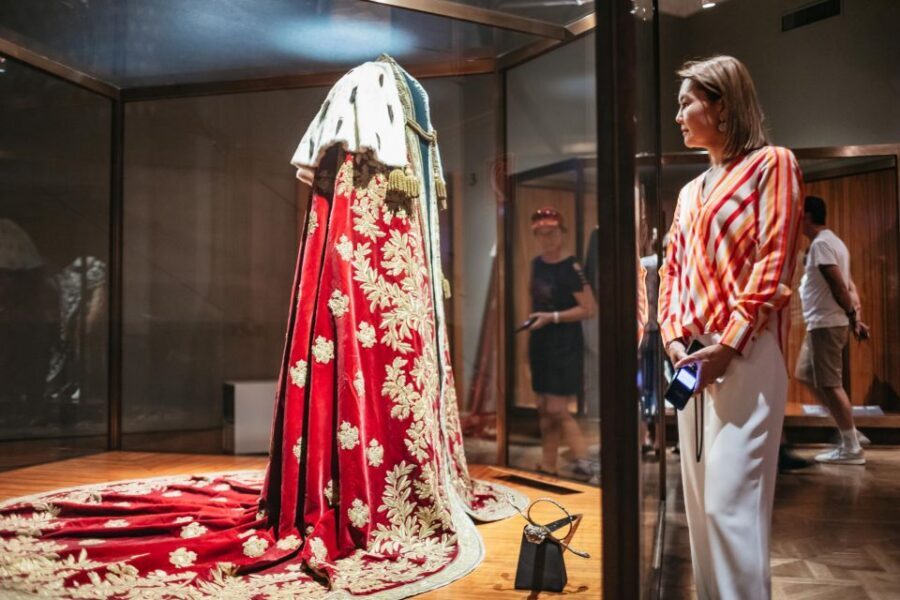
- Austrian Imperial Crown: the signature crown that connects Habsburg rule with the Holy Roman Empire
- Holy Grail (agate bowl): a famous showpiece presented as a legendary object of the treasury
- Largest cut emerald focus: you’ll see an oversized emerald emphasized as a standout gem
- Empress Elisabeth jewelry pieces: parts of original jewelry are shown for a more personal side of court wealth
- Holy Lance and other relics: religious objects sit alongside royal regalia for a full “power + faith” mix
- Small-group feel (up to 10): easier pacing in a collection that can otherwise feel like a rushed jewelry stall
Imperial Treasury in the Hofburg: What This Visit Really Feels Like
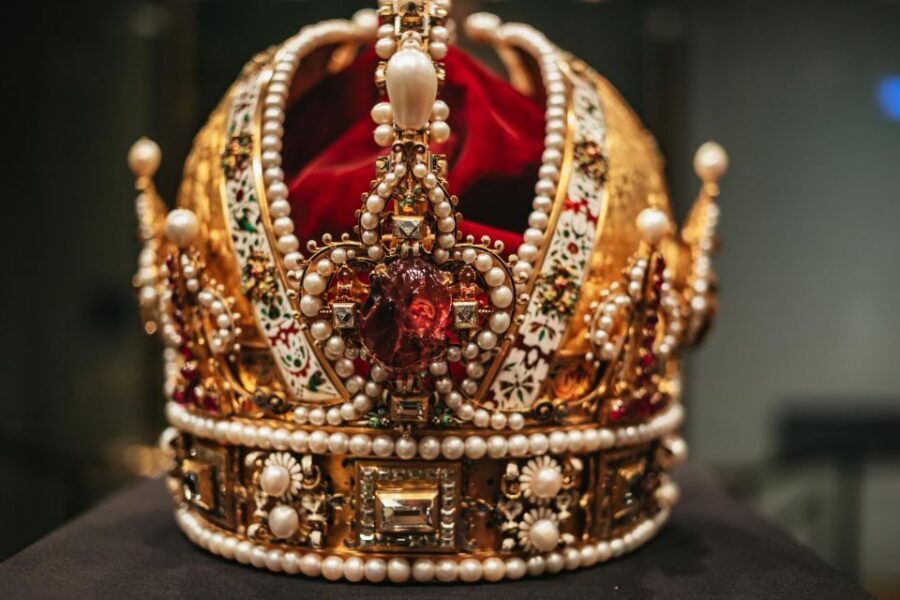
The Hofburg Palace has a way of making you feel like you stepped into a real machine of empire—rooms, corridors, uniforms, rules. The Imperial Treasury (Schatzkammer) is the part that turns all that into objects you can actually stand in front of. It lives in the oldest section of the palace, the Swiss Wing, which helps: you’re not just looking at crowns, you’re looking at them in the kind of space that once stored and protected them.
This is also a great stop for people who love big names but hate endless museums. You can get a full hit of Habsburg wealth without spending half a day in a maze. Still, it is a treasury—meaning the rooms are designed for looking, not sprinting. Give yourself enough time to slow down, read labels, and let the “wait, that’s real?” factor land.
You can also read our reviews of more tours and experiences in Vienna.



Swiss Wing Entrance: Finding the Treasury and Getting Oriented
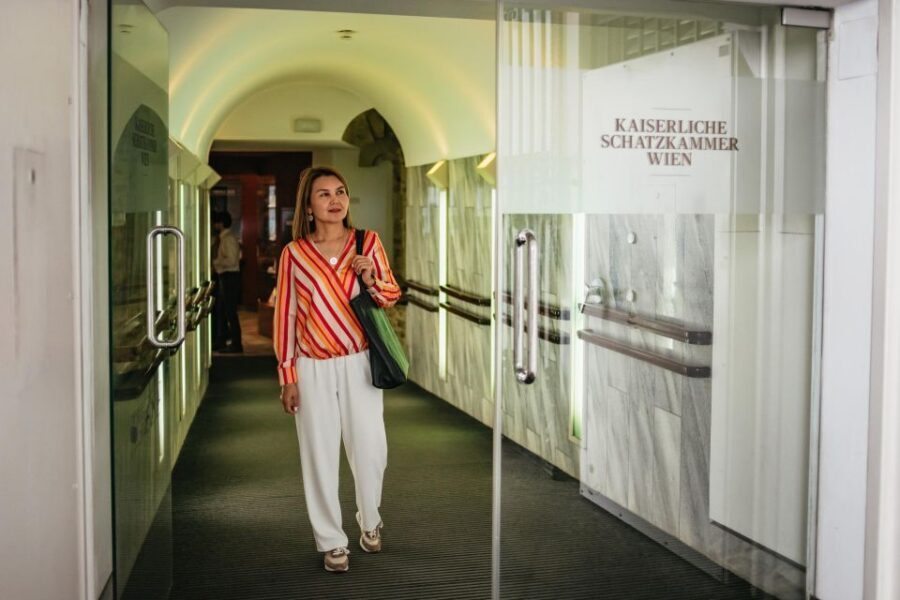
Your meeting point is the Swiss Wing in the Vienna Hofburg Palace. That sounds simple, but the palace is huge. The practical move is to arrive with a few extra minutes so you can find the correct entrance without feeling flustered.
Ticketing can add friction. The experience uses a printed voucher, and on-site there’s often a step where you exchange your code for an actual entry ticket. Even when everything is smooth, that exchange can create a short line bottleneck right at the start. Once you’re past that, the museum flow is typically manageable.
If you hate waiting, come early in your day. If you’re flexible, build in time to step outside afterward and reset your bearings. The palace environment makes it easy to overestimate how fast you’ll move.
Austrian Imperial Crown: The Habsburg Signature You Don’t Want to Miss
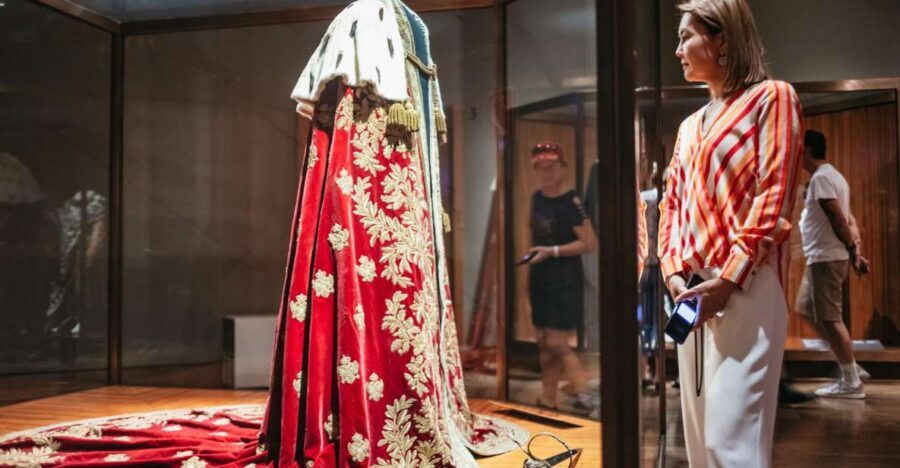
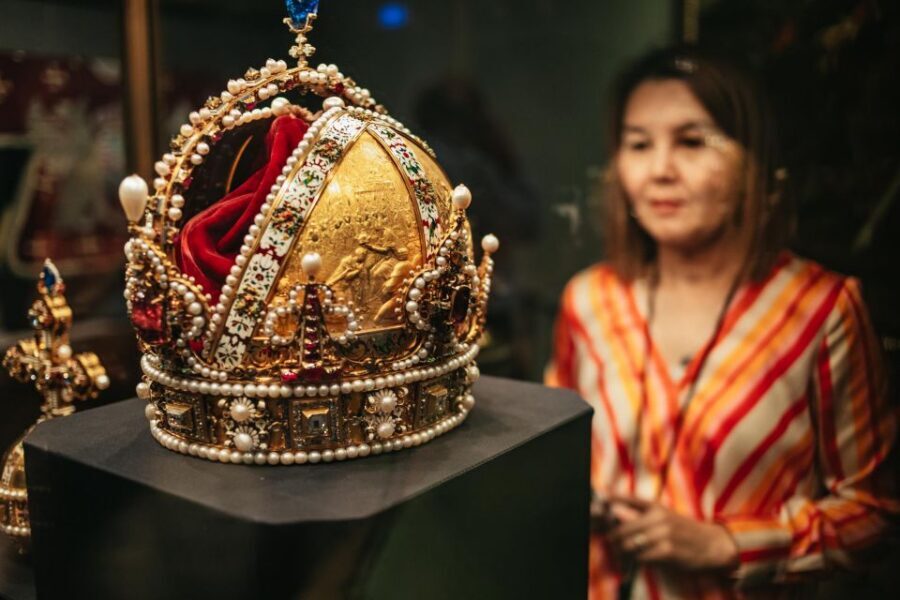
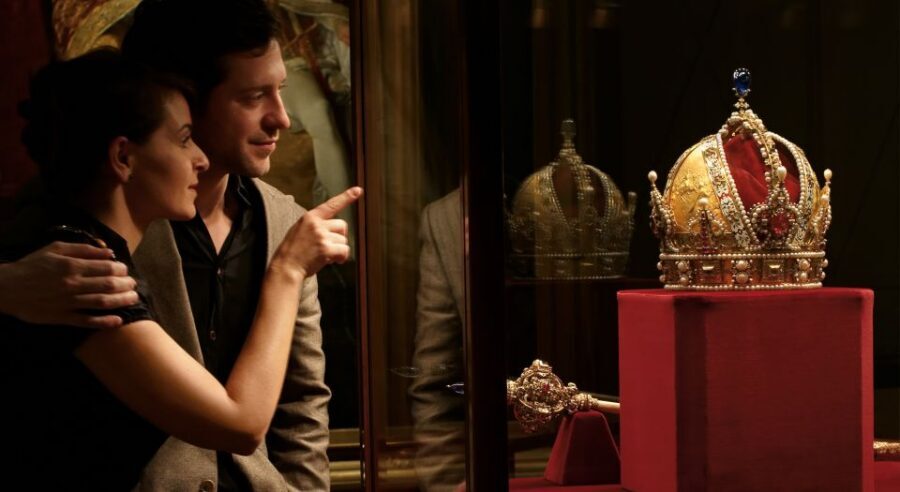
The main reason many people buy tickets is the crown material—specifically the Austrian Imperial Crown. This is presented as one of the most beautiful crowns in the world, and it carries extra weight because it links directly to the crown jewels of the Holy Roman Empire.
What’s satisfying here is not only the shine. It’s the storytelling angle: this crown isn’t just “pretty jewelry,” it’s a political instrument. You’re seeing how a dynasty used symbols you could display in court, in ceremony, and in moments meant to communicate authority.
Look closely at how the crown is exhibited compared with surrounding objects. Treasuries are arranged to reinforce hierarchy—big objects get the spotlight, smaller pieces get their own framing. Even without a formal guide, you can read the curatorial logic with your eyes.
Empress Elisabeth Jewelry: When Court Wealth Gets Personal
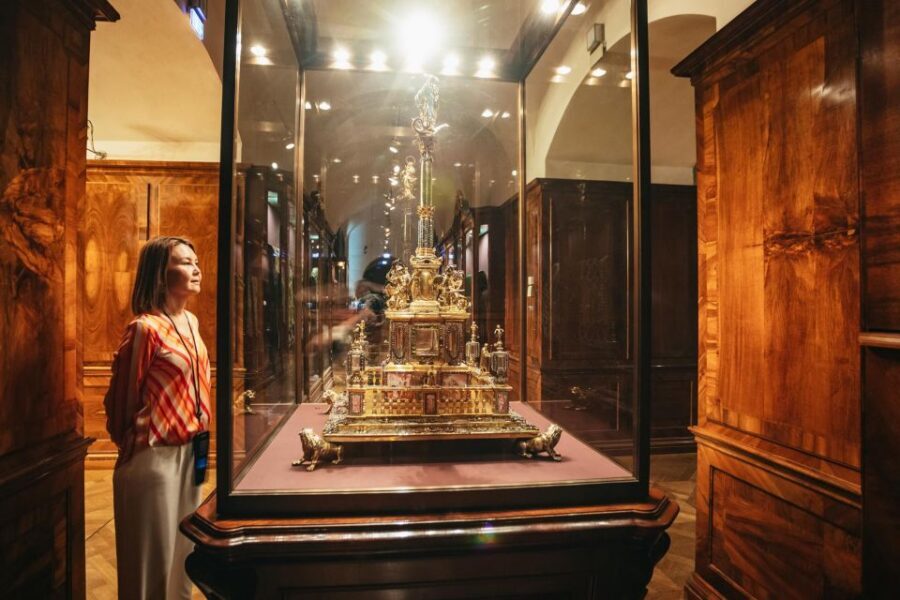
One of the most interesting things in the Imperial Treasury is the shift from royal regalia toward more intimate jewelry history. You’ll see jewels and diamonds, including parts of the original jewelry of Empress Elisabeth (Sisi).
This section works because it breaks the “everything is ceremonial armor” feeling. It helps you remember that elite life was not only about public rituals. It was also about adornment: hairstyles, daily elegance, and personal status. The treasury doesn’t treat jewelry like modern fashion—it treats it like heritage and power made wearable.
Take your time here. Jewelry details can look similar from across a room, but the closer you get, the more differences appear: settings, cut styles, and the way each piece is described. If you’re someone who likes reading labels, this is where your patience pays off.
Legendary Relics: Holy Lance, Holy Grail, and the Unicorn Horn
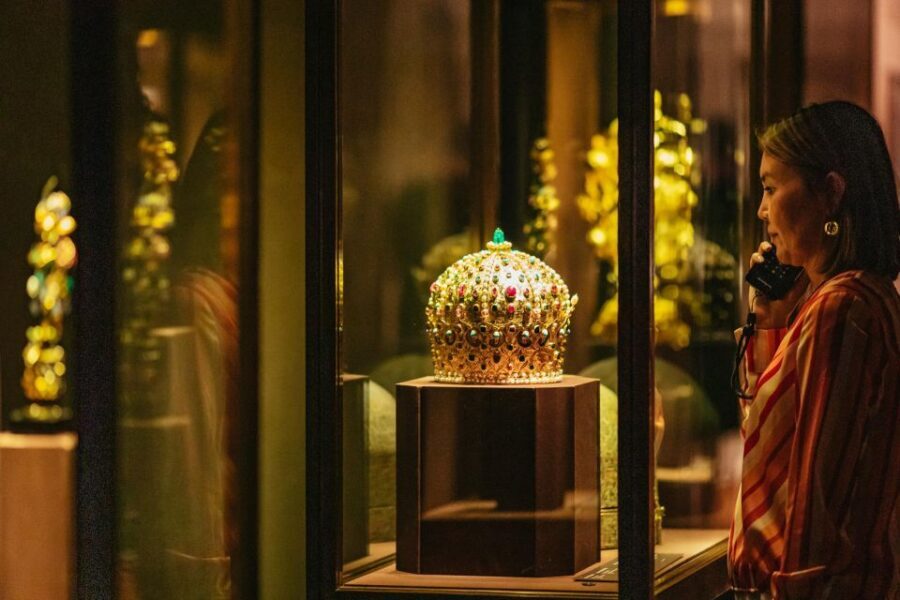
This is where the treasury earns its reputation for being fun, not just formal. You’ll encounter legendary objects presented with names that make people smile: the Holy Lance from the 8th century, the horn of a unicorn, and the Holy Grail described as the world’s largest agate bowl.
Even if you don’t care about the legends themselves, these items are valuable for what they show about belief systems. Empires didn’t just collect things because they were expensive. They collected them because they had meaning to the people in charge.
A practical tip: don’t rush past these items. The displays are set up to make you look twice. Also, if you’re the type who gets overwhelmed in “big-history” places, this is a good emotional break. Moving from crowns to relics keeps the visit from becoming a single long jewelry stare.






How the Treasury Explains Power: Golden Fleece, Burgundy, and Napoleon II
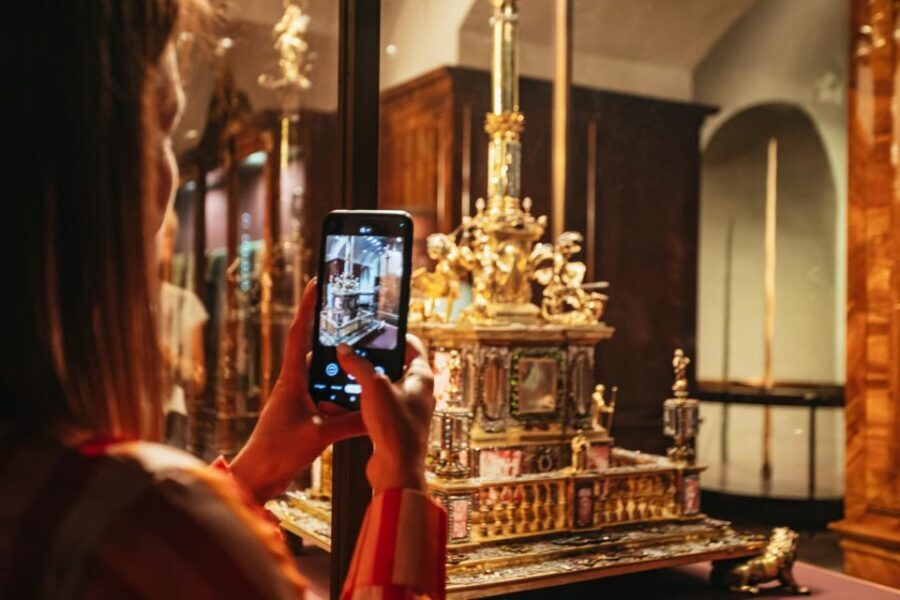
The Imperial Treasury isn’t only crowns and relics. It also shows how status networks worked, and how rulers displayed connections across Europe.
You’ll see:
- The treasure of the Order of the Golden Fleece
- A collection tied to 15th-century Burgundy
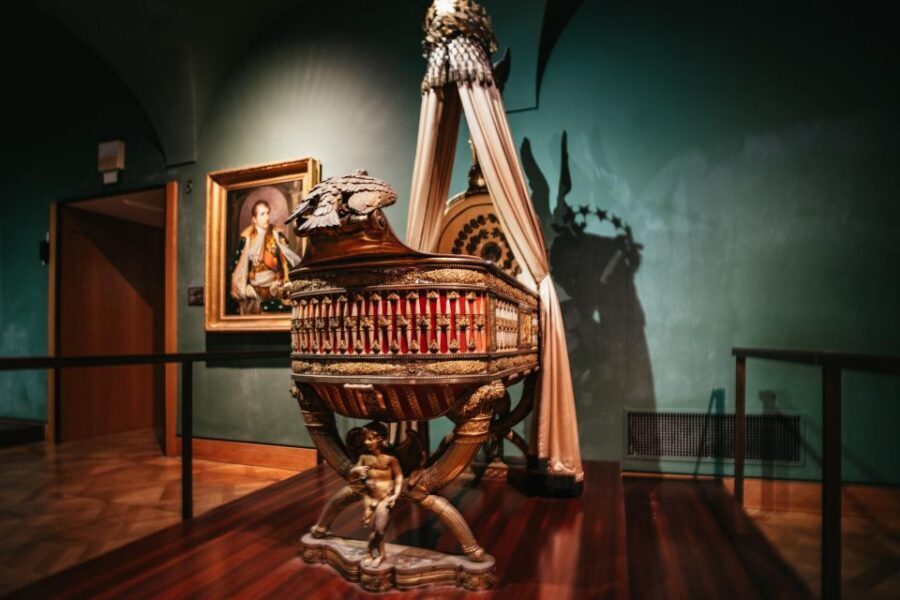
- The cradle of the King of Rome (Napoleon II)
These are the objects that help the whole dynasty feel connected. Orders like the Golden Fleece weren’t just decorations. They were memberships in a political system, a way of rewarding loyalty and reinforcing rank. The Burgundy material gives you a sense of court taste from a different region and time—so you get more than one “style of wealth.”
And the cradle of Napoleon II? That’s a reminder that even when titles change, courts keep collecting symbols. It gives the treasury a broader timeline of ambition, not only one-family glory.
Layout and Lighting: Why Pace Matters in a One-Day Stop
A lot of people treat this as a quick add-on. Many visitors finish in about an hour or so, while others take around an hour and a half. That difference matters. If you rush, you’ll miss the emotional variety—crown regalia, intimate jewelry, and legendary objects are three different moods.
The lighting can also affect your experience. Some rooms can feel dim, which means the details might be harder to read than you expect. If you rely on photos, use caution and don’t assume every surface can be captured well. Your best tool is your own eyes close up.
Also, give yourself a planning buffer for confusion near ticketing and wayfinding. The palace setting can be disorienting at first, especially if you arrive when other people are doing the same thing.
Audio Guide vs Going Off Your Own Interests
The entrance ticket you book covers admission. An audio guide is not listed as included, and a guided tour is not included either. Still, you can absolutely make this work without a guide.
If you do use an audio option on-site, it tends to help because the treasury holds a lot of names, dates, and cross-links between objects. One of the most useful things from past visitors is how the headsets were described as easy to use and how labels were clearly marked, so you can pair audio with close viewing instead of wandering aimlessly.
If you’re bringing your own guide, the museum setup can suit that well. The collection is organized enough that a good guide can highlight the most important pieces and explain how they connect—without requiring you to absorb every label word-for-word.
If you’re going solo, choose a simple strategy before you enter: pick 3 must-sees (the Imperial Crown, a legendary object, and the Elisabeth jewelry) and then let everything else support those anchors.
Value for Money: Is $18 Worth It?
At about $18 per person for roughly a one-day ticket window, the value is strong if you want a concentrated experience. You’re paying for access to a major treasury chamber—one that’s known for high-impact objects, not a sprawling general museum.
The catch is what your ticket does not include. Since the audio guide and guided tour aren’t part of the listed package, your experience depends on whether you’re comfortable reading labels on your own. If you want extra interpretation and explanation, budget for an audio option or consider pairing your visit with a separate guided service.
My practical take: this is worth booking if you like royal and religious artifacts, and if you’re okay with a museum that is more “stand in front of masterpieces” than “follow a long narrative.” If you only want modern, interactive museums, you might find the pace feels old-school.
Who This Imperial Treasury Visit Suits Best
This is a smart match for:
- Crown and regalia lovers who want the big objects in a short visit
- People who enjoy legends and symbols as much as they enjoy craftsmanship
- Visitors who want a high-value stop near the center of Hofburg Palace
- Families and teens who enjoy reading up on historical objects (with note that young people under 19 generally get free admission)
It also works if you’re combining this with other Hofburg rooms. The palace context makes the treasury feel less random and more like a key you turn to understand Vienna’s imperial storytelling.
Should You Book the Imperial Treasury in the Hofburg?
I’d book this if you want one of Vienna’s most “object-forward” experiences: the Austrian Imperial Crown, major reliquary-style treasures, and famous gems all in a compact plan. The small-group limit (up to 10) helps you take your time, and the collection hits multiple interests—royal, religious, and legendary.
Skip it or reconsider if you hate ticket lines and printed-voucher exchanges, or if dim lighting and label reading will frustrate you. Also, if you’re expecting a guided narrative included in the ticket, know that’s not what this price covers.
If you’re the kind of traveler who likes to lock onto a few icons and really look, this treasury is a classic Vienna win.
FAQ
Where is the meeting point for the Imperial Treasury?
The meeting point is the Swiss Wing in the Vienna Hofburg Palace.
How long should I plan for the visit?
The activity is valid for 1 day, and the visit itself is generally short enough that you may finish in about an hour to an hour and a half, depending on how closely you read and view the displays.
Is an audio guide included with the entrance ticket?
No. An audio guide is not included with the entrance ticket.
Is a guided tour included?
No. A guided tour is not included. You can bring your own guide if you want.
Do I need a printed voucher?
Yes. A printed voucher is required.
Is the site wheelchair accessible?
Yes. The Imperial Treasury experience is wheelchair accessible.
Is there free admission for children and young people?
Children and young people under 19 generally enjoy free admission. School groups under 19 must be registered through the museum’s booking department.
Can I cancel for a refund?
Yes. You can cancel up to 24 hours in advance for a full refund.