REVIEW · VIENNA
Big Tour of Gustav Klimt’s Art in Vienna: Belvedere, Secession & Leopold Museum with Skip-the-Line Tickets
Book on Viator →Operated by Art with me! — Art experience for the intellectually curious · Bookable on Viator
Three Klimt stops, one smart route. This is a private Vienna outing that connects Gustav Klimt’s artworks to the city that shaped them, with an art historian guide and skip-the-line entry. You’ll see key paintings at three top venues: Belvedere Palace, the Secession building, and the Leopold Museum.
I especially like how the tour stays focused, so you’re not just collecting famous names—you’re understanding what you’re looking at. You’ll also get a clear, time-tested flow between sites, with a schedule that helps you fit three museums into about 3 hours, plus plenty of room for questions as you go.
One thing to consider: the visit is timed. Each stop is allotted a set amount of time, so if you want to linger for long readings or multiple slow re-visits, you’ll probably want to add extra time after the tour at the Leopold Museum area.
In This Review
- Key Highlights Worth Planning For
- Why This Klimt Route Feels Smarter Than Doing It Alone
- Starting at Belvedere: Where to Meet and How to Not Stress
- Belvedere Palace: The Kiss, Judith, and What the Golden Period Really Signals
- Secession Building: Beethoven Frieze and the Power of a Short, Focused Stop
- Leopold Museum: Death and Life and the Ceiling Paintings Reconstruction
- MuseumsQuartier Wien: A Tiny Free Moment That Helps You Reset
- What You’ll Learn From Julia’s Art-History Approach
- Price and Value: What $336.43 Buys You in Real Terms
- Who This Tour Fits Best (and Who Might Want Something Different)
- Final Advice: Should You Book This Gustav Klimt Tour?
- FAQ
- How long is the Klimt tour?
- Is this a private tour or shared group?
- What language is the tour offered in?
- Which stops are included in the itinerary?
- Are admission tickets included?
- Does the guide handle tickets or do I need to bring them?
- Where do we meet the guide?
- Is there a recommended way to find the meeting point?
Key Highlights Worth Planning For
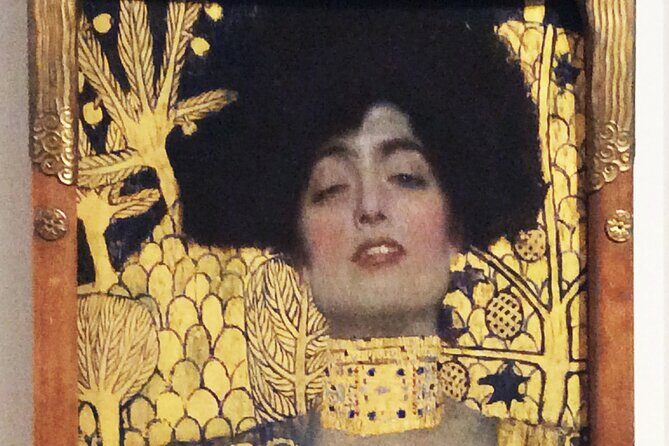
- Belvedere Golden Period hits: Plan for The Kiss and Judith as your first big emotional punch
- Secession’s big statement: Klimt’s Beethoven Frieze gets real context in a short, focused stop
- Leopold Museum “then and now”: Death and Life plus a University of Vienna ceiling reconstruction
- Private pacing with Q&A: Your group stays together, and your guide answers what you ask
- Tickets handled for you: The guide brings your museum entrance tickets, so you’re not stuck in lines or queues
Why This Klimt Route Feels Smarter Than Doing It Alone
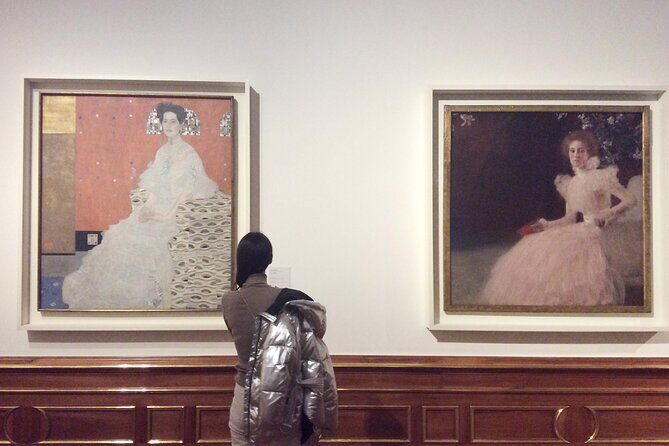
Vienna has a way of pulling you in different directions. You start out thinking you’ll just see one museum, and suddenly you’re hopping trams and checking opening hours like it’s a second job. This tour is helpful because it gives you a tight, logical route through the Klimt sites that matter most.
The big win is that you’re not treating Gustav Klimt like a set of isolated masterpieces. Instead, you’re seeing how themes travel—style changes, symbolism evolves, and the cultural setting keeps showing up in the details. The tone is practical too. I like that the experience is designed for a normal pace, not museum-speed marathons where you can’t absorb anything.
Also, your guide is an art historian, and that matters. When someone can explain how and why Klimt produced these works, you start noticing things you’d otherwise miss—composition choices, recurring motifs, and the way Vienna culture shaped his visual language.
This is a private tour, so it stays intimate. That’s a real advantage at museums like these, where the most enjoyable part is usually the conversation: what you’re seeing, what it might mean, and how it connects to the bigger story.
You can also read our reviews of more tours and experiences in Vienna
Starting at Belvedere: Where to Meet and How to Not Stress
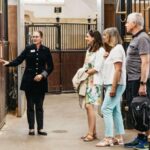
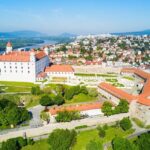
You meet at the Austrian Gallery Belvedere, at Prinz-Eugen-Straße 27, 1030 Wien. The meeting point is at the main entrance of Belvedere Palace—specifically the Upper Belvedere side. The instructions are clear: your guide waits on the right side of the main entrance.
One small-but-useful tip is built right into the directions. If you spot the breathtaking view of Vienna, you’re in the right place. If you only see the palace but not the city view, move to the entrance on the opposite side of the building and follow the Museum entrance sign.
Why am I repeating this? Because Belvedere can feel a bit complex when you arrive—there are angles, entrances, and signage. Showing up a few minutes early is the best way to avoid any last-minute scrambling. The tour also asks for punctuality, which is fair. When a guide is coordinating timed museum entry, a late start can ripple through the day.
The tour is also described as near public transportation, which is helpful. Vienna’s transit makes it easy to get here without a car, and you’re not wasting your time hunting parking.
Finally, your guide carries your museum entrance tickets, so you’re not juggling paperwork or trying to figure out where to scan. That alone can save energy at the start.
Belvedere Palace: The Kiss, Judith, and What the Golden Period Really Signals
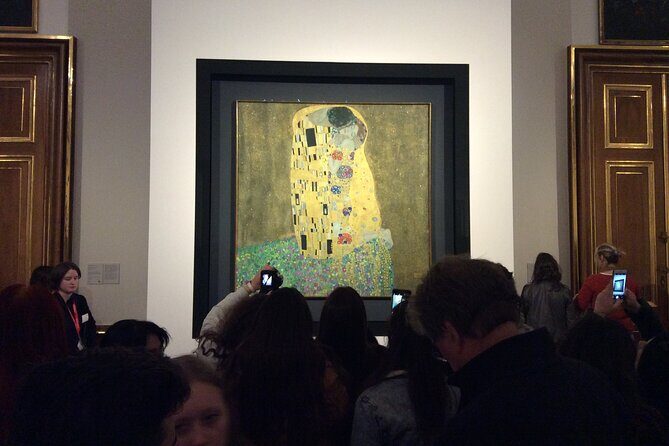
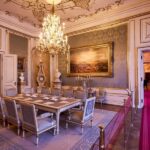
Belvedere is where you begin, and it’s a strong choice. You step into the world of Klimt’s vivid “Golden Period” and start with his most famous emotional works.
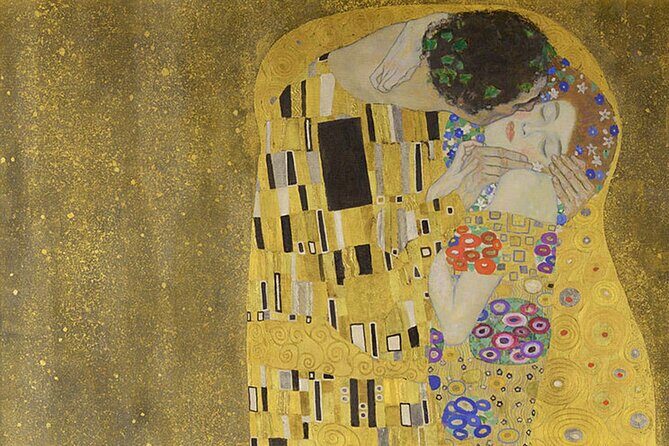
At this stop you’ll spend about one hour inside Belvedere, with museum admission included. The highlight here is The Kiss, plus Judith. These are the two paintings that many people come to Vienna for in the first place, and it’s smart to see them first while you’re fresh.
Here’s what I find valuable: you get more than admiration—you get orientation. When an art historian connects these works to the broader context of his career and Vienna’s cultural climate, you start to understand why these images hit so hard. The gold isn’t just decoration. It reads like a statement about mood, meaning, and status, and it helps explain why Klimt’s style became so recognizable.
You’ll also notice how the tour’s structure supports attention. One hour at a single venue gives you enough time to slow down. You’re not running in and out. Instead, you can take a breath and let the works hit you, then ask questions while the setting is still clear in your mind.
Potential drawback? Famous paintings attract big expectations. If you’re the type who worries you’ll be disappointed because you already know the image, having a guide helps. The explanations make you look again, not just glance once and move on.
Secession Building: Beethoven Frieze and the Power of a Short, Focused Stop
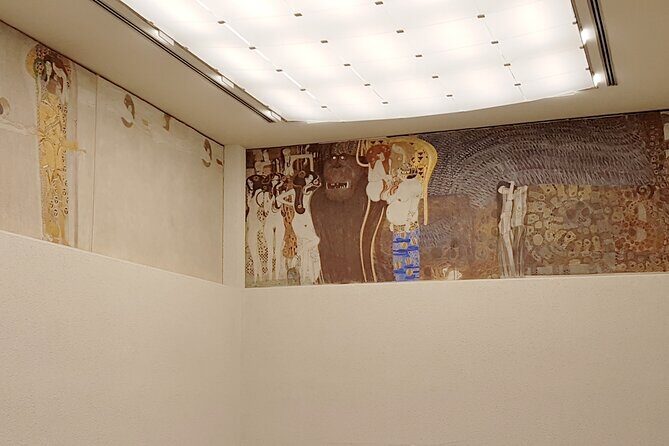
Next you head to the Secession building (Secessionsgebaude). This is the “how it feels to be Klimt in a room” stop.
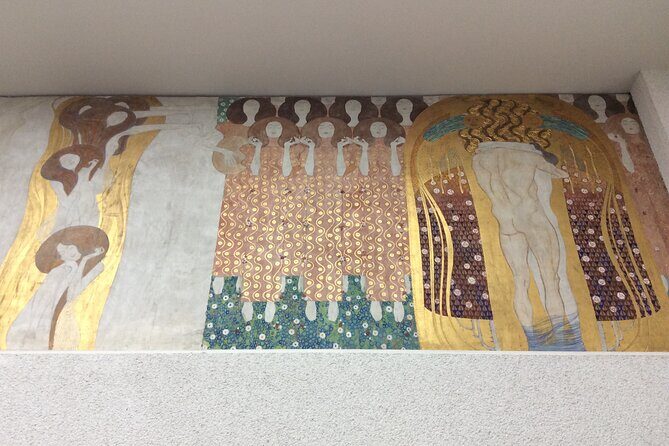
You’ll spend about 30 minutes here, with admission included. The key work is Klimt’s Beethoven Frieze, which is often described as his biggest work in this space. It’s the kind of piece that can overwhelm you if you walk in cold. A short guided visit is a good match because it helps you understand what you’re looking at without making the stop feel rushed.
The Secession is also important because it represents an idea: artists pushing against tradition, creating new visual languages, and shaping modern culture. When your guide ties Klimt’s work to that spirit, you start seeing the frieze less like a single artwork and more like a cultural statement.
In practical terms, 30 minutes sounds short. But it’s built for focus. If you’ve ever walked into a museum and spent 20 minutes just finding the best route, you’ll appreciate that this stop is organized.
The possible downside is simple: if Beethoven Frieze is the one piece you could stare at for an hour, the time limit may feel tight. I’d treat this as a “get the key” stop. After the tour you can always come back—Vienna museums are there when you’re ready for a slower second visit.
Leopold Museum: Death and Life and the Ceiling Paintings Reconstruction
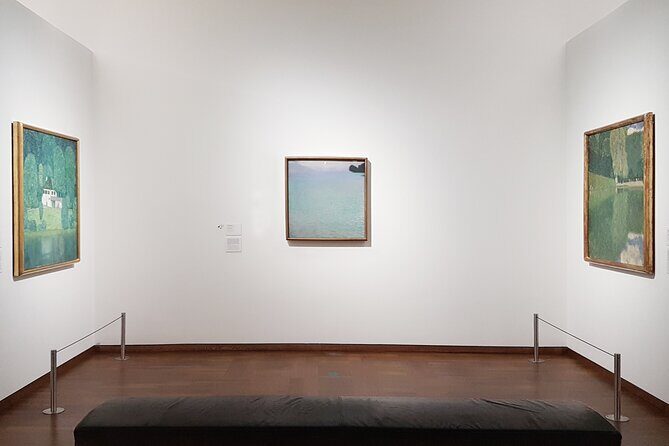
Then it’s time for the Leopold Museum in the Museumsquartier area. This is your longest stop at about 59 minutes, again with museum admission included.
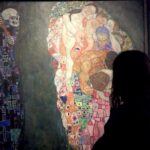
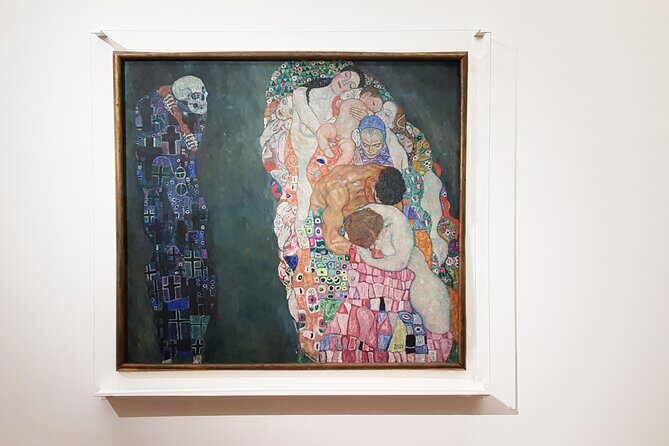
The main Klimt works you’ll see here include Death and Life. You’ll also get something especially useful for understanding Klimt’s range: a reconstruction related to his University of Vienna ceiling paintings.
This is a big deal because it’s not only about seeing one famous painting. It’s about seeing how Klimt’s art fits into larger commissions and public-facing ambitions. When you connect Death and Life with the ideas behind the ceiling works, you get a broader sense of how his symbolism and style function across different settings.
Death and Life can feel like a cliff-edge emotionally—life, death, and the push-pull between them. With an art historian guiding you through the imagery, you can make sense of the symbolism instead of treating it like a sealed riddle.
And the ceiling reconstruction helps you understand Klimt’s goals beyond paintings you can frame and hang. It’s about scale and intent. Even if you don’t read every detail of the reconstruction, the guided context makes the experience click. You leave with a clearer mental map: Klimt wasn’t only painting for private viewing. He was shaping how people would experience ideas in space.
Time tip: this is where you can ask the most questions. Because it’s the biggest stop, it gives your guide room to answer more than one topic without the pressure of “we need to move.”
You can also read our reviews of more museum experiences in Vienna


MuseumsQuartier Wien: A Tiny Free Moment That Helps You Reset
You’ll also get a very brief stop at MuseumsQuartier Wien—just about one minute and free. Think of it as a palate cleanser.
This matters because after three art-heavy stops, your brain can start buffering. A quick look at the MuseumsQuartier area can help you reset and keep your mood light, especially if you’re hopping between museums with different atmospheres.
It’s not the main event. It’s just enough to give you bearings in the neighborhood so the end of the tour feels natural.
What You’ll Learn From Julia’s Art-History Approach
Your guide is named Julia, and she has a strong reputation for making Klimt’s work feel clear and connected. The standout theme is that she explains art history in a structured way—Klimt’s upbringing, career development, and how his work evolved over time.
That structure is practical. It turns museum wandering into purposeful seeing. You’re not stuck guessing which details matter. You learn what to notice while you’re looking at the painting, so your attention stays anchored.
One reason this kind of guide approach really works is that it supports different interests. If you’re a true Klimt fan, you’ll appreciate seeing the evolution behind the famous works. If you’re more casual—maybe you only know the major paintings—you’ll still walk away with understanding you can use.
Also, because it’s private, you can ask follow-up questions. That’s where “seeing” becomes “getting it.” You get answers while your visual memory is still fresh, not after you’ve left the building and tried to remember everything.
Price and Value: What $336.43 Buys You in Real Terms
The price is $336.43 per person for an approximately 3-hour private tour with skip-the-line tickets and museum admissions included.
On paper, that’s not cheap, so I’d judge value by what’s included and how much trouble it saves you:
- You get a private guide, in English.
- You get skip-the-line tickets, plus entry included at Belvedere, the Secession building, and the Leopold Museum.
- Your guide brings your entrance tickets, and the itinerary is timed to fit three sites efficiently.
- You get an art historian’s context, not just “here’s the famous painting.”
If you’re the kind of person who hates wasted time in lines, this can be worth it quickly. Even more, if you care about understanding what you’re seeing, a good guide can outperform a cheaper self-guided day—especially at museums where context turns “beautiful” into “meaningful.”
The best match is someone who wants a Vienna day that feels guided but still calm. If you’re okay doing everything on your own and you mainly want photos, you could probably do it cheaper. But if you want clarity—why Klimt did what he did and how it connects across buildings—this price starts to make sense.
Who This Tour Fits Best (and Who Might Want Something Different)
This is a good fit for Klimt lovers who want more than surface-level appreciation. It’s also a strong pick if you enjoy structured explanations and want to ask questions, not just follow a group silently.
It’s listed for travelers with moderate physical fitness, which likely means you’ll be doing some walking between sites and navigating museum interiors at a normal pace. If you have limited mobility or stamina, you’ll want to consider whether a multi-stop museum route is realistic for your day.
If you’re traveling with kids or very young teens, the tour length and timed museum stops may feel a bit adult-focused—unless your group is genuinely interested in art context. The same goes for anyone who wants extremely slow museum time.
Best strategy if you love museums: treat the tour as the “orientation day.” Then extend after, especially around the Leopold Museum area, since the tour ends there and you can stay for more exhibitions on your own.
Final Advice: Should You Book This Gustav Klimt Tour?
I’d book it if you want three major Klimt venues covered in a smart order, with an art historian guide named Julia and tickets handled for you. It’s a strong value when you care about context—Belvedere, Secession, and Leopold are all different kinds of spaces, and you’ll get more from seeing the connections between them.
I’d skip it if you’re planning to move at a very slow pace or you want long solo time in each museum. The stops are timed, and you’ll likely want extra hours after the tour to revisit what grabbed you most.
If you’re going in peak season, I’d also plan ahead. The tour is commonly booked well in advance, and early planning gives you more choices for departure times—useful if you want to pair your museum day with other Vienna plans.
FAQ
How long is the Klimt tour?
The tour runs for about 3 hours.
Is this a private tour or shared group?
It’s a private tour/activity. Only your group participates.
What language is the tour offered in?
The tour is offered in English.
Which stops are included in the itinerary?
You’ll visit Belvedere Museum, the Secession building, and the Leopold Museum. There’s also a brief free stop at MuseumsQuartier Wien.
Are admission tickets included?
Yes. Admission tickets are included for the museum stops.
Does the guide handle tickets or do I need to bring them?
Your guide will have your museum entrance tickets with them.
Where do we meet the guide?
You meet at the main entrance of Belvedere Palace (Upper Belvedere), at the Austrian Gallery Belvedere. The guide waits on the right side of the main entrance.
Is there a recommended way to find the meeting point?
Look for the Vienna city view from the meeting area. If you see the palace but not the city view, move to the entrance on the opposite side and follow the Museum entrance sign.
If you’d like, tell me your travel month and whether you prefer morning or afternoon, and I’ll suggest a practical Vienna day plan that pairs well with this Klimt route.