REVIEW · VIENNA
Vienna: Tickets to Haus der Musik
Book on GetYourGuide →Operated by Haus der Musik Museum GmbH · Bookable on GetYourGuide
Vienna’s music has a fun side. Haus der Musik turns the city’s composers into hands-on stations, from sound science to interactive orchestra moments.
Two things I really like are the museum’s mix of music history + interactive play, and how it’s built to work for both adults and kids.
One thing to consider: this place is very “do stuff” heavy, so if you only want quiet, lecture-style museum time, you may find some stations a bit noisy and hands-on.
In This Review
- Key things to know before you go
- Haus der Musik in Vienna: why this music museum feels different
- Start in the Palais: where Vienna’s orchestra story begins
- Four floors of Vienna composers, from Haydn to Schönberg
- Sound labs and interactive instruments: music meets physics
- The Vienna Philharmonic conductor challenge: play the maestro
- Mozart name game and composing your own waltz
- Vienna Philharmonics New Year’s Concert in HD
- What to do with your headphones and your time
- Cost and value: is $22 a good deal?
- Who this ticket is best for (and who it’s not)
- Should you book Haus der Musik tickets?
- FAQ
- Is this ticket valid for one day only?
- Where is Haus der Musik located?
- How much does a ticket cost?
- What’s included with the admission ticket?
- Do I need to bring anything?
- Are food and drinks included?
- Can I cancel for a full refund?
- What language options are available for the app guide?
- Is the museum wheelchair accessible?
- Is Namadeus part of the ticket?
Key things to know before you go
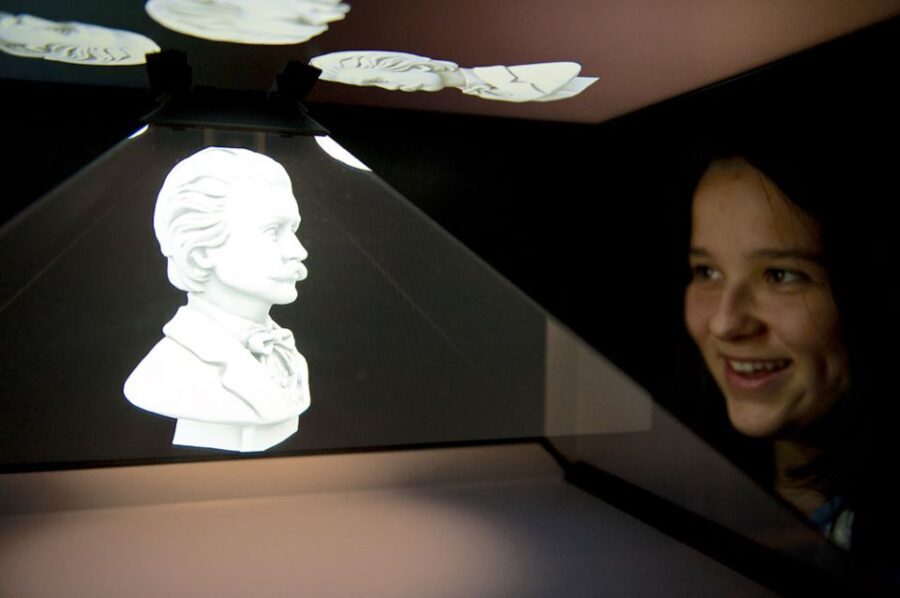
- Four floors that connect Vienna composers to sound, instruments, and how we hear
- Vienna Philharmonic Orchestra ties to real history, including a founder link from 1842
- A conductor challenge that puts you in front of a virtual orchestra moment
- Namadeus: hear your name as an original Mozart-style composition (extra output/certificate not included)
- Compose a waltz using a throw-of-the-dice game, then compare what you created
- Bring headphones so you can follow interactive audio parts comfortably
Haus der Musik in Vienna: why this music museum feels different
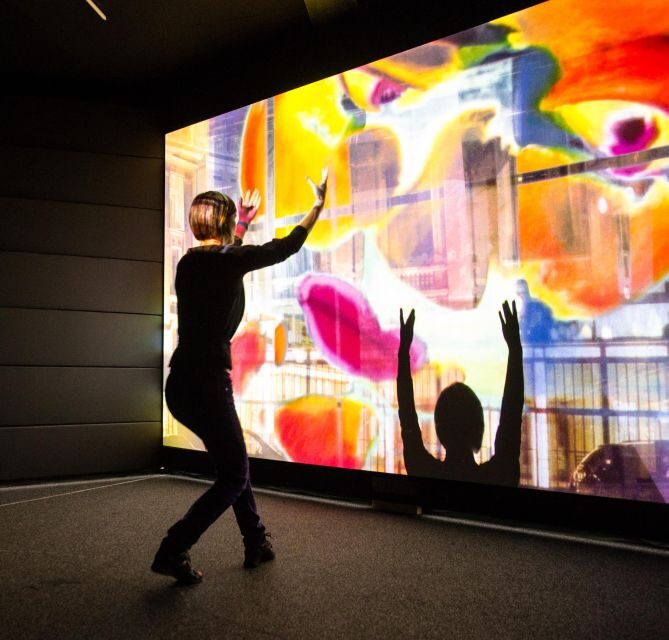
Haus der Musik is in a very central spot, and it’s not trying to be a dusty, behind-glass museum. It’s a modern, interactive space that treats music like something you can test with your own senses. You’ll move through rooms that explain the big ideas, then immediately ask you to try the ideas out.
I like that it gives you two kinds of value at once: you learn the story of Vienna’s composers, and you also learn what sound actually does. That second part matters. When you understand resonance, pitch, and sound behavior, a Mozart melody or a Beethoven phrase lands differently.
The museum’s setting helps too. It’s located in the former Palais of Archduke Charles, and the story of the Vienna Philharmonic ties back to the residence of Otto Nicolai, who founded the orchestra in 1842. So even before you reach the first interactive station, you’re anchored in real Viennese music history, not just modern multimedia.
If you’re short on time, you can still make it work. It’s a one-day ticket (valid from first activation), and you can pace yourself through the floors based on your interests.
You can also read our reviews of more tours and experiences in Vienna

Start in the Palais: where Vienna’s orchestra story begins
Walk into Haus der Musik and you’re stepping into a building with music-history roots. The museum calls out that Otto Nicolai, founder of the Vienna Philharmonic Orchestra, lived here when he established the orchestra in 1842. That’s a strong way to frame what you’ll see next: you’re not just learning about composers, you’re learning about the musical machine that Vienna built around them.
On the museum side, you’ll also find pieces connected to the orchestra’s past—precious documents and mementos tied to the Vienna Philharmonic’s history. This is one reason the visit feels grounded. Even when you’re playing a game, the museum keeps nodding back to the historical “why.”
You can also catch temporary exhibitions in the inner courtyard. These focus on famous musicians or music-historical themes, including things like Viennese Modernism. So it’s not always the same exact experience year-round.
Practical note: the meeting point is Haus der Musik, Seilerstätte 30, 1010 Vienna. It’s easy to reach on foot from much of central Vienna, and it’s ideal for building this stop into a day of walking.
Four floors of Vienna composers, from Haydn to Schönberg
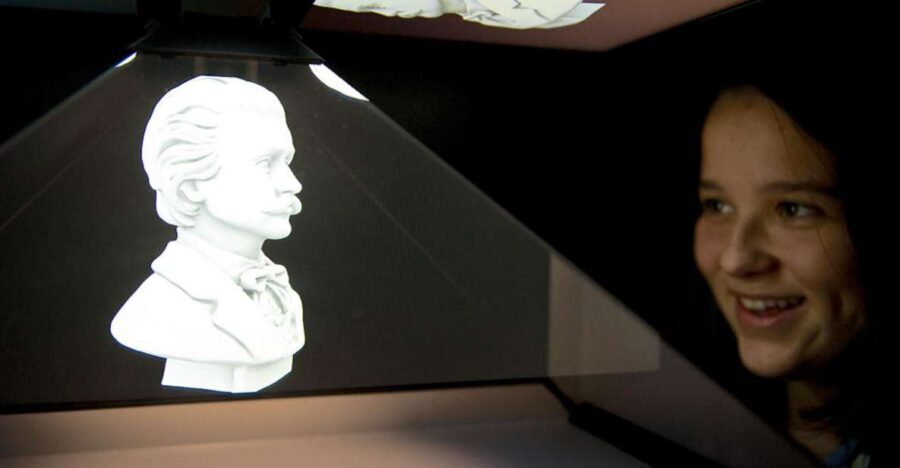
Haus der Musik spreads its musical story across four floors. The core theme is Viennese masters, introduced through a mix of historic materials and modern presentation. You won’t just get names. You’ll see context: documents, models, costumes, and personal items that help you place the composers in their own environment.
The big lineup includes Haydn, Mozart, Beethoven, Schubert, Strauss, Mahler, and Schönberg. That span is key. Vienna’s “music story” isn’t one style. It’s a timeline of ideas changing over time—sometimes gradually, sometimes in leaps.
What’s especially useful for first-time visitors is how the museum presents these composers in a contemporary setting on the history level. That means you’re not limited to reading plaques. You’ll see installations that help connect what you’re hearing in your head with what the composers were dealing with on the ground.
A nice bonus is that the permanent exhibition isn’t the only show in town. Temporary courtyard exhibitions can add a different angle depending on when you go. If you’re the type who likes variety, check what’s running while you’re there so you don’t miss an extra theme.
Sound labs and interactive instruments: music meets physics
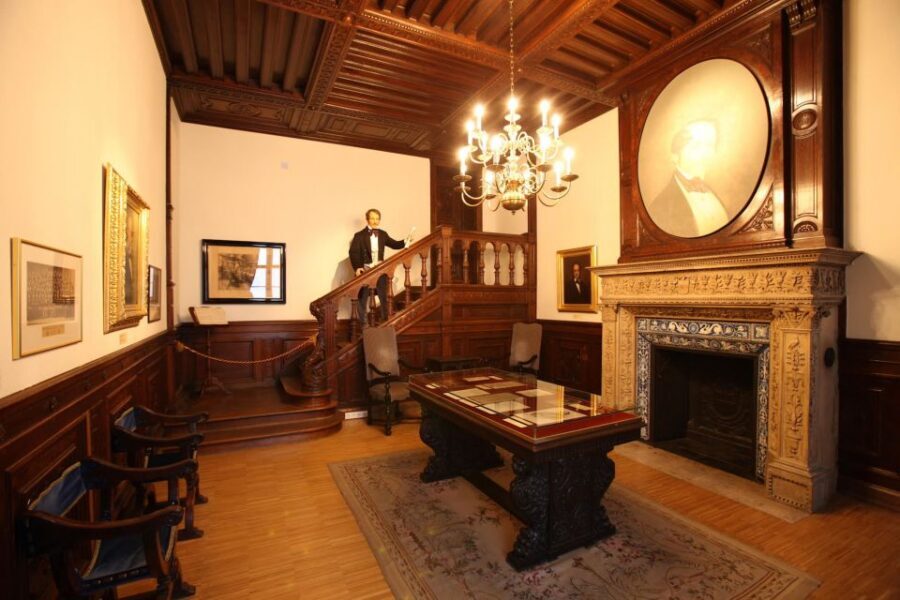
One of the most praised parts of the experience is the science of sound. This museum treats sound like a physical thing, not just a vibe. You can take an acoustic journey through the “how it works” side of music—using interactive displays, sound experiments, and instruments you can interact with.
If you’ve ever wondered why some instruments feel bright and others feel warm, this is where the museum tries to answer that in a practical way. The experience is designed to connect sound, noises, and musical instruments so you see how hearing works from the inside out.
This is also a big reason the museum works for non-music lovers. You don’t need to know the difference between orchestration styles to enjoy a sound station. You can just test, listen, adjust, and notice. The learning sticks because you’re doing it, not just watching it.
If you’re traveling with kids, this is the floor where you’ll get the most traction. Families tend to gravitate here because the activities keep things moving. Even as an adult, you’ll probably catch yourself lingering longer than you planned.
The Vienna Philharmonic conductor challenge: play the maestro
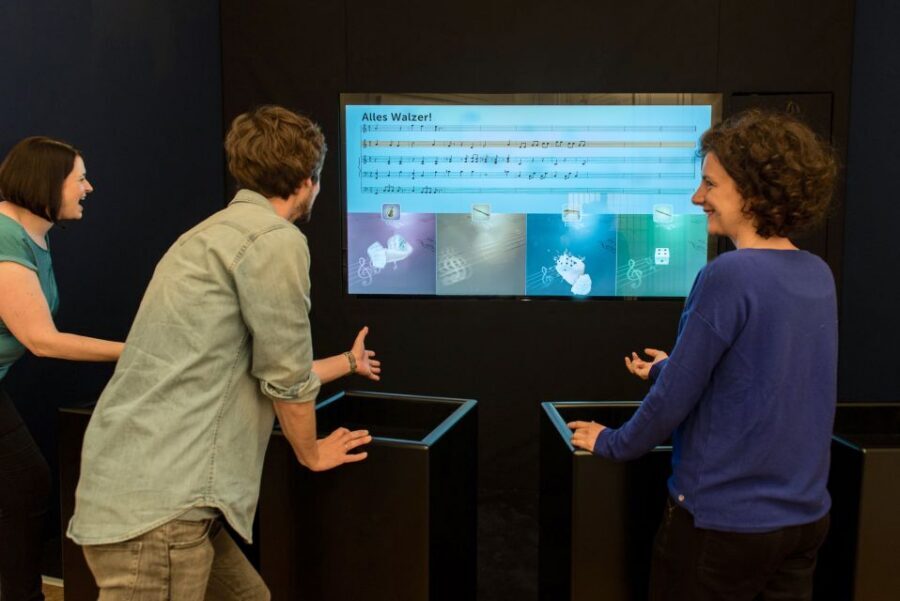
One of the most fun “wow” moments is the virtual conductor experience. The museum includes a conductor challenge where you face the world famous Vienna Philharmonic Orchestra. The idea is simple: you act like a conductor and see how the orchestra responds.
Even if you’re not a trained musician, it’s entertaining. And it’s useful. Conducting is one of those things people romanticize but don’t understand. This interactive format gives you a taste of how timing, cues, and coordination matter.
I like how it’s framed. It’s not just a screen with sound. It’s a music role you can try, and it helps you think about orchestral performance in a more hands-on way.
Tip for your visit: if your group includes mixed interests, make this one of the early stops. Once people know they’ll get a playful orchestra moment, they often stay more engaged through the history rooms.





Mozart name game and composing your own waltz
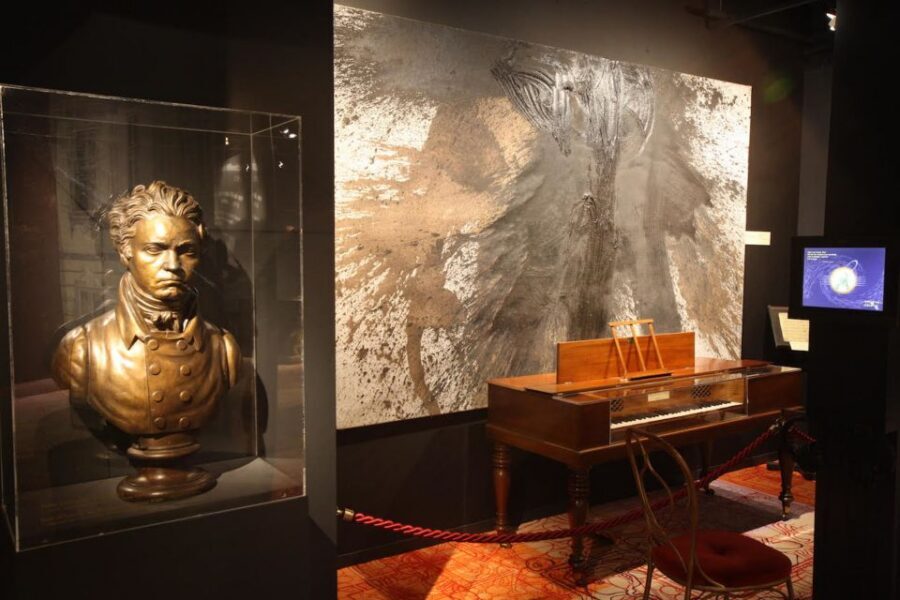
Haus der Musik doesn’t stop at explanations. It hands you a microphone for your imagination.
First, there’s the Namadeus Game. With this interactive feature, you can hear your name as an original Mozart composition. It’s a clever trick because your brain lights up at personal relevance. When your own name becomes music, you’re not just learning about Mozart—you’re participating in the idea of Mozart.
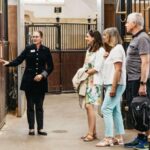
The museum also has a game for composing a waltz with a throw of the dice. This is one of those activities that feels silly for about five seconds, then starts to make sense. You’re essentially building musical structure based on a random prompt system. The end result isn’t meant to replace composition lessons. It’s meant to show you how patterns and rhythm can form a recognizable musical style.
One caution: the Namadeus certificate is not included. If you’re hoping for a particular printed keepsake, check what’s actually provided during the interactive experience. The interactive name-as-Mozart part is part of the offering, but the certificate is listed as not included.
Still, both the name game and the waltz game are exactly the kind of “memory maker” that makes a museum visit feel personal.
Vienna Philharmonics New Year’s Concert in HD
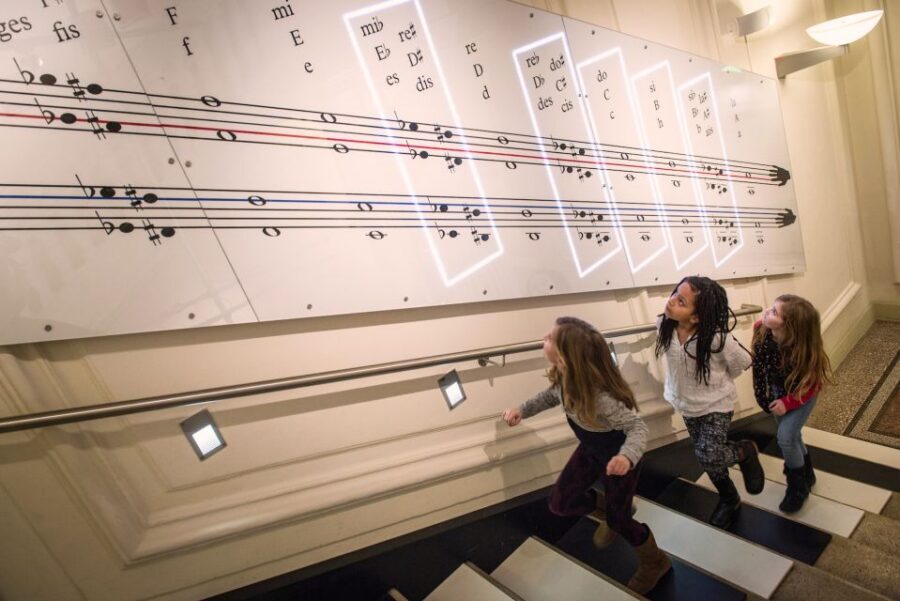
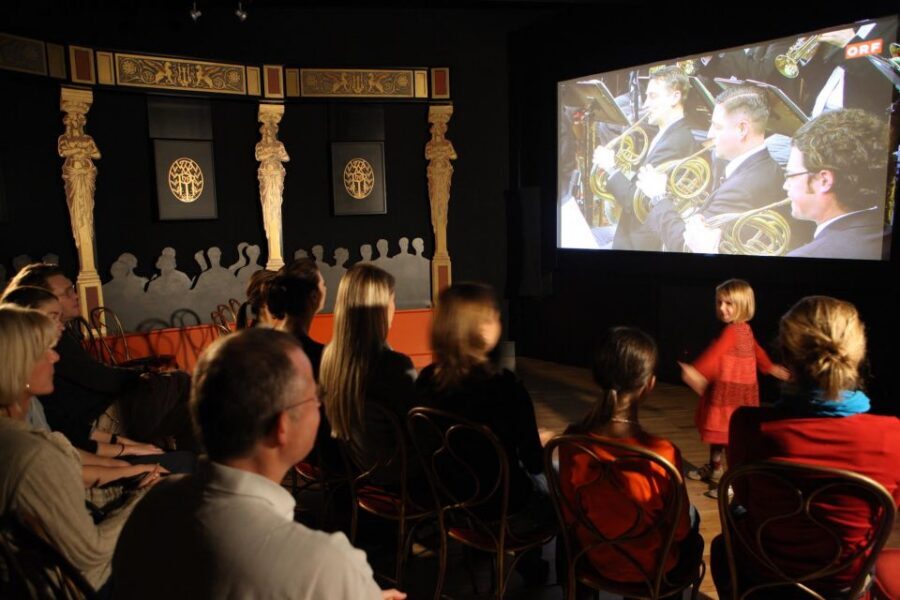
Another high-demand experience is the Vienna Philharmonics New Year’s Concert, shown in HD quality. This is a great option because it lets you hear a major performance style without needing concert tickets or a full evening plan.
I think this works well late in the visit. By then, you’ve learned more about composers and sound, and you can listen with better instincts. Even if you’re not a classical die-hard, the format gives you an easy entry point.
Time-wise, you’ll want to decide how much you want to watch versus how much you want to keep playing. If you’re the type who likes to “do everything,” the HD concert might be your reward moment. If you’re more focused on hands-on stations, treat it like a break you can fit around your pace.
What to do with your headphones and your time
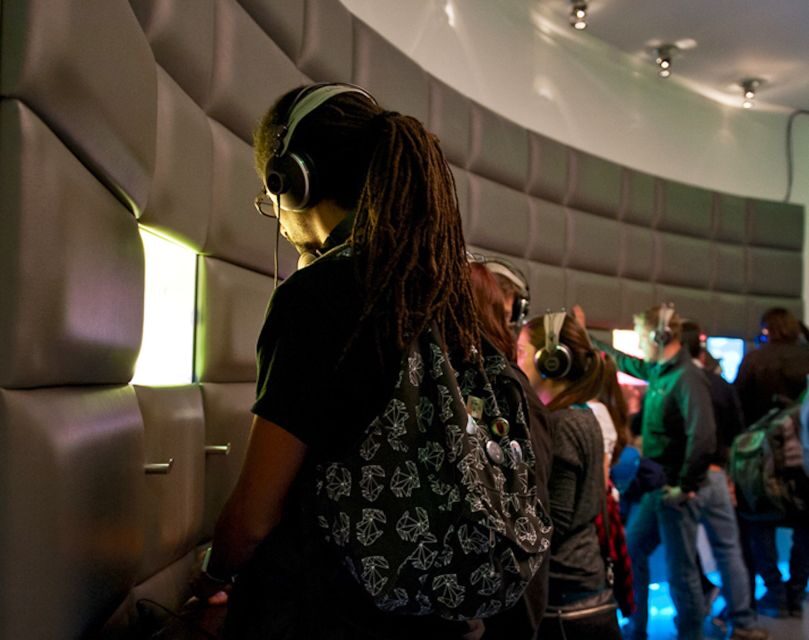
The museum asks you to bring headphones. That’s a real practical tip, not a suggestion. Interactive parts rely on audio, and you’ll want comfortable listening so you don’t have to fight for shared space or crank up volume in a crowded area.
In terms of pacing, plan for more than a quick stop. One common pattern is that people end up spending hours here because there are enough activities to keep you moving. If you can, set aside a half day to a full afternoon. You can see a lot in a shorter window, but the best experience comes from giving yourself time to try the interactive stations rather than speed-walking.
Also, remember food and drinks are not included. That’s not a deal-breaker, but you should plan a snack stop nearby or eat before/after. Bringing your own water might help you stay comfortable, but the data you provided doesn’t explicitly say outside food rules—so I’d follow whatever signage and staff guidance you see on arrival.
Cost and value: is $22 a good deal?
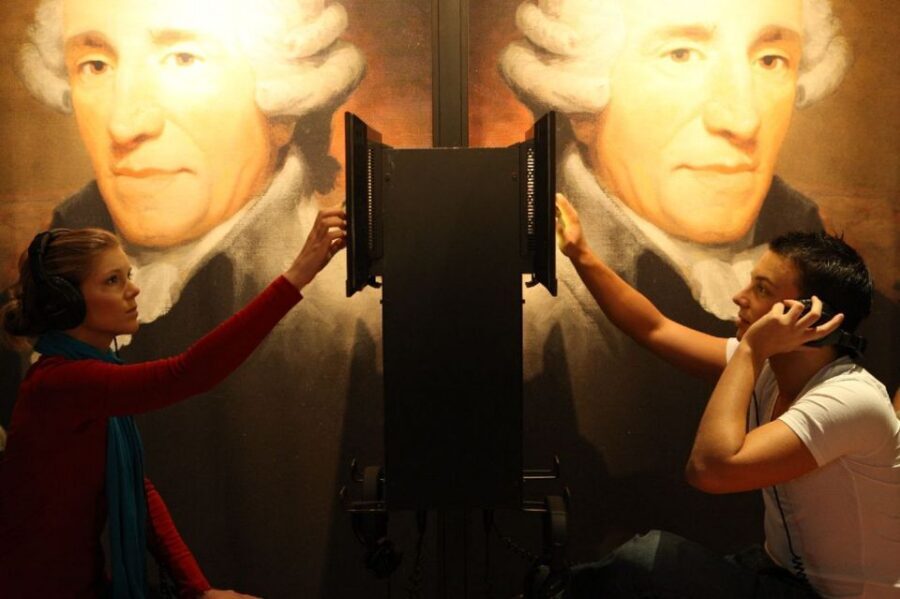
At about $22 per person, Haus der Musik often feels like strong value because you’re not paying for one attraction. You’re paying for four floors, multiple interactive stations, and audio-based experiences with a smartphone guide.
What you actually get for the ticket:
- Admission to the museum
- An app guide you download to your own smartphone in 8 languages, plus a children’s app in 2 languages
- A map of the museum
- Coat check
That smartphone guide is a big deal for value. Museums like this can be “overwhelming” if you’re wandering without a sense of priorities. The app guide can help you target the sections that match your interests—composer history, sound science, or the interactive games.
And it’s not just adults. The museum is designed to work for families, and that affects the value calculation. If the kids are engaged for hours, you’re getting more “time bought” out of the ticket.
The main cost downside is indirect: food isn’t included, and you should budget for nearby meals or snacks. Also, some outputs like the Namadeus certificate are not included, so if you want a specific keepsake, factor that in.
Who this ticket is best for (and who it’s not)
This works especially well if you fit one of these buckets:
- You love classical music and want a different way to understand it
- You have kids who need hands-on activities, not just listening time
- You like science and want sound explained through instruments and experiments
- You’re curious about Vienna’s composer timeline and how it connects to performance culture
It’s less ideal if:
- You want mostly quiet rooms with minimal interaction
- You’re only interested in a single thing (like a specific composer) and don’t want to spend time across multiple floors
Still, even if you’re “not a music person,” the interactive sound stations give you a reason to stay. A museum that keeps everyone moving tends to be a good use of a one-day slot in Vienna.
Should you book Haus der Musik tickets?
If you’re deciding based on value and variety, I’d book. This isn’t just a place to look at music history. It’s a place to test the ideas in your hands and ears. At $22, the combination of composer-focused exhibits, sound experiments, interactive games, and the HD New Year’s Concert makes the ticket feel like a solid day plan rather than a quick stop.
Book it if you want a Vienna experience that’s cultural and playful. If you can only spare a short visit, pick your priorities: composer history for one set of rooms, then the sound science and the conductor/or games.
If that sounds like your style, Haus der Musik is a strong match.
FAQ
Is this ticket valid for one day only?
Yes. The ticket is valid for 1 day from the first activation.
Where is Haus der Musik located?
Haus der Musik is at Seilerstätte 30, 1010 Vienna, Austria. The meeting point is the museum itself.
How much does a ticket cost?
The price is listed as $22 per person.
What’s included with the admission ticket?
Admission is included, along with an app guide download on your smartphone (8 languages), a children’s app (2 languages), a museum map, and coat check.
Do I need to bring anything?
Yes. You should bring headphones.
Are food and drinks included?
No. Food and drinks are not included.
Can I cancel for a full refund?
Yes. Free cancellation is available up to 24 hours in advance for a full refund.
What language options are available for the app guide?
The app guide is available in 8 languages, and there’s a children’s app in 2 languages.
Is the museum wheelchair accessible?
Yes. The museum is wheelchair accessible with step-free access at main and side entrances, automatic sliding doors, and wheelchair-accessible elevators. Wheelchair-accessible toilet facilities are located in the inner courtyard and on the top floor.
Is Namadeus part of the ticket?
Namadeus is included as an interactive game. However, the Namadeus certificate is listed as not included.