REVIEW · VIENNA
Vienna: Imperial Crypt Entrance Ticket
Book on GetYourGuide →Operated by Kaisergruft · Bookable on GetYourGuide
400 years of Habsburg power sits underground. The Imperial Crypt is where emperors and families are laid to rest beneath the Capuchin church in Vienna’s center.
I love the sheer craftsmanship: sarcophagi and funerary monuments you can study at a calm pace. I also like seeing Franz Joseph and his wife Elisabeth, known as Sisi, in the same vaulted complex.
One consideration: English context can be limited unless you add a guided option, so build your visit around reading the on-site materials and moving slowly.
In This Review
- Key things I’d highlight before you go
- Imperial Crypt Under the Capuchin Church: What you’re walking into
- Habsburg names that anchor the vaults
- The craftsmanship: ornate sarcophagi and real metalwork
- Reading your way through: booklets, signs, and optional guided tours
- Pace and timing: how long it takes in real life
- Where the experience feels best: calm, not frantic
- Combo ticket idea: pairing the crypt with A Little Night Music
- Price and value: is $17 worth it?
- Practical rules that shape your visit (and save headaches)
- Who should book this Imperial Crypt ticket?
- Should you book the Imperial Crypt entrance ticket?
- FAQ
- How much is the Vienna Imperial Crypt entrance ticket?
- How long is the ticket valid?
- Is the experience wheelchair accessible?
- How big is the group for this experience?
- Are pets allowed inside the Imperial Crypt?
- Can I record video during the visit?
- Are there rules about what I can bring?
Key things I’d highlight before you go
- Ten vaults built and expanded over more than four centuries, not a one-time construction
- The Capuchin Order still has custody of the vault system, so the place feels lived-in, not staged
- Burials of about 150 Habsburg personalities, including Maria Theresia, Franz Joseph, Elisabeth (Sisi), and Rudolph
- Ornate sarcophagi and monuments made with striking metalwork details
- A peaceful setting under the church, with a more solemn tone than you might expect
- Combo ticket option to attend A Little Night Music after your crypt visit
Imperial Crypt Under the Capuchin Church: What you’re walking into
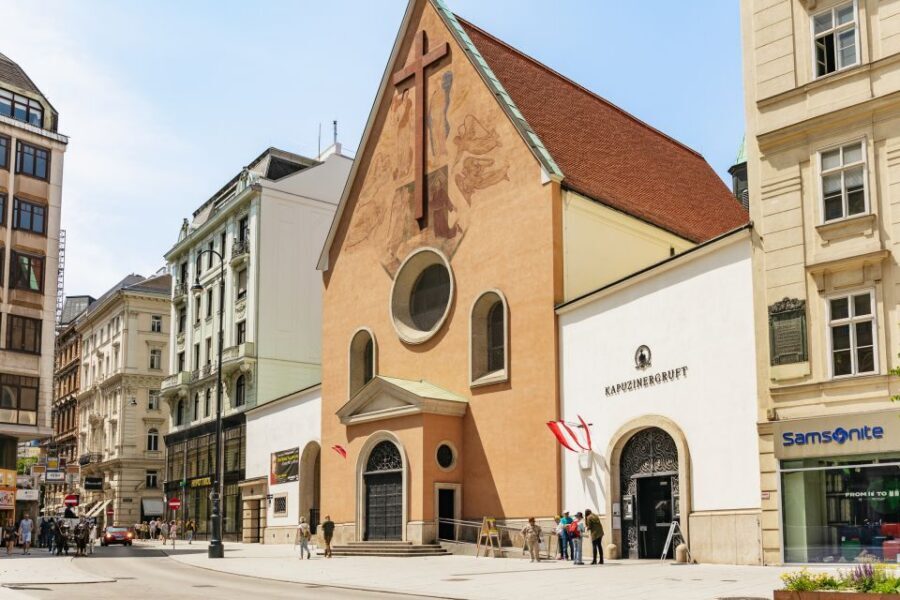
Vienna pulls a neat trick with this one: you enter a site under a church and monastery that look almost modest at street level, then you go below to a burial world built for imperial display. The crypt sits in the city center, directly under the Capuchin church and monastery.
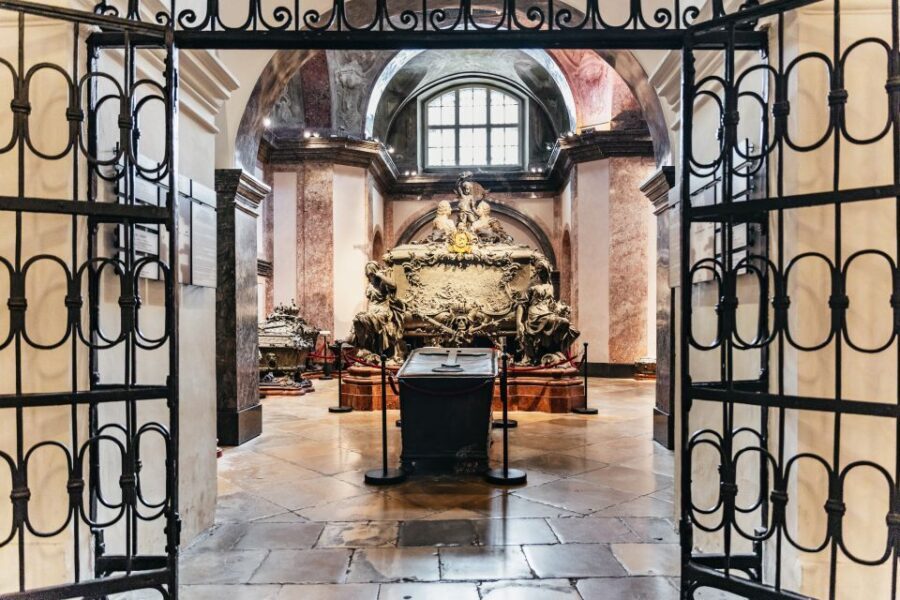
What you see isn’t one simple room. The vault system was modified and extended over 400 years, and today it totals ten vaults. Those vaults host the funerary monuments you came for—sarcophagi, urns, and memorial pieces for Habsburgs and their family.
The experience also has a strong “design story” angle. You don’t just read who is buried here; you learn about the designers and creators of the crypt’s rooms, and how the spaces were shaped to reflect the dynasty’s power and grandeur. That matters, because the crypt isn’t only history. It’s also art directed toward how authority wanted to be remembered.
The Imperial Crypt is sometimes treated like a quick look, but it rewards patience. If you like architecture and symbolism, you’ll likely spend longer than you planned, just because the craftsmanship gives you something new every time you change direction.
You can also read our reviews of more tours and experiences in Vienna



Habsburg names that anchor the vaults
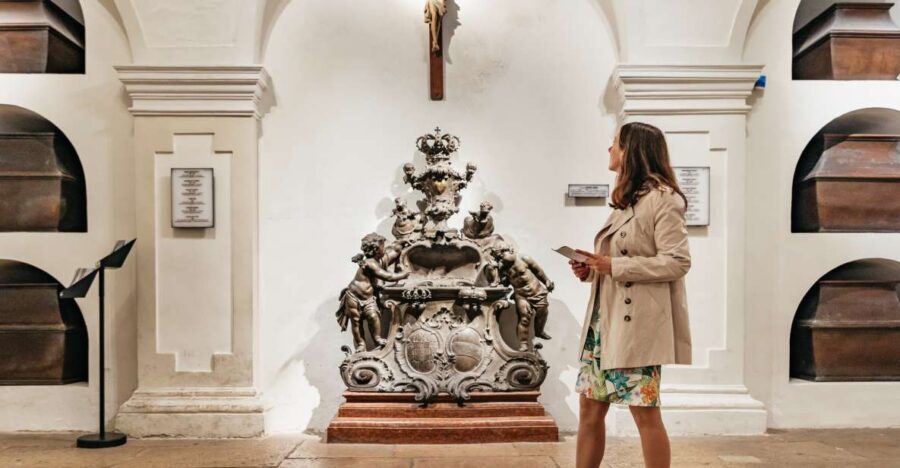
The Habsburg Empire can feel like a blur of dates until you’re standing in the place where real people are laid to rest. This crypt holds the remains of 150 Habsburg personalities, so you get that “family story” feeling instead of a museum checklist.
Some names you’ll see and connect to right away include Maria Theresia, Emperor Franz Joseph, his wife Elisabeth (Sisi), and their son Rudolph. Even if your knowledge is patchy going in, the crypt’s organization helps you understand the dynasty as a lineage, not just a parade of rulers.
One fascinating detail to keep in mind: the crypt is not where every Habsburg remains are all the time. For example, it’s worth knowing that the hearts of the Habsburg monarchy are not placed within the crypt itself but inside the monastery. That kind of split burial practice adds a layer of complexity—and it helps explain why people talk about this whole Capuchin complex, not only the vault rooms.
Also, the crypt doesn’t feel like a totally closed chapter. It continues to be connected to Habsburg burials even today, which makes the place feel less like an artifact and more like an ongoing tradition.
The craftsmanship: ornate sarcophagi and real metalwork
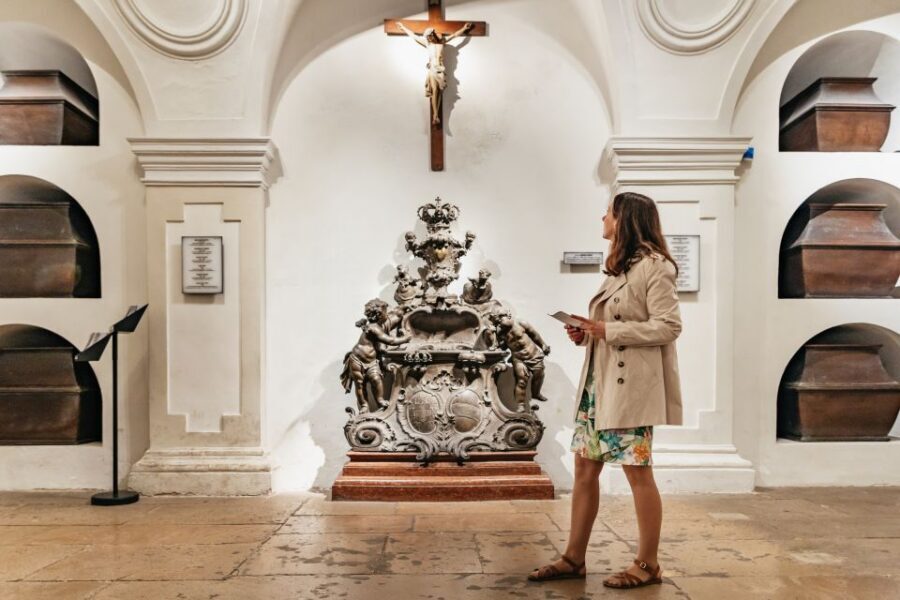
If you’re expecting dark and dingy, you might be surprised. Yes, it’s a burial site. But it’s also visually intense in a way that feels deliberate rather than grim.
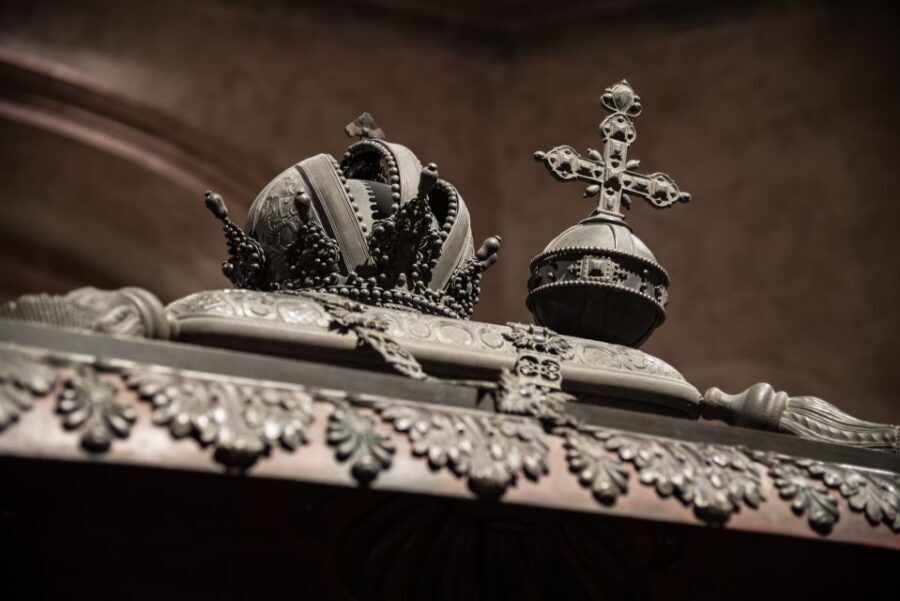
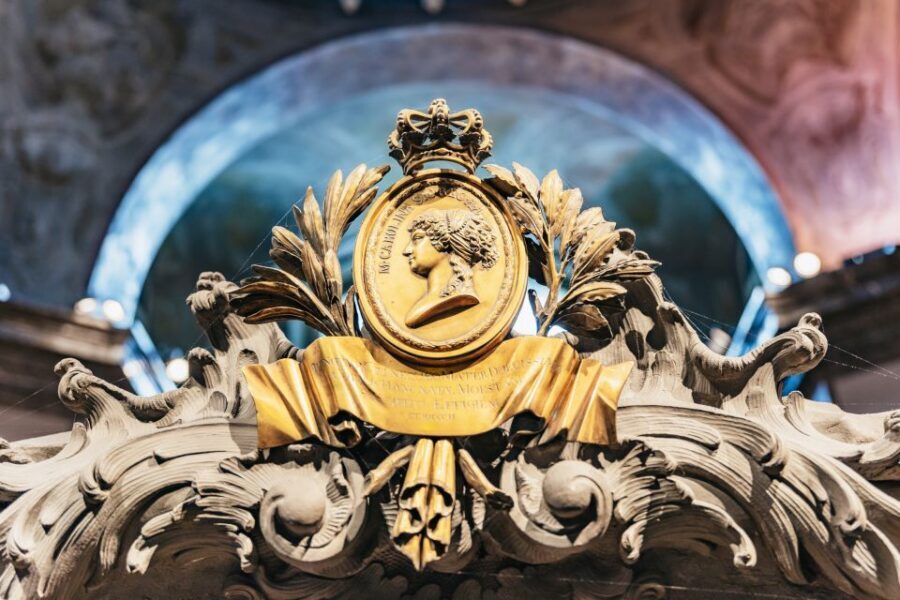
A standout theme is the level of decoration. You’ll see coffins and memorial objects described with impressive metalwork details—tin, copper, bronze, and combinations that include silver and gold accents. That’s not just decoration for decoration’s sake. The designs are meant to project status, continuity, and presence even after death.
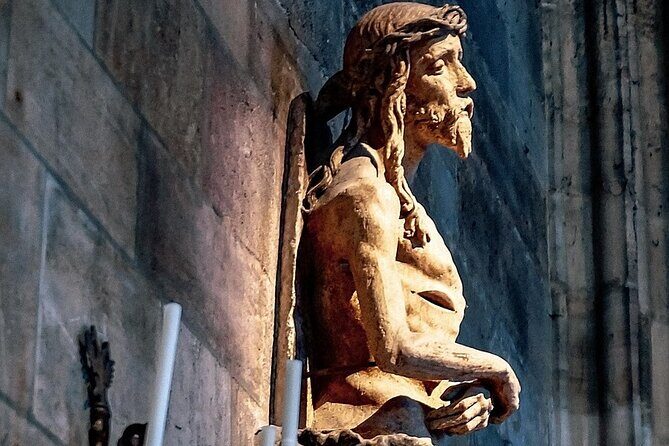
The rooms are set up so you can move through and keep noticing details. Some tomb elements feel almost like small sculptures, and other parts read more like carefully engineered architecture. Even if you don’t read every label, your eyes will catch repeating motifs and different styles that correspond to different people and eras.
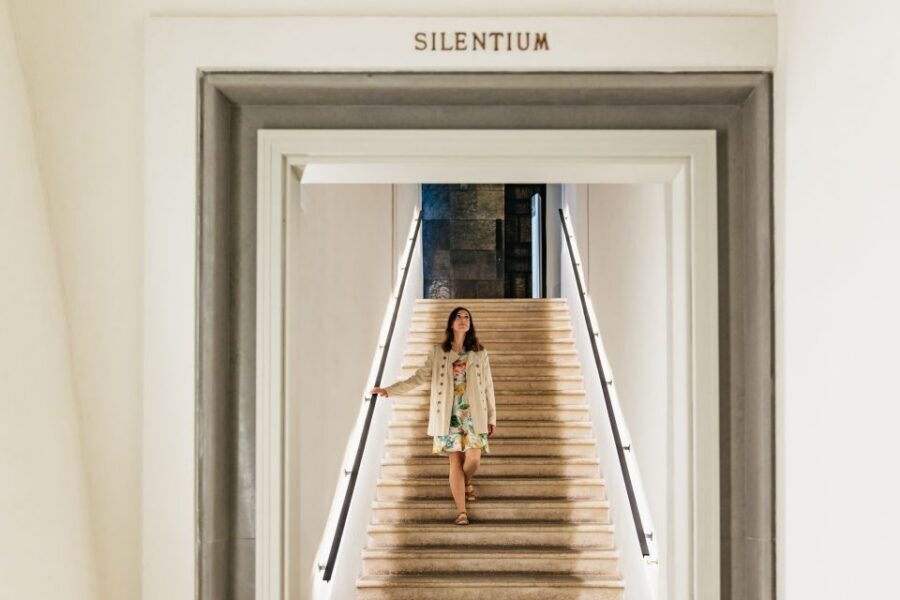
One more thing I really appreciate: the crypt’s tone is often described as peaceful. It doesn’t come off as overly macabre or chaotic. It’s solemn, yes, but it’s also quiet enough that you can actually look.
Reading your way through: booklets, signs, and optional guided tours
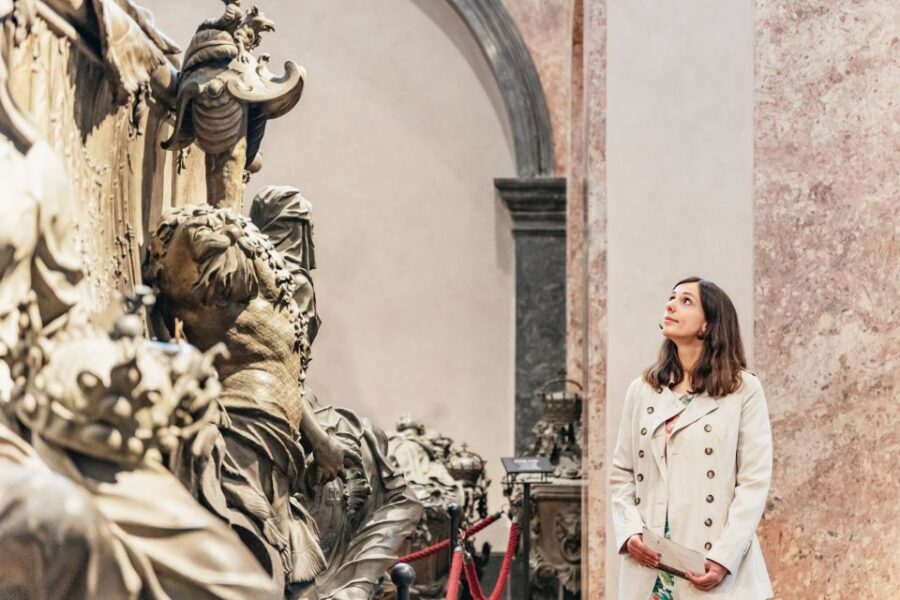
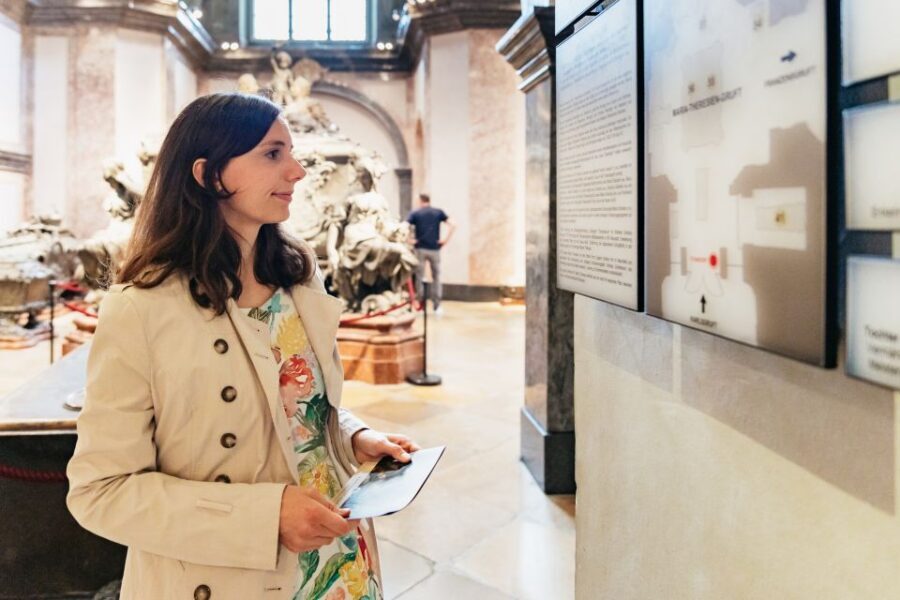
This is the part that can make or break your experience. The crypt gives you the basics through on-site materials—especially small booklets that explain details about the tomb contents. Those booklets can be a big help if you want to connect the names on the sarcophagi to the larger story of who they were.
There are also signs and descriptions placed around the rooms. Several visitors point out that the information on the objects helps you learn, even if you don’t want a formal tour. You can take as long or as short as you want, and that flexibility suits different travel styles.
If you want a stronger narrative, consider adding a guided component. Some visitors have found that an additional guided tour can last about one hour and may be booked at the ticket office for a small extra fee (reported as €3). That kind of guide time can help you understand the “why” behind the designs and which figures matter most.
Here’s the trade-off: English support can be uneven. One common complaint is that there isn’t much English information available, and some onsite guided tours may not match the standard you hope for if you’re looking for deep context in English. If you rely on English for details, you might want to plan your visit around whatever language support is available on the day.
Pace and timing: how long it takes in real life
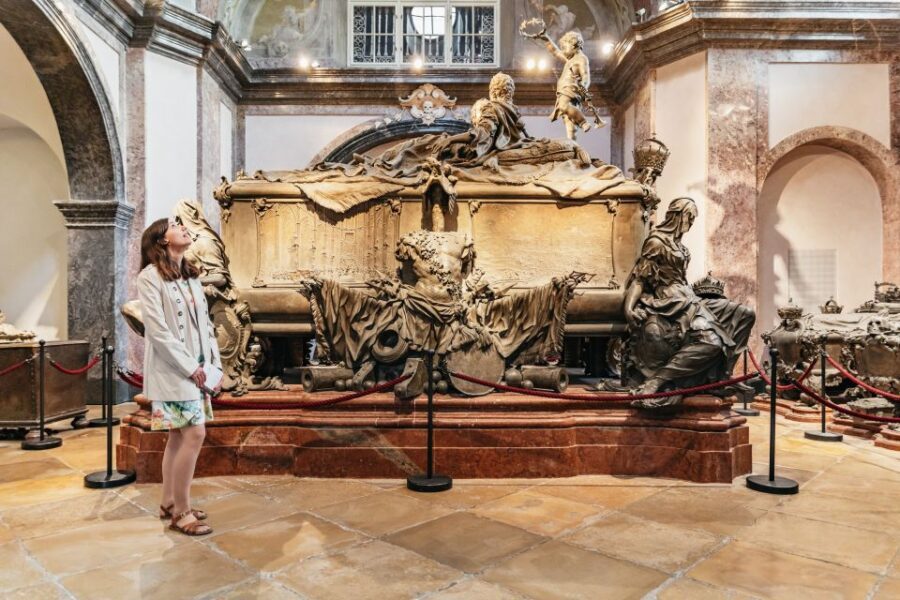
Your ticket is valid for 1 day, which is helpful if your schedule is flexible. Also, the crypt experience doesn’t have to be a rushed sprint. Some visitors report moving through in around 30 minutes, while others spend about 1.5 hours reading and lingering over the coffin designs.
A practical approach: decide what you want most. If you want the highlights and you’re comfortable scanning, you can likely do a shorter visit. If you care about the biographies and design context, give yourself time to read—especially because the rooms include lots of small details that get more interesting the longer you stay.
One small heads-up from visitor experience: time slots booked in advance may not be strict, and you may be able to arrive during the day. Still, the crypt closes at a certain hour, so don’t play chicken with the end of the day. Build in buffer time so you’re not rushing your last rooms.





Where the experience feels best: calm, not frantic
The Imperial Crypt tends to work best as a “slow stop,” not a quick photo break. The space is generally described as not overcrowded, and that matters because this is a place where you’ll actually want to read what you see.
It also helps that the crypt isn’t trying to be a horror attraction. The overall mood is more solemn and respectful. That’s why the rules about conduct matter.
Respect the no-photo guidance. The experience clearly states no video recording, and photography is not allowed. Some visitors have noticed people ignoring the rule, but the simplest way to enjoy the site is to follow it and treat the place like what it is: a burial space.
And yes, clothing rules apply. Sleeveless shirts are listed as not allowed, so plan to wear something with at least some coverage.
Combo ticket idea: pairing the crypt with A Little Night Music
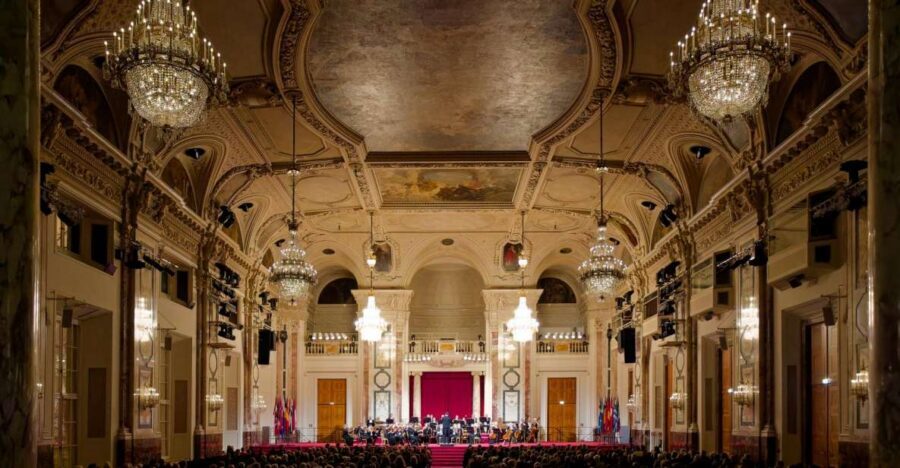
A fun way to make the day feel complete is to pair the crypt with music right after. This ticket offering includes a combo option that lets you visit the Imperial Crypt and then attend A Little Night Music.
That pairing works because it shifts your day from memory and monument to sound and performance. It also keeps you from having to plan two separate experiences on different days.
To make the combo work smoothly, think about pace. If you’re the kind of person who reads every sign, your crypt visit might run long, and that can squeeze your concert timing. If you prefer highlights and quick reading, you’ll have more breathing room. Either way, give yourself a cushion rather than assuming it’ll all be perfectly timed.
Price and value: is $17 worth it?
At about $17 per person for the entrance ticket, the price feels fair for what you get. You’re paying for access to a rare site: a deeply historic burial complex connected to one of Europe’s most influential dynasties, housed in a vault system that evolved for centuries.
The value also comes from how “complete” the experience feels. You’re not seeing one tomb. You’re moving through a network of vaults with multiple sarcophagi and memorial objects tied to a large family story. The craftsmanship is also a big part of the appeal, especially if you enjoy architectural details and metalwork.
Another value factor: the group size is limited to 9 participants. Smaller groups usually mean less crowd crush, and in a quiet site like this, that translates into a better viewing experience.
If you also use the concert combo, you’re getting more than just the crypt. That can make the overall day feel like a full cultural block rather than one standalone stop.
Practical rules that shape your visit (and save headaches)
This is a place with clear boundaries, and knowing them ahead of time saves stress.
- No pets
- No luggage or large bags
- No sleeveless shirts
- No video recording
If you’re traveling with a daypack, consider traveling light. Even small storage issues can slow you down in a narrow interior space.
You may also want to plan for storage and basic comforts. Some visitors have mentioned free toilets and lockers that use refundable coins (reported as €1/2 coins). It’s not something you should count on without checking when you arrive, but it’s a useful detail to know if you tend to carry extra items.
Finally, keep your visit respectful. If you’re torn between looking and photographing, choose looking. The crypt rewards attention, not quick clicks.
Who should book this Imperial Crypt ticket?
You’ll probably love this if you enjoy one or more of these:
- Habsburg history and want to see it in a real physical setting
- Art, architecture, and metalwork details
- A calm, solemn place that’s not overly staged
It’s less ideal if you’re coming mainly for atmosphere without any interest in the family story, or if you need a lot of English narrative support. In that case, you’ll want to plan around whatever guidance or language materials are available during your visit.
It’s also a good fit for couples and solo travelers who like to wander quietly and read at their own pace. And because it’s wheelchair accessible, it can work well for visitors who need step-free access.
Should you book the Imperial Crypt entrance ticket?
If you want an essential Vienna experience tied directly to the Habsburgs, this ticket is an easy yes. For $17, you get access to a rare burial complex with ornate design, a centuries-long vault system, and major figures like Franz Joseph and Sisi.
I’d book it especially if you’ll take time to read and look. If English context is a priority for you, consider adding guided support when possible so you don’t feel stuck with only the basics.
And if you can swing the combo, pairing the crypt with A Little Night Music is a smart way to turn one historic stop into a whole memorable evening.
FAQ
How much is the Vienna Imperial Crypt entrance ticket?
The ticket price is $17 per person.
How long is the ticket valid?
It’s valid for 1 day.
Is the experience wheelchair accessible?
Yes, it is wheelchair accessible.
How big is the group for this experience?
It’s a small group limited to 9 participants.
Are pets allowed inside the Imperial Crypt?
No, pets are not allowed.
Can I record video during the visit?
No, video recording is not allowed.
Are there rules about what I can bring?
Yes. Luggage or large bags are not allowed, and sleeveless shirts are not allowed as well.