REVIEW · VIENNA
Day Ticket for Klosterneuburg Abbey
Book on Viator →Operated by Stift Klosterneuburg · Bookable on Viator
History with a Danube view. This Klosterneuburg Abbey day ticket is one of those rare day trips that mixes big art moments, religious grandeur, and fresh-air scenery all within a short visit. Two highlights I’d circle right away are the Verdun Altar and the chance to taste wines in Austria’s oldest winery setting.
You also get guided access that helps you not just look at rooms, but understand what you’re seeing: the abbey church, the Treasury, the Marble Hall, and even the Imperial Apartments. One consideration: the experience is offered in English, but you might still run into language options where you’ll rely on English audiotapes instead of live English narration.
In This Review
- Key Highlights Worth Planning Around
- Getting Oriented at Stift Klosterneuburg (It Feels Closer Than You Think)
- Ticket Value: Why This Day Pass Works for 1 to 3 Hours
- Guided Highlights: Church, Verdun Altar, and the Art You’ll Actually Remember
- Treasury and Marble Hall: When the Visit Turns From Rooms Into Stories
- Danube Views Toward Vienna: Don’t Skip the Outside Moment
- Imperial Apartments: A Different Side of the Same Complex
- Austria’s Oldest Winery: Baroque Cellar and the Wine Tasting Portion
- Timing Your Visit: Use the Opening Hours to Avoid Stress
- Getting There and Comfort Notes That Matter
- Who This Day Ticket Suits Best
- The One Decision: Book It or Skip It?
- FAQ
- FAQ
- How long does the Klosterneuburg Abbey day ticket last?
- What is the price per person?
- Is the tour offered in English?
- What major sights are included in the visit?
- Does the admission ticket come included?
- What are the opening hours for the site?
- Is free cancellation available?
- Is it near public transportation?
- Are service animals allowed?
- Where can I find more information about the abbey?
Key Highlights Worth Planning Around
- Verdun Altar: a major focal point, mentioned as a must-see for good reason
- 900+ years at Stift Klosterneuburg: lots of history packed into minutes from Vienna
- Treasury + Marble Hall: art-and-architecture stops that feel curated, not rushed
- Danube views stretching toward Vienna: scenery that turns the visit into more than museum time
- Imperial Apartments: a different mood than the church and Treasury rooms
- Oldest winery experience: Baroque wine cellar plus a tasting of selected local wines
Getting Oriented at Stift Klosterneuburg (It Feels Closer Than You Think)
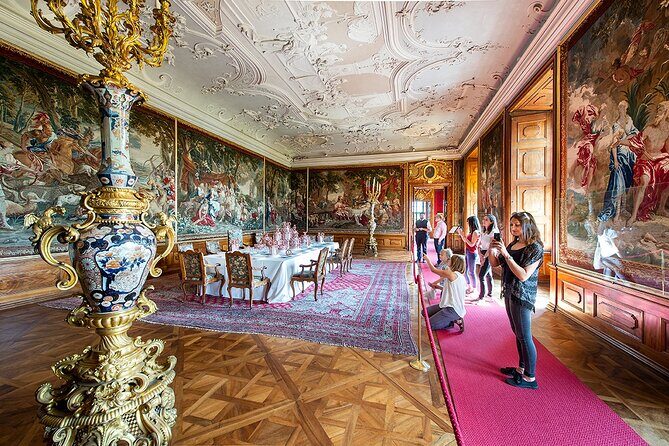
Stift Klosterneuburg sits just outside Vienna, so the logistics are refreshingly easy for a half-day mindset. You’re not committing to a long bus ride or a full day of transit. Instead, you arrive at an abbey complex that instantly makes sense: church first, then rooms that explain the abbey’s power and its relationship to art, royalty, and even wine.
That mix is the real appeal. Many “abbey” visits stay stuck in one lane—religious architecture only. Here, the visit flows across different types of spaces: museum-like areas (Treasury), ceremonial spaces (Marble Hall), residential-feeling areas (Imperial Apartments), and then the winery side. It keeps your attention because the abbey doesn’t treat history as one static thing.
And since the ticket is for 1 to 3 hours, you can match it to your day. It’s long enough to get actual value from the guide, but short enough that you’re not stuck waiting for fatigue to catch up.
You can also read our reviews of more tours and experiences in Vienna
Ticket Value: Why This Day Pass Works for 1 to 3 Hours
At about $24.06 per person, this isn’t the cheapest museum stop you’ll find, but it’s also not priced like a blockbuster attraction. The value comes from what’s included and how it’s packaged: admission is included, and the experience is built around guided access to major highlights.
Here’s how I’d think about value for your time:
- If you like “see the top stuff, but also learn it” visits, a guided format is usually worth the extra money versus wandering alone.
- If you’re visiting Vienna and want something that feels distinctly Austrian and not just a bigger city museum, Stift Klosterneuburg gives you that change of pace.
- If you’re a “one trip per neighborhood” person, this fits that style. It’s one site with multiple interest angles, not a spreadsheet of stops.
The guided structure matters. Without it, you might see beautiful rooms and miss the logic connecting them. With it, you’re more likely to understand why specific artworks and spaces mattered—especially pieces like the Verdun Altar.
Guided Highlights: Church, Verdun Altar, and the Art You’ll Actually Remember
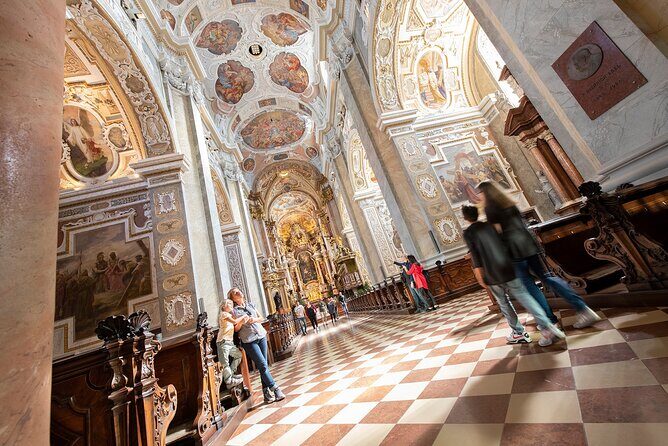
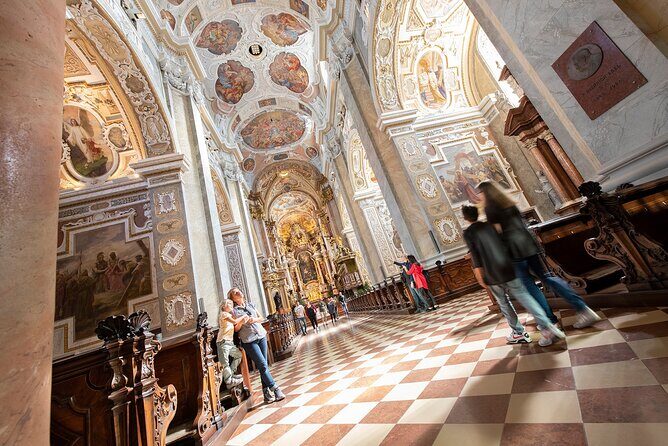
The abbey church is your anchor point. It sets the tone immediately, because you’re not only looking at religious architecture—you’re stepping into a place that has been meaningful for centuries. A good guide helps you read the space instead of just taking photos and moving on.
Then comes the Verdun Altar, and it’s one of those objects that tends to pull people back for a second look. It’s specifically called out as a highlight, and that makes sense. When an experience repeatedly emphasizes one artwork, it usually means it’s the kind of centerpiece that holds up under a closer look—detail, scale, and the feeling of something made with serious intention.
One useful thing to know: the tour can include guided attention beyond what you’d get from a basic audio track. In practice, that means you’re more likely to hear context and clarifications while you’re standing in front of the rooms and art.
If you end up in a non-English live tour group, don’t panic. The experience has English audiotapes mentioned as a fallback option, so you can still follow along and not feel lost.
Treasury and Marble Hall: When the Visit Turns From Rooms Into Stories
After the church, you’ll move into areas that feel more like a museum of the abbey’s identity. The Treasury is presented as a collection of priceless works of art, and that’s the right way to think about it: this isn’t just decorative. It’s about what the abbey gathered, protected, and displayed over centuries.
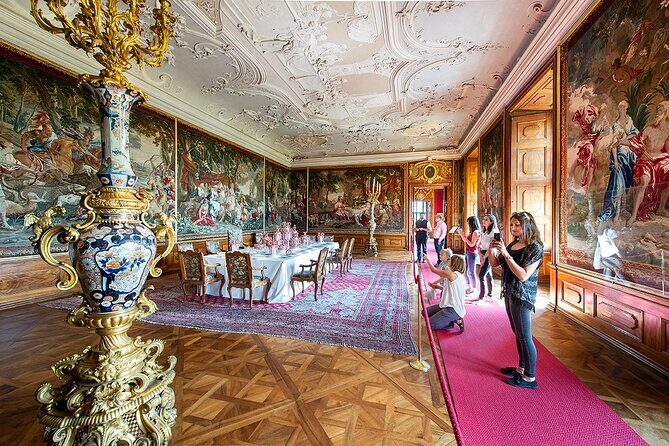
Next up is the Marble Hall. This is the kind of space where “big and impressive” is not the whole point. The real value is how these rooms help you understand status and ceremony. It’s not only about what the abbey owned. It’s also about how it displayed meaning, and how the abbey presented itself to people who visited—whether for devotion, politics, or royal connections.
These museum-style portions are also where you’ll appreciate the guided pace. A guide can point you to what to notice, and that turns “I saw a room” into “I remember what that room was for.”
Danube Views Toward Vienna: Don’t Skip the Outside Moment
One reason I like abbey visits when I’m in a city like Vienna is simple: they give you a break from indoor density. Here, you get breathtaking views over the Danube River, stretching all the way toward Vienna.
That view does a couple practical things for your day:
- It resets your attention after more detailed interior viewing
- It gives you geography, so the site feels anchored to real surroundings, not just history on walls
- It’s a natural place to slow down and take a breath (and maybe a snack if you brought one)
If you tend to rush through sightlines, try to linger. The abbey’s position makes this a more meaningful pause than the typical quick photo at the end of a tour.



Imperial Apartments: A Different Side of the Same Complex
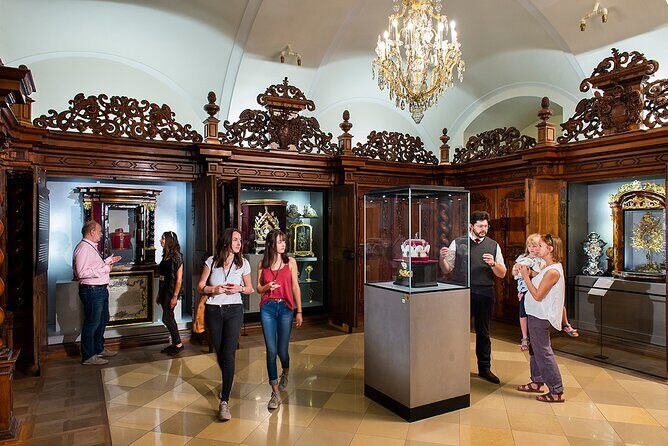
The Imperial Apartments add variety in tone. Instead of only sacred space and art collections, you get the feel of lived-in rooms tied to Austria’s imperial era.
These apartments are specifically listed as a guided highlight, so expect the guide to connect the rooms to the broader story of why the abbey mattered. That connection is what keeps this section from turning into generic “pretty rooms” time.
For readers, this part is especially valuable if you’re doing a Vienna trip where you’ll see lots of palaces. Imperial Apartments at Stift Klosterneuburg can feel calmer and more intimate than the big city palaces. It’s still imperial in theme, but it doesn’t require you to manage crowds and queue chaos in the same way.
Austria’s Oldest Winery: Baroque Cellar and the Wine Tasting Portion
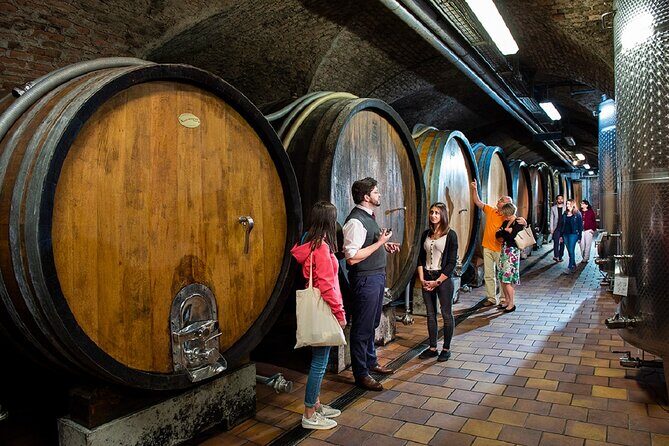
Here’s where the ticket goes from cultural to sensory. You’re told that Austria’s oldest winery is part of the experience, including a spectacular Baroque wine cellar and a wine tasting of selected local wines.
Even if you’re not a heavy wine person, this is a strong value add. It changes the tempo of the day. It also gives a different kind of context: instead of only learning about the abbey’s art and influence, you taste something connected to the abbey’s long-term agricultural and economic life.
Practical tip: if you’re pairing this with other Vienna plans, treat the tasting as a real event, not a quick sip. Build in a little time afterward so you don’t feel like you’re rushing out the door.
This winery piece also tends to make the experience more memorable later. People remember what it felt like to stand in a historic cellar more easily than they remember another room full of objects. The senses help your brain file the experience correctly.
Timing Your Visit: Use the Opening Hours to Avoid Stress
This ticket runs during set opening windows, and your best move is to plan around them.
- Jan 1, 2026 to Apr 30, 2026: Monday–Sunday 10:00 AM to 4:00 PM
- May 1, 2026 to Nov 15, 2026: Monday–Sunday 9:00 AM to 6:00 PM
Because the duration is about 1 to 3 hours, you can fit it into either a morning-first day or an afternoon reset day. If you’re trying to maximize Vienna time, the later spring/summer hours are handy.
Also note that this is commonly booked in advance (on average 40 days ahead). That doesn’t mean you can’t get in last minute, but it does mean planning ahead improves your odds and helps you lock in a time that matches your schedule.
Getting There and Comfort Notes That Matter
The experience is listed as being near public transportation, which is helpful in a city where you may not want to rely on rideshares. It also lists service animals allowed, so that’s good to know up front.
On the comfort side, the experience asks for a moderate physical fitness level. That’s fair for an old complex where you’ll be moving through multiple spaces. If you know stairs or longer indoor walking will fatigue you, plan your pacing and don’t try to pack this into a day that already includes a lot of heavy walking.
Who This Day Ticket Suits Best
This is ideal if you want a Vienna-area stop that feels genuinely different from typical city sightseeing. You’ll likely enjoy it if you like:
- architectural and art-focused visits (Treasury, Marble Hall, Verdun Altar)
- guided context over solo guessing
- a mix of sacred + museum + “hands-on” tasting
- short, high-value outings (1 to 3 hours)
It may be less ideal if you’re looking for a super short stop with zero structured time. This experience is guide-led and highlight-driven, so you’ll get the most by going with the flow rather than treating it as a quick drop-in.
The One Decision: Book It or Skip It?
I’d book this if you’re in Vienna and you want a single, well-rounded experience that covers art, church history, imperial-era rooms, and a winery moment—without turning it into a whole-day ordeal.
Skip it only if your schedule truly allows no time for a guided 1–3 hour visit, or if wine tasting doesn’t fit your plans at all. Otherwise, the combination of Verdun Altar, Danube views, and the Baroque cellar tasting is exactly the kind of practical, memorable day trip you’ll be glad you added.
FAQ
FAQ
How long does the Klosterneuburg Abbey day ticket last?
The experience is listed as about 1 to 3 hours.
What is the price per person?
The price is $24.06 per person.
Is the tour offered in English?
Yes, it’s offered in English.
What major sights are included in the visit?
You get guided access to highlights such as the abbey church, the Verdun Altar, the Imperial Apartments, and areas like the Treasury and Marble Hall, plus the winery portion.
Does the admission ticket come included?
Yes, admission ticket included is stated as part of the experience.
What are the opening hours for the site?
For Jan 1, 2026 to Apr 30, 2026, it’s 10:00 AM–4:00 PM daily. For May 1, 2026 to Nov 15, 2026, it’s 9:00 AM–6:00 PM daily.
Is free cancellation available?
Yes. You can cancel up to 24 hours in advance for a full refund.
Is it near public transportation?
Yes, the experience notes it is near public transportation.
Are service animals allowed?
Yes, service animals are allowed.
Where can I find more information about the abbey?
More information is available at www.stift-klosterneuburg.at.