REVIEW · VIENNA
Private Tour with an Art Historian of the Leopold Museum: Gustav Klimt, Egon Schiele and Viennese Art Nouveau
Book on Viator →Operated by Art with me! — Art experience for the intellectually curious · Bookable on Viator
Vienna gets strange and personal here. This private tour at the Leopold Museum turns famous faces like Gustav Klimt and Egon Schiele into living stories, explained with the kind of art context that helps you actually see what you’re looking at.
Two things I really like are that museum admission is included (so you can focus on art, not tickets) and the tour is paced around your interests instead of forcing you through a long checklist. If you want the big ideas—Viennese Secession style, shocking subject matter, and what made these artists so discussable—this format makes that easy.
One possible drawback: the meeting point is at the museum’s main entrance with a large staircase, and the experience is not stroller accessible. Plan for a bit of stairs and steady walking, especially if you’re not used to older building access.
In This Review
- Quick Reasons This Tour Works
- Entering Leopold Museum: Where Your Art Conversation Starts
- Why Klimt and Schiele Make More Sense Here Than Anywhere Else
- The 2 Hours 15 Minutes Plan: Focused Viewing, Not Museum Marathoning
- Inside the Schiele Thread: Art That Provokes Old Questions
- Art Nouveau and the Vienna Secession Lens: Seeing Style as Meaning
- Private Pacing Means Your Questions Actually Land
- Timing and Movement: Plan for a Museum Day, Not a Quick Stop
- Tickets, Mobile Entry, and Staying Flexible
- Price and Value: What You’re Really Paying For
- Who This Tour Is Best For (And Who Might Want Something Else)
- Should You Book the Private Leopold Tour with an Art Historian?
- FAQ
- How long is the private tour?
- How much does it cost?
- Is this tour private or shared?
- Is museum admission included?
- What language is the tour offered in?
- Where do we meet the guide?
- Can I use a mobile ticket or do I need paper?
- Is the tour suitable for strollers or pets?
- Is free cancellation available?
Quick Reasons This Tour Works
- Admission included so you can enter without fuss and start thinking about art right away
- Art historian-led with a focus on major works, so you don’t get lost in a museum maze
- Private group means questions don’t feel like interruptions
- Egon Schiele’s permanent collection gives you a consistent thread to follow through the visit
- Art Nouveau and Secession context helps you connect the dots between style and subject
- English offered for clear explanations of the meaning behind the paintings and themes
Entering Leopold Museum: Where Your Art Conversation Starts
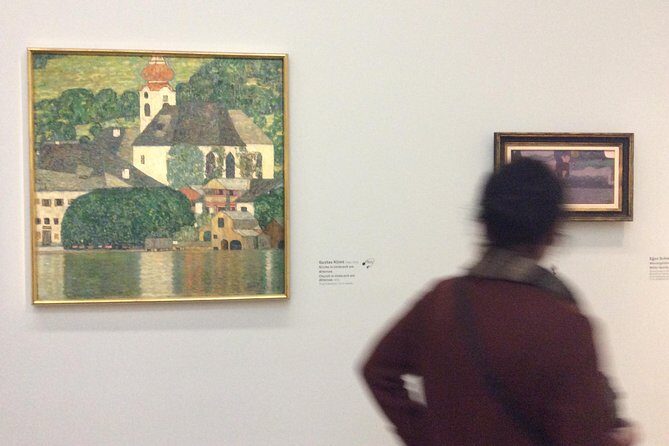
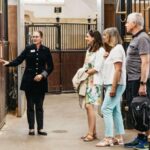
The experience begins at Leopold Museum, Museumsplatz 1, 1070 Wien, right in front of the museum’s main entrance. Come punctually. There’s a big staircase leading up to the door, and your guide waits at the bottom so you can regroup quickly and head in together.
This matters more than you might think. At the Leopold, the art can hit you all at once—figures, furniture, sketches, and recurring themes of Vienna around the turn of the 20th century. Starting together keeps the first moments from becoming random wandering.
Also note the practical stuff. You can present either a paper or electronic voucher, and it’s offered in English. The museum is near public transportation, so you can make this a smooth piece of your Vienna day instead of a difficult detour.
You can also read our reviews of more private tours in Vienna


Why Klimt and Schiele Make More Sense Here Than Anywhere Else
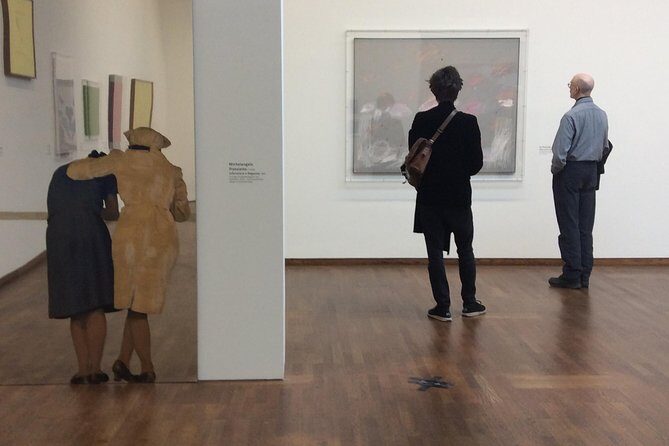
Leopold Museum is considered one of the best places in Vienna for Viennese modern art that caused big reactions. The museum is especially known for the way it brings Egon Schiele to the front of the conversation, including a permanent exhibition of his works alongside temporary shows.
I like this focus because it changes the way you look. If you just go to a museum and try to “catch up” on everything, you tend to skim. Here, the tour is built to help you understand why these artists were so controversial—and why they still spark debate.
A useful idea your guide will work with is the nowness of art—how meaning doesn’t just live in the past. The subjects these artists chose, and the way they handled the human body, were tied to Vienna’s social tensions and artistic arguments at the time. Those same questions can feel oddly modern when you sit with the works long enough.
The 2 Hours 15 Minutes Plan: Focused Viewing, Not Museum Marathoning
The tour runs for about 2 hours 15 minutes, and it’s private, so you’re not stuck with a rigid group pace. That time window is a sweet spot. It’s long enough for real explanation and for you to step back and look again, but it’s not so long that you end up fatigued and cranky in a gallery.
Here’s what you can expect in practice.
First, you’ll concentrate on the museum’s most important works. That means you’re not trying to process every painting on the walls. Instead, you get an organized path through the highlights—ideal if you like art but don’t want to be overwhelmed.
Then, you’ll connect the dots. You’re there for Gustav Klimt, Egon Schiele, and Viennese Art Nouveau, but the discussion is likely to expand to related names from Vienna’s early-1900s scene. The goal is to understand the movement and the mindset behind the art, not just memorize titles.
That focus is also one of the reasons this works well as a first modern-art museum stop in Vienna. If you’ve never studied Viennese Secession before, the structure helps you start from a clear anchor.
Inside the Schiele Thread: Art That Provokes Old Questions
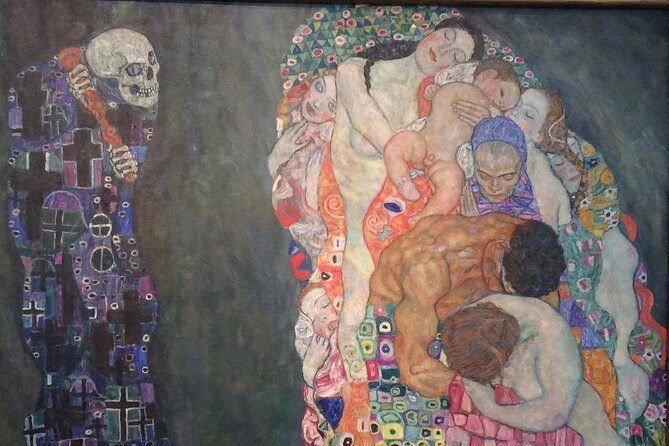
A big part of the visit centers on Egon Schiele, whose works are known for taking direct aim at themes that still cause arguments. One of the key ideas you’ll run into is the blurred line between what some people consider pornography and what can be defended as art. In other words, the conversation isn’t only about technique—it’s about intent, context, and audience.
I find that much more engaging than a simple biography. You’re not just told Schiele was shocking. You learn why certain choices were made, how Vienna reacted, and what those choices meant to the broader art world at the time.
Because the museum has a substantial Schiele presence as a permanent exhibition, you’re not chasing him across temporary rooms. You get continuity. That continuity helps you see recurring motifs and shifts in expression, instead of treating each work as a standalone image.
Art Nouveau and the Vienna Secession Lens: Seeing Style as Meaning
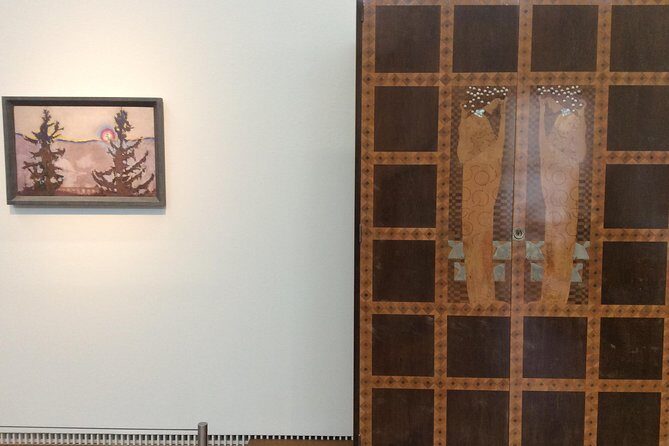
Even if you think you know Art Nouveau, this kind of tour helps you see it differently. In Vienna, the look of the era isn’t just decorative lines. It’s tied to ideas about modern life, sexuality, identity, and the break from older academic standards.
As your guide explains the works, you’ll get the movement context: why the artists rebelled, what they were pushing against, and how their style carried their message. That matters when you’re standing two feet from a painting. Without context, you might admire the brushwork and move on. With context, you start noticing how the composition, pose, and framing work together.
From the art historian angle, you’ll also likely hear connections to other figures from that period—names like Arnold Böcklin’s orbit is not mentioned here, but among the Austrian modernists you’ll hear about in this tour’s spirit are artists such as Makart, Kokoschka, and Gerstl. These connections help you place Klimt and Schiele inside a wider Viennese conversation, rather than treating them like isolated superstars.
You can also read our reviews of more museum experiences in Vienna


Private Pacing Means Your Questions Actually Land
A private museum tour sounds good in theory, but here’s the real advantage: you can slow down when you need to. If you want more time on one painting—because the symbolism feels slippery—you don’t have to rush to keep up with anyone else.
You also get room to ask questions that don’t fit neatly into a group script. That can include practical stuff like what to look for in a composition, or big-picture questions about why certain themes became such pressure points in Vienna.
The guide makes a difference. In this experience, your art historian is often described as both passionate and able to communicate complex ideas clearly. In past tours, people have specifically mentioned guides named Julia (and the closely related Julie name appears as well), highlighting how the explanations felt balanced and thoughtful—not just loud opinions.
Timing and Movement: Plan for a Museum Day, Not a Quick Stop
The tour starts at the museum entrance and ends back at the meeting point. So you’re essentially building a complete mini-day segment around the Leopold rather than popping in for 30 minutes.
Two practical considerations:
- Moderate physical fitness is expected. You’ll be on your feet in galleries.
- Not stroller accessible. There’s a large staircase at the start, and accessibility details beyond that aren’t offered.
If you’re traveling with mobility limits, it’s worth thinking carefully. This is a museum experience in older architecture, and the tour starts at the bottom of a big staircase. If you need step-free access, you should plan an alternate strategy.
Also, the tour isn’t suitable for pets. That’s straightforward, but it can affect how you plan your day if you’re traveling with a companion animal.
Tickets, Mobile Entry, and Staying Flexible
You’ll get confirmation at booking, and you can use either a paper or electronic voucher on the day. The tour also includes admission, which is one of the clearest value wins.
Why it matters:
- You don’t need to time your museum entry on your own.
- You avoid the stress of figuring out tickets right before the tour begins.
- You can arrive ready to look at art, not admin.
The museum is near public transportation, so you can keep your day efficient. That also means you’re not boxed into a car schedule or long taxi rides.
Price and Value: What You’re Really Paying For
The price is $216.27 per person for about 2 hours 15 minutes. That’s not cheap, and it shouldn’t be treated like a budget activity. You’re paying for a private experience with an art historian, plus museum admission included.
So the value question becomes: are you the kind of person who wants art explained with structure? If you enjoy learning how to look—composition, context, and the why behind controversy—this tour can feel like a payoff. You’re not just viewing; you’re building understanding fast.
Also, the experience offers group discounts, which can improve value if you’re traveling with friends or family and can share the setup. Even with a private feel, the discount possibility is worth checking when booking.
Who This Tour Is Best For (And Who Might Want Something Else)
I think this tour is a strong match if you want:
- Viennese Art Nouveau and modern Austrian art explained clearly
- A focus on major works rather than endless rooms
- A private pacing style where questions are welcome
- The backstory behind why artists like Schiele became so controversial
It’s also a great choice if you’re planning a Vienna museum day and want one guided anchor. The Leopold Museum can be a highlight, especially if you want a different angle than the usual must-sees.
Consider something else if:
- You prefer completely self-guided wandering with no structure
- You want every single detail in the museum and you tend to spend half a day per collection
- Stairs or extended standing would be a problem for you
Should You Book the Private Leopold Tour with an Art Historian?
Book it if you want a guided, high-impact introduction to Vienna’s modern art world—especially Klimt, Schiele, and the Viennese Secession/Art Nouveau ideas—in a way that doesn’t overwhelm you. The combination of private pacing, admission included, and a historian-led focus on important works is a practical recipe for a memorable museum visit.
I’d skip (or at least reconsider) if stairs and mobility limits are a concern, since the meeting point involves a large staircase. And if you’re the type who prefers browsing without any explanations, you might not get your money’s worth.
Bottom line: if you like your art with context and you want to leave feeling like you understand what you saw, this is a strong booking.
FAQ
How long is the private tour?
It lasts approximately 2 hours 15 minutes.
How much does it cost?
The price is $216.27 per person.
Is this tour private or shared?
It’s private. Only your group participates.
Is museum admission included?
Yes. Museum admission is included in the tour.
What language is the tour offered in?
The tour is offered in English.
Where do we meet the guide?
Meet at Leopold Museum, Museumsplatz 1, 1070 Wien, Austria, at the museum’s main entrance. The guide waits at the bottom of the large staircase.
Can I use a mobile ticket or do I need paper?
You can present either a paper or an electronic voucher.
Is the tour suitable for strollers or pets?
It’s not stroller accessible and it’s not suitable for pets.
Is free cancellation available?
Yes, free cancellation is available. You can cancel up to 24 hours in advance for a full refund.