REVIEW · VIENNA
Mozarthaus Vienna Admission Ticket
Book on Viator →Operated by Mozarthaus Vienna · Bookable on Viator
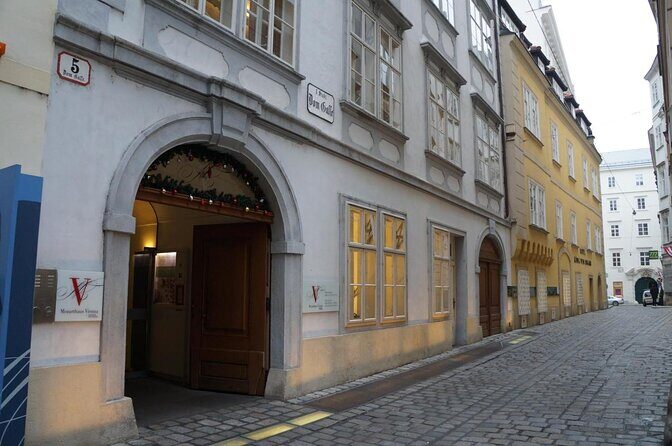
Mozart’s Vienna house feels personal fast. This Mozarthaus Vienna admission ticket gives you a self-guided look at the composer’s peak creative years, including the actual apartment where he lived from 1784 to 1787. I love the three-floor layout, and I also love that the audio guide keeps you moving at a good pace without needing a separate guide.
One thing to calibrate: this is an exhibition, not a perfectly preserved time capsule of every object. Some displays can feel more like interpretive presentation than a room-by-room museum of original furniture, so I’d go in expecting a mix of artifacts and reconstructions—plus note that photos aren’t allowed inside.
In This Review
- Key highlights before you go
- Mozarthaus Vienna: what you’re really buying for $19.27
- Getting in smoothly with a mobile ticket and small capacity
- Third floor: Mozart’s personal and social Vienna world
- Second floor: colleagues, da Ponte, and the operas that changed everything
- First floor apartment (1784–1787): where Figaro was made
- Audio guide details: pace yourself and use the multilingual support
- What you’ll see: originals, reproductions, and what to expect
- Timing your visit: open daily, and plan for a slow, steady flow
- Practical tips: photos, comfort, and what to watch for
- Who this Mozarthaus Vienna ticket is best for
- Should you book this Mozarthaus Vienna admission ticket?
- FAQ
- FAQ
- How long does the Mozarthaus Vienna admission ticket take?
- What are the opening hours for Mozarthaus Vienna?
- Is this a mobile ticket?
- Is an audio guide included, and what languages are available?
- Do I need to bring headphones for the audio guide?
- What’s included in the ticket price?
- Is food or drink included?
- Are photos allowed inside the Mozarthaus?
- Can I cancel and get a full refund?
Key highlights before you go
- Three floors, three angles on Mozart: personal/social, musical circle, then the apartment centerpiece
- Mozart’s own Vienna years in focus: the time when he wrote more music here than anywhere else
- Lorenzo da Ponte connections: hear how Vienna partners shaped Marriage of Figaro and Don Giovanni
- Mozart’s apartment from 1784–1787: the only one still intact, and the largest/elegant/extensive one he occupied
- Audio guide in many languages: 13 for adults, 8 for children, with audio support available in English
Mozarthaus Vienna: what you’re really buying for $19.27
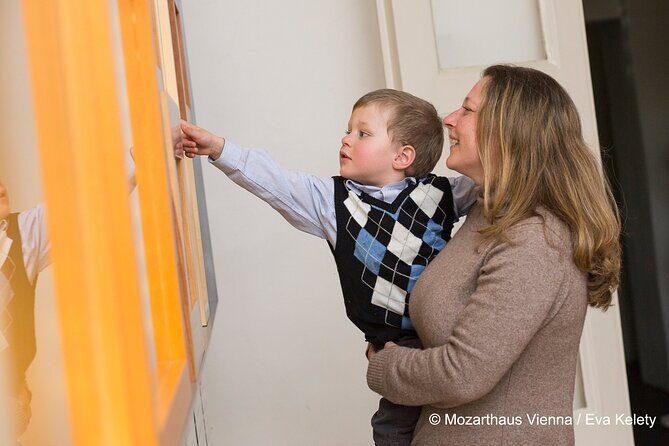
At about $19.27 per person, this ticket is priced like a classic museum admission, but it delivers more than a quick stop. You’re paying for a focused storyline: Mozart in Vienna, through the rooms he lived in and the creative network around him.
The 1 to 2 hours timing is also part of the value. It’s long enough to take your time on each floor, yet short enough to fit into a day that already includes the big Vienna sights.
If you’re deciding whether to book ahead, note that this is commonly reserved about 33 days in advance. That doesn’t mean it will sell out instantly, but it does suggest it’s a popular “music-first” stop.
You can also read our reviews of more tours and experiences in Vienna

Getting in smoothly with a mobile ticket and small capacity
You’ll use a mobile ticket, and you should receive confirmation at booking. The venue is near public transportation, so you won’t feel locked into a single route or a long walk.
There’s also a practical sweet spot in the setup: the experience lists a maximum of 10 travelers. That matters because it usually means less crowd pressure as you move floor to floor.
Tip: when you arrive, keep your phone ticket ready at the entrance. One common snag reported by visitors is that tickets can take a moment to be recognized, so having the QR code pulled up helps you avoid awkward delays.
Third floor: Mozart’s personal and social Vienna world
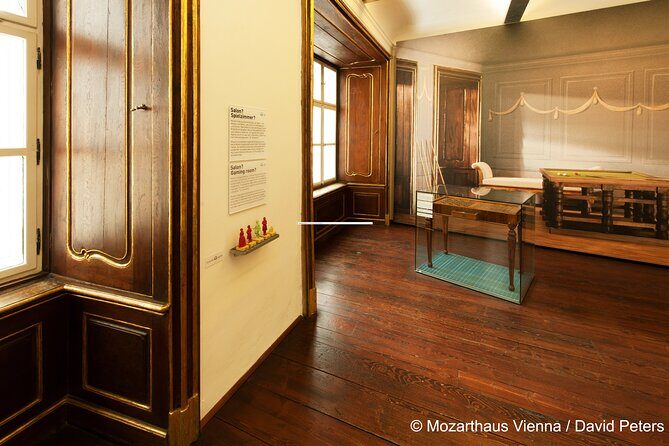
Start on the story the exhibition uses to anchor everything. You’ll see a Mozart quotation (from 4 April 1781 to his father Leopold in Salzburg) set the tone for the exhibition’s Vienna chapter.
This top-level focus is the “who he was among other people” layer. Instead of jumping straight into famous compositions, you’re shown the personal and social situation in Vienna—how life around him shaped the work he produced during these peak years.
Why I like this approach: it makes the later scenes in the apartment feel less like trivia and more like context. You’re not just learning dates—you’re building a picture of the world Mozart stepped into and what that world demanded creatively.
Second floor: colleagues, da Ponte, and the operas that changed everything
On the second floor, the exhibition shifts to Mozart’s professional orbit. You’ll connect Mozart with major musical colleagues in Vienna, and you’ll also see how he worked with librettist Lorenzo da Ponte.
That da Ponte collaboration is the big bridge to two landmark works: The Marriage of Figaro and Don Giovanni. This is where the exhibition helps you connect the dots between people, storytelling, and music—without needing a music degree.
A useful way to experience this floor is to treat it like a “creative network” map. Even if you know the operas already, the exhibit encourages you to think about who was involved and why that partnership mattered.
First floor apartment (1784–1787): where Figaro was made
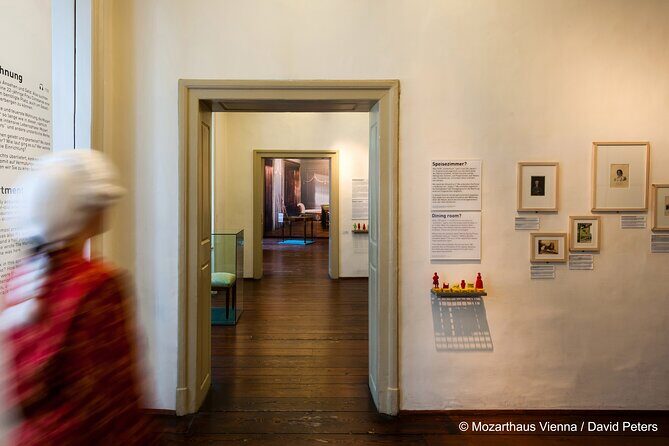
The first floor is the centerpiece, and it’s the reason many people choose the Mozarthaus Vienna admission ticket in the first place. This is the apartment the Mozart family lived in from 1784 to 1787—and it’s described as the largest, most elegant, and expensive Mozart occupied, while also being the only one still intact today.
This section matters because it turns music history into physical space. You’re not imagining where things happened; you’re walking through the setting tied to the creation of major works, including The Marriage of Figaro and three of the six Haydn Quartets.
If you’re a classical-music fan, pay attention to how the exhibition frames time and place. The apartment becomes a kind of stage where you can picture Mozart composing more music in Vienna than anywhere else—one of those facts that suddenly feels less abstract once you’re there.




Audio guide details: pace yourself and use the multilingual support
The ticket includes an audio guide, available in 13 languages for adults and 8 languages for children. That language support is a big deal in Vienna, where museum language can vary wildly.
You don’t have to bring your own headphones. One of the practical upsides people highlighted is that the audio setup handles what you need, so you’re not scrambling with cables and dongles.
How to use the audio guide well: don’t treat it like a script you must finish in order. Let the guide pull you toward key objects or themes, then pause for a moment to look around the room. That small pause turns the information into something you actually remember.
What you’ll see: originals, reproductions, and what to expect
Here’s the honest balancing act. This experience is designed as an exhibition, and you should expect a mix of interpretive elements. Some visitors felt it leaned more toward copies or reproductions than a strict display of Mozart’s own belongings.
At the same time, other visitors specifically mention seeing things like original manuscripts tied to major works (for example, the Requiem manuscript is called out in one account). That points to a common reality with historic sites: you may see genuine pieces, but you also may see reconstructions or explanations that bring the story to life.
My advice is to set your goal before you arrive:
- If you want Mozart’s apartment experience and you enjoy guided context, you’ll likely feel satisfied.
- If your main goal is to see lots of original furniture and artifacts from Mozart’s time, go in with moderated expectations so you don’t feel disappointed.
Timing your visit: open daily, and plan for a slow, steady flow
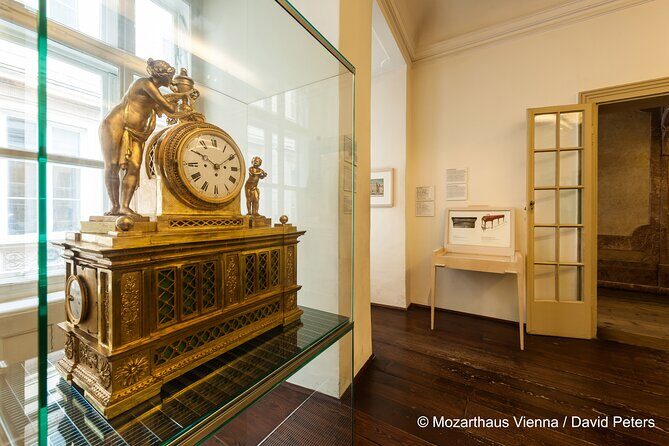
Mozarthaus Vienna is open daily 10:00 AM–7:00 PM for 2024, 2025, and 2026. That wide window helps you pick a time when you’re not rushing through rooms.
For a great pace, plan on closer to 90 minutes if you like reading and listening, or up to 2 hours if you want to linger in the apartment centerpiece.
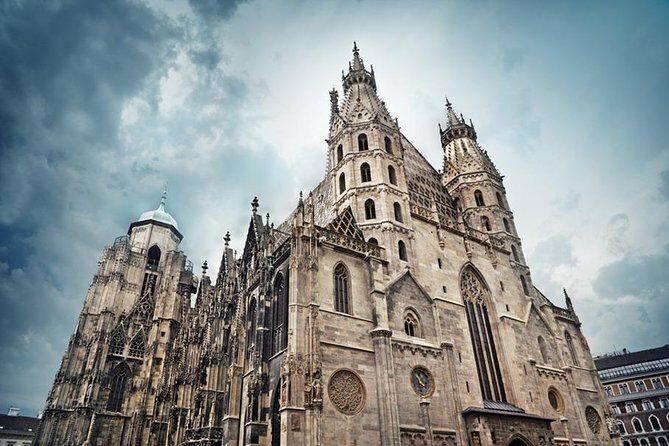
If you’re building a Mozart walk on the same day, one reviewer noted the location is near St. Stephen’s Church and mentioned that another Mozart-related house (the one where he died) is nearby too. Even if you don’t do both, being in this area makes it easy to turn the visit into a half-day theme.
Practical tips: photos, comfort, and what to watch for
A clear heads-up: photos aren’t allowed inside the Mozart House. If photography is important to you, think of it like this—you can capture your surroundings outside, but you won’t get to document each room inside.
Comfort-wise, the experience covers three floors. That’s not huge, but it’s enough walking and enough time spent standing that you’ll feel better in shoes you can comfortably wear for an hour or two.
Also, the experience lists service animals allowed, and it states that most travelers can participate. If you’re sensitive to stair travel or have mobility limits, it’s worth planning for the vertical movement implied by the three-floor setup.
Who this Mozarthaus Vienna ticket is best for
This ticket is a strong match if you:
- love Mozart and want the Vienna years as a focused story
- enjoy learning through a multi-language audio guide
- want to see his apartment setting where major works were produced
It’s also a good choice for people who like structured context. The exhibition is organized in a way that takes you from personal/social Vienna to musical colleagues and collaborations, then lands you in the apartment centerpiece.
If you’re the kind of visitor who only feels satisfied by fully original rooms and lots of authentic furniture, you might want to read your expectations carefully. Some visitors feel the exhibition leans more toward presentation than preserved display.
Should you book this Mozarthaus Vienna admission ticket?
Yes, I think you should book it if Mozart is your priority and you want a high-value way to experience his Vienna peak years in a short window. For $19.27, the combination of a three-floor exhibition and the apartment centerpiece makes it a practical, story-driven stop.
You’ll get the most out of it if you plan to slow down—especially on the first floor—and use the audio guide as your “conversation partner” through each room. If you’re willing to accept that some elements are interpretive, you’ll likely leave feeling you understand Mozart the person and the creative environment that shaped his work.
FAQ
FAQ
How long does the Mozarthaus Vienna admission ticket take?
Plan for about 1 to 2 hours.
What are the opening hours for Mozarthaus Vienna?
It’s open daily from 10:00 AM to 7:00 PM.
Is this a mobile ticket?
Yes. The ticket is listed as a mobile ticket, and you should receive confirmation at booking.
Is an audio guide included, and what languages are available?
An audio guide is included. It’s available in 13 languages for adults and 8 languages for children, and it’s offered in English.
Do I need to bring headphones for the audio guide?
You do not need to bring your own headphones, based on how the audio guide experience is described.
What’s included in the ticket price?
The ticket includes admission to the Mozarthaus exhibition, with an included audio guide.
Is food or drink included?
No. Food and drinks are not included.
Are photos allowed inside the Mozarthaus?
Photos are not allowed inside the Mozart House.
Can I cancel and get a full refund?
Yes. You can cancel up to 24 hours in advance for a full refund.