REVIEW · VIENNA
Vienna Urban Art Tour: Explore a different side of Vienna!
Book on GetYourGuide →Operated by CityRiddler · Bookable on GetYourGuide
Vienna has a second face, and it’s painted. This Urban Art Tour turns your smartphone into the guide, using the CityRiddler app (in partnership with Calle Libre) to lead you through quieter corners where murals, graffiti, and odd little installations come with stories.
What I like most is the mix of street art + background audio. You’re not just looking at walls—you’re getting the why, the inspiration, and the creative process as you walk. I also like that it’s built like a game: an interactive challenge that includes the mystery of who killed the Basilisk.
The one catch is that the whole thing lives or dies by the app. If you don’t want to manage a downloadable audio guide and tap an interface while you’re on foot, it may feel more fiddly than you expect.
In This Review
- Key points to know before you go
- Street Art with a CityRiddler Code: How the self-guided format works
- From Karl-Farkas Park to Therese-Sip Park: Timing and walking reality
- Mural Magic and Artist Insights: What the audio guide gives you
- The Interactive Challenge: Who killed the Basilisk?
- Hidden alleys of Vienna: Why this route feels different
- Price and value: Is $23 a good deal?
- Who should book it, and who should skip it
- Should you book the Vienna Urban Art Tour?
- FAQ
- How long does the Vienna Urban Art Tour take?
- How far do I walk?
- Where does the tour start and end?
- Is this tour guided by a person on-site?
- What languages are available for the audio guide?
- What do I need to bring?
- Can I pause and continue the tour later?
- Is there free cancellation?
Key points to know before you go
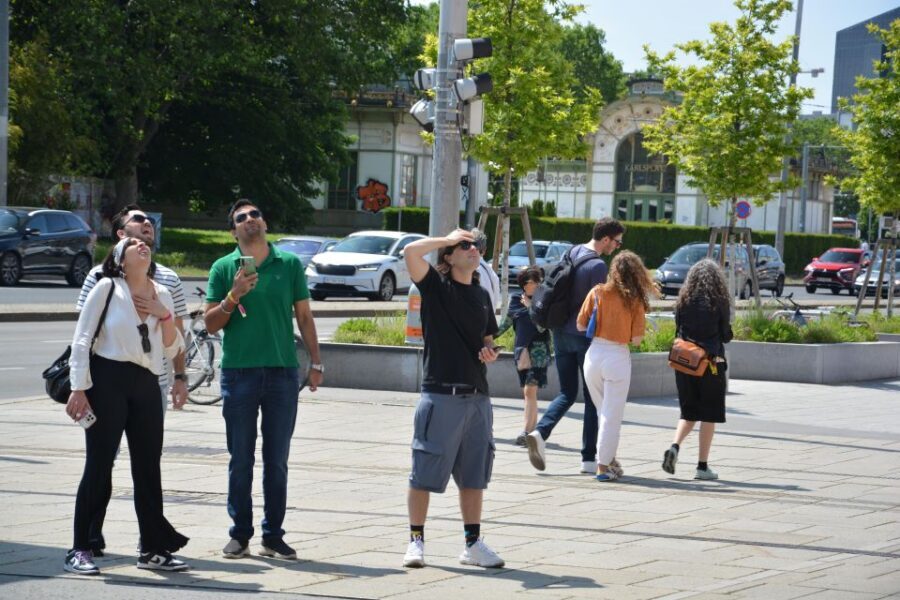
- Self-guided with the CityRiddler app: no person waiting at the start, so your phone is your compass.
- ~2 hours and ~4 km on foot: short city walking, but real distance between stops.
- Audio guide in English and German: download the content before you start.
- Interactive challenge included: puzzles and the Basilisk story add momentum to the walk.
- Street art can change: some works may be gone, so don’t treat this as a must-see museum piece.
- Family-friendly route options: works include pieces in/near playground settings, so kids enjoy it more than some adults might.
Street Art with a CityRiddler Code: How the self-guided format works

This tour is self-guided, which changes the feel right away. You don’t meet a host on-site, and you aren’t waiting on a schedule. Instead, you start when you’re ready, and you control your pace using the CityRiddler app.
After you book, CityRiddler emails you an access code. It can take up to 24 hours, so if you’re planning a last-minute start, build in a little buffer. Once you have the code, you enter it in the app under the adventure join area and go from there. It’s straightforward—until you’re outside with spotty signal or your phone battery hits 12%.
That’s why I’d treat the “bring a fully charged smartphone” note as more than a suggestion. You’ll want enough battery for GPS, photos, and the downloadable audio track. Also, download the audio guide content before the tour. The app includes tour info as audio in English and German, but it needs to be on your device for the walk.
This format is also good for a private group setup. Even if you’re traveling with friends, you can still move together without matching your pace to strangers. Just remember: since there’s no live guide, you’ll rely on the app’s timing and cues, not on someone’s explanations on the spot.
You can also read our reviews of more tours and experiences in Vienna.


From Karl-Farkas Park to Therese-Sip Park: Timing and walking reality
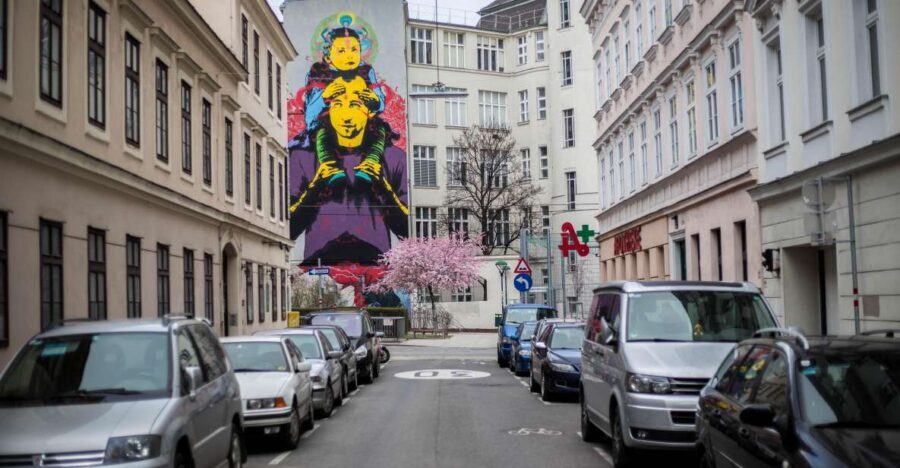
Your walk starts at Karl-Farkas Park (1070) and ends at Therese-Sip Park (1060). The route is about 4 km on foot, and the experience typically takes around 2 hours.
That sounds easy—until you realize you’re not just strolling. You’ll be stopping for audio stories, looking closely at details, and answering parts of an interactive challenge. So I recommend you plan this as a main activity, not something you squeeze in between coffee stops and shopping.
You can start and pause at any time, which is a real advantage in a city. If the day is hot, or you want a quick restroom break, you’re not breaking a group rhythm. Pause, regroup, and continue when you’re ready.
One practical tip: because the distance between artworks can feel stretched, wear shoes you’d actually walk in for a solid hour. If you’re thinking this is a “light walk,” the 4 km number will gently correct that assumption.
Also, one detail from the experience that matters for families: some murals are located on or around playground areas. That can be great fun for kids, but it may feel awkward for adults who’d rather not be watched while they’re reading clues or photographing street art.
Mural Magic and Artist Insights: What the audio guide gives you
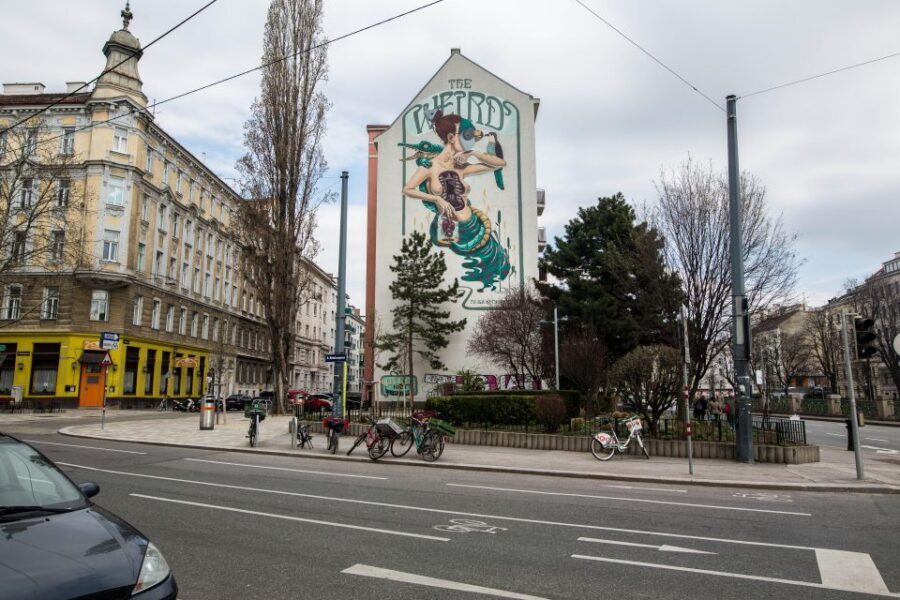
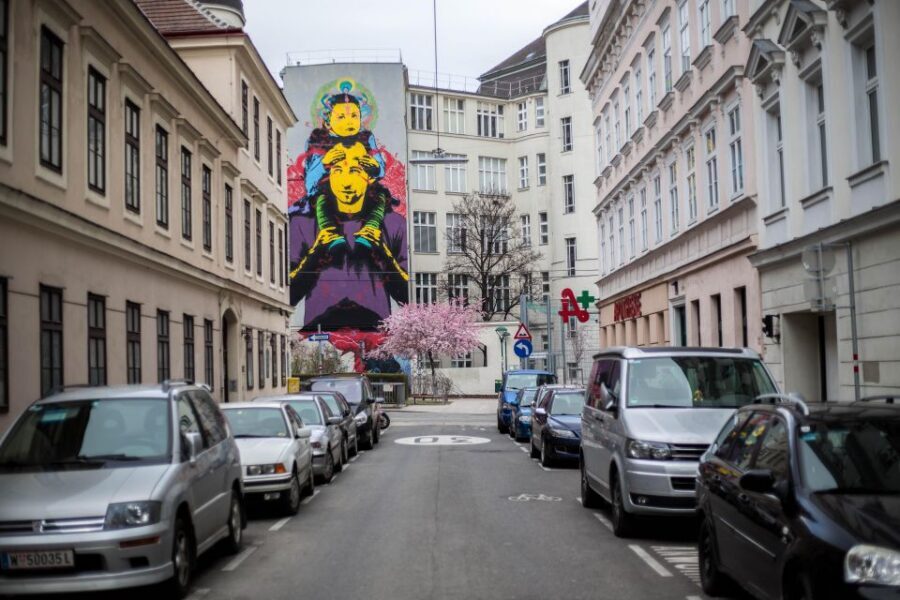
The core of this tour is the story-layer. As you encounter murals, poetic graffiti, and unusual installations, the CityRiddler audio guide adds context that makes the art easier to read.
Instead of treating the walls like random decorations, the tour explains the creative process and connects the works to the city’s evolving street-art spirit. You’re meant to notice more than just color. You start paying attention to composition, message, and the little details that normally get ignored while people rush past.
I also like that the guide nudges you toward lesser-known spots. It’s not a “look at the landmark, take a photo, move on” style of sightseeing. You’re steering away from the most obvious tourist paths and into smaller corridors, alleys, and corners where street art can feel more tied to everyday life.
One warning, and it’s important: street art changes. Pieces disappear, get painted over, or relocate. The tour team updates as best they can, but if a work isn’t visible, you’ll just keep going with the rest of the route. That’s normal for urban street art, but it can be a disappointment if you’re expecting a perfect, museum-like lineup.
The Interactive Challenge: Who killed the Basilisk?
This is where the tour becomes more than a photo walk. You’ll be doing an interactive challenge while you explore, and it centers on discovering who killed the Basilisk along with the history behind it.
Even with no extra details provided here, the structure matters: you’re not reading a speech while standing still. You’re moving through the city and solving clues in the rhythm of the route. That keeps your attention from wandering, and it also makes the tour more engaging if you’re traveling with kids or teens. It’s part art lesson, part game.
How to make the most of it:
- Take a moment at each stop to listen fully before rushing to the next wall.
- If you’re pausing, pause between clues when possible, not mid-question.
- If you’re traveling as a group, split roles: one person listens, one person spots details you might otherwise miss.
If you like puzzles, you’ll feel the difference quickly. If you don’t, the audio stories still carry the tour—but the challenge is clearly meant to be a major ingredient.
Hidden alleys of Vienna: Why this route feels different
Street art works best when it’s tied to place, not when it’s isolated in a curated frame. This tour does that by sending you into less-obvious areas and encouraging you to explore hidden alleys rather than only the main streets.
That matters because Vienna is famous for classic architecture, museums, and grand avenues. But it also has contemporary creativity happening in the margins. Street art is one of the fastest ways to see what’s on people’s minds right now—what themes show up, what styles are in circulation, and how neighborhoods express themselves.
You’ll also get the benefit of walking through small pockets of city life at human scale. You notice shopfronts, courtyards, side paths, and the little “in-between” spaces that big tours usually skip.
Just keep your expectations realistic: this isn’t an art-history lecture in a classroom. It’s a moving experience with real urban texture, which means you might encounter construction, changing murals, or the general day-to-day feel of public spaces.
And since some artworks are near playground settings, it’s a good idea to be mindful. Keep your voice down, respect families enjoying the area, and don’t treat public art as a stage for long photo sessions that block others.





Price and value: Is $23 a good deal?
At $23 per person, this is priced like an entry ticket to an experience—especially because it includes a downloadable audio guide in English and German and you get that flexible, stop-when-you-want structure.
The value is strongest if:
- You like exploring at your own pace.
- You’re comfortable using your smartphone to run the tour.
- You enjoy street art enough to read stories behind it.
The value is weaker if:
- You want a live guide to answer questions on the fly.
- You’re planning to rely on the app without downloading audio first.
- You hate any “tech steps” during travel.
One more angle: since the route is short-ish (about 4 km) and typically around 2 hours, the cost can feel like it’s paying for the storytelling and puzzle layer rather than a long guided walk. If you love that combo—art + context + a bit of mystery—$23 can feel fair. If you mainly want someone pointing out murals for you, you might feel like you’re doing extra work for the same result.
Who should book it, and who should skip it
This tour works well for a lot of people, mainly because it’s flexible and built for curiosity.
You’ll likely love it if you’re:
- An art fan who likes street art more when there’s context.
- A tourist who wants to see Vienna beyond the usual big stops.
- A local who enjoys something different for an afternoon.
- A family traveling with children from age 6 (the puzzle element and open-air art can be a good match).
I’d be cautious if:
- You’re the type who gets stressed by apps, codes, downloads, or screen navigation.
- You expect each mural to still be exactly where it was the last time the tour content was updated.
- You really dislike the idea of art stops that happen in/near playground zones where parents and kids are nearby.
Also, since this is “private group” and self-guided, it can be a nice option for couples or friends who want shared time without the friction of keeping up with a crowd.
Should you book the Vienna Urban Art Tour?
I think you should book it if you want a low-pressure Vienna walk with a story engine in your pocket. The Basilisk challenge is a fun hook, and the audio pieces give you enough background to make the street art more meaningful than a quick sightseeing glance.
Skip it if you don’t want to rely on your smartphone as the main guide. This experience asks you to download audio, manage an app code, and stay on top of the flow yourself. If that’s your idea of a chore, you’ll probably feel annoyed instead of entertained.
FAQ
How long does the Vienna Urban Art Tour take?
It typically takes about 2 hours.
How far do I walk?
The distance is about 4 km on foot.
Where does the tour start and end?
It starts at Karl-Farkas Park (1070) and ends at Therese-Sip Park (1060).
Is this tour guided by a person on-site?
No. It’s self-guided through the CityRiddler app, and no one waits at the meeting point.
What languages are available for the audio guide?
The audio guide is available in English and German.
What do I need to bring?
You need a fully charged smartphone. You also need to download the CityRiddler app and the audio content for the tour.
Can I pause and continue the tour later?
Yes. You can start and pause at any time during your tour window.
Is there free cancellation?
Yes. You can cancel up to 24 hours in advance for a full refund.