REVIEW · VIENNA
Vienna: ‘Armenia In The Heart Of Austria’ Tour
Book on GetYourGuide →Operated by Ayrarat Tour · Bookable on GetYourGuide
Vienna hides an Armenian world, and this 2-hour tour brings it into focus inside the Mekhitarist Monastery—true “Small Armenia” in the middle of Vienna. I like the warm, human feel of the visit, and you get the context you need fast from your live guide. The setting alone is a reason to go: you’re not just looking at art, you’re meeting the story behind it.
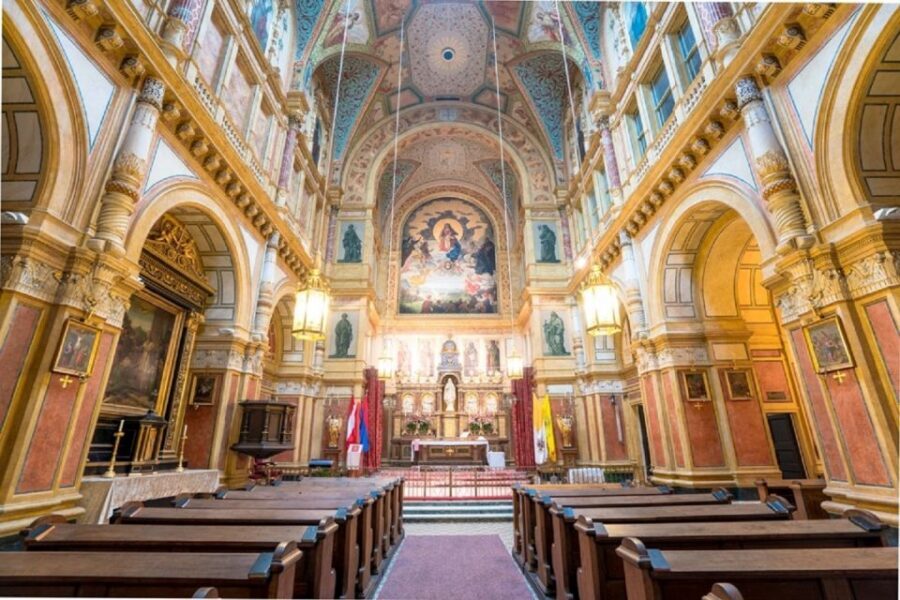
The biggest thing I love is the visual punch of Maria Schutz Church, especially the altar work tied to St Mary’s protection of Armenia. I also love the way the tour treats the Mekhitharis Library like something alive: manuscripts, old print, and the everyday reality of preserving language. In the best version of this tour, you’ll be guided with real character—Father Vahan is one name that shows up in the welcoming tone people remember.
One possible drawback: this experience is very specific. If you want only quick, generic sightseeing, the focus on Armenian history, books, and monastery art may feel a bit academic for your taste—though the pacing still stays friendly and approachable.
In This Review
- Key highlights at a glance
- Vienna’s Mekhitarist Monastery: Small Armenia in a 2-hour visit
- The Mekhitarist Congregation story and Maria Schutz Church’s 1874 transformation
- St Mary’s protection of Armenia: Camillo Sitte and the altar art you’ll remember
- Loretto-Chapel and Mary with the Rose: baroque drama with a real survival story
- The refectory walk and Schnorr von Carolsfeld’s Feeding of the Five Thousand
- Mekhitharis Library and Museum: Armenian manuscripts, newspapers, and coin collections
- Mechitharine liqueur tasting: a finish that actually teaches you something
- Price and value: is $84 reasonable for what you get?
- Who should book this tour (and who might skip it)
- Should you book “Armenia In The Heart Of Austria”?
- FAQ
- Where do I meet for the tour?
- How long is the tour?
- What’s the group size?
- What languages are available for the live guide?
- What is included in the tour price?
- Do I get to taste anything?
- How much does the tour cost?
- Is free cancellation available?
Key highlights at a glance
- Maria Schutz Church (1874) and its standout altars tied to Armenian saints and protection themes
- Loretto-Chapel and the Mary with the Rose picture, remembered for surviving the Turkish siege of Vienna in 1683
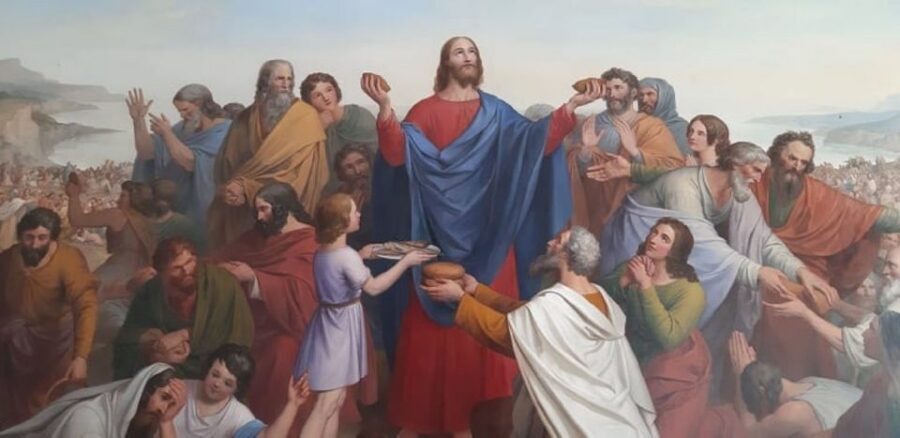
- Refectory wall painting featuring the Feeding of the Five Thousand by Ludwig Ferdinand Schnorr von Carolsfeld
- Mekhitharis Library scale: thousands of manuscripts and an enormous Armenian publishing archive
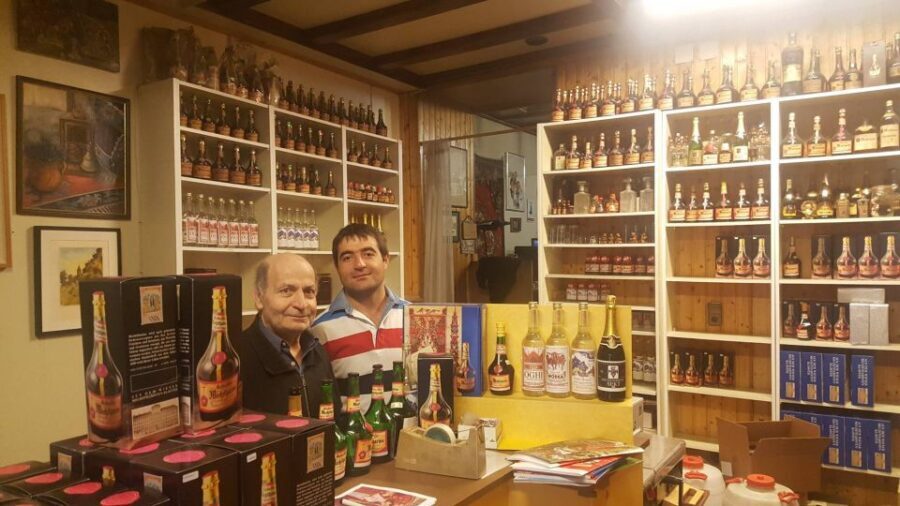
- Mechitharine liqueur tasting with a short lesson on flavor, history, and family business
Vienna’s Mekhitarist Monastery: Small Armenia in a 2-hour visit
This tour gives you something Vienna visitors rarely get on a normal sightseeing day: a whole cultural pocket that feels separate from the surrounding city. You meet at the front of the main entrance of the Mekhitarist Monastery, and then you’re guided through spaces that were built to serve worship, learning, and preservation.
The group size is limited to 10, which matters. It’s the difference between hearing the guide through a crowd and actually catching details—like why certain paintings are here and what they were meant to communicate. And at 2 hours, you’re getting a focused arc rather than a long, tiring museum marathon.
The tour runs with a live guide in Armenian, English, or German, so you can match your comfort level. That’s a big deal for a place where the stories behind artworks and collections are the point, not just the objects themselves.
You can also read our reviews of more tours and experiences in Vienna.
The Mekhitarist Congregation story and Maria Schutz Church’s 1874 transformation
You start with the history of the Mekhitarist Congregation in Vienna. This isn’t a random preface. It explains why this monastery became a center for Armenian religious life and cultural memory while being physically located inside Austria’s capital.
Then you move to Maria Schutz Church, built in 1874 to replace an older Cappuccine church. That kind of “replacement” detail helps you understand the layers: the site isn’t frozen in time. It evolved, and the Armenian community shaped what visitors experience today.
Inside the church, the guide points out major artistic elements, and you’ll quickly see that Armenian identity here is expressed through visual storytelling. It’s also just plain beautiful—especially when you realize the artwork isn’t only decorative. It’s meant to teach, to inspire, and to connect people across borders.
St Mary’s protection of Armenia: Camillo Sitte and the altar art you’ll remember
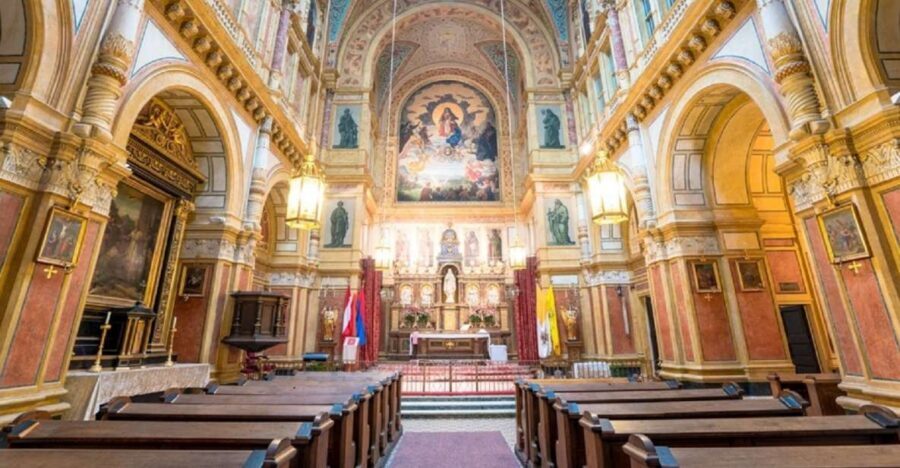
One of the tour’s sharpest moments comes from the altar painting showing St Mary’s protection of Armenia, painted by Camillo Sitte. You don’t just see it. You get the meaning behind why that protection theme matters in the Armenian cultural imagination, particularly in a monastery environment devoted to long-term preservation.
What I like about how the tour presents this is that it connects art to purpose. The altars aren’t treated like museum trophies. They’re treated like messages—religious messages, cultural messages, and historical messages all at once.
In the same area, you’ll also be shown a particularly remarkable altar dedicated to St Gregory the Illuminator, designed by Theophil von Hansen. If that name rings a bell, it should: Hansen is also the architect of the Austrian Houses of Parliament in Vienna. So you’re seeing Armenian devotional art through the lens of a famous Viennese architectural mind—an unexpected link that makes the place feel even more “Vienna,” without losing its Armenian character.
Loretto-Chapel and Mary with the Rose: baroque drama with a real survival story
Next comes the Loretto-Chapel, home to the baroque miraculous picture known as Mary with the Rose. This is one of those details that makes a monastery stop feel like more than a still-life of old paintings.
The guide explains that this picture survived the perils of the Turkish siege of Vienna in 1683 and was rescued intact. Even if you’re not a religious-history person, that survival detail hits. You can almost feel the urgency that must have surrounded preserving something considered precious—spiritually and culturally.
The chapel is also a good example of why the tour works. It doesn’t rush past the “wow” objects. It slows down just enough for you to register what you’re looking at and why it has staying power.
The refectory walk and Schnorr von Carolsfeld’s Feeding of the Five Thousand
From the chapel, you pass through the monastery spaces, including the refectory. This is the kind of stop you might otherwise skip if you were wandering on your own—so the guided route helps.
The standout here is a monumental painting by Ludwig Ferdinand Schnorr von Carolsfeld, The Feeding of the Five Thousand. The tour frames it well: it’s not just a Bible scene. It’s also a visual statement about care, provision, and community—ideas that fit neatly with a monastery that’s known for education and collection-building.
Practical note: refectories can feel dim compared to brighter gallery rooms. If you’re the type who likes to take in details slowly, give yourself a few extra seconds to adjust your eyes.



Mekhitharis Library and Museum: Armenian manuscripts, newspapers, and coin collections
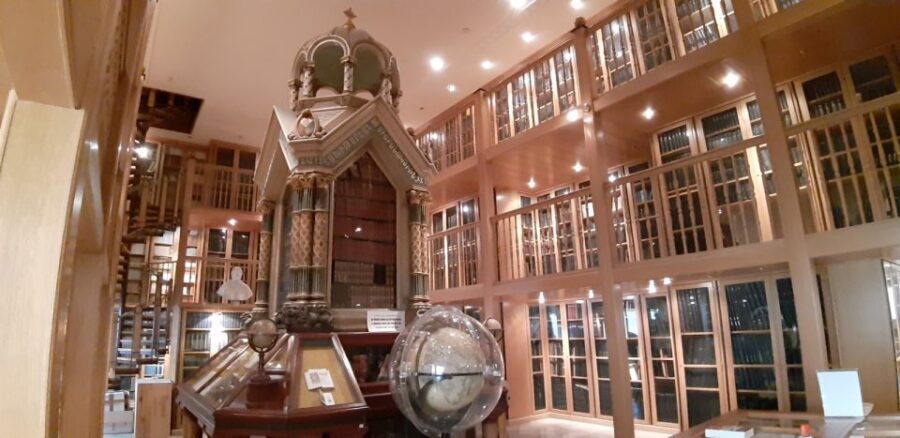
Then you reach the centerpiece for anyone who loves books, archives, and the slow power of preservation. The tour shifts from church art into the world of the Mekhitharis Museum and Library, where the guide walks you through exhibitions rather than making it feel like a storage facility.
Here are the scale details that make this place worth your time:
- More than 2,800 Armenian manuscripts
- More than 170,000 volumes of ancient and modern Armenian publications
- The largest collection of Armenian newspapers and magazines in the Western world
That’s the kind of information that instantly changes how you see the monastery. This isn’t only a religious site. It’s a cultural engine that kept Armenian written life moving across centuries.
The tour also highlights numismatics—coin collecting—which you might not expect in a monastery setting. You’ll see the Mekhitharis numismatic collection: 10,000 Armenian coins and 20,000 coins from other countries. It’s a clever way to connect Armenian history to broader trade routes and political change without turning it into a lecture-only environment.
You’ll also be shown items such as ceramics and carpets, largely of Armenian production. That matters because it makes “culture” feel tangible. You’re not stuck only with text and paintings. You’re seeing craft and material tradition represented in the collection.
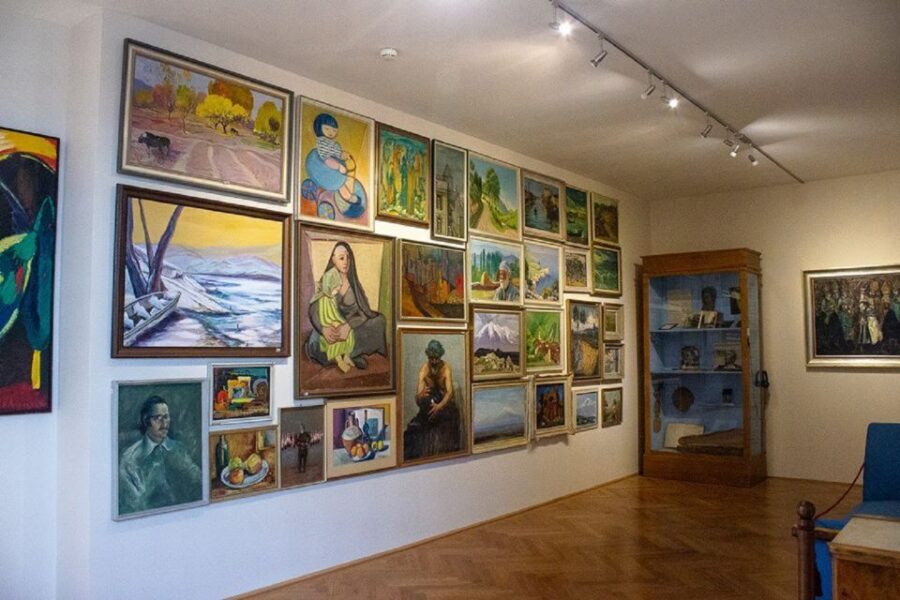
And yes, the gallery includes paintings by Armenian artists, including three paintings by Aivazovsky. If you like maritime scenes and dramatic light, this is the part that may feel closest to a traditional art museum moment—except you’ll understand it as part of a much bigger cultural mission.
Mechitharine liqueur tasting: a finish that actually teaches you something
At the end, you taste Mechitharine liqueur—included in the tour. This isn’t just a token sample. The guide explains secrets about the liqueur world: its unique taste, its history, its families, and the business behind it.
Why this matters for value: it gives your visit a living ending. You’re leaving with a flavor memory tied to the place, not just photos of stone walls and framed art. It also helps the monastery feel less sealed off from everyday life.
If you’re curious about food and drink traditions in Europe, this stop is a nice bonus. You can treat it like a mini cultural translation: the same care used in preserving manuscripts and objects also shows up in how people carry forward a craft.
Price and value: is $84 reasonable for what you get?
At $84 per person for a 2-hour tour, you’re paying for access, storytelling, and included entry fees—plus the guide and the tasting. For a specialized site like this, the price starts making sense if you care about guided interpretation.
Where the value really shows is in the mix:
- You get church interiors and specific altar details explained
- You get access to the library and museum exhibitions with context
- You get a focused experience that doesn’t sprawl across a full day
- You finish with an included liqueur tasting, which turns the visit into a memorable sensory close
If you’re the type who prefers independent wandering, you might feel you could do something similar on your own. But for a place where the “why” is the main event, the guide is the difference between seeing objects and understanding what they represent.
Who should book this tour (and who might skip it)
I’d strongly suggest this tour if you like:
- Armenian culture and history, even if you’re not deeply familiar
- Church art, altar iconography, and the story behind famous artists’ involvement
- Libraries, manuscripts, and the idea of preserving identity through print
- Short, well-paced tours with a small group feel
You might want to skip or be cautious if:
- You mainly want sweeping city landmarks and quick photo stops
- You dislike tours that focus on art interpretation and archive-level details
- You’re looking for something more general about Vienna’s highlights
That said, even if you don’t know anything about Armenian history, the survival story around Mary with the Rose and the scale of the library collections make the visit memorable.
Should you book “Armenia In The Heart Of Austria”?
If you want Vienna with a different point of view, book this. It’s one of the more distinct cultural experiences you can fit into a short time window, and the small group size helps you actually hear the guide.
My decision rule is simple: if you enjoy learning through places that hold stories—churches, libraries, museums—this tour will feel like a smart use of your time. If you only want the biggest famous sights, you’ll still learn a few fascinating things, but you may not feel fully satisfied.
FAQ
Where do I meet for the tour?
Meet in front of the main entrance of the Mekhitarist Monastery.
How long is the tour?
The tour duration is 2 hours.
What’s the group size?
It’s a small group limited to 10 participants.
What languages are available for the live guide?
The live tour guide is available in Armenian, English, and German.
What is included in the tour price?
Included are entrance fees, the guide service, and a Mechitharine liqueur tasting.
Do I get to taste anything?
Yes. The tour ends with a tasting of high-quality Mechitharine liqueur.
How much does the tour cost?
The price listed is $84 per person.
Is free cancellation available?
Yes, you can cancel up to 24 hours in advance for a full refund.