REVIEW · VIENNA
Vienna 40 Minutes Helicopter Tour for 2
Book on Viator →Operated by Aerial Helicopter · Bookable on Viator
Forty minutes above Vienna feels like a shortcut. I like the way you get live commentary as the pilot points out what you’re seeing, instead of just looking at clouds. I also love the small-group setup for 2, which makes the whole experience feel less rushed. The main drawback to plan for is comfort: seating can be tight, and one review noted that the window seat is much better than the middle seat.
This flight-style format is great when your schedule is busy but you still want perspective beyond the center. You’ll meet near Stockerau (Senningerstraße 59) and finish back at the same place. Expect a good portion of time spent flying over the Vienna region’s sights in a route that reaches into Lower Austria.
In This Review
- Key points to know before you go
- A 40-minute helicopter loop that makes Vienna fit your schedule
- Starting in Stockerau: where the flight actually begins
- What you’ll spot from the air: castles, monasteries, Danube, and the airport
- The restored castle in Lower Austria close to Vienna
- The monastery close to Vienna
- Danube Tower near the Vienna International Center
- Haven Freudenau and a view toward Vienna International Airport
- An old castle ruin on the Danube river bank
- Live English commentary: faster understanding of what you’re flying over
- Price and value: why $488.48 per person can make sense
- Comfort and the window-seat question (and why it came up)
- Pilots who make the flight feel personal: Klaus and Mario
- Weather, visibility, and when the tour might change dates
- Should you book this Vienna 40 Minutes Helicopter Tour for 2?
- FAQ
- How long is the Vienna helicopter tour?
- Where do we meet for the tour?
- Is the tour offered in English?
- How many people can join this tour?
- What landmarks are included in the route?
- Is there a weight or seating limit?
Key points to know before you go
- Live, on-the-fly commentary in English helps you actually understand what you’re seeing below
- Limited to 2 travelers makes it feel closer to a private flight than a big-group tour
- Danube coverage plus Vienna International area views gives you variety in a short time
- Castles, a monastery, and river ruins mean you’re not stuck staring at only city buildings
- Window-seat comfort matters, based on real feedback about seat feel
- Weight/balance rules can affect seating, with the possibility of needing an extra seat for heavier passengers
A 40-minute helicopter loop that makes Vienna fit your schedule
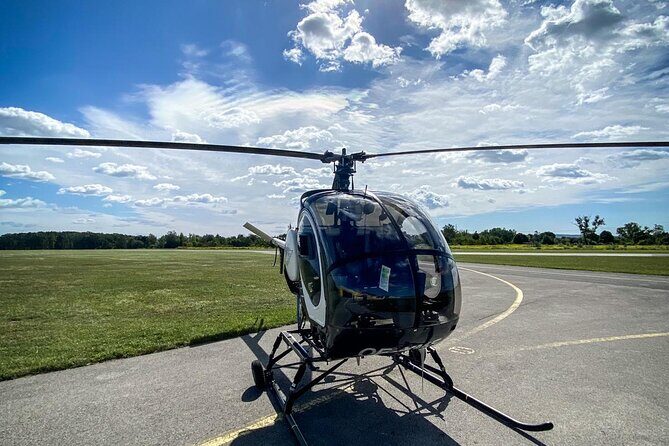
If you’ve got Vienna on your mind but not a lot of time, this tour is one of the fastest ways to get the big picture. You’re not trying to squeeze in multiple neighborhoods by bus and foot. Instead, you lift above the city and fly a route that quickly shows how Vienna sits within the Danube corridor and nearby countryside.
I’d call it a great “orientation flight.” From the air, street grids, bridges, and river bends become obvious. That makes your ground sightseeing afterward click faster—get your bearings fast.
The timing is also friendly. The overall experience is about 40 minutes, and you’ll spend that time seeing several landmark-style stops from overhead with commentary guiding your attention.
You can also read our reviews of more tours and experiences in Vienna
Starting in Stockerau: where the flight actually begins
Your meeting point is Senningerstraße 59, 2000 Stockerau, Austria. That’s not in central Vienna, so you should plan for the fact that this is a Vienna region activity. The upside is that you’re starting closer to the countryside and river areas the route is designed to highlight.
This matters for two reasons. First, your time isn’t just spent in the helicopter; you’re also mentally shifting to a “regional” view of Vienna. Second, you’ll want to arrive ready—since the activity ends back at the meeting point, you’re not commuting across town after the flight.
The tour runs with a local guide, and the experience is offered in English. The operator may use a multi-lingual guide depending on the schedule, which can be helpful if you’re traveling with anyone who prefers another language.
What you’ll spot from the air: castles, monasteries, Danube, and the airport
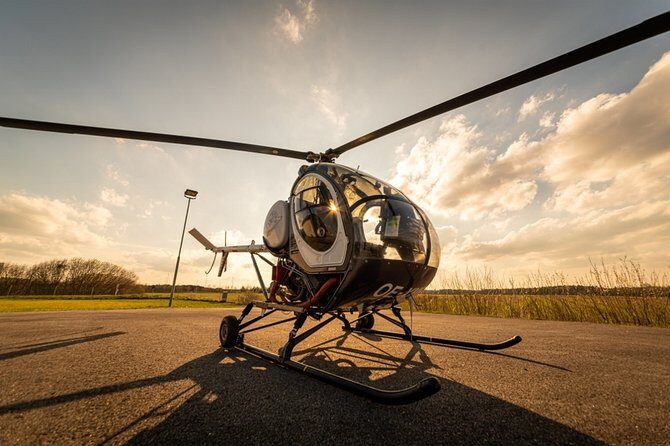
The itinerary-style route is built around variety. You’ll see restored historic architecture, religious buildings, major landmarks in the Vienna International area, and industrial/river-adjacent scenery near the Danube. The goal isn’t to pick just one “famous” place—it’s to show you how different parts of the region fit together.
Here’s what to expect as you fly.
The restored castle in Lower Austria close to Vienna
You start your sightseeing with a beautifully restored castle in Lower Austria near Vienna. From above, restored buildings often look cleaner and more deliberate than they do from street level. You also get better geometry—courtyards, rooflines, and the way the property sits within its surroundings.
Why it’s worth your attention: castles from the air tend to feel less “one building” and more like a whole defended estate layout. If you like architecture, this is a fast way to appreciate form.
Potential drawback: depending on weather and visibility, details can blur. If you’re hoping for ultra-crisp roof textures, you’ll have to rely on clear skies.
The monastery close to Vienna
Next up is a monastery near Vienna. A monastery can be visually distinctive from the air thanks to its placement—often near open areas and with a more self-contained footprint than city blocks.
Why this stop works: it gives you a calmer contrast to downtown Vienna. Even if you’re only seeing it from above, it helps you understand where quiet institutions sit in relation to the city’s motion.
Keep in mind: you’re viewing this as a flying overview, not a grounds visit. So treat it like a “see the shape and setting” moment.



Danube Tower near the Vienna International Center
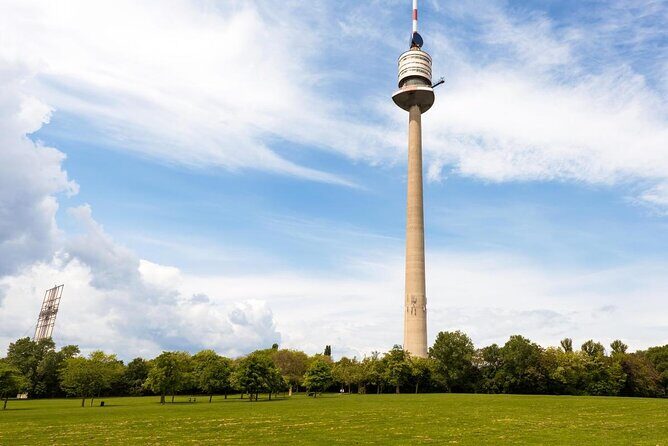
You’ll also fly over the Danube Tower area, close to the Vienna International Center. This is one of the more “you’re in a modern hub” sightings on the route. From the air, the tower’s height relative to the river corridor is easier to grasp.
Why I like this pairing: the Danube Tower and the Vienna International Center together show how Vienna combines large-scale infrastructure with long-standing river geography. You get both the modern landmark feel and the underlying geography.
If you’re the kind of person who loves skyline logic, this is a good moment to slow down mentally even while the plane is moving.
Haven Freudenau and a view toward Vienna International Airport
Then comes Haven Freudenau, with a view toward Vienna International Airport. This part of the route shifts the vibe toward the functional side of the region: river traffic areas, water-adjacent infrastructure, and the real-world proximity of flight paths to city life.
Why it’s valuable: it’s not a postcard view of the historic center. It’s a practical look at how travel and logistics operate right beside the river.
What to watch for: in good weather, you can often trace the river’s course clearly and see how roads, tracks, and airport area boundaries line up.
An old castle ruin on the Danube river bank
Finally, you’ll see an old castle ruin on the river bank of the Danube. Ruins have a different aerial appeal than restored buildings. You can read the remaining footprint like a puzzle—walls, breaks, and how the site relates to the water edge.
Why this works after the rest: you end with “time layers.” First you see restoration. Then you see institutional sites. Then modern landmarks. The ruin ties it all back to the Danube’s long influence.
It’s also a good visual metaphor for Vienna’s story: change over time, but the geography stays.
Live English commentary: faster understanding of what you’re flying over
The biggest quality-of-life feature here is the live commentary. Instead of trying to guess what a cluster of roofs or a river bend might be, the pilot and local guide guide your attention in real time.
In real feedback, pilots were praised for being friendly and professional while also giving enough information to make the landmarks make sense. Two names came up strongly: Klaus and Mario. Both were described as engaging, with Mario especially noted for introducing landmarks with enough info, not just flying past them.
That difference matters. A helicopter ride can be pure sightseeing, sure. But with commentary, you leave with a clearer mental map, and you’re less likely to spend the whole flight saying “I think I recognize that…”
If you want an experience that teaches as well as entertains, this is the core reason to pick this format.
Price and value: why $488.48 per person can make sense
At $488.48 per person, this isn’t a budget activity. The honest question isn’t whether it’s expensive; it’s whether it fits your travel priorities.
Here’s what you’re getting value for:
- The route is built to cover multiple major sights from above in one short outing.
- You’re not paying for city driving plus a chain of stops. You’re paying for a direct aerial view.
- The price includes a lot of the common extras: all taxes, fees, and handling charges, plus local guide, landing and facility fees, and an airport/departure tax.
What’s not included is also important. You’ll still handle things like food and drinks and transportation to/from attractions on your own. That means the true cost depends on how you’re getting to the meeting point.
One more value angle: the tour is capped at a maximum of 2 travelers. That tends to reduce the “big group” feel and makes it easier to ask questions during the flight. For couples or a pair of friends, that’s a real part of the value story.
Finally, the weight rule can affect how your final spend lands. If you weigh over 110 (as noted in the tour info), you might be asked to purchase an additional seat payable directly to the operator on the day of the tour. That’s a cost consideration you’ll want to keep in mind when budgeting.
Comfort and the window-seat question (and why it came up)
Helicopters can be cozy. Cozy can also mean tight.
One review pointed out that the window seat is comfortable, while the seat in the middle is not. That lines up with the reality of small aircraft layouts: you’ll often get more legroom and less awkward shifting near the window.
My practical advice: if the seating assignment is an option, go for the window. You’ll also have the best view for photography and for seeing the details of the river bends, bridges, and landmark outlines.
Also be aware of the tour’s guidance about comfort and weight/balance. The tour info lists a total weight per passenger of 243 lbs, and it notes the potential for an additional seat if you’re over 110. If you’re anywhere near that threshold, plan for the possibility of paying that extra amount on the day.
If you’re traveling with kids, they must be accompanied by an adult. The tour also says most travelers can participate, so it’s generally not overly restrictive—just double-check the weight guidance.
Pilots who make the flight feel personal: Klaus and Mario
This is one of those tours where the “human factor” clearly matters. Reviews highlighted staff professionalism and friendliness, and the pilots stood out for keeping the experience positive and smooth.
Klaus was described as super nice and made the ride feel relaxed and fun. Mario was described as professional, helpful, and friendly, and he took time to introduce landmarks in a way that felt like more than just a pass-through commentary.
Even if you’re not chasing drama or hype, these details matter because a short flight gives you limited time to adjust expectations. When the pilot communicates well, you spend more of the ride looking and understanding, instead of wondering what you’re seeing.
Weather, visibility, and when the tour might change dates
This activity requires good weather. If conditions are poor, the tour may be canceled and you’ll be offered another date or a full refund.
Because you’re viewing landmarks from the air, visibility is the main issue. You don’t need perfect skies, but clearer conditions will give you sharper views of the Danube riverbank sites, the airport approach area near Haven Freudenau, and landmark edges.
This is also the kind of tour where it helps to build it into your schedule with some flexibility. If you’re already locked into tight plans, choose a day with a backup in mind.
Should you book this Vienna 40 Minutes Helicopter Tour for 2?
I’d recommend booking if most of the following are true:
- You want a fast, high-impact way to see Vienna’s region beyond the busy center.
- You enjoy learning what you’re seeing, not just watching from the window.
- You’re traveling as a pair and you like the idea of a small max group size (2 travelers).
- Your schedule is tight and you need a 40-minute “big picture” experience.
I’d think twice if:
- Seating comfort is a big deal for you, since the middle seat may be less comfortable than the window seat.
- You’re sensitive to extra costs tied to the weight/balance seating rule.
- You’re not flexible on weather day changes, since the tour requires good conditions.
If you fit the first list, this tour is a practical splurge. It doesn’t try to replace Vienna’s museums or palaces. It gives you something different: a fast aerial map of how the city and the Danube corridor connect.
FAQ
How long is the Vienna helicopter tour?
The experience is about 40 minutes (approx.).
Where do we meet for the tour?
You’ll meet at Senningerstraße 59, 2000 Stockerau, Austria. The activity ends back at the same meeting point.
Is the tour offered in English?
Yes, the tour is offered in English. Mobile tickets are used.
How many people can join this tour?
The tour has a maximum of 2 travelers.
What landmarks are included in the route?
You’ll fly over or view sights including a restored castle in Lower Austria, a monastery near Vienna, the Danube Tower near the Vienna International Center, Haven Freudenau with a view toward Vienna International Airport, and an old castle ruin on the Danube riverbank.
Is there a weight or seating limit?
The tour lists a total weight per passenger of 243 lbs. Passengers weighing over 110 might be required to purchase an additional seat, paid directly to the operator on the day of the tour.