REVIEW · VIENNA
Taste and Tour Small Organic Wineries with a Winemaker
Book on Viator →Operated by Kapitel Zwei Wine · Bookable on Viator
Small wineries, big conversations, right by the Danube. This winemaker-led day trip takes you from Krems along the Donau wine country with guide Chris and a smart pace: about 2.5 hours tasting and touring, with only ~30 minutes of driving between stops. I love that you spend time with real producers at micro and family wineries, not just lined-up storefronts.
My other favorite part is the variety you get in only three hours. You go from organically grown French varietals at Kapitel Zwei to classic Austrian Grüner Veltliner at Mantlerhof, then to the sparkling and slightly experimental world of WeinSchach, finishing with a short vineyard walk to a viewpoint over the region.
One thing to think about: the tour includes cellars and some walking. It is not recommended if you cannot walk down into a cellar, and some rooms can feel small.
In This Review
- Key Highlights at a Glance
- A Donau Wine Day That Starts in Krems, Not Vienna
- What the Private Format Means for How You Taste
- Stop 1: Kapitel Zwei Wine and the Story of Kremsleithen
- Stop 2: Weingut Mantlerhof Near the Kamp Meets the Danube
- Stop 3: Feldtheorie in Schoenberg am Kamp with Ulrike Filp and Robert Bormuth
- Stop 4: WeinSchach in Langenlois and the Quest for Pet Nat Balance
- Stop 5: Ausblick am Welterbesteig for Vineyard Views and a Final Taste
- Value Check: Is $114.02 Worth It?
- Who Should Book (and Who Might Want to Skip)
- Should You Book Taste and Tour Small Organic Wineries with a Winemaker?
- FAQ
- How long is the tour?
- Where does the tour start and end?
- Can I arrange pickup if I’m in Vienna?
- Is the tour in English?
- Is this a private tour?
- Is there walking involved?
- Are tastings included?
- What are the operating hours?
- What is the cancellation window?
Key Highlights at a Glance
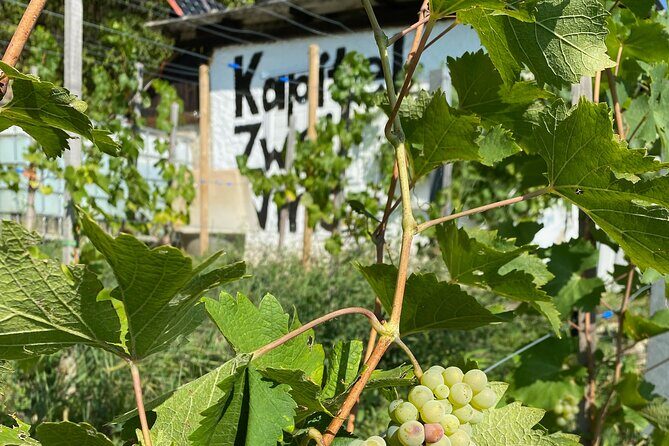
- Winemakers and owners greet you at each stop, with wine explained in plain language
- Single-vineyard focus at Kapitel Zwei, including amphora aging and amphora-and-steel thinking
- Organic Austrian classics with Grüner Veltliner and Roter Veltliner at Mantlerhof
- A Pet Nat goal and careful biological work at WeinSchach in Langenlois
- A short vineyard walk at the end for Donau-area views
A Donau Wine Day That Starts in Krems, Not Vienna
This tour is built around Krems an der Donau. That matters, because once you’re there, you can feel the shift from city pace to vineyard pace fast. Your meeting point is Bahnhofpl. 2, Krems an der Donau, and the start ends back where you began.
If you’re staying in Vienna, you’ve got a couple sensible options. You can take the direct train to Krems and meet at the station. Or you can arrive via boat from Vienna and meet at the boat station. If neither works, you coordinate a meeting place with the host.
Schedule-wise, plan on roughly a 3-hour total outing. The time split is part of the appeal: around 2.5 hours doing the actual tour and tasting, plus about 30 minutes driving between locations. It’s long enough to learn and taste deeply, without feeling like you’re spending the day in a van.
You can also read our reviews of more tours and experiences in Vienna.
What the Private Format Means for How You Taste
This is a private tour for your group only. That changes the whole tone. Instead of racing through a script, you can ask the questions you actually care about: soil, growing style, fermentation choices, aging, bottle balance, and what makes each producer’s approach their own.
The tour is offered in English, and it also uses a mobile ticket. That’s a small thing, but on a day trip like this, it helps you avoid last-minute paperwork stress and get to wine faster.
Also, based on how this experience is repeatedly described, Chris (the guide) is a big part of the value. You get an enthusiastic, practical host who stays focused on what you want to see and taste, and who can connect vineyard details to the glass in front of you.
Stop 1: Kapitel Zwei Wine and the Story of Kremsleithen
Your first stop is in Kremsleithen, reached by a drive up from sea level about 400 meters along winding winery roads. Even before you taste, the setting is doing work here. You’re seeing how slopes and elevation shape the grapes and the style, especially in a region built around the Donau River valleys.
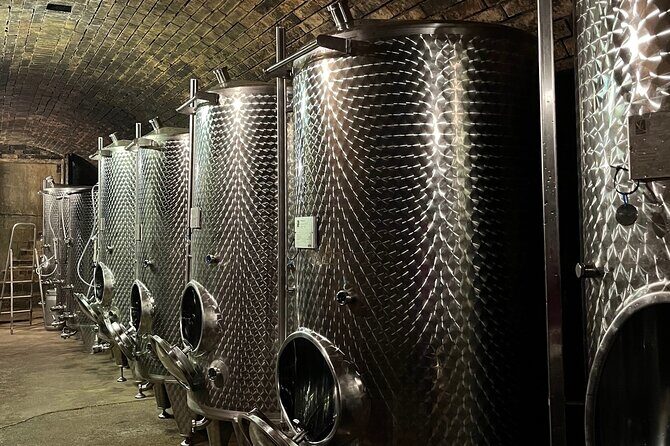
At Kapitel Zwei Wine, you’re in a micro-winery experiment called Kapitel Zwei, basically chapter two of Austrian wine thinking. The focus is organic and sustainable growing, with French grape varietals such as Chenin Blanc, Roussanne, and Sémillon. The production choices are the point: grapes are aged in amphora and steel tanks.
What makes this stop especially interesting is the single-vineyard angle. The grapes come from one ried, Kremsleithen, described as a steep-slope site running down toward the river Krems. The vineyard was abandoned decades ago and then replanted in May 2022, which makes it feel like you’re seeing a living project, not just a finished product.
The details help you understand why this place is being watched:
- First mentioned in records dating back to 1266
- Around 300 meters above sea level
- Soil described as loamy, sandy soil and clay
- The name ties to the steep slope: “Leiten” in German
You’ll likely start tasting by thinking about fermentation and what aging vessel choices do to the wine. This is also the kind of stop where questions like young-vine development and vineyard selection make sense, because the story is grounded in real site history and recent replanting.
Stop 2: Weingut Mantlerhof Near the Kamp Meets the Danube
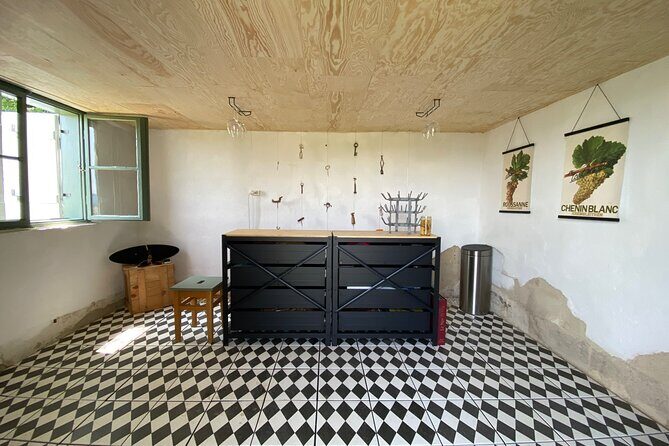
Next is Weingut Mantlerhof, in the municipality of Gedersdorf, close to the river Kamp right before it merges with the Danube. It’s a classic Austrian geography moment: water, valley views, and the way distant landmarks become part of the day.
If you get the chance to look around, you can see the lights of Krems to the west, and toward the east you may glimpse the towers of Grafenegg. That’s not just pretty scenery. It helps you place Mantlerhof in the wider rhythm of the region’s waterways and wind patterns.
The winery itself is family-owned with long continuity. The family Mantler has worked Mantlerhof for over 200 years, with winemaking roots traced back to 1365. That kind of timeline matters because it shapes what they emphasize: sustainable methods that don’t feel like a trend.
Production is organic, and the winery works 15 hectares of vineyards. Their focus is on Grüner Veltliner and Roter Veltliner, two grapes that often make Austrian wine feel like it has structure even when it’s meant to be refreshing and food-friendly.
The setting inside the village is quietly memorable. Brunn im Felde has a pond, and on the pond’s western side sits an old manor with an early classicist facade. That manor is the Mantlerhof. It’s the kind of place where you can understand how a wine operation is also a local home base.
If you like learning how tradition and organic practice can coexist, this stop delivers. It’s also a good counterpoint after Kapitel Zwei’s French varietals and amphora/steel aging, because it brings you back to two grapes that define much of Austria’s identity.
Stop 3: Feldtheorie in Schoenberg am Kamp with Ulrike Filp and Robert Bormuth
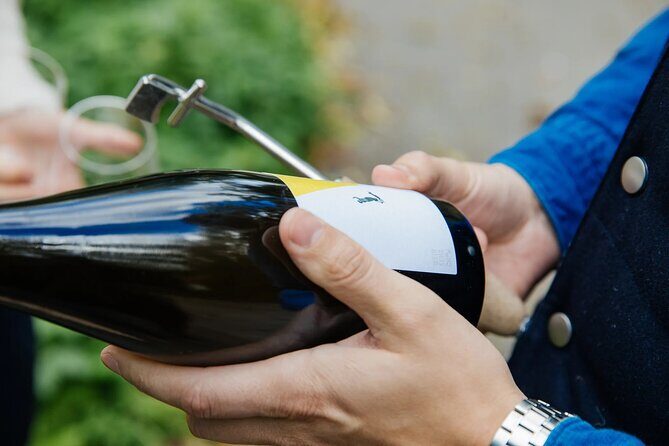
Schoenberg am Kamp is where you shift from estate tradition to a more science-informed natural approach. The people behind Weingut Feldtheorie are Ulrike Filp and Robert Bormuth, plus their friends and family.
Here’s the human origin story that helps explain the wine philosophy. During their natural science studies, they discovered a love for wine on a trip to New Zealand. After finishing school, they did internships in Germany, Australia, and Austria. They settled in Wachau, and when the timing was right, they bought their own parcels in neighboring Kamptal.
Their goal is pretty clear: pass on the uniqueness of Kamptal through their wines to anyone who tastes them. That focus isn’t just marketing. In the way they work, the cellar and the vineyards are handled together by the team, not handed off into separate worlds.
This stop is often where the tour feels most personal, because you’re getting the “why” behind the choices. If you like hearing how a region becomes a set of decisions—what to plant, how to farm, when to harvest, and how to treat the wine afterward—this is a great place for those questions.


Stop 4: WeinSchach in Langenlois and the Quest for Pet Nat Balance
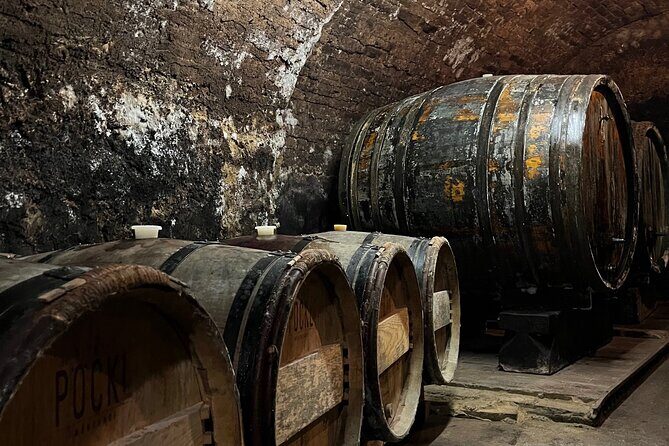
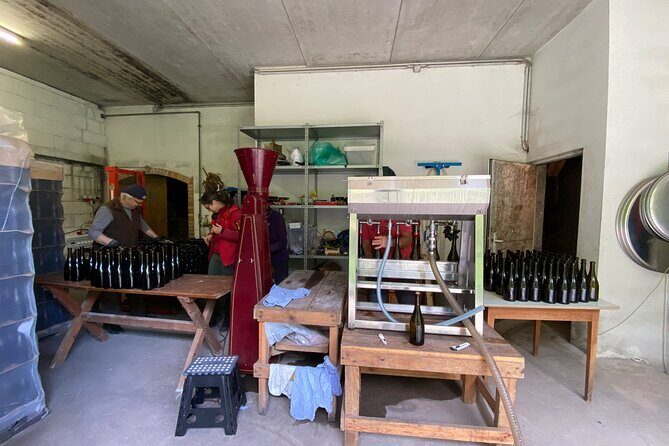
Then you arrive in Langenlois, and the vibe shifts to sparkle. Here you visit WeinSchach, a winery built around one big belief: nature has what wine needs, and the wine should unfold freely in the bottle.
The stated target is a Pet Nat on equal footing with the great sparkling wines of the world. That line matters because Pet Nat isn’t just a style for them. It’s a direction and a challenge. To get there, they experiment. Some of that experimenting means going in circles, testing what works, and restarting if needed.
The production approach is described as biological. Wine is harvested by hand, and then it’s de-gorged. You’re not just hearing about theory. You’re getting a sense of how the winery thinks about experiments as a method to reach balance.
If you’re the kind of traveler who only wants your wine to taste good, you’ll still enjoy this stop. The key is that their sparkler goal is realistic: they want Pet Nat to make sense on the shelf and at the table, not just in tasting notes.
If you’re the kind of traveler who loves process, this is where your brain will light up. You’ll likely get the reasoning connecting biological farming, hand harvest, and the sparkling method to how the wine performs in the glass.
Stop 5: Ausblick am Welterbesteig for Vineyard Views and a Final Taste
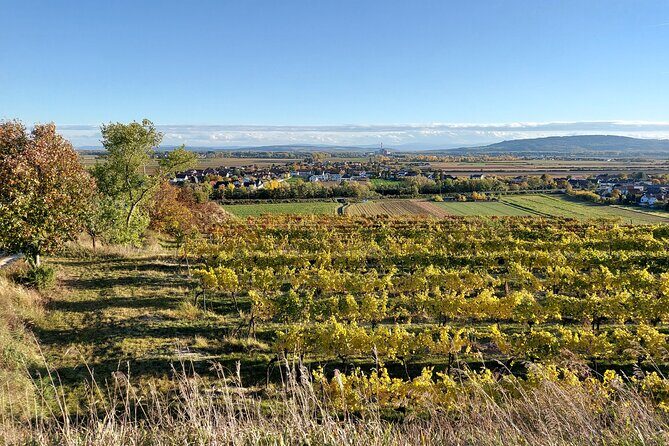
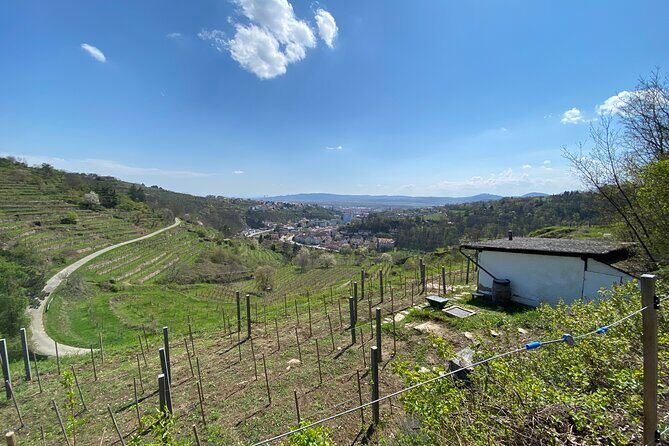
The last part of the tour is calm and scenic. You finish at Ausblick am Welterbesteig with a short 7 to 10 minute walk through vineyards to a viewpoint looking over the region.
This is a good timing choice. You’ve already learned a lot about grapes, soil, and cellar decisions. Now you get perspective—literally. It’s where you can look across the slopes and waterways and start seeing why each site matters.
Wear shoes you’re comfortable walking in. This is not a big hike, but the tour does include walking and some time in and around winery spaces.
Value Check: Is $114.02 Worth It?
At $114.02 per person for about three hours, the value depends on what you want. If you’re chasing a quick souvenir tasting, this might feel pricey. If you want wine knowledge and real conversations with producers, it starts to look like a good deal fast.
A few things that support the price:
- It’s private, so your group isn’t competing for attention
- You get an English-speaking guide and winemaker-focused visits
- Each stop emphasizes a specific approach, from amphora aging to organic classic varieties to biological Pet Nat production
- Admission tickets at each stop are listed as free, which reduces the chance of hidden add-ons during the tour
Also, the tour is booked on average about 55 days in advance, which suggests demand from people who want an organized, small-scale winery day rather than a hop-on-hop-off bus plan.
If you’re considering value, think about what you’d do instead: DIY wine visits from Vienna can mean extra transport costs, time wasted finding places, and little chance of meeting owners. This experience solves those problems in one smooth, guided route.
Who Should Book (and Who Might Want to Skip)
This tour is a strong fit if you:
- Want small organic wineries and hands-on winemaker explanations
- Enjoy tasting with context, not just drinking without learning
- Like being in a private group with room for questions
You might want to skip it if:
- You cannot walk down into a cellar. The experience is not recommended for that.
- You dislike small rooms. Some stops involve cellar spaces that can feel tight.
- You don’t want any walking at all. There’s some hiking, plus the 7–10 minute vineyard walk at the end.
One more practical note: this experience mentions moderate physical fitness. If you’re generally active and comfortable with uneven vineyard paths and stairs, you should be fine.
Should You Book Taste and Tour Small Organic Wineries with a Winemaker?
I’d book it if you want an Austria wine day that feels real: organic choices, working producers, and tastings tied to specific sites. The combination of Kapitel Zwei’s single-vineyard project, Mantlerhof’s long organic family legacy, Feldtheorie’s founder-led philosophy, and WeinSchach’s Pet Nat experimentation gives you a surprisingly full picture of the region in just three hours.
Book it sooner rather than later if you’re set on dates, since it’s commonly reserved about two months ahead. And if you know you’ll ask questions, this is the kind of tour where that curiosity turns into a better experience, not a distraction.
FAQ
How long is the tour?
The tour runs about 3 hours.
Where does the tour start and end?
It starts at Bahnhofpl. 2, 3500 Krems an der Donau, Austria, and ends back at the same meeting point.
Can I arrange pickup if I’m in Vienna?
Yes. Pickup is offered, and if you’re in Vienna you can take a direct train to Krems and meet at the train station. You can also arrive by boat from Vienna and meet at the boat station. If neither works, you can coordinate another meeting location.
Is the tour in English?
Yes, it is offered in English.
Is this a private tour?
Yes. Only your group participates.
Is there walking involved?
You should have a moderate physical fitness level. Some hiking is required, and the tour includes a short 7 to 10 minute vineyard walk. It is also not recommended if you can’t walk down into a cellar.
Are tastings included?
The experience is described as a wine tour with winery visits, and tastings are part of the stops as part of the overall experience.
What are the operating hours?
The activity operates during 11/01/2025 to 10/31/2026, Monday through Saturday from 12:00 PM to 7:00 PM.
What is the cancellation window?
Free cancellation is available up to 24 hours in advance for a full refund. If you cancel less than 24 hours before the start time, the amount paid is not refunded.