REVIEW · VIENNA
Ticket to Klosterneuburg Abbey
Book on GetYourGuide →Operated by Stift Klosterneuburg · Bookable on GetYourGuide
Nine centuries, one great viewpoint.
This one-day visit packs panoramic views over the Danube and Vienna with a guided look at Klosterneuburg Abbey’s art and religious life. I especially like how the day mixes culture and pleasure: you get the Treasure Chamber plus a winery tour with a real wine tasting at the end. One thing to plan around: the guided tours are in German, so you’ll want to use the audio guide in 14 languages to keep everything flowing.
You start outside the front entrance and step into an Augustinian world that’s shaped this corner of Lower Austria for generations. I love that it doesn’t feel like a dead monument, because the abbey still operates as a living religious and cultural center just beyond Vienna. A practical consideration: if you’re arriving by public transport, give yourself extra time for the last stretch to the meeting spot, since getting exact directions can be hit-or-miss depending on the day.
In This Review
- Key things to know before you go
- Entering Klosterneuburg Abbey: where faith meets serious views
- Treasure Chamber: the “what they valued” part of the day
- Marble Hall and Imperial Rooms: Habsburg history in stone and ritual
- The Verdun Altar and cloister: where the tour stops being generic
- Panoramic windows: your Danube-and-Vienna payoff
- Austria’s oldest wine estate: the Baroque cellar and tasting
- Annual exhibition (May–November) and the Abbey Museum on weekends
- A realistic one-day schedule that keeps you from sprinting
- Price and value: why $23 can feel fair
- Getting there and meeting up: make your life easy
- Who this trip suits best
- Should you book the Klosterneuburg Abbey ticket?
- FAQ
- FAQ
- How long is the Klosterneuburg Abbey ticket experience?
- What’s included with the ticket?
- Are the guided tours in English?
- When can I visit the annual exhibition?
- When is the Abbey Museum open?
- Where do I meet for the tour?
- Are pets allowed?
Key things to know before you go
- Treasure Chamber focuses on spiritual and everyday history through art and artifacts
- Danube and Vienna views are a highlight from the abbey’s windows
- Grand Abbey Tour is guided and includes standout sights like the Verdun Altar and cloister
- Winery tour with tasting happens after the abbey highlights and is often the best payoff
- Annual exhibition is available from May to November
- Abbey Museum access works on weekends and public holidays
Entering Klosterneuburg Abbey: where faith meets serious views
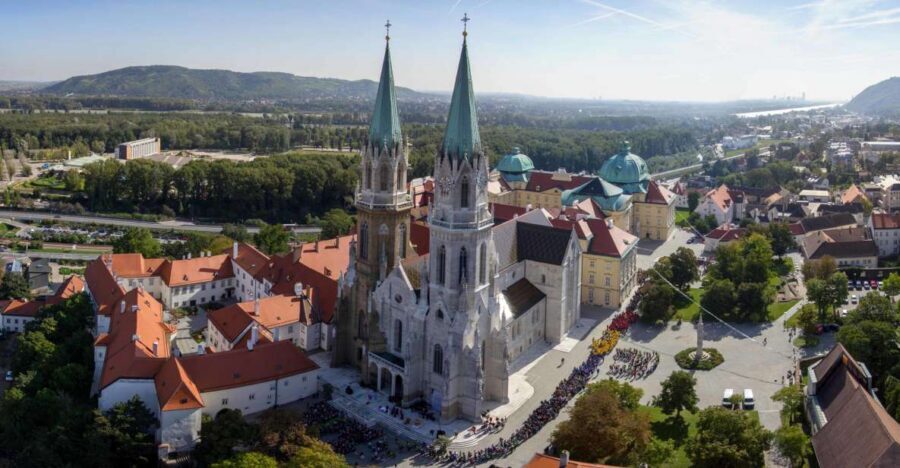
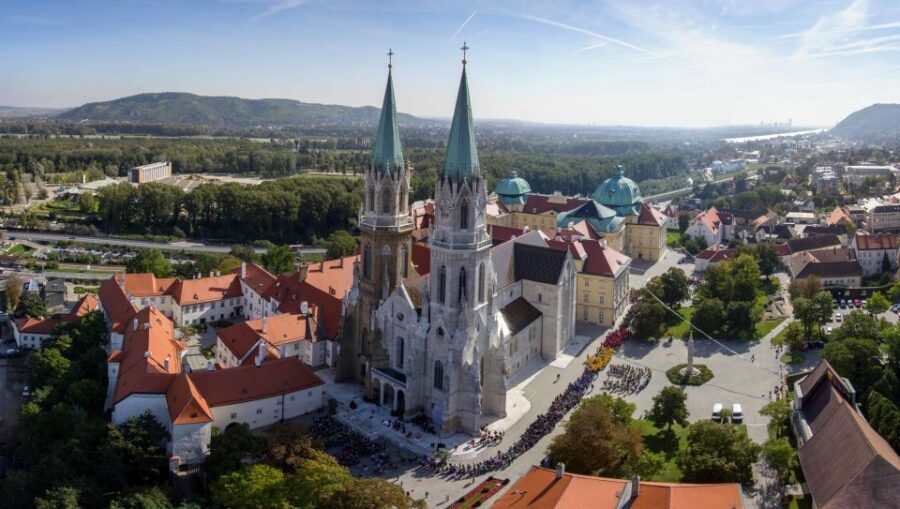
Klosterneuburg Abbey sits just outside Vienna in Lower Austria, and that geography matters. It’s close enough for an easy day trip, but the site still feels removed in the best way: you’re up high enough to look out over the Danube corridor and see Vienna far off in the distance. The abbey also has a long-running identity shaped by the Augustinian Canons, meaning you’re not just touring old stone. You’re stepping into a place that has functioned as a religious, pastoral, scientific, cultural, and economic center for centuries.
With your ticket, you get a structured experience rather than a random wander. You’ll start with the Treasure Chamber and then have access to other parts of the abbey’s visitor program. You can also join guided tours throughout the day, which is a big deal if you like context. Standing in the right spot inside a historic building is good. Understanding what you’re seeing is better.
There’s a little rhythm to the visit: the abbey gives you art, architecture, and church spaces early on, and then the day turns toward wine. That mix makes it easier to stay interested without feeling like you’re stuck in one theme for hours.
You can also read our reviews of more tours and experiences in Vienna
Treasure Chamber: the “what they valued” part of the day
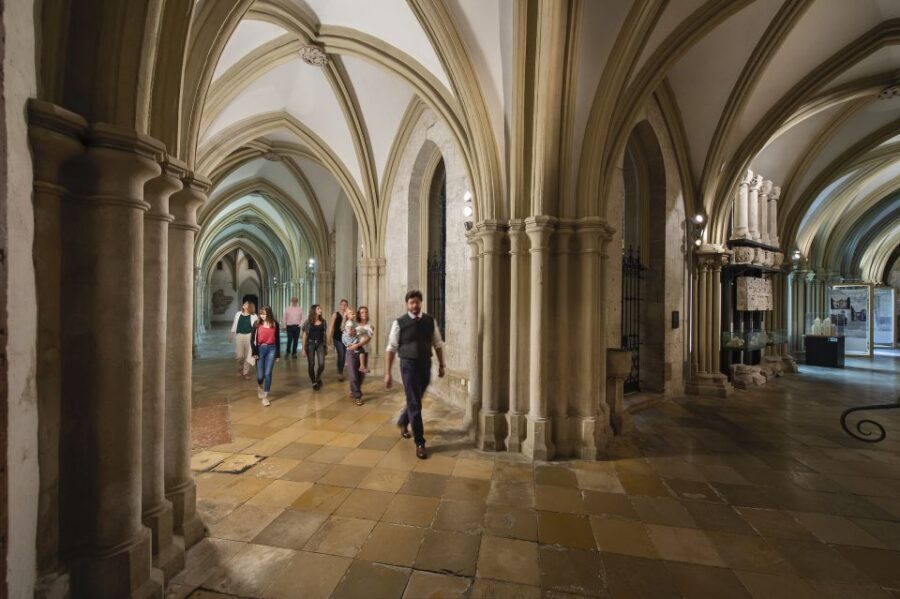
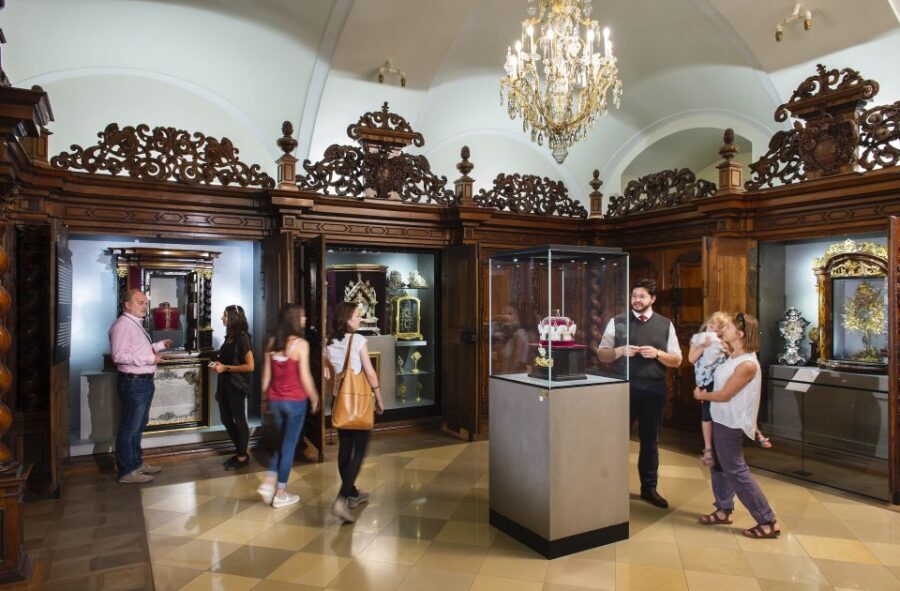
Your visit begins in the Treasure Chamber, and that’s smart. Instead of starting with the biggest room, you start with the ideas behind the collection: precious artworks and historical objects that reflect spiritual and cultural life tied to the Canons.
Even if you’re not an expert in religious art, this is where the abbey’s story becomes understandable. The objects aren’t just decorative. They show what a community protected, displayed, and passed on—basically, what mattered to them in daily practice and ceremony. If you pay attention here, the later rooms won’t feel like disconnected highlights. They’ll feel like the same story told through architecture, liturgy, and history.
Practical note: plan for time to slow down. The Treasure Chamber is the kind of space where you’ll get more out of it if you don’t treat it like a checklist. Look for recurring themes in symbols, craftsmanship, and how items are arranged. That’s how the room teaches you.
Marble Hall and Imperial Rooms: Habsburg history in stone and ritual
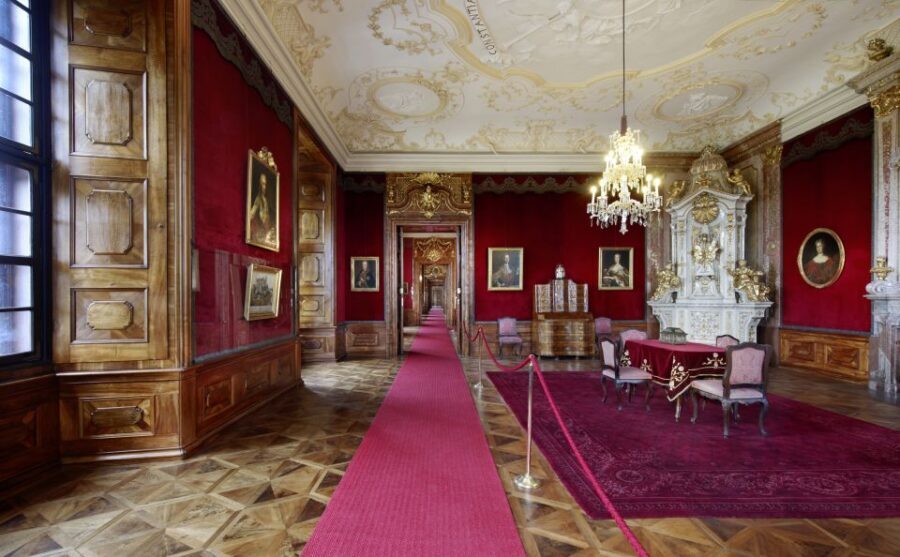
After the Treasure Chamber, you’ll move through impressive interior spaces, including the Marble Hall, which was once used by members of the Habsburg family. That single fact gives you a useful lens. It’s not only a church complex; it also functioned in the orbit of power and prestige in Austria’s history.
In the guided Grand Abbey Tour, you’ll also see highlights like the Imperial Rooms. This is one of those times where the guided structure pays off: the rooms gain meaning when someone explains how the abbey’s status connected to wider European history. You’ll also have a chance to see key church-adjacent areas such as the cloister, which helps you understand how the abbey’s spiritual life shaped daily movement through the building.
If you’re someone who likes architecture details, keep your eyes open for the way spaces transition from sacred to ceremonial. The marble hall is an obvious standout, but the real value is how the building makes visitors walk through different “modes” of the abbey—public, private, ritual, and display.
The Verdun Altar and cloister: where the tour stops being generic
The Grand Abbey Tour is about 90 minutes and is designed to focus your visit. You’ll visit the Abbey Church and cloister and see major highlights including the Verdun Altar and the Imperial Rooms.
What makes this portion worth doing is not the list of stops. It’s the order. When you see the church and cloister in sequence, the building starts to read like an organism—spaces connected by purpose and movement rather than random rooms in a museum layout. The Verdun Altar is a focal point, and seeing it as part of a guided narrative helps you understand why it’s famous, instead of just noting that it exists.
One heads-up: the guided tour is in German. The audio guide is available in 14 languages, which is a lifesaver, but it also means you should bring your best audio habits. Arrive with your headphones charged or ready, and don’t ignore the audio even if you’re looking around visually. The story you miss is usually the part that makes the art click.
Panoramic windows: your Danube-and-Vienna payoff
One of Klosterneuburg Abbey’s strongest selling points is simple: the windows. From the abbey you can enjoy wonderful views of the Danube River and across toward Vienna.
This is the kind of view that works even if you’re not a “views person.” It gives you orientation. The Danube isn’t just scenery; it’s a historic corridor that shaped settlement, trade, and transport. Seeing Vienna from here reminds you that you’re close to the city, but you’re experiencing the landscape from a different altitude and angle.
I’d treat this like your main photo moment. If you’re planning around timing, aim to spend a little extra time in the window areas before your next guided tour so you’re not rushing. Also, keep an eye on the light: the Danube can look dramatically different over the day, and the farther Vienna sits, the more atmosphere influences the final look.


Austria’s oldest wine estate: the Baroque cellar and tasting
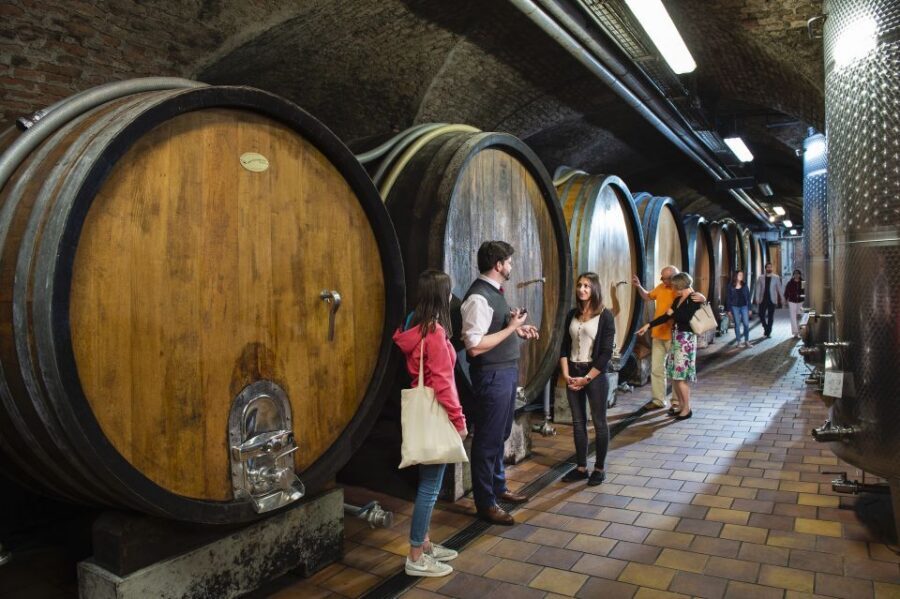
Then comes the part that turns this trip into a full-on day out: the Winery Tour. It’s about 90 minutes, runs daily at 1:00 PM, and it ends with a wine tasting. You’ll learn about Austria’s oldest wine estate and walk through an impressive Baroque cellar.
This is valuable for two reasons. First, it connects the abbey to a real economic and cultural practice, not just spirituality and art. Second, the wine doesn’t feel like an afterthought. The winery tour is structured as its own guided experience, so you get the historical background while you’re physically inside the working-style cellar environment.
When you reach the tasting, that’s where I think you’ll feel the payoff. After hours of art, church spaces, and artifacts, wine tasting is a sensible reset. It also makes the cultural history feel more human and less academic. If you only have energy for one guided component, I’d still put your attention toward the winery, because it’s frequently the most satisfying moment of the day.
Annual exhibition (May–November) and the Abbey Museum on weekends
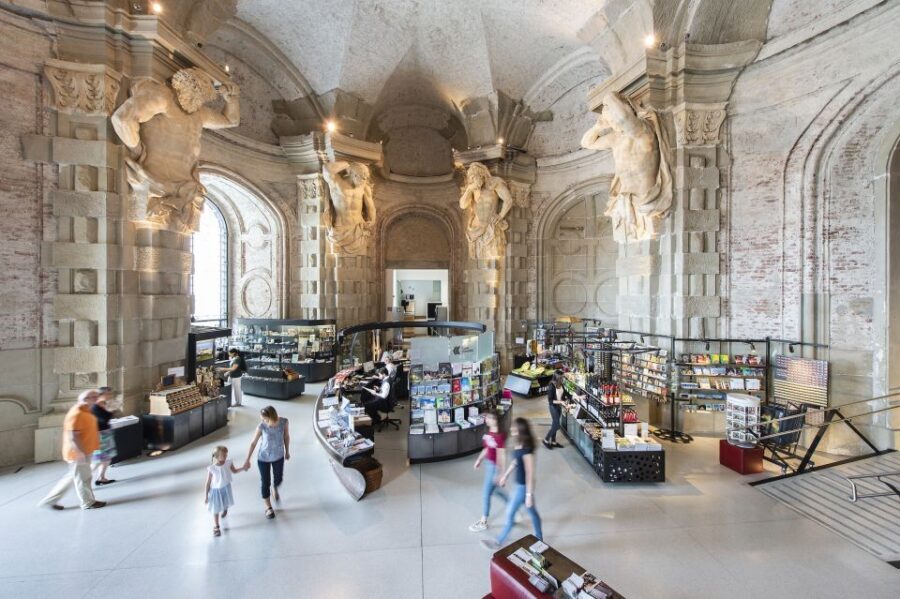
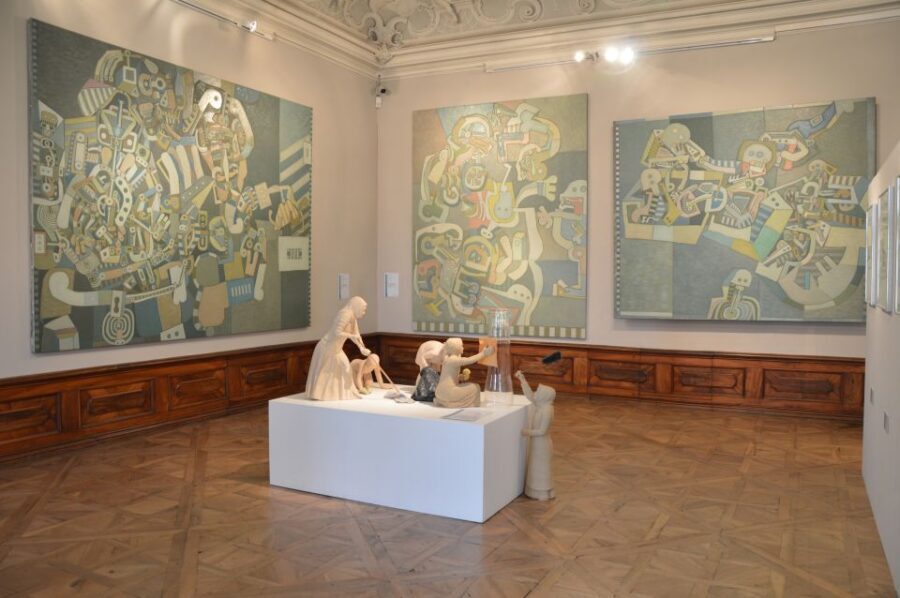
Your ticket includes access to an annual exhibition from May to November. If you’re visiting during those months, factor in time for this. Exhibitions can add variety and help you place the abbey’s collection and themes into a current curatorial context, even when the abbey’s core identity remains unchanged.
You also have access to the Abbey Museum on weekends and public holidays. That detail matters because it can change the feel of your day trip. If the museum is open, you’ll get more space to slow down, read, and connect the dots between the Treasure Chamber, the church spaces, and the broader institutional role of the Canons.
If you’re traveling outside May–November or on a weekday, you might have a tighter museum rhythm. That’s not a problem, just means you’ll want to lean more heavily on the main guided tours and the included indoor spaces you can access year-round.
A realistic one-day schedule that keeps you from sprinting
You have a 1-day ticket, so the key is using your time around guided tours and letting the rest of the day breathe. You also don’t want to spend the whole day running from room to room inside the abbey complex.
Here’s a solid way to think about your flow:
- Start with the Treasure Chamber so you get the story foundation early.
- Fit the Grand Abbey Tour into your mid or late part of the day (it runs daily at 12:30 and 3:00, and it’s about 90 minutes).
- Plan your day so the Winery Tour at 1:00 PM works smoothly. Because it’s at a fixed time, everything else should orbit it rather than compete with it.
For the unstructured time, use it for windows and wandering. The views are better when you aren’t trying to get somewhere else five minutes later. Also, if you’re in the May–November window and the annual exhibition is running, that’s a good place to spend time after your main highlights, when you’re mentally ready for more detail.
I like giving myself a little buffer between guided tours. It keeps the day from turning into an anxiety march, especially if the site is busy.
Price and value: why $23 can feel fair
At about $23 per person for a full day that includes multiple guided components and key access points, the value is in the combination.
You’re not only paying for entry. You’re paying for:
- admission to the Treasure Chamber
- access to the annual exhibition when it applies (May–November)
- access to the Abbey Museum when it applies (weekends/public holidays)
- a guided Grand Abbey Tour with audio support
- a guided Winery Tour with a wine tasting
- an audio guide in 14 languages
That combo matters because it turns “just another abbey visit” into something with multiple payoffs: art and artifacts, architectural highlights, scenic views, and wine tasting. Many day trips in this price range give you one strong thing. Here, you get a few strong things, and they’re spaced across the day so you can actually enjoy them.
One small thing to consider: since tours are guided in German, the audio guide becomes part of the value. Bring headphones, and you’ll feel like you’re getting your money’s worth. Skip the audio for long stretches and the experience will feel flatter.
Getting there and meeting up: make your life easy
Your meeting point is outside the front entrance. That sounds obvious, but it’s where day trips often fall apart. From Vienna, public transport is usually the easiest option, yet the last steps to the exact entrance can still be annoying depending on the day’s signage and crowd levels.
Do this: check your route ahead of time and aim to arrive early enough to find the front entrance calmly. If you’re relying on an app for directions, keep in mind that sometimes the last-mile guidance is wrong or incomplete, so don’t wait until the final street corner to troubleshoot.
Also, if you’re visiting around local festival periods, special conditions can pop up. For example, during a week tied to the Leopold Fest, entrance may be free. That’s worth checking for your exact travel dates, because it could change the financial value of your plan.
Who this trip suits best
This is a great fit if you want:
- a low-stress day trip near Vienna that’s more than a quick photo stop
- a mix of art, architecture, and church spaces plus wine
- guided context without feeling like you need advanced knowledge
It also works well for couples, solo travelers, and groups who want a common plan. If you love wine and want history without a heavy academic vibe, this is especially satisfying because you get guided storytelling in both the abbey and the winery.
If you’re sensitive to language barriers, plan to use the audio guide actively. The tours themselves are guided in German, but the audio guide is built to help you keep up.
Should you book the Klosterneuburg Abbey ticket?
Yes, I’d book it if you want a one-day experience that balances views, historic interiors, and wine tasting. The price looks fair when you consider what’s included, especially the guided winery tour with tasting.
I would hesitate only if you strongly dislike guided tours in a non-English language and don’t want to use the audio guide. Otherwise, this is a smart choice for a day outside Vienna that still gives you a major payoff without complicated planning.
FAQ
FAQ
How long is the Klosterneuburg Abbey ticket experience?
The ticket is valid for 1 day.
What’s included with the ticket?
You get admission to the Treasure Chamber, access to the annual exhibition (May–November), access to the Abbey Museum (weekends and public holidays), a guided Grand Abbey Tour, a guided Winery Tour with wine tasting, and an audio guide in 14 languages.
Are the guided tours in English?
The guided tours are held in German, but you can use the audio guide in 14 languages.
When can I visit the annual exhibition?
The annual exhibition is available from May to November.
When is the Abbey Museum open?
The Abbey Museum is open on weekends and public holidays.
Where do I meet for the tour?
The meeting point is outside the front entrance.
Are pets allowed?
Pets are not allowed, but assistance dogs are allowed.