REVIEW · VIENNA
The Viennese Sound of Music Tour & Ticket to Strauss Museum
Book on Viator →Operated by Vienna Local Guide · Bookable on Viator
Vienna’s composer trail is still the best kind of sightseeing. This Sound of Music–themed tour strings together Mozart and Strauss landmarks with real music-hall context, and it also ends with an included museum visit instead of just a photo stop. I especially like the small group size (max 15) and the fact that you get a guide who’s clearly a music specialist, with help for things like concert tickets. One thing to consider: it’s a lot of walking in one afternoon, so moderate stamina helps.
You’ll start at the Vienna Music Society outside the Musikverein, then move through major sites tied to composers—churches, opera, a living Mozart address, and more—before finishing at the Johann Strauss Museum next to the Naschmarkt area. It’s priced at $47, which is good value here because many stops are marked free, and you also get paid time inside the museum at the end.
In This Review
- Key highlights worth planning around
- A $47 Vienna music tour that mostly pays for itself
- Where to start at 1:00 pm and how the pace feels
- Stop-by-stop: Musikverein, Karlskirche, Stadtpark, and the Vienna you can see
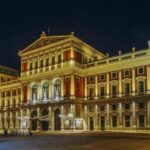
- Musikverein: the Golden Hall and the New Year’s broadcast legacy
- Karlskirche (Saint Charles Church): a church that remembers Vivaldi
- Stadtpark: composer monuments in a public space
- Mozarthaus Vienna: Mozart’s former home still standing
- The big landmarks: St. Stephen’s, the Teutonic Order Church, and the opera house atmosphere
- St. Stephen’s Cathedral: the city landmark setting the scene
- Church of the Teutonic Order: a historical concert-hall link
- Wiener Staatsoper: why the opera still defines the city
- The included finish at the Johann Strauss Museum (and why you should plan extra time)
- Getting a classical concert after the tour: ask for ticket recommendations
- What the guide adds (beyond facts you can read online)
- Price and value check: what’s included vs. what you’ll fund yourself
- Who this tour fits best (and who might want a different plan)
- Should you book this Vienna Sound of Music tour?
- FAQ
- How long is the Vienna Sound of Music Tour & Ticket to Strauss Museum?
- What time does the tour start, and where do I meet?
- Where does the tour end?
- Is the Johann Strauss Museum ticket included?
- Are the other stops paid-entry attractions?
- Does the tour include a classical concert ticket?
- How big is the group?
- Ending thought
Key highlights worth planning around
- Musikverein’s Golden Hall context: the New Year’s Concert is tied to this venue and broadcasts to 90 countries.
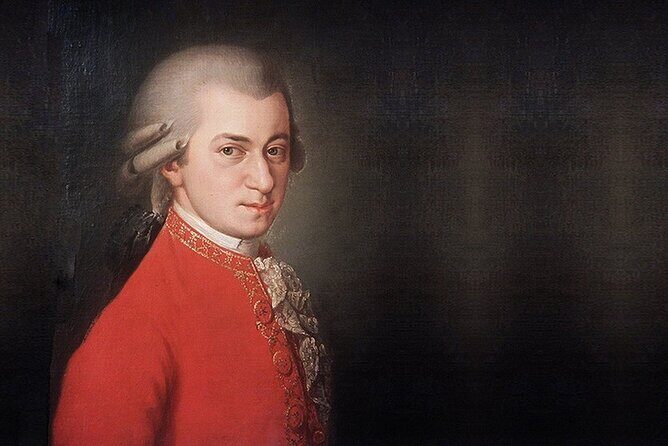
- Mozarthaus Vienna stop: you’ll see Mozart’s former home in a surviving apartment building linked to his Vienna life.
- Tiny-group feel (max 15): more room for questions and real conversation, not just marching along.
- Museum time included at the finish: you get tickets and can stay as long as you like.
- Guide support for a classical concert: you can ask for ticket recommendations after the tour.
A $47 Vienna music tour that mostly pays for itself
At $47 for roughly 2 hours 30 minutes, this tour is aiming for a sweet spot: lots of famous locations, but not a full day of paid-entry ticket stacking. The key value is that several major stops are listed as free admission tickets, so your money goes into the guide’s stories and the final included museum entry rather than constant add-on fees.
Also, the structure matters. This isn’t just sightseeing with facts tacked on. It’s built around the venues where Vienna’s composers performed and lived—so the buildings don’t feel like random pretty landmarks. You start connecting the dots between music, architecture, and the people who shaped the sound of the city.
You can also read our reviews of more tours and experiences in Vienna
Where to start at 1:00 pm and how the pace feels
The meeting point is the Vienna Music Society at Musikvereinspl. 1 (1010 Vienna). The tour starts at 1:00 pm, and it ends at the Johann Strauss Museum – New Dimensions (Friedrichstraße 7, 1010 Wien).
Because it’s a walking tour, the practical point is timing and energy. You’re moving between church courtyards, plazas, and major buildings with short breaks at each stop. The total time is about 2 hours 30 minutes, but the final museum stop gives you a more relaxed chunk (about 1 hour 15 minutes) where you can slow down and read at your own pace. If you’re the type who likes to linger for photos, bring that energy early—the last part gives you room to breathe.
Stop-by-stop: Musikverein, Karlskirche, Stadtpark, and the Vienna you can see
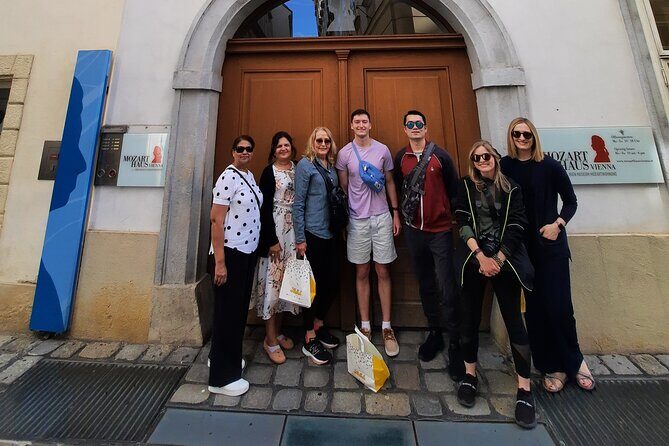
Each stop is short, which keeps the tour lively, but it also means you’ll want your phone charged and ready for quick details. Here’s what you can expect, and why each one is worth the few minutes.
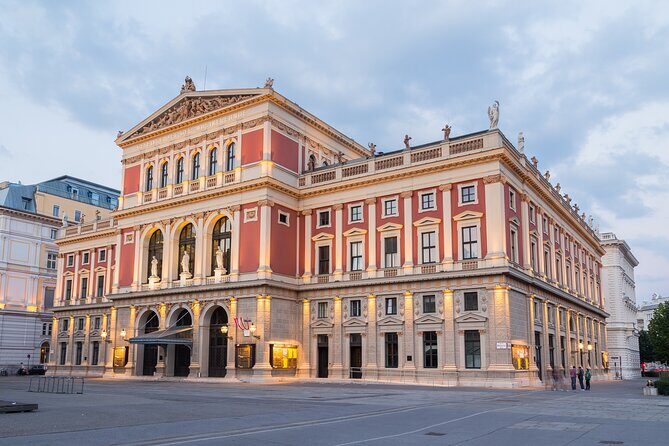
Musikverein: the Golden Hall and the New Year’s broadcast legacy
You begin at the Musikverein, Vienna’s famous concert hall. The Golden Hall is where the New Year’s Concert takes place, and it’s broadcast to 90 countries. That broadcast detail is more than trivia—it’s a reminder that Vienna’s music tradition isn’t just local romance. It’s a global event tied to a specific room and a specific acoustical tradition.
Tip: even if you don’t hear music that day, looking at the hall in person helps your brain “place” later concerts you might watch or attend.
Karlskirche (Saint Charles Church): a church that remembers Vivaldi
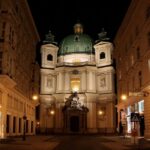
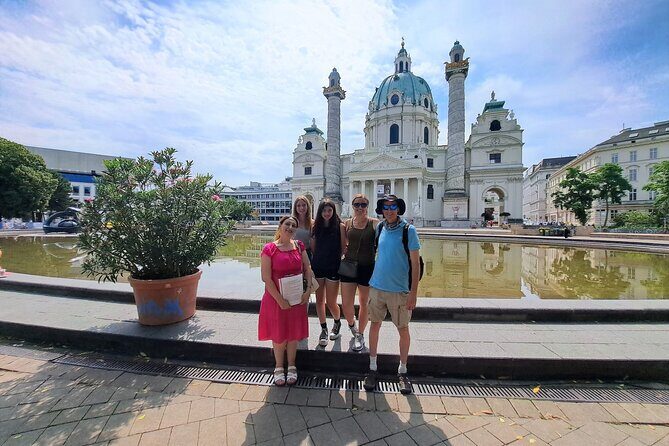
Next is Karlskirche, known as the church of Saint Charles. This stop includes a specific music tie: it’s associated with Vivaldi concerts held in memory of the Italian composer. That’s a great reminder that in Vienna, musical life isn’t only about stages like opera houses. Churches also function as cultural spaces where music is part of the identity.
Drawback to note: the stop is listed as brief, so you’ll get the music connection more than a long interior visit.
You can also read our reviews of more museum experiences in Vienna




Stadtpark: composer monuments in a public space
Then you head to Stadtpark, where you’ll see monuments to famous composers, including Johann Strauss and Franz Schubert. This matters because it shows how Vienna keeps its composers “in view.” You’re not searching for names in history books—you’re seeing them in the city’s walking rhythm.
If you like turning sightseeing into a mini scavenger hunt, this is a satisfying stop: you’ll look at statues and then your guide’s stories connect them back to music life.
Mozarthaus Vienna: Mozart’s former home still standing
At Mozarthaus Vienna, you’ll visit Mozart’s house and museum. The standout detail is that it’s described as the only one of Mozart’s 13 Vienna apartments still standing today. That alone makes the stop feel concrete and rare: you’re looking at a real address tied to the life of the composer, not a vague “in this neighborhood” approximation.
Keep an eye out for your guide’s framing here. When Mozart’s presence is explained through locations like this, Vienna feels less like a postcard and more like a chain of lived moments.
The big landmarks: St. Stephen’s, the Teutonic Order Church, and the opera house atmosphere
After the Mozart connection, the tour pivots into Vienna’s “where music happens” landmarks: major churches, performance spaces, and the opera world.
St. Stephen’s Cathedral: the city landmark setting the scene
You’ll also pass St. Stephen’s Cathedral, one of Vienna’s best-known landmarks. This stop is short, but it does a useful job: it anchors you in the central identity of the city. When a guide links a grand landmark like this to composer-era Vienna, your mental map gets sharper fast.
Church of the Teutonic Order: a historical concert-hall link
The Church of the Teutonic Order is another music-linked stop tied to performance history, described as a historical concert hall where Mozart performed. This kind of detail can change how you look at a church from just architecture to a venue that shaped real musical moments.
Even if you don’t have time for deep reading here, hearing that Mozart performed in a space like this gives the visit meaning.
Wiener Staatsoper: why the opera still defines the city
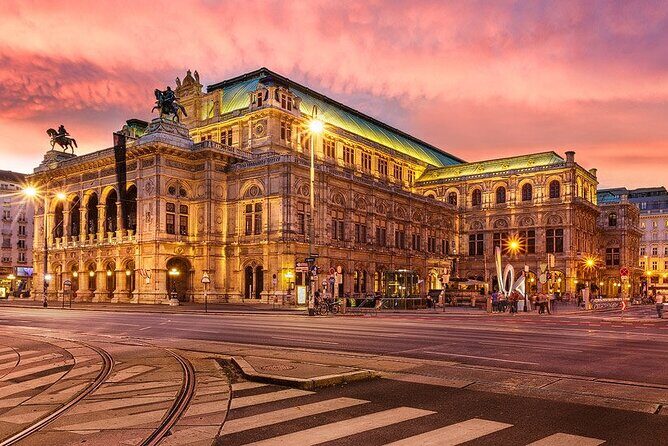
You’ll also see Wiener Staatsoper, the Vienna State Opera. It’s described as one of the most important music halls in Vienna, and the guide’s job is to connect what makes it important to the people and periods that fed Vienna’s musical reputation.
If you love opera or just like the idea of stepping into a real performance culture, this is a strong stop. The building’s scale and presence do part of the work for you.
The included finish at the Johann Strauss Museum (and why you should plan extra time)
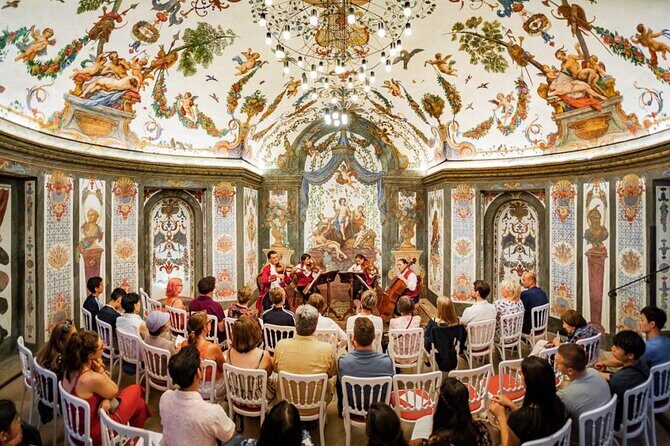
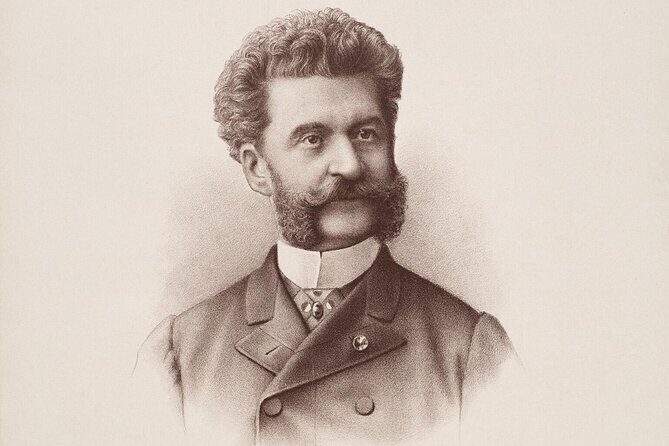
The tour ends at the Johann Strauss Museum – New Dimensions at Friedrichstraße 7. You’re given your tickets included for entry, and you can stay as long as you wish during the included time slot (about 1 hour 15 minutes).
This is a smart finish for two reasons:
- It gives you a calmer segment after lots of short street stops.
- It lets you connect the names you saw earlier—especially Strauss—with an indoor, self-paced learning environment.
If you’re a detail person, this is where you’ll likely slow down: read exhibits, look at memorabilia, and make your own connections without the time pressure of the walking format. And because the museum is described as near the Naschmarkt area and opposite the Secession museum (with the Opera and Charles Square about a 5-minute walk away), it’s also an easy launch point for what you do next.
Getting a classical concert after the tour: ask for ticket recommendations
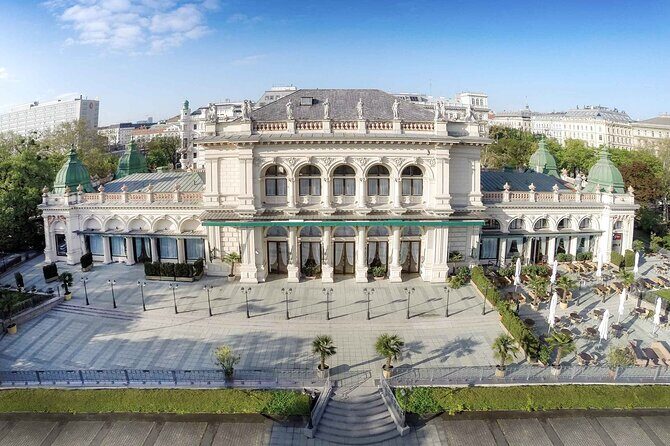
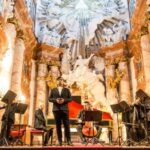
The tour includes a built-in suggestion: after you finish (or around the end), you can ask your guide for recommendations for a classical concert and ticket options.
Important practical note: the concert itself isn’t clearly included in the provided info—so treat this as guidance, not a guaranteed entry ticket. Still, this is valuable. A local guide can point you toward good timing and realistic options based on what’s on during your visit window.
If you’re trying to reduce stress on your trip, this is the moment to ask questions like:
- what’s most convenient that night
- what kind of program you’ll likely hear
- how early you should line up or book
What the guide adds (beyond facts you can read online)
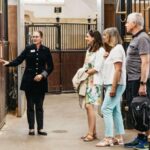
The guide experience is where this tour really earns its keep. Many reviewers highlighted the guide as an engaging storyteller and a music history specialist. One review specifically mentions a guide named Nicoletta—not only passionate about music history, but also helpful with practical extras like tourist tip materials and even photo help when the group was tiny.
That group dynamic matters. This tour caps at 15 travelers, and in at least one case it was even smaller. In real terms, that means you’re more likely to get:
- clearer answers to questions
- better photo angles (instead of waiting for the group funnel)
- more back-and-forth about what you’re seeing
You’ll also see multiple reviewers mention extra printed materials like a booklet with sightseeing tips and a map. Even if your specific set is different, the pattern is consistent: guides here try to send you away with something useful for the rest of your Vienna days.
Price and value check: what’s included vs. what you’ll fund yourself
Here’s the money picture in straightforward terms:
- $47 total price
- In-person guide is included
- Many stops are listed with admission ticket free (at least for the sights named along the route)
- Johann Strauss Museum entry is included, plus you can stay as long as you wish during the included time
- Tips aren’t included (so you decide based on how the service feels)
Also, it’s a mobile ticket format, so you’ll want your phone ready before you meet.
If you’re comparing options, don’t just look at cost. Look at what you’re getting for that cost: guided context at multiple landmark stops, plus museum entry at the end. That combination is often better value than paying separately for one attraction while skipping guided context.
One more practical note: the experience is stated to require good weather, and there’s free cancellation up to 24 hours in advance, with a full refund if you cancel on time. If it’s canceled due to poor weather, you’re offered a different date or a full refund.
Who this tour fits best (and who might want a different plan)
This is a strong fit if you:
- like music in a way that goes beyond just hearing a piece
- want real place-based context for Mozart and Strauss
- appreciate short, story-led stops with a guided pacing
- want a small-group feel instead of a crowded stampede
It’s also a good choice for families with musically interested kids. One review specifically noted that children enjoyed the tour and that the guide used funny stories to keep it lively, especially since the family members study instruments like piano and viola.
If you’re looking for a deeply detailed museum day, this might not be your full answer by itself. It’s a walking tour with short stops plus a museum finish, so the indoor time is concentrated at the end. If you want multiple long museum hours, you’ll likely add that afterward.
Should you book this Vienna Sound of Music tour?
Book it if you want a guided walk that links famous composer names to the actual buildings and venues you can stand in. The value is strong because so many stops are admission-free on the route, and the end includes Johann Strauss Museum entry with time to explore. The small group cap also makes it feel personal, and the guide support for a concert recommendation is a nice bonus if you want to turn the day into live music too.
Skip it only if you strongly prefer slow, long sit-down museum time from the start, or if walking for an afternoon doesn’t work for your schedule. In most cases, though, this is the kind of tour that helps Vienna make sense quickly—one music landmark at a time.
FAQ
How long is the Vienna Sound of Music Tour & Ticket to Strauss Museum?
It’s about 2 hours 30 minutes.
What time does the tour start, and where do I meet?
The tour starts at 1:00 pm. You meet at Vienna Music Society, Musikvereinspl. 1, 1010 Wien.
Where does the tour end?
The tour ends at the Johann Strauss Museum – New Dimensions, Friedrichstraße 7, 1010 Wien.
Is the Johann Strauss Museum ticket included?
Yes. You receive tickets to enter the museum, and you can stay as long as you wish during the included time.
Are the other stops paid-entry attractions?
The listed admissions for the stops along the route are marked as free. The museum admission is the included paid component at the end.
Does the tour include a classical concert ticket?
The tour finishes with a recommendation for a classical concert, and you can ask your guide for ticket recommendations. The concert ticket itself is not stated as included.
How big is the group?
The tour has a maximum of 15 travelers.
Ending thought
If you want Vienna to feel like music lived in real places, this tour is a practical way to do it—Mozart, Strauss, opera, and church venues all connected by a guide who knows how to tell the story.