REVIEW · VIENNA
Vienna: Time Traveling Virtual Reality Sightseeing Tour
Book on GetYourGuide →Operated by VR Tours Vienna · Bookable on GetYourGuide
Vienna’s past gets 360-degree proof. This VR sightseeing tour takes you through six key scenes while you walk a short, flat route in the old town. I particularly like the mix of live storytelling and the headset scenes that make big events feel close, not like textbook chapters. One thing to think about: the VR visuals can feel a bit dated or slightly blurry in a few moments, so manage expectations if you’re picky about image quality.
You also get a strong practical setup: a real guide in English and German, plus an audio track in several languages. I’ve seen how guides like Julian (English and German) can make the pacing easy, and how another guide, Dr. Reiner, brings a helpful, research-backed calm to the show. If you’re in a mixed-language setting, I’d also plan to pay attention to the language group you’re assigned, because translation can get tricky.
In This Review
- Key highlights you’ll actually feel during the tour
- Why this VR walking tour is a great way to start in Vienna
- Check-in at Neuer Markt 6 and what the experience feels like on the ground
- The walking route: short, flat, and designed for time well spent
- The 6 VR chapters: from White Sunday to the last days of WWII
- 1) White Sunday procession, 1483: ceremony in the open
- 2) Ottoman threat, 1683: the second siege brings real danger
- 3) The plague and Augustin: darkness, then humor and song
- 4) Hofburg on a sunny day: Sisi and Emperor Franz Joseph II
- 5) The Opera in the golden 20s: getting ready to perform
- 6) St. Stephen’s Square: the cathedral burn and Soviet tanks
- Price and languages: what you get for $45
- VR headset expectations: fun, but not a cutting-edge game
- Who should book this tour (and who might skip it)
- Should you book this time-travel Vienna VR tour?
Key highlights you’ll actually feel during the tour
- 360-degree VR scenes tied to real places in Vienna’s center
- Six time periods stitched into a simple walking flow
- Live guide plus multilingual audio, so you can follow along comfortably
- A surprisingly dramatic storyline, from processions and sieges to plague fear and WWII’s final days
- Short route (3.2 km on flat ground) that doesn’t chew up your whole day
- Turquoise-door check-in that’s designed to get you out of the cold fast
Why this VR walking tour is a great way to start in Vienna
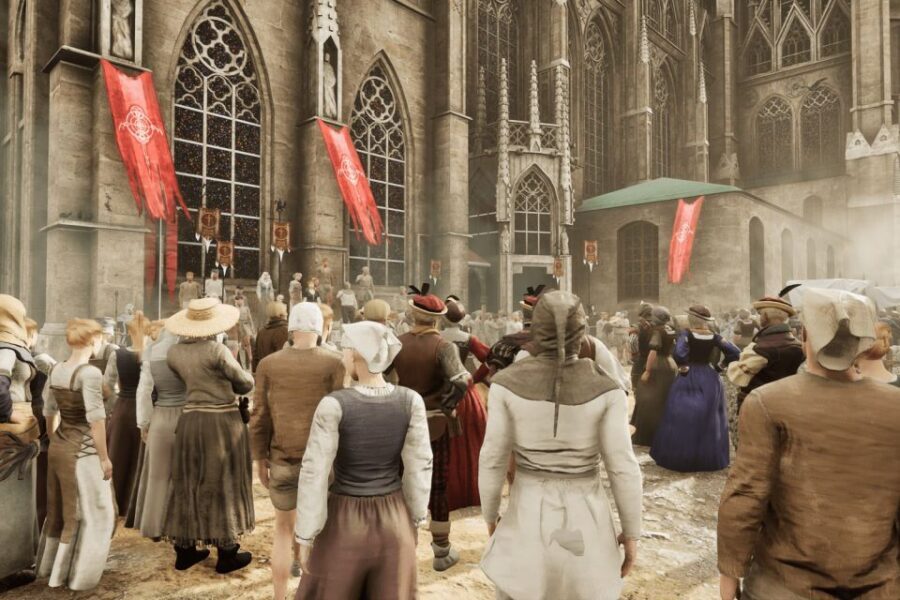
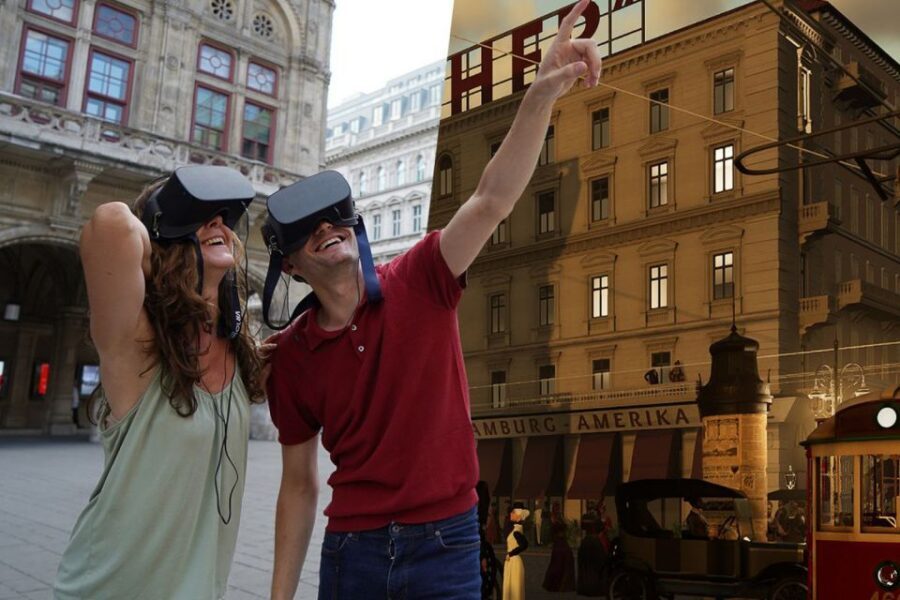
If you like your history with street-level context, this tour hits a sweet spot. You’re not stuck in a dark room all day. You walk Vienna’s old-town lanes, listen to a guide and audio, then “time jump” at specific stops using VR glasses. The result is a tour that helps you place what you’re seeing later—churches, squares, palaces—because you’ve already tied them to major turning points.
I also like that the story line doesn’t just list dates. It shows how Vienna became what it is: a city shaped by ceremony, power, fear, survival, and culture. One moment you’re watching a public religious procession. The next, you’re bracing for siege-era danger. Then the mood shifts again to plague darkness and—yes—humor and music. That emotional variety keeps it from becoming a single-tone lecture.
The value for your $45 comes from bundling three things that usually cost more separately: a guided history walk, VR glasses, and earphones for an audio guide in multiple languages. It’s also only about 100 minutes, which makes it easier to fit into a first or second day schedule.
You can also read our reviews of more tours and experiences in Vienna.
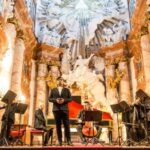

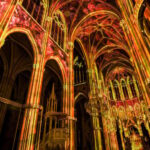
Check-in at Neuer Markt 6 and what the experience feels like on the ground
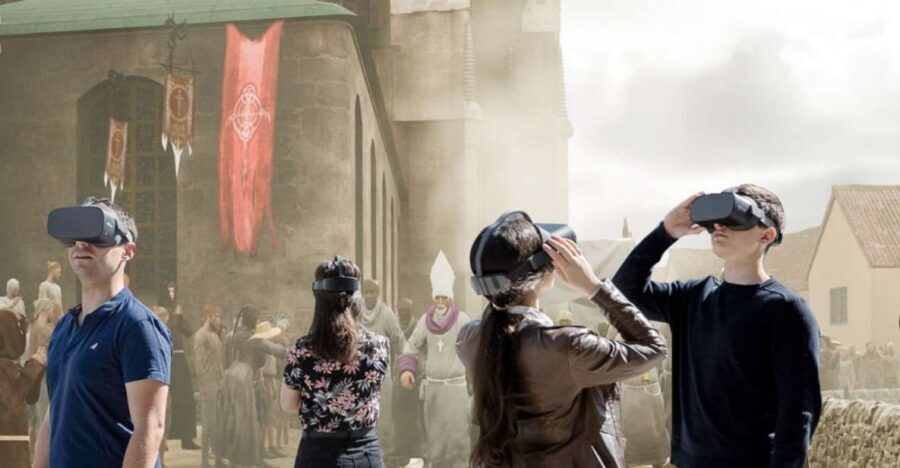
The tour starts at Neuer Markt 6. Plan to arrive 15 minutes early, and look for the turquoise entrance. This detail matters because you want time to get your headset sorted before you’re shepherded into the walk-and-VR rhythm.
Once you’re set, the structure is straightforward:
- you walk through Vienna’s streets with the guide and audio running,
- you stop at a handful of points,
- then you put on the headset for the VR scene tied to that spot,
- then you move on.
This pacing is smart for first-time visitors. You get that quick “I know where I am” feeling because you’re physically in the area, not just watching a screen from afar.
Two guide notes from real-world impressions: Julian is noted for speaking both German and English clearly, and Dr. Reiner is praised for being knowledgeable and helpful. That matters because VR tech can feel fiddly at the start. A calm, step-by-step guide makes it smoother.
The walking route: short, flat, and designed for time well spent
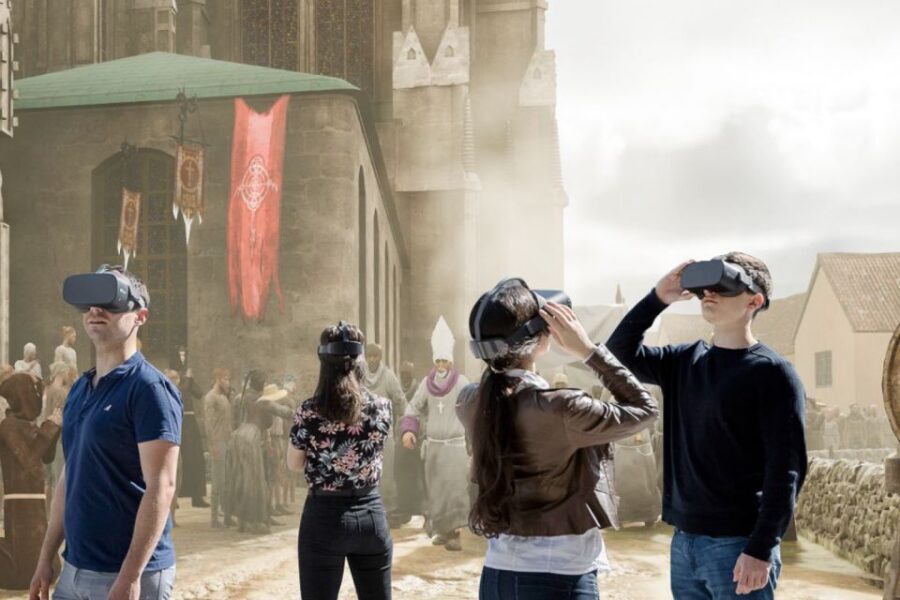
The route covers about 3.2 kilometers over flat terrain. That distance doesn’t sound huge—because it isn’t. Still, you should expect regular walking through streets in the old town, plus short waits at VR stops.
As for total length, the experience is described as 100 minutes (often running around 105 minutes in the tour flow). It’s long enough to tell a real story, short enough that you won’t feel stranded when you’re done.
A practical heads-up: the tour might be canceled due to poor weather, like heavy rain or a storm. If conditions worsen quickly, the call can come at the last minute. If you’re traveling on a tight schedule, it’s wise to keep one flexible time slot for this.
The 6 VR chapters: from White Sunday to the last days of WWII
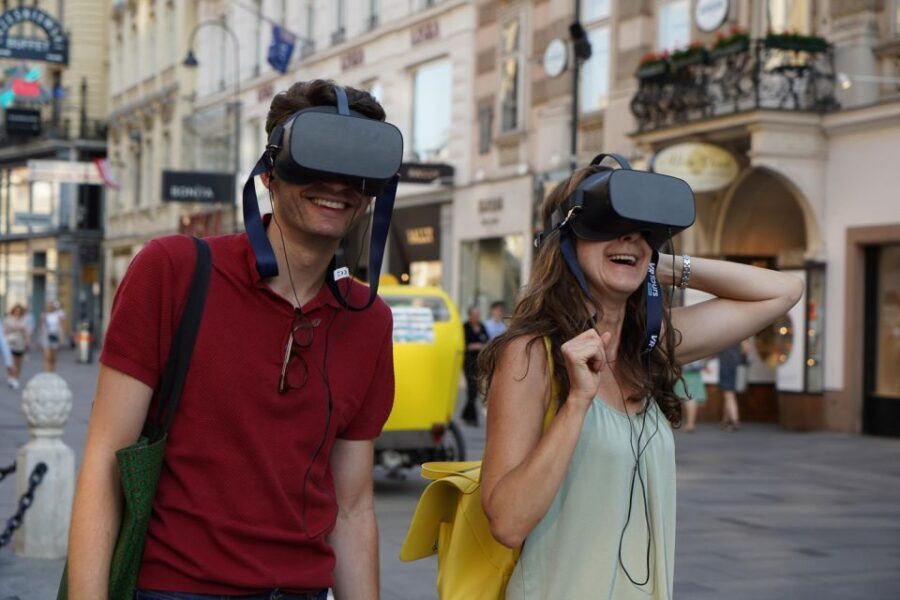
The heart of the tour is six major scenes—each one anchored to the city you can see around you. Think of it as a guided timeline where VR supplies the “what it felt like,” and your walk supplies the “where it happened.”
1) White Sunday procession, 1483: ceremony in the open
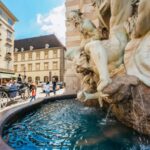
You’ll join a procession on White Sunday in 1483, one of those rare occasions when ornaments were brought out and shown to the public. This scene is valuable because it shows Vienna as a social stage, not just a pile of buildings. You understand why public ritual mattered—and how the city looked when it wasn’t trimmed down to today’s quiet streets.
If you like details, pay attention to how the tour describes what you’re seeing and why it mattered. It’s the kind of context that helps you later when you stand in front of the same gothic and baroque landmarks.



2) Ottoman threat, 1683: the second siege brings real danger
Then the mood turns. You’ll take cover as the Ottoman Empire carries out another siege during the second siege in 1683. This isn’t delivered as a distant “war was bad” statement. It’s staged to make you feel the panic and urgency that came with the threat to a major European city.
It’s a good reminder that Vienna’s identity was shaped by survival and defense as much as by music and art.
3) The plague and Augustin: darkness, then humor and song
After the siege-era fear, you’ll experience the darkness during the plague that killed half of Europe. This segment matters because it doesn’t stay only on the gloom. You also learn about Augustin, a singer who showed that Vienna could survive even after terrible times—with humor and music.
That choice is smart. It prevents history from feeling like a grim hallway with no exit. Instead, you see how art and performance helped people cope when life was terrifying.
4) Hofburg on a sunny day: Sisi and Emperor Franz Joseph II
Next you’ll walk around the Hofburg area on a sunny day and meet Empress Sisi and Emperor Franz Joseph II during a hunting trip. There’s a playful touch here: the tour notes that you’re standing very close to the road, so don’t forget the little instruction to wink.
I like scenes like this because they humanize power. You start imagining the court as people moving through real streets and real routines, not just statues and portraits.
5) The Opera in the golden 20s: getting ready to perform
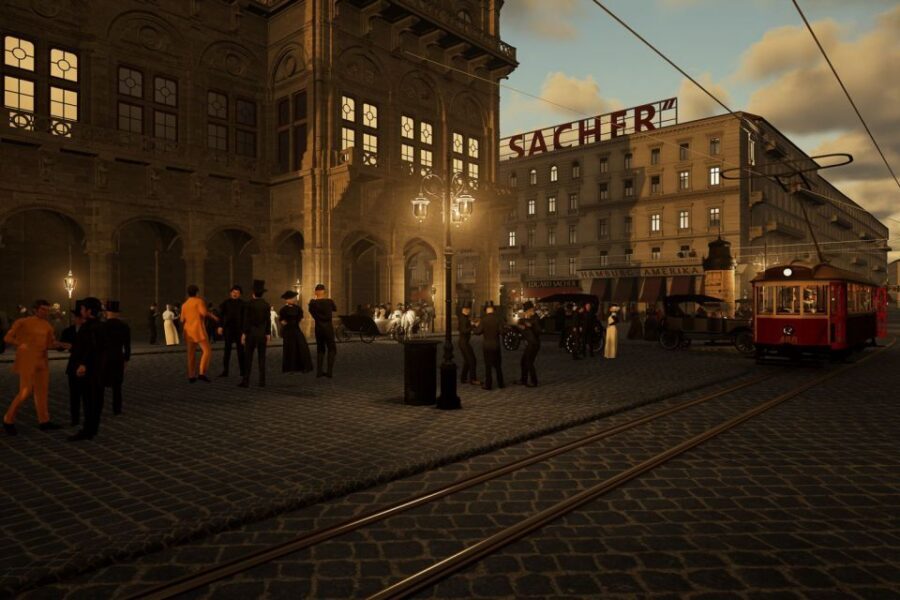
At the Opera, the tour shifts into Vienna’s golden 20s. You’ll see how people prepared for an opera performance, and you’ll get a sense of the mood and expectations around culture at that moment.
One consideration: a couple of people noted that some VR moments in this era don’t always include everything you might expect (like missing elements such as dancing). It doesn’t ruin the tour, but it’s worth knowing if you’re the type who expects cinema-level animation.
6) St. Stephen’s Square: the cathedral burn and Soviet tanks
The final scene lands at St. Stephen’s Square. You witness the cathedral burning in the last month of the terrible Second World War, then see the Soviet army driving the last German soldiers out.
This is the tour’s most intense closing chapter. Even if you already know the broad facts, the VR staging helps you feel the shock and finality of that period. You also walk away with a stronger emotional memory of where you are—because you’re not just seeing a famous church; you’re remembering a turning point.
Price and languages: what you get for $45
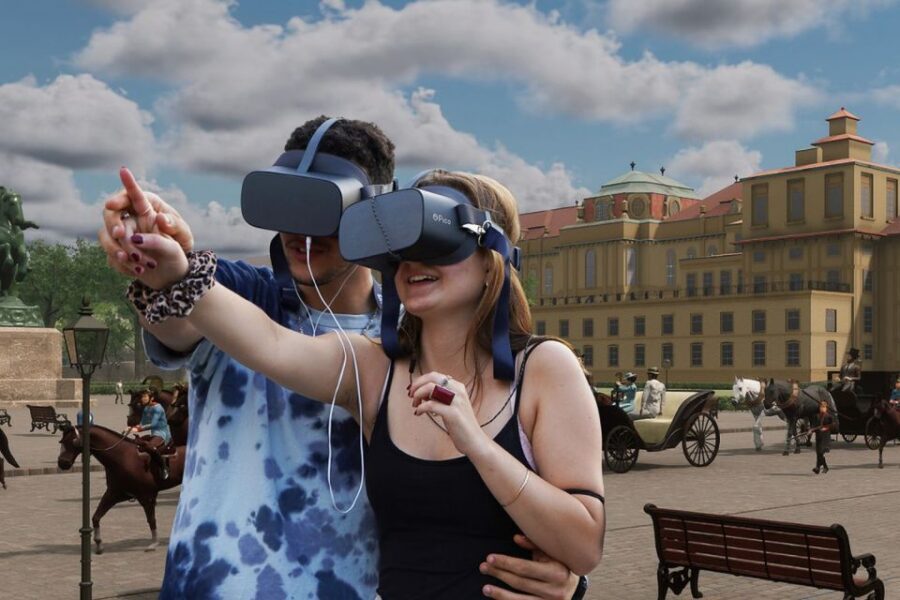
At $45 per person for about 100 minutes, the main question is: what’s included that you wouldn’t get otherwise?
Here’s the practical breakdown you can count on:
- VR glasses
- Earphones for the audio guide
- a live tour guide in English and German
- an audio guide available in English, Spanish, Dutch, French, Italian, Russian
- VR content designed around six scene stops
- wheelchair accessible operation, with a flat route
What I like about the language setup is the flexibility. If you’re not perfect in German, you can still follow the audio track in your language while the guide speaks live. If you are bilingual, you may notice the pacing is easier when you’re listening to the live guide and matching it to the audio.
One drawback to keep in mind: if groups include multiple languages, the translation between English and German can become difficult. The best move is to join the language group that matches what you want to listen to most.
VR headset expectations: fun, but not a cutting-edge game
This is the part where you set yourself up for enjoyment. The VR scenes are powerful for storytelling, and people describe the experience as surreal in the best way—like you stepped into another world for a few minutes.
Still, some people found the VR visuals more like an older generation of VR, with slightly blurry or indistinct faces. In other words: the concept is excellent. The tech quality may not feel “new” to you if you’ve used the newest headset systems before.
Also, the experience is not 100% VR. Most of your time is still a walking history tour. You’ll listen to the guide and audio much more than you’ll watch VR the entire time. That balance is good for learning, but if your goal is constant headset immersion, you should adjust your expectations.
Who should book this tour (and who might skip it)
This experience makes the most sense if you:
- want a strong first-day orientation to central Vienna,
- like history told through specific places, not generic explanations,
- enjoy VR as a short, story-based tool rather than a high-end gaming experience,
- want a guided walk that stays around 1.5 hours.
It’s also explicitly not suitable for:
- children under 8
- people with epilepsy
And it may be a less comfortable fit for you if:
- you’re very sensitive to visual motion effects (since it includes VR),
- you expect hyper-sharp, modern VR graphics throughout.
Wheelchair users should be aware the route is flat and wheelchair accessible, which helps. If you use mobility aids, the short walk still means you’ll want a comfortable pace and time to stop at each VR moment.
Should you book this time-travel Vienna VR tour?
Yes—if you want a memorable history timeline tied to real streets. This tour is especially good for the first couple days when you’re still building your “mental map” of Vienna. The $45 price is reasonable because you’re getting VR glasses plus guided interpretation plus a multilingual audio guide, and you’re done in about 100 minutes.
Skip or reconsider if:
- you’re expecting the absolute latest VR visual quality,
- you’re traveling with young kids (under 8),
- you have epilepsy or strong concerns about VR visual effects,
- you can’t handle possible last-minute weather cancellations.
If you’re flexible with timing and you’re curious about how Vienna survived sieges, epidemics, and war—while still producing opera and court culture—this is a smart, hands-on way to see it.