The main thing to weigh is the cost and what it does and does not include—meals beyond breakfast are on you, and lunches/dinners aren’t part of the package. If you’re hoping for a fully “all-in” food plan, you’ll want to budget meals (and plan lunch stops) so you don’t feel shortchanged.
Prague and Budapest in 3 days: what you’re really paying for
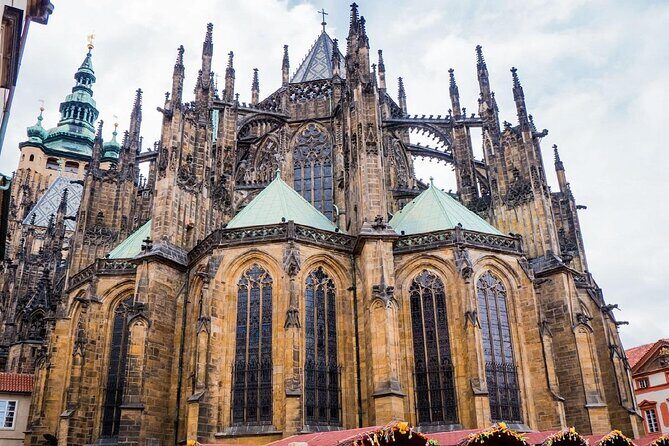
This tour is priced at $1,930.73 per person, and that number only makes sense when you look at the moving parts you’re buying. You get private pickup/drop-off in Vienna, intercity driving with a local driver, hotel nights in Prague and Budapest (3 or 4-star), and multiple guided walking tours with set time blocks.
If you divide that cost by what you’d normally pay for train/bus connections, timed guided tours, and two nights of hotel in central areas, it starts to feel less like a splurge and more like buying convenience. This is especially true if your group wants flexible pacing without switching between tickets, stations, and city transit plans.
One more practical detail: the hotel locations matter. In at least one account, the Prague hotel was a clear win for comfort and convenience, while the Budapest hotel was more “okay” than standout. Either way, you’re not stuck out on the edge.
Vienna to Prague: door-to-door transfer that sets the tone
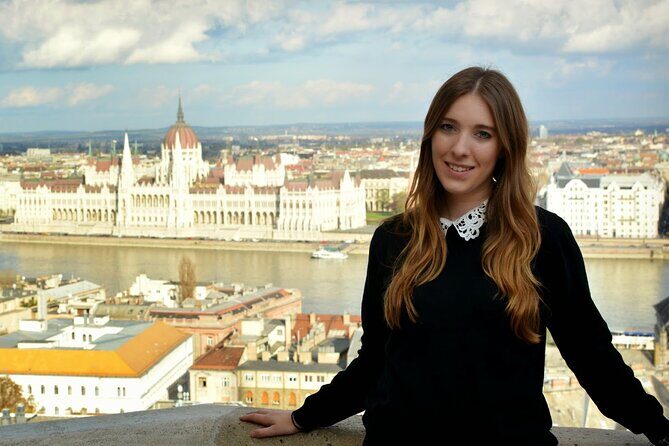
Day 1 starts with a private transfer from Vienna to Prague, with pickup from your hotel or another spot in Vienna. That matters more than it sounds. You avoid the morning scramble, you arrive with luggage sorted, and your day begins with a local guide already in the picture.
When you reach Prague, you’re greeted by your local guide and taken straight into the old town walk. There’s also a note that timing includes about 3 hours for this segment and that the admission for the initial transfer day is listed as free—so the day is structured, not open-ended.
If you’re the kind of person who hates “figure it out” travel, this style will feel friendly. If you love total freedom, you may still enjoy it because the guided portion is only a chunk, and the rest of the day gives you breathing room.
Prague Old Town walking tour: Castle, Charles Bridge, and the big squares
The core of Day 1 is a 3-hour walking tour of Prague Old Town. You’ll spend time on the historic side of the city, focused on landmarks that people travel specifically to see.
Expect to hit the following themes:
- Prague Castle as a UNESCO World Heritage anchor
- Charles Bridge, with baroque statues lining the crossing
- Old Town Square and its Gothic architecture, plus street performers adding motion to the scene
What I like here is the order. You get the “wow” sights in a logical flow, and your guide can point out details you’d probably miss while taking photos and checking your map.
A possible drawback: the itinerary is sight-heavy, so you’ll want comfortable shoes. Also, the Charles Bridge area can get crowded, so your best bet is to stay with the group and let your guide handle the pacing.
Lunch is listed as on your own at a traditional Czech restaurant option. That’s normal, but it’s worth planning this as part of your day budget—since you’re not getting included lunches or dinners later.
Free afternoon in Prague: how to make the 2 hours count
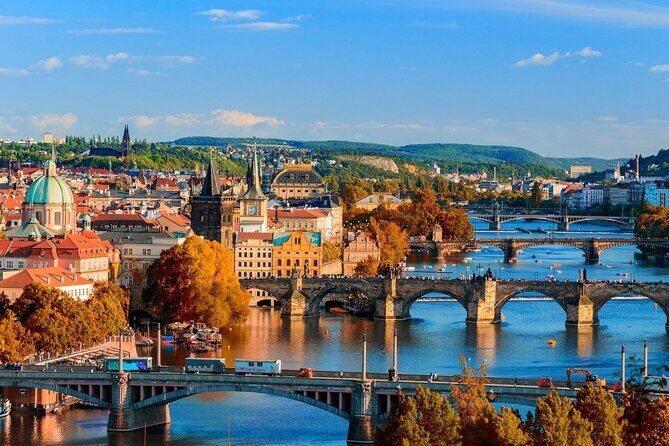
After lunch, you get a couple of hours to explore at your own pace and then check into your central Prague hotel. This is the portion that makes the tour feel less like a conveyor belt.
You might use this time for:
- wandering through the Lesser Town area
- hunting for quiet courtyards
- taking a breather near the Vltava River
If you’re deciding what to do in that free block, here’s an easy strategy: choose one “walk” goal and one “rest” goal. For example, pick a neighborhood to stroll and then reward yourself with a coffee or something warm before your evening.
This is also a good time to get your bearings. Prague is famous for turning easy-looking routes into winding passages. Two hours won’t be enough to master the city, but it will help you move around confidently when you return later.
Day 2 in Prague: Jewish Quarter, Vyšehrad, and Petřín views
Day 2 is your second Prague walk, and it shifts the mood. The guide-led time focuses on places tied to identity, perspective, and panoramic views.
You’ll spend about 3 hours on:
- the Jewish Quarter, with stories tied to Prague’s complex past
- Vyšehrad Fortress, which offers city outlooks
- Petřín Hill, including the miniature Eiffel Tower viewpoint and scenic cityscape angles
If you only do one guided day in Prague, this would be the day to ensure you get. It gives you a different layer than the Castle-and-Bridge route, and Vyšehrad plus Petřín are the kind of views you’ll remember even after the photos fade.
Practical note: this day involves walking uphill in spots (Petřín especially), so go in with realistic expectations. It’s not a marathon, but it’s not flat either.
Transfer to Budapest: the reset you’ll feel in your legs
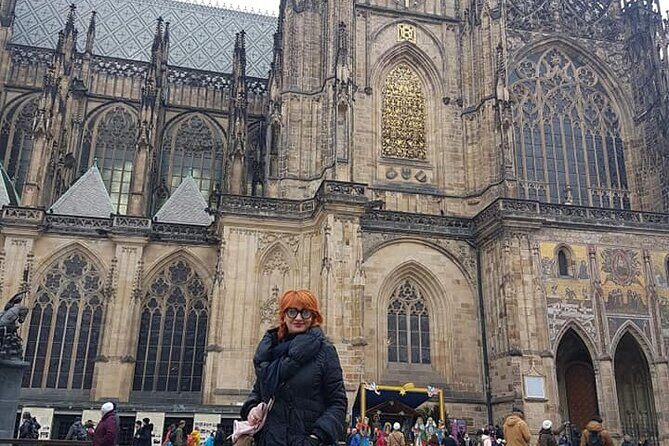
After breakfast, you finish the Prague exploration, check out, and then transfer privately to Budapest. The itinerary lists about 5 hours for the transfer segment, and your Budapest hotel check-in comes afterward.
That timing is a small but important perk. You’re not trying to squeeze a huge sightseeing day into the middle of a long move. You get a transport block, you arrive, you settle in, and you can decide whether to do a bit of evening wandering or keep it low-key.
One thing to keep in mind: this is a private tour for your group only, so the pace stays in your hands. If your group wants a quiet night, you’re not stuck waiting on other people’s energy levels.
Buda Castle District and Fisherman’s Bastion: the view-first morning
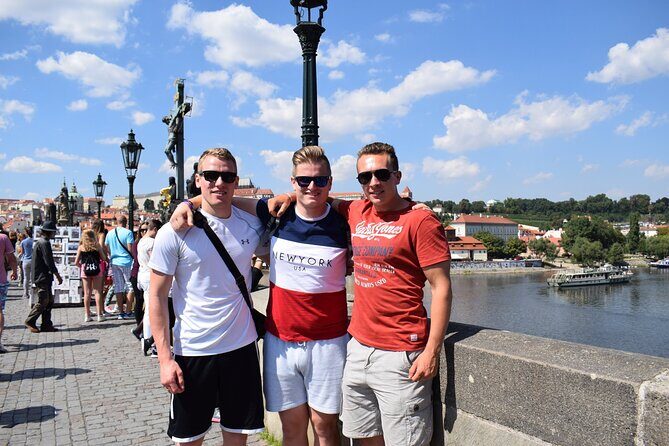
Day 3 starts with breakfast and a 3-hour walking tour in Budapest centered on the Buda Castle District. This area is the “postcard” side of Budapest for a reason, but the value here is that the walk is guided, so you get context while you’re looking.
The highlights on the route include:
- the Buda Castle District (UNESCO World Heritage area)
- Fisherman’s Bastion
- Matthias Church
I like morning tours because the light is better and you haven’t spent the whole day pacing through crowds yet. Also, with a guide, you’re more likely to find the best angles without stopping every 10 feet to study your phone.
As always: wear grippy shoes. Castle district streets and steps can be uneven. If you’ve got knee issues, plan for breaks and don’t try to outwalk your comfort level.
Heroes’ Square and the Danube cruise: skyline from street and water
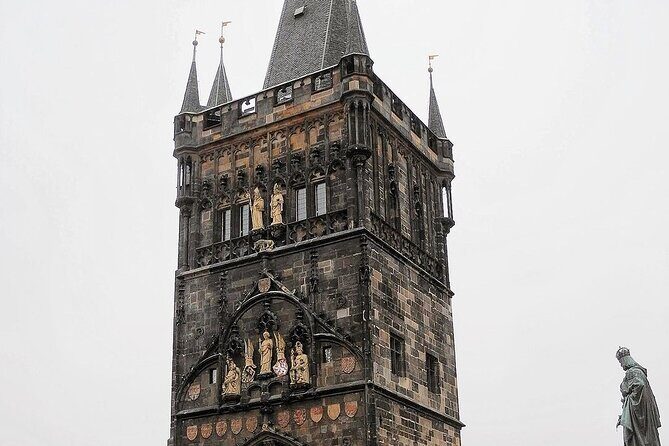
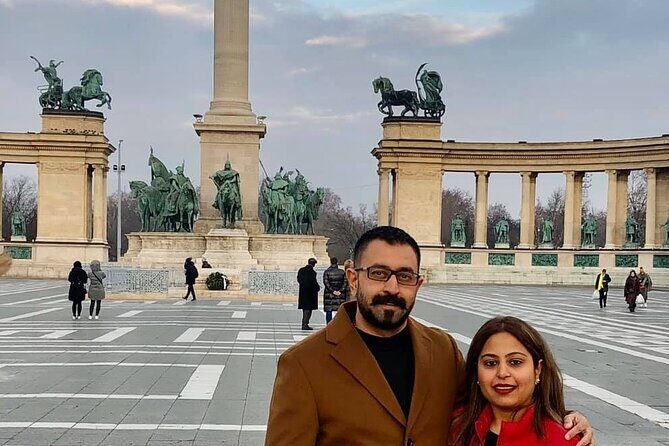
After the castle-area walk, you continue to Heroes’ Square for about 1 hour. Your admission is listed as included for that stop, and it’s a good anchor point for understanding the city’s public memorial landscape.
Then comes one of the most relaxing parts of the tour: a 1-hour Danube River cruise. You’ll get views of the Hungarian Parliament Building and Chain Bridge from the water, which is a very different perspective from street-level sightseeing.
There’s one caveat: the cruise is stated as “subjected to the availability.” That means it may depend on scheduling. If it runs, it’s one of the easiest ways to connect the city’s landmarks into a single visual story.
The return to Vienna: finishing strong without a late-night scramble
In the afternoon, you check out of your Budapest hotel and take a private transfer back to Vienna. The itinerary lists about 3 hours for this final leg.
This ending style is underrated. You get a solid “last sight” experience earlier in the day, and you’re not stuck chasing dinner reservations or crossing the city in transit stress right before heading home.
If you want to make this day more pleasant, keep your last lunch simple and close to your hotel. That gives you a smoother handoff when it’s time to depart.
Price and logistics: is $1,930.73 worth it?
For a 3-day private route that includes:
- hotel stays in Prague and Budapest (3 or 4-star)
- private Vienna↔Prague and Prague↔Budapest transfers via a local driver
- guided walking tours in both cities
- breakfast included (two mornings)
- a Danube cruise (when available)
…you’re paying for time, coordination, and reduced mental load. In plain terms: you’re buying structure.
The drawback is also plain: lunches and dinners are not included, and tips for the driver are optional. If your travel style is to snack and graze all day without thinking, this can feel like a surprise add-on. If you’re comfortable budgeting meals, it won’t be a big deal.
It’s also a good price model when you travel with a friend, partner, or small group, because private transfers and guide time get easier to justify when the cost is shared. If you’re traveling solo, you may feel the price more sharply—but the tradeoff is that you still get a private experience.
Should you book this Prague and Budapest tour from Vienna?
Book it if you want a guided, low-stress way to see the major sights plus a couple of meaningful neighborhood stops, and you don’t want the hassle of planning intercity travel on your own. I think it’s a strong fit for first-timers who like to have a roadmap, and it’s also a nice choice for travelers who enjoy walking days but appreciate someone else handling the schedule.
Skip it or at least reconsider if your priority is total control over meals and pacing. Since lunches and dinners aren’t included, you’ll need to budget and plan. And if cruise timing is a must for you, remember it’s listed as dependent on availability.
If you want a smooth cultural hit from one base city to two others, this is built for that.
FAQ
How long is the tour from Vienna to Prague and Budapest?
The experience runs for about 3 days, with private transfers between Vienna, Prague, and Budapest, plus guided walking tours in both cities.
What’s included in the price?
It includes private pickup and drop-off service in Vienna (with luggage help), private transportation with a local driver between cities, local guides in Prague and Budapest, hotel accommodations (3 or 4-star) in Prague and Budapest, privately guided walking tours, breakfast (2), and a 1-hour Danube River cruise subject to availability.
Are lunch and dinner included?
No. Lunches and dinners are not included, so you’ll pay for meals on your own.
Is there a Danube cruise?
Yes. A 1-hour Danube River cruise is included, but it’s noted as subject to availability.
Where are you staying each night?
You’ll stay in centrally located, hand-picked hotels in Prague and Budapest, with accommodations listed as 3 or 4-star.
Do you get guided walking tours or just transfers?
You get privately guided walking tours. Prague includes Old Town and then a second walk covering the Jewish Quarter, Vyšehrad, and Petřín. Budapest includes Buda Castle District, Fisherman’s Bastion, Matthias Church, plus Heroes’ Square.
What about transportation and pickup?
Pickup and drop-off are offered for private service. You also get private intercity transportation with a local experienced driver, and luggage assistance is included.
What if I need to cancel?
This experience is non-refundable and cannot be changed for any reason. If you cancel or ask for an amendment, the amount you paid is not refunded.
]]>I especially like two things. First, Maria’s storytelling connects the landmarks to the people behind them, including royal drama and the life of Empress Sisi. Second, the tour leans into Vienna’s coffee house culture, with the option to stop at the iconic Café Central-style tradition for a proper taste of local life (meal costs are on you).
One drawback to plan around: this is an exterior-only tour on streets with steps and copper-stone pavement. If you have mobility issues, use a wheelchair, or need a fully flat route, this may not be a good fit.
Key points to know before you go
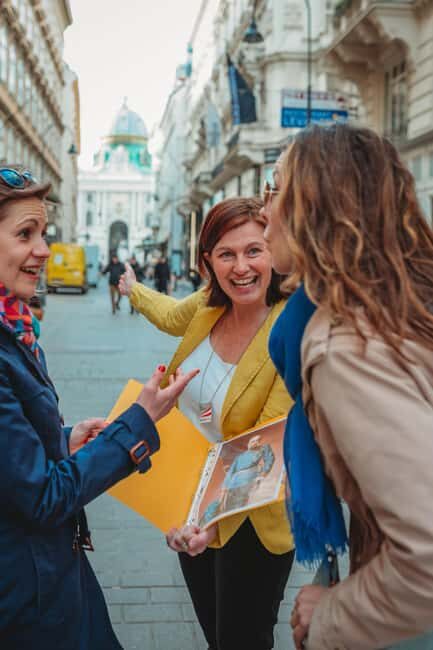
- Licensed local guide Maria leads the walk in English, German, or Italian.
- Private group size up to 6 means you get real interaction, not a canned lecture.
- Hofburg Palace, Vienna State Opera, and St. Stephen’s Cathedral are covered on foot from the outside.
- Empress Sisi + the Habsburg world + Mozart, Beethoven, and Johann Strauss are woven into what you see.
- Coffee house culture is part of the experience, with a potential traditional stop at your request.
- Pictures and maps are included, which helps you follow along even when the streets twist.
Finding Your Way: Anker Clock and the HELVETIA Meeting Spot
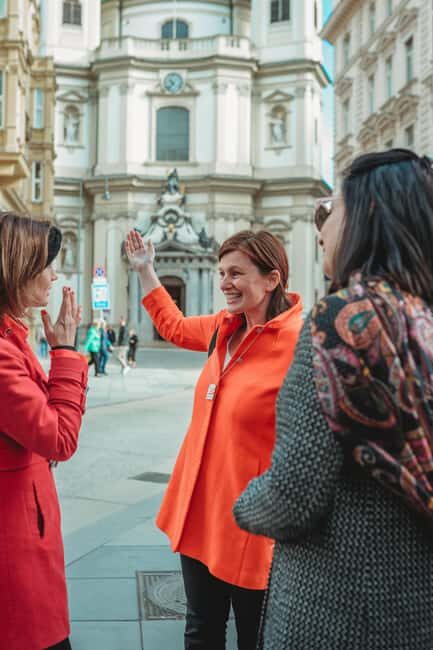
The tour starts at the Anker Clock, also called Ankeruhr, in Hoher Markt square. The guide meets you directly under the HELVETIA sign next to the clock at Hoher Markt 10–11, and Maria holds an orange folder so you can spot her quickly.
This is a good meeting choice because it puts you right in the heart of Vienna’s old center, where the walk naturally flows between the big-name sights. If you have hotel pick up arranged, you’ll skip some early walking and get dropped into the start area—still, arrive a few minutes early so you can settle in without stress.
You should also know the practical style of this walk: it’s a classic historic-center stroll, not a bus ride with “quick stops.” Expect steps, stairs, and uneven copper-stone streets, and dress for weather because the tour runs in rain. Comfortable shoes matter here more than fancy shoes.
The Stories You’ll Actually Use: Sisi, the Habsburgs, and Vienna’s Music Giants
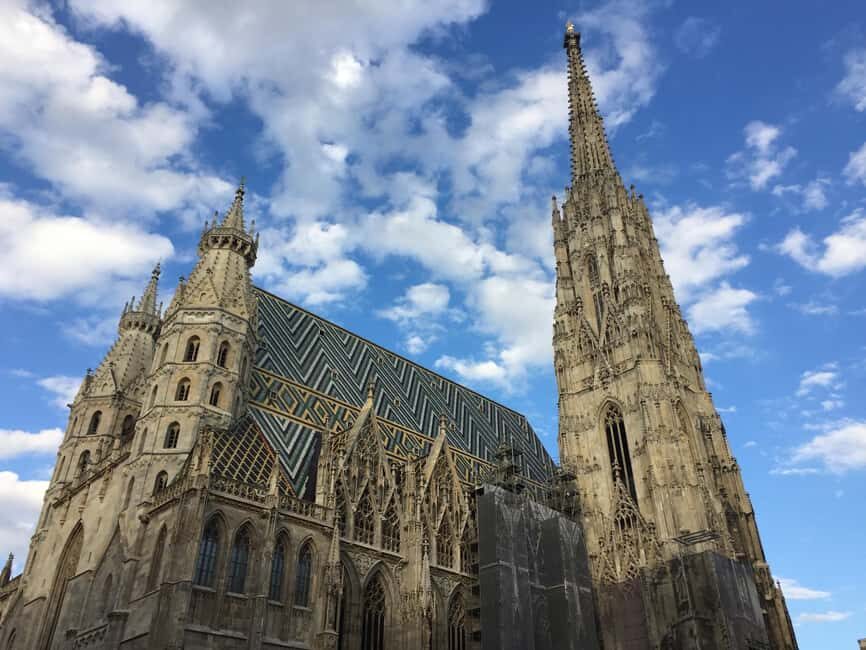
The tour is built around context. You won’t just see buildings; you’ll hear how Vienna’s past shaped the city you’re walking through now. Maria’s focus is royal drama and the life of Empress Sisi, with the Habsburg Empire as the big backdrop tying it together.
Then the stories swing to the creative side of Vienna. As you move through the historic center, you’ll hear how the city connects to the birth of major classical music names—Mozart, Beethoven, and Johann Strauss. Even if you’re not a deep classical-music fan, this helps. You start to recognize why Vienna puts so much importance on music and performance as part of identity, not just entertainment.
What I like is that the tour uses landmarks as anchor points for the narrative. Maria points out what you should notice and why it matters, so you’re not wandering through famous places like a checklist. The included pictures and maps make it easier to remember what you just learned and keep the timeline straight while you’re on your feet.
Hofburg Palace Outside: Power, Presence, and Why It Looks the Way It Does
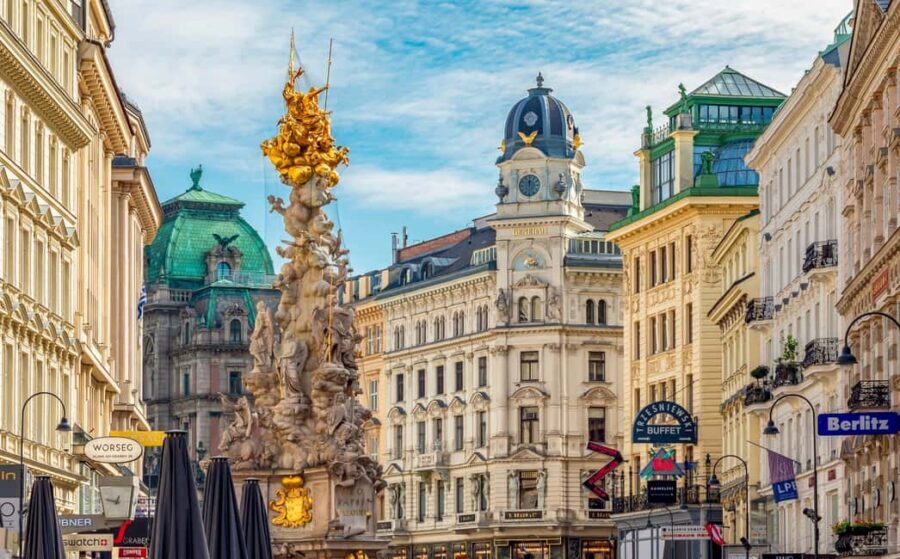
One of the highlights is the Hofburg Palace area. Even from the outside, Hofburg reads like government and empire rolled into stone. It’s the kind of building that looks impressive from every angle, but the real value is the explanation you get while you’re standing there.
Maria’s approach helps you see Hofburg as more than a big palace. You’ll connect it to the Habsburg world and the court life that shaped Vienna’s identity for centuries. That matters because when you understand the role a place played, you start noticing patterns—spacing, authority in the façade, and how the surrounding streets support the grandeur.
Because the tour is exterior-only, you won’t be touring rooms inside. Still, you’ll get enough context to understand why this site is so central to Vienna’s story. If you later want to go inside and see interiors, you’ll be better prepared for what you’re looking at.
St. Stephen’s Cathedral: The City’s Anchor in Gothic Form
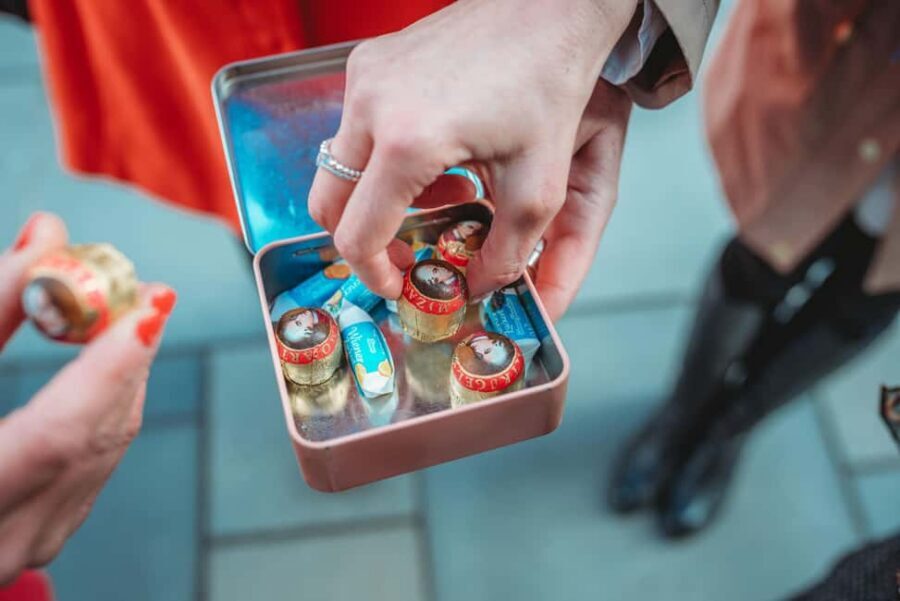
Next up is St. Stephen’s Cathedral, a landmark that hits you visually even if you don’t know the details yet. From the outside, it’s all about shape and presence—how the cathedral dominates the skyline and how it frames the surrounding old streets.
The tour wraps up in the central area near St. Stephen’s Cathedral, which is handy because it gives you a natural place to keep walking on your own afterward. Your guide’s recommendations are meant to send you off with direction, so you don’t just leave the cathedral area with a vague sense of having seen something famous.
Practical note: cathedral-area streets can mean more uneven footing and stairs as you move around the historic layout. Build in time to slow down for footing. If you rush, you’ll miss the small visual cues Maria points out.
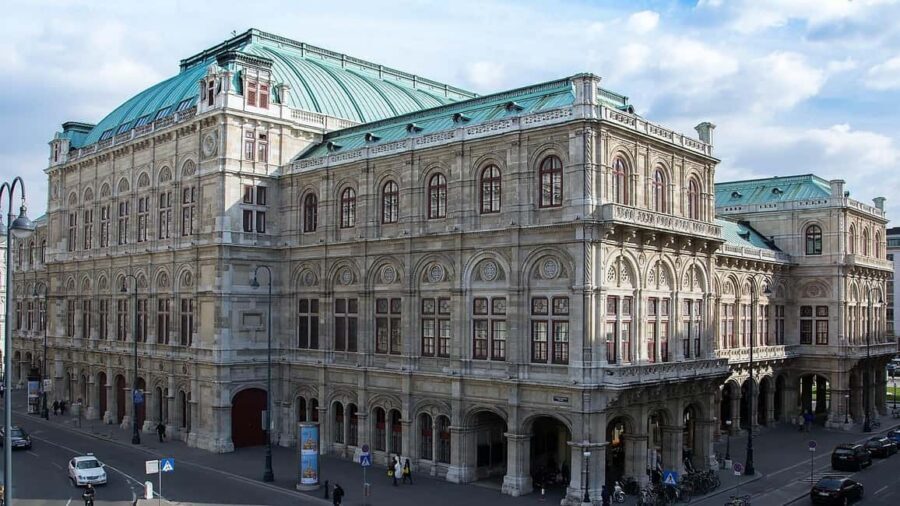
Vienna State Opera: Architecture With a Built-In Music Story
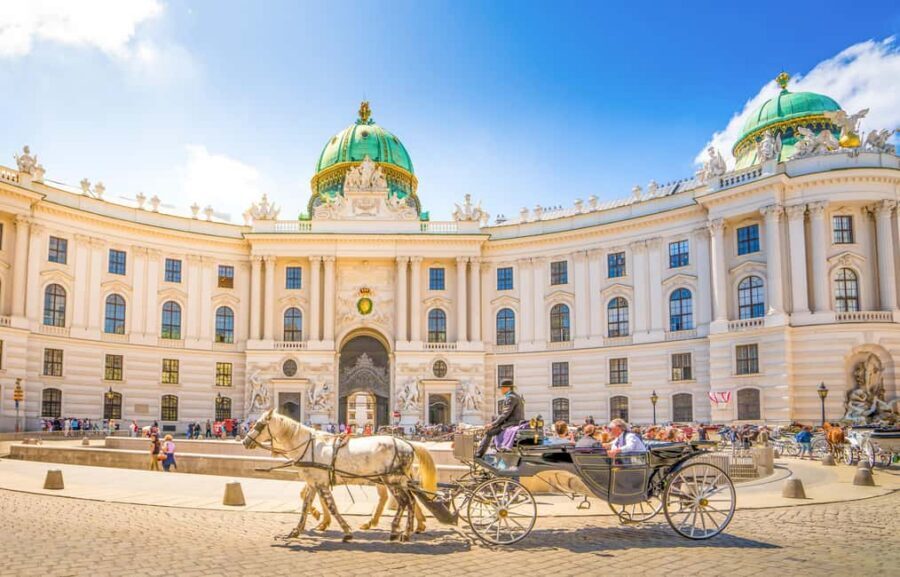
The walk also includes Vienna State Opera House, another mega-famous stop. The value here is how the guide connects the building to the wider Vienna music narrative you heard earlier. If you’ve already been listening for Mozart, Beethoven, and Johann Strauss connections, the Opera becomes more than a photo stop.
This is one of those places where you can feel the city’s commitment to performance. Even just looking at the façade from outside, you get the sense that Vienna treated music as something serious and public—not only for private salons.
The tour information also notes that the activity ends at the Opera area, so plan for your final stretch to be around this part of the city. If you’re trying to match your day plan tightly, ask the guide where you’ll finish at the exact moment you meet, so your next reservation is placed correctly.
Coffee House Culture and Café Central: A Local Habit, Not a Tourist Script
Vienna’s coffee houses are a big deal, and this tour treats them that way. Maria explains the tradition of coffee house culture, including the iconic Café Central. Even if you skip the stop, the talk helps you understand why these cafés became social hubs.
You can also request a stop at a traditional Viennese coffeehouse. That’s a smart option because it slows the day down at just the right moment: you’ve seen the major sights, and now you can switch from architecture and empire to everyday Viennese life.
Budget note: meal and drinks are not included. So if you do the café stop, plan to pay for what you order. Also, the tour is described as stress-free, but you should expect the walking rhythm to stay steady—coffee is a thoughtful add-on, not a long sit-down. If you want a longer break, you might consider stretching the time on your own after the tour ends.
Hidden Corners in Central Vienna: Lesser-Known Courtyards and Photo-Worthy Details
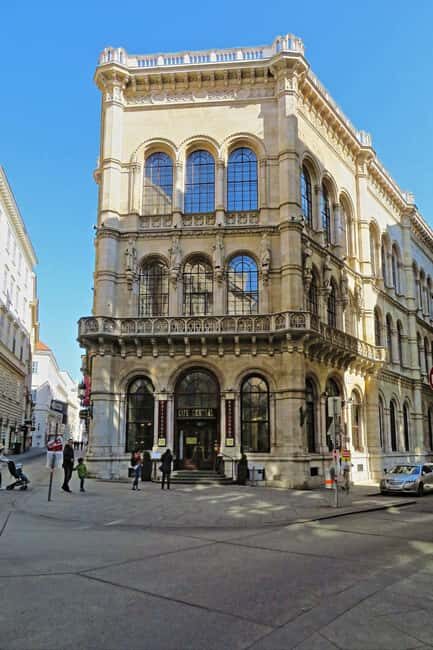
A standout part of this experience is that it doesn’t only stick to the main postcards. Maria leads you through lesser-known corners and secret stories, including the kind of courtyards and side passages you’d likely miss on your own.
This is where “private” really pays off. In a larger group, guides tend to stick to speed and obvious sights. Here, Maria has room to slow down, point things out, and help you notice the small features that make Vienna feel lived-in rather than staged.
Even the practical supports help. With pictures and maps, you’re less likely to feel lost while you’re outside. You can follow the guide’s references and get a mental map of what you just walked past—useful when you’re back out there later trying to find your way again.
The Walking Reality: What Exterior-Only Means for Your Expectations
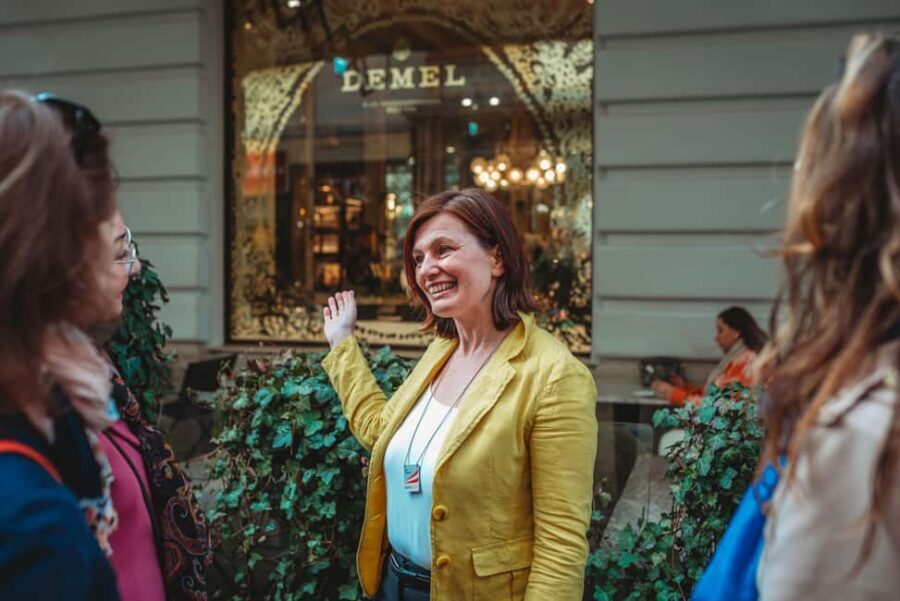
This tour is exterior-only, so you won’t be going inside the cathedral, Hofburg, or the Opera. That can be a plus if you’re trying to avoid interior logistics, but it also means you should not expect museum-level access or guided room-by-room touring.
You also need to consider the walking surface. Copper stone streets, stairs, and small elevation changes are part of the historic center. The tour is not suitable for wheelchair users, and it’s also not suitable for people with mobility impairments. It’s not recommended if you have heart problems, and audio recording is not allowed.
So think of this tour as a guided “see it, understand it” walk. If you want interiors, you’ll do those separately later. The payoff is that you’ll understand what you’re seeing before you ever buy tickets to go inside.
Rain doesn’t stop it, so bring a rain layer. You don’t need to panic, but if you slip easily, watch your footing on wet copper stone.
Price and Value: Why $56 for 2 Hours Can Make Sense
At $56 per person for a 2-hour private walking tour, the value depends on how you travel. If you like interaction and you want a guide who can answer questions on the spot, this kind of private format is often worth it.
You’re paying for more than the route. You’re paying for:
- A licensed, registered local guide (Maria)
- Personalized attention and interactive storytelling
- Pictures and maps to help you follow along
- A tour that runs even in rain
- The option to tailor requests like a coffee house stop
It also caps at a small group size, up to 6 participants, so the experience stays flexible instead of feeling rushed. Entrance fees and meals are not included, which is normal for an exterior walking tour, but you should budget for coffee if you add that stop.
If you’re traveling with friends or family and you can fill the private group, the per-person cost becomes more comfortable. If you’re traveling solo and want maximum personalization, it’s still a fair way to get structure and context without turning the day into a lot of planning work.
The Ending Part: Where You’ll Land and How to Continue Your Day
The tour information includes a couple end-location cues: it’s said to conclude next to St. Stephen’s Cathedral and that the tour ends at Vienna State Opera House, while the activity is also listed as ending back at the meeting point. That sounds confusing, so here’s the simple fix: when you meet Maria, confirm the exact final stop and where you’ll be dismissed.
Either way, the end area is useful. St. Stephen’s is a great launching point for exploring the central streets on your own. The Opera area is also perfect for continuing your day around a major landmark.
Because you’ll get recommendations during the walk, you can keep momentum right after the tour without scrambling for ideas.
Should You Book This Vienna Historic Center Walking Tour?
Book it if you want a guided walk that connects the big sights to people and stories—especially Empress Sisi and Vienna’s music-era names like Mozart, Beethoven, and Johann Strauss. I also think it’s a strong choice if you enjoy stopping for a coffee house tradition and want the cultural context, not just the photograph.
Skip it or rethink it if you need step-free access, use a wheelchair, or rely on an audio-recording setup. Also, if your main goal is inside-the-buildings touring, this will feel limited since it’s exterior-only.
If you like walking, good shoes, and a guide who can point out the small stuff, you’ll get your money’s worth. You’ll leave with a clearer sense of where Vienna’s power, music, and everyday life overlap.
FAQ
What is the duration of the Vienna private walking tour?
The tour lasts 2 hours.
How much does the tour cost per person?
The price is $56 per person.
Is this tour private?
Yes, it’s described as a private group experience.
How many people can join?
The tour can be booked for up to 6 participants.
What languages are offered?
The guide offers English, German, or Italian.
Where do you meet the guide?
Meet at the Anker Clock (Ankeruhr) at Hoher Markt square, directly under the HELVETIA sign next to the Anker Clock at Hoher Markt 10–11. The guide holds an orange folder.
Where does the tour end?
The information says the tour concludes near St. Stephen’s Cathedral and also notes that the tour ends at the Vienna State Opera House, while the activity is listed as ending back at the meeting point. Confirm the exact end stop with the guide when you start.
Is the tour interior or exterior?
It is an exterior-only tour.
Does the tour run in bad weather?
Yes, it takes place in all weather conditions, including rain.
What is included and not included?
Included: a professional expert guide, a 2-hour guided walking tour, pictures and maps, and hotel pick up possible. Not included: meal and drinks, and entrance fees. Audio recording is not allowed.
Is it suitable for people with mobility impairments?
No. It is not suitable for wheelchair users or people with mobility impairments, and it is also not recommended for people with heart problems or hearing-impaired people.
]]>You’ll meet in front of the golden Johann Strauss statue at Stadtpark, which makes the whole experience feel instantly grounded in Vienna. From there you’ll move to Stephansplatz for a close look at St. Steven’s Gothic cathedral, plus a stop for shopping street energy in the city center. The main drawback for some people: the tour includes paid-in-advance time at outdoor stops, but admission tickets for stops are not included, so plan for any entry fees if you choose to go inside.
The small group size (max six) is the hidden engine here. It keeps the pace relaxed, the conversation easy, and the guide able to answer questions about both what you’re tasting and what you’re seeing. If you want a fast, see-everything sprint, this may feel calmer than you expected—though you still cover a lot in three hours.
Key things that make Vienna Veritas worth your attention
- Six-person maximum keeps it social without turning into a lecture hall
- Academy-certified wine guidance helps you understand what’s in your glass
- Stadtpark meet point at Johann Strauss gives you an easy, recognizable starting landmark
- Stephansplatz and St. Steven’s Cathedral anchors the tour with one of Vienna’s best-known squares
- Photo-friendly walking route across central sights for quick before-dinner memories
- Mobile ticket means less fuss on arrival
A small-group Vienna wine walk that starts at Maria-Theresien-Platz
If you’re trying to get your bearings in Vienna without stacking three separate tours, this one is a smart shortcut. You’ll start at Maria-Theresien-Platz (1010 Wien) at 6:30 pm, then finish at Stephansplatz (1010 Wien). The timing is perfect for travelers who want a relaxed evening and don’t mind a walking route through central streets.
What I like most is the “two-for-one” structure: city sightseeing plus a focused wine tasting. Vienna can feel big and overwhelming on day one. A guided route helps you connect the dots quickly, so you’re not wandering around the map like a confused tourist.
The group size matters here. With a maximum of six travelers, questions don’t get lost, and the guide can adjust the pace. That’s the difference between rushing through landmarks and actually hearing why they matter.
The wine tasting lesson: what you’ll actually understand
Wine tours sometimes stop at: smell this, sip that, enjoy yourself. This one goes further because your guide brings wine expertise and a city-history lens. You’ll learn about the characteristics of Austrian wine during the tasting, which helps you move from generic “tasty” to specific “oh, that’s why.”
You also get context for the way Vienna and wine culture intertwine. The guide shares history of both Austrian wine and Vienna’s storied sights as you walk. That pairing is useful, because it makes the tasting feel connected to place, not like you were dropped into a wine moment without a story.
One practical note: the tour is built around tasting, so it’s best for people who are comfortable sampling alcoholic wine. If you’re not sure what options exist for non-drinkers, I’d message the provider before booking so you don’t end up stuck between expectations.
Stadtpark and the golden Johann Strauss statue: an easy meeting point
Your first stop is Stadtpark, the central city park. You’ll meet in front of the famous golden statue of Johann Strauss—an anchor point that’s hard to miss, even if you’re arriving slightly late and slightly stressed. The tour schedule gives you about 15 minutes there, which is enough time to settle in, orient yourself, and start the history talk.
Why this matters: Stadtpark sits right in the Vienna rhythm. It’s a real place locals move through, not a themed set. Starting here keeps the tour from feeling like a chain of “look, then go,” because the park sets a calmer tone before you hit busier streets.
And yes, the statue is also a great photo moment. If you want a clean background for selfies or quick portraits, this is a straightforward place to do it without hunting for the perfect angle.
Vienna’s prestigious shopping streets: a short pause with city energy
Between the park and the big square stop, there’s a stop at Vienna’s most famous and prestigious shopping area. The schedule doesn’t give a named district in the details you provided, but the intent is clear: you get a taste of Vienna’s central shopping vibe without it eating the whole tour.
This part works well as a “breather.” After wine talk and park scenery, a stroll through the city’s prime shopping area gives you a different visual feel—more street-level, more architectural variety, more people-watching. It’s also a natural spot for the guide to point out what makes the area feel distinctly Vienna.
The only consideration is time. Since the tour is only about three hours, this shopping stop won’t be a long shopping spree. Think of it as an in-route experience and a chance to notice details, not a free hour to browse.
Stephansplatz and St. Steven’s Cathedral: the centerpiece square
The tour’s end lands at Stephansplatz, with a stop of about 10 minutes. This square hosts the magnificent Gothic St. Steven’s Cathedral, one of the city’s most recognizable landmarks. If you like landmarks you can spot from a distance, this is the one Vienna cards and postcards can’t stop using.
Even with a short time window, a good guide can help you look past the obvious. Instead of only scanning for the famous façade, you’ll get the kind of orientation that makes the whole square feel more meaningful. It’s also a strong finale because the area is central and easy to continue on your own afterward.
If you want to go inside St. Stephen’s Cathedral, note that the admission tickets aren’t included in the tour information. You can still plan a quick add-on, but treat it as separate from the walk-and-tasting portion.
Timing, pace, and what to expect from the walking route
This is an evening tour that starts at 6:30 pm and runs about three hours. That’s long enough to feel like you did something substantial, but not so long that you lose your evening. It also means you’ll likely experience the city in a softer light, which is great for photos and comfortable walking.
The pace is designed to feel relaxing, not rushed. With six people, the guide can keep you moving at a steady rhythm while still talking. I like tours that don’t try to speed-run every sight, because Vienna rewards attention.
What you should wear: comfortable shoes are non-negotiable. This is a walking experience between major central points, and you’ll be on your feet for most of the time. If you’re planning dinner right after, choose footwear that won’t punish you for celebrating too hard.
Price and value: is $160.75 a good deal for this tour?
At $160.75 per person for about three hours, this isn’t a budget activity. But the value makes sense if you care about two things at once: learning and small-group time.
Here’s where the price likely pays off for you:
- Wine expertise included with the tasting, guided by an academy-certified wine expert
- A structured route through famous landmarks from park to cathedral square
- Small group limit (six) which reduces the “lost in the crowd” feeling
If you already plan to do a self-guided walking tour and you just want a casual glass of wine, you might spend less on your own. But if you want the story behind what you’re drinking and seeing—plus a smoother first pass through Vienna—this is the kind of pricing that can feel fair.
Who this Vienna Veritas tour fits best
I think this tour is a great match if you’re:
- Visiting Vienna for a short time and want a clear first introduction
- Interested in Austrian wine, but you don’t want to guess what you’re tasting
- The type who likes small groups where you can actually ask questions
- Planning to walk the center anyway and want the route to have a purpose
It’s also a strong choice for couples or friends who want conversation time without being trapped in a big group. And if you want photos of major sights without spending hours planning, the guided photo-friendly route helps you get there.
Should you book Vienna Veritas with MarioViennaGuide?
If you want a guided evening that mixes Austrian wine understanding with classic Vienna landmarks, I’d seriously consider booking. The small group size, the academy-certified wine focus, and the relaxed pace add up to an experience that feels personal instead of crowded.
I’d only hesitate if you strongly prefer an all-morning schedule, hate walking, or need clarity on alcohol-free tasting options. If those are deal-breakers, send a quick message first so expectations line up.
Overall, this looks like a high-value way to combine “see Vienna” with “learn something real” in a single 3-hour block.
FAQ
How long is the Vienna Veritas tour?
It’s listed as approximately 3 hours.
What time does the tour start?
The start time is 6:30 pm.
Where do I meet the guide?
You’ll meet at Maria-Theresien-Platz, 1010 Wien, Austria.
Where does the tour end?
The tour ends at Stephansplatz, 1010 Wien, Austria.
Is the group limited in size?
Yes. The maximum group size is 6 travelers.
Do I get a mobile ticket?
Yes, the tour includes a mobile ticket.
Are admission tickets included for the stops?
No. Admission tickets are not included for the Stadtpark stop and for the Stephansplatz area.
Is the tour focused on Austrian wine tasting?
Yes. The tasting is part of the experience, and you’ll learn about the characteristics of Austrian wine.
Can I bring a service animal?
Service animals are allowed.
Is free cancellation available?
Yes. Free cancellation is available, and you can cancel up to 24 hours in advance for a full refund.
]]>I like that your guide (Michael) sets a pace that fits your group and keeps the story moving, from grape growing to the old stones you’ll see at the ruin. One thing to keep in mind: even though it’s labeled an easy route, there’s still a 200-meter height difference and it’s a long day overall, so plan for hills and the fact that food and drinks aren’t included.
Key things to know before you go
- Private for your group, even though the transfer is shared
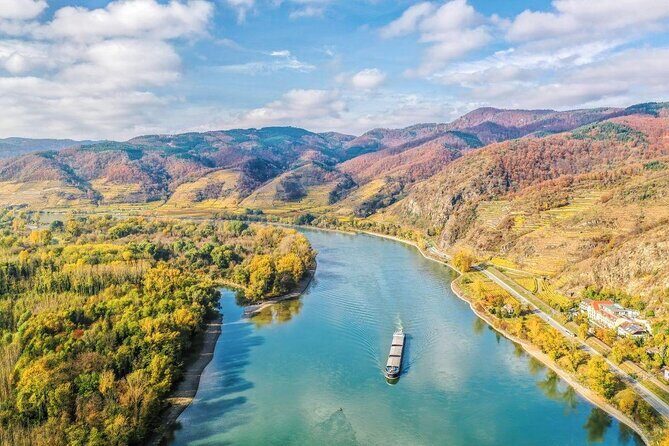
- UNESCO Wachau valley walking from the village of Spitz
- Circular walk with three short ascents, plus viewpoint payoffs
- 200 meters of elevation gain without turning it into a grind
- Hinterhaus ruin (13th century) for the strongest historical scene
- Photo help from Michael, including sharing pics later via Dropbox (when available)
From Am Hauptbahnhof to Spitz: how the day runs
The day starts in Vienna at Am Hauptbahnhof (Am Hbf, 1100 Wien). The start time is 8:00 am, and the activity ends back at the same meeting point. That matters more than it sounds: you skip the stress of figuring out trains or buses when you’re starting in the city.
You’ll use round-trip shared transfer to get out to the Wachau, but the walking part is a private experience for your group, with your local guide on hand. In practice, this is a nice middle ground. You get the simplicity of one pickup point and one return plan, while still getting the attention and flexible pacing that make a private hike feel worth it.
Because the overall duration is listed at about 7 hours, you’re signing up for a full day, not a quick after-breakfast stroll. The hiking portion is around 3 hours, so the extra time is doing what you’d expect: transit, orientation, and time at viewpoints and ruins.
The Wachau UNESCO setting you’ll actually walk through
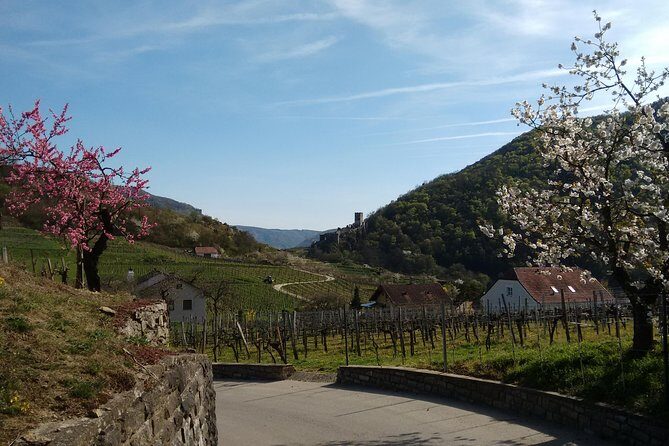
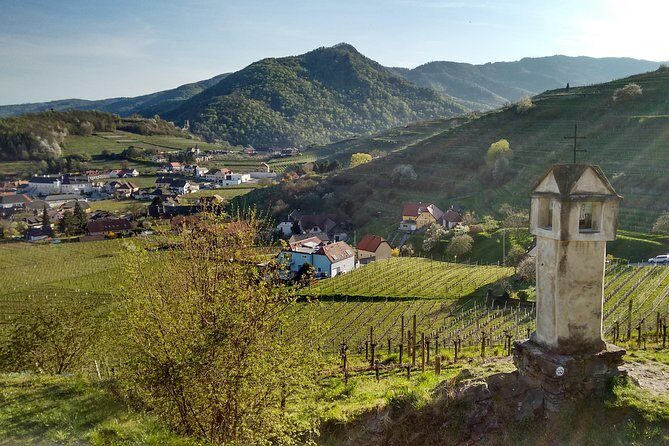
The Wachau Valley is famous because it looks like the land and the farming practices grew up together. On this tour, you see that right away when the trail leads you from Spitz through terraced areas with grape vines and fruit trees. This is the kind of setting where the view is part geography, part agriculture, part architecture.
What I like about this layout is that it teaches you how to look. You’re not just hiking for cardio. You’re climbing in short bursts, reaching viewpoint points, then moving on through the working valley. That makes the day feel like a guided walk-through of how people shaped the valley over centuries.
Also, Wachau isn’t only scenic. It has strong “human scale” history: small ruins, vineyard edges, and older structures that feel grounded rather than museum-like. This makes it ideal for a private guide, because you can ask questions as you go instead of waiting for a formal talk.
Spitz circular walk: Red Gate views and the 200m climb
The main hike starts at Spitz with a mostly comfortable circular walk. The route includes three short ascents that take you up to viewing points. The elevation gain is listed as 200 meters, and that’s a useful number to remember. It’s not flat-walk easy, but it also isn’t the kind of climb that demands elite conditioning.
The “circular” part means you don’t spend the whole time backtracking. You move through terraced areas, then gradually work your way toward bigger views. For me, the best hikes have a rhythm: climb, pause, look, move again. This route is built around that idea, with the viewpoints acting like checkpoints you actually want to reach.
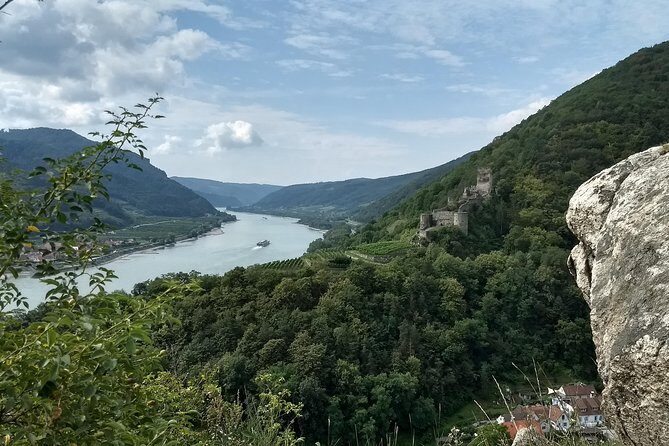
A key landmark on the walk is the Red Gate, often the moment when you can really grasp how the Danube and the valley line up. The views are described as stretching to Spitz, the Thousand-Year Mountain, the Danube, and the ruin Hinterhaus. Even if you don’t remember every name, you’ll feel the geography: the river corridor, the valley slopes, and how the vineyards step up.
One practical note: since it’s a hike with height change, your comfort depends on your footing. The tour strongly recommends mountain boots, and that’s smart. Shoes with grip matter more on uneven paths than you’d think.
Ruin Hinterhaus: why that 13th-century stop hits
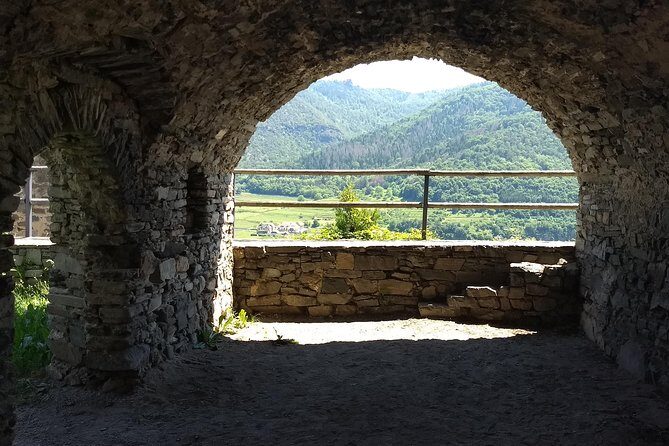
The highlight is the ruin Hinterhaus, described as an adventurous castle from the 13th century. This is the part of the day where the hike turns from “pretty valley walk” into “story you can point to with your hand.”
Ruins are tricky: some are just rocks with a sign. Hinterhaus, from how the day is framed, is different because it’s tied to the viewpoint sequence. You get a line of sight to it from the Red Gate area, then you walk through the vineyards and terraced slopes and eventually reach it. That progression makes the place feel earned.
The ruin is also a good fit for a private guide. You’re not just there to take photos. You can ask how the site relates to the surrounding valley, how old structures sat within farming landscapes, and what the terrain would have meant historically. The pace and safety checks also matter here—if the ground is slick or muddy, a guide who’s watching the trail helps you enjoy the time without constantly thinking about slipping.
If the weather cooperates, this is also the moment where you’ll likely slow down the most. Even if you don’t consider yourself “a ruins person,” this is the stop that turns the whole day into something memorable.
Your guide (Michael): pacing, safety, and real talk about the valley
This kind of private hike lives or dies by the guide. Here, the guide is Michael, and the overall vibe is consistent: thoughtful, prepared, and focused on making sure you get the best parts of the walk.
A few things you’ll benefit from:
- Pace adjustment. The route is set, but the walking rhythm can be tailored for your group.
- Safety awareness. The tour emphasizes staying conscious of conditions, which is especially useful on uneven paths and in changing weather.
- History and practical context. The day isn’t only about what you see. You’ll be able to understand how the valley works, including agriculture.
- Photo support. Michael is described as taking photos of the group and sharing them afterward via Dropbox. If you like a couple solid memory shots without hassling with your camera all day, this is a real perk.
One more detail that matters: the tour can run in rain and adjusts when needed. Umbrellas were provided in wet conditions, which is a good example of how to avoid turning a hike into a miserable soggy experience. Still, you should dress for damp weather because “operates in all weather conditions” usually means you’re outside.
Price and value: what $277.29 gets you in real terms
At $277.29 per person, this isn’t the cheapest way to hike in the Wachau. So let’s talk value in a practical way.
You’re paying for three things:
- A full-day, structured experience with a planned walking route, stops, and guide interpretation.
- Private participation for your group, so you’re not stuck with a fixed pace that doesn’t match your energy level.
- Transport from Vienna with a fixed meeting point and return, which saves time and planning.
The transfer is listed as round-trip shared, which helps keep things from turning into a pure car charter situation. And there’s a group discount option mentioned, which can make it much easier to justify if you’re traveling with friends or family.
If you can only do one hike outside Vienna and you want it guided end to end, the price starts to look more reasonable. If you’re the type who’s happy to navigate independently, you might find cheaper options. But for many people, what you’re really buying is the day feeling smooth: one pickup, one guide, and viewpoints timed so you don’t miss them.
Weather, clothing, and fitness: make it a comfortable win
The tour operates in all weather conditions, with an important safety caveat. If weather becomes dangerous for life and limb, the operator may switch to a different tour on equal terms, or cancel with a full refund.
So your job is simple: dress for the conditions you could get. Rain, wind, and cool temps can all change how enjoyable the hike feels, especially when you’re walking for hours.
Here’s what I’d plan around, based on the info you’re given:
- Moderate physical fitness: the route is described as easy, but the 200-meter climb and 3-hour hiking time mean you should be comfortable on foot.
- Mountain boots strongly recommended for trail traction.
- Bring layers since weather can shift during a hillside walk.
- In winter, additional equipment may be needed (like snow chains or snowshoes), and you’ll be informed accordingly.
- Service animals allowed, and children must be accompanied by an adult.
Also, remember the practical gap: food and drinks aren’t included. You’ll want a snack or a plan to buy something on your own at the end, so you can keep energy up without waiting to see what’s open.
Who this tour is best for (and who should skip it)
This hike is a strong match if you:
- Want UNESCO Wachau views with a clear route and real stop points (Red Gate and Hinterhaus).
- Prefer private guide attention and a pace that can fit your group.
- Like countryside hiking that includes history and how the valley is farmed.
It might be a tough fit if you:
- Hate any sort of uphill, because 200 meters of height difference still adds up.
- Want a low-effort, fully flat nature walk.
- Need food/drinks included as part of the price. You’ll need to handle that yourself.
If you’re traveling with kids, the tour notes that children must be accompanied by an adult. In winter, plan for possible traction gear and extra caution.
Should you book the Private Hiking Tour to Spitz in Wachau?
If your ideal day looks like: Vienna pickup, a guided walk through terraced vineyards, a few “earned” viewpoints, and a 13th-century ruin at the end, this tour is easy to like. The combination of structured route, private pacing, and guide support (including photo help from Michael) makes it feel thoughtfully put together rather than random walking.
I’d book it if you’re okay with a moderate fitness hike and you’re prepared to bring your own snacks and rain-ready layers. I’d skip it if you want zero elevation, a super-short outing, or an all-inclusive food plan.
FAQ
FAQ
How long is the hiking portion?
The hike time is listed as about 3 hours, with an overall day duration of about 7 hours.
Where does the tour start and end?
It starts at Am Hauptbahnhof (Am Hbf, 1100 Wien, Austria) and ends back at the same meeting point.
Is this tour private?
Yes. It’s a private tour/activity, and only your group participates.
What’s the difficulty level?
It’s described as an easy route, but there is a 200-meter difference in height, so you should have moderate physical fitness.
Do I need to bring my own food and drinks?
Food and drinks are not included, so you’ll want to plan for snacks and hydration yourself.
What language is the tour offered in?
The tour is offered in English.
What happens if the weather is bad?
The tour operates in all weather conditions, but if weather becomes dangerous for life and limb, the operator can cancel free of charge or offer a different tour on equal terms.
]]>I especially like how your licensed guide builds the cause-and-effect story in plain language. Expect expert commentary on WWI, WWII, Austrofascism, the Holocaust, and key figures like Adolf Hitler and Ernst Kaltenbrunner, with room for questions in your chosen language.
One thing to consider: it’s a walking route through Inner Stad, so if you want lots of indoor museum time or a very slow pace, you may feel a bit rushed in just two hours.
Key Highlights You’ll Actually Notice
- Morzinplatz start linked to the Gestapo HQ: you begin at the memorial to Nazi terror victims near where Hotel Metropol was used in 1939 as the Gestapo headquarters
- A guided timeline, not a random stop list: your guide connects events leading up to and after both world wars
- Holocaust remembrance you can reach on foot: you pass the Holocaust Memorial and Remembrance Stones while the guide explains what they mean
- Hofburg and Heldenplatz as WWI/WWII markers: exterior views plus the Memorial Crypt for WWI and WWII victims
- Franz Joseph I and the Burggarten context: you see the imperial monument while the guide frames the broader political shifts
- An end point tied to the 1945 bombing: the Monument Against War and Fascism near the Vienna State Opera
Why Vienna’s Old Town Fits a WWII Story So Well
Vienna’s center is built for walking, and that matters for a WWII tour. The guide isn’t just pointing at “important-looking” buildings. They’re using the city’s visible layers to explain how power changed hands, how propaganda shaped everyday life, and how tragic events unfolded.
In two hours, you’ll cover a long sweep of time. The tour tracks major beats from the assassination of Franz Ferdinand through Hitler’s annexation of his homeland, and then onward to the bombing and liberation of Vienna. That broad timeline is helpful because it shows you the buildup, not just the ending.
This is also a tour where you learn while you’re still moving. You pass from imperial sites to remembrance spaces without switching cities or losing your momentum. You’ll feel the transitions, and your guide can point out why Vienna’s different corners carry different memories.
Morzinplatz: The Tour Starts at a Nazi-Terror Memorial
The meeting point is Denkmal der Opfer des Faschismus (Memorial to the Victims of Nazi Terror), Morzinpl. 4. Right away, you’re in a place that frames the whole walk with moral clarity. This is not a tour that treats WWII as distant history.
The guide begins here because of what stood nearby. In 1939, Hotel Metropol was used as the Gestapo headquarters in Vienna. Having that connection at your first stop changes how you look at the surrounding streets. Even if the buildings have shifted over time, the location still carries meaning, and your guide helps you connect the dots.
I like tours that start like this, because it keeps the story grounded. You’re not waiting 45 minutes to learn what the tour is actually about. You start with the impact of Nazi terror and then follow the consequences through the Old Town.
Inner Stad Walk: Propaganda, Daily Life, and Holocaust Remembrance
Once you head through Inner Stad, the tour becomes a story of how history shows up in everyday life. Your guide focuses on German-occupied Austria and how daily routines, public messaging, and fear shaped behavior. That angle is powerful because it’s not only about battles or leaders. It’s about how people lived under pressure.
As you walk, you’ll pass the Holocaust Memorial and some Remembrance Stones. Those are the kinds of stops that can feel abstract if you see them alone. With a guide, they become concrete: you understand who the memorials honor and why remembrance was placed where it is.
Your guide also covers tragic fate of Vienna’s Jewish citizens. You’ll hear it framed inside the larger WWII timeline, not as a separate topic floating by itself. That’s an important choice for a 2-hour tour. It keeps the story connected, instead of turning Holocaust education into a quick detour.
You’ll also hear about major Nazi figures, including Adolf Hitler and Ernst Kaltenbrunner. I find that when a guide names people like this and connects them to specific places, it reduces the feeling of chaos. You start to see roles and mechanisms, not just headlines.
Hofburg and Heldenplatz: Imperial Power Meets War Dead
The imperial palace complex of Hofburg appears as an exterior stop on this walk. That outside view is deliberate. It reminds you that Vienna was a center of authority long before WWII. Then your guide links that imperial backdrop to the turmoil that followed.
Next comes Heldenplatz, where the Memorial Crypt is dedicated to WWI and WWII victims. This is where the tour’s “why” becomes clearer. You’re not only learning about events; you’re seeing how Vienna marked loss across both world wars in one complex space.
It’s a sober stop, but it’s also practical for understanding history. When you learn WWI and WWII timelines back to back, your mind starts making comparisons: how ideas spread, how violence escalates, and how societies cope with aftermath. The memorial crypt helps you hold onto the human cost as you learn about causes and consequences.
Your guide ties these themes into the walking route, so the imperial setting doesn’t feel like a random backdrop. It becomes part of the story structure.
Burggarten and the Franz Joseph I Monument: Seeing the Past in One Frame
Near Hofburg, you’ll also see the monument to Emperor Franz Joseph I in Burggarten. This is one of those stops that can look like classic Vienna sightseeing. The trick is that your guide reframes it so it’s not only aesthetic.
By placing you in front of the Franz Joseph I monument during a WWII-themed walk, the guide points out that political history in Vienna didn’t start in 1939 and it didn’t end in 1945. Long-term governance, symbolism, and shifting legitimacy all feed into the bigger story.
If you’ve ever wondered why certain cities seem to carry political meaning in their stone and statues, this is where you’ll feel the answer. You’re reading history with your eyes, while the guide supplies the context that turns a photo spot into a timeline anchor.
Ending at the Monument Against War and Fascism Near the State Opera
The walk ends at the Monument Against War and Fascism near the Vienna State Opera. This is a fitting finish: it points forward, toward the warning sign of what happens when societies choose authoritarianism and war.
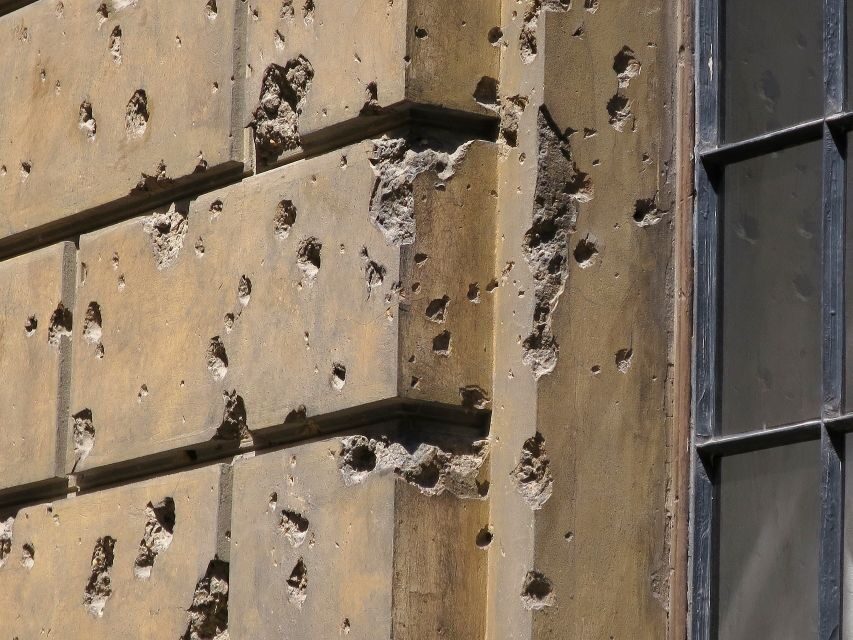
The State Opera area also carries the memory of WWII damage. The tour notes the opera was heavily damaged by the 1945 bombing. Even if you don’t go inside, the end point connects your learning to a visible reminder of how the city was hit.
I like ending here because it changes the emotional tone from explanation to reflection. You still get facts, but the message is harder to ignore: the walk didn’t just teach you what occurred. It pushes you to think about what should be prevented.
How Guides Make This Tour Worth It (And Why Questions Matter)
This tour lives and dies by the guide. It’s private, so you’re not stuck listening to a script that fits nobody. You can ask questions, and the guide can adjust the flow to what you care about most.
The best signs show up in how flexible guides have been in challenging situations. One guide, Peter, earned praise for explaining everything in detail and answering questions thoroughly, with patience when a small child needed pauses. Another guide, Sanda, was described as highly professional. Alexander also received strong feedback, and Frau Heuberger was praised for balancing the tour with well-timed pauses, even during heavy heat.
You also have multi-language support, with options including English, German, Italian, French, Spanish, Russian, Polish, Chinese, Japanese, Croatian, Portuguese, Arabic. That matters for emotional topics. When you can understand every nuance, you stay engaged instead of translating in your head.
Price and Value: What $214 Buys in Two Hours
At $214 per person for a 2-hour private walking tour, you’re paying for three things you can’t easily DIY.
First, you’re paying for a 5-star licensed guide who provides expert commentary on WWII, WWI, and the Holocaust. That’s not trivia. It’s interpretation, timeline stitching, and careful explanation of why specific places matter.
Second, you’re paying for private routing through key WWII markers in the Old Town. The tour covers multiple meaningful sites: Morzinplatz, the Holocaust Memorial and Remembrance Stones, Hofburg exterior, Heldenplatz’s Memorial Crypt, Burggarten’s Franz Joseph I monument, and the final anti-war monument near the State Opera.
Third, you’re paying for a tailored experience. The tour is designed to match your interests, and the guide’s language skills help you keep up without losing the thread.
Could you walk these places on your own? Sure. But you’d likely miss how the stops connect into a coherent timeline from Franz Ferdinand to annexation to bombing and liberation. In a city like Vienna, that “connective tissue” is where the real value lives.
What to Expect From a 2-Hour Private Walk
Two hours moves faster than most people expect. The good news is that the route is dense: you cover major anchors in central Vienna without needing transit. The walking pace is realistic, but it’s still a walking tour, so comfortable shoes are a must.
Also, plan for weather. Vienna can feel extreme, and one guide was praised for finding a smart balance between touring and shaded pauses during intense heat. That kind of practical pacing is a real quality-of-experience factor.
You’ll also want to keep an eye on the pre-tour email you receive the day before. The tour notes that important information comes by email. I’d treat that as part of the process, not an afterthought.
Who Should Book This WWII Old Town Tour
This is a strong choice if you want WWII history with real place connections and you prefer a guide who can explain the timeline clearly.
You’ll especially like it if:
- You care about the overlap between WWI and WWII and want the buildup explained.
- You want Holocaust remembrance explained in context, not treated as a standalone stop.
- You like asking questions and having answers shaped to your interests.
- You’d rather walk through Vienna’s historical anchors than spend your time searching for context on your own.
If your priority is a long museum day with lots of indoor exhibits, this might feel too short. But if you want a fast, focused understanding of how Vienna’s center holds WWII memory, this walk fits well.
Should You Book This WWII Vienna Old Town Tour?
Yes, if you want a coherent WWII narrative anchored in Vienna’s most meaningful central sites. The combination of the Morzinplatz start, the Holocaust remembrance stops, Heldenplatz’s Memorial Crypt, and a finish near the State Opera’s WWII damage creates a tight story arc.
I’d book it sooner rather than later if you:
- prefer a private format with a licensed guide,
- need the timeline explained in your language,
- and like learning while walking through the city instead of only reading plaques.
If you’re sensitive to heavy subject matter, give yourself permission to take breaks. The fact that some guides have handled breaks well during hot conditions suggests the experience can be paced thoughtfully.
FAQ
Where does the tour start?
The tour meets in front of Denkmal der Opfer des Faschismus (Memorial to the Victims of Nazi Terror), Morzinpl. 4, 1010 Wien, Austria.
How long is the WWII history walking tour?
It lasts 2 hours.
Is this a private tour or group tour?
It is a private group tour.
What languages are available for the guide?
The live guide is available in English, German, Italian, French, Spanish, Russian, Polish, Chinese, Japanese, Croatian, Portuguese, Arabic.
Which places and monuments do you see?
You’ll see Hofburg (exterior only), St. Stephen’s Cathedral, and multiple WWII & Holocaust monuments, including the Holocaust Memorial and Remembrance Stones. The tour also includes the Memorial Crypt at Heldenplatz and ends at the Monument Against War and Fascism near the Vienna State Opera.
What topics does the guide cover?
The guide covers WWI and WWII timeline, causes and consequences, Austrofascism, Holocaust remembrance, and key historical figures such as Adolf Hitler and Ernst Kaltenbrunner.
What is the maximum group size per guide?
The experience limits the group size to 1–25 people per guide.
Is payment required immediately?
You can reserve and pay later, meaning you can book your spot and pay nothing today.
]]>I especially like how the walk mixes grand sights with small pauses in spacious gardens where you can reset your eyes and take in statues and flower arrangements. I also appreciate the way the guide ties buildings to people’s fates, so the Ringstrasse doesn’t stay as pretty stone.
One thing to consider: at 2 hours, it moves at a steady pace. If you want deep, building-by-building architectural analysis, you may feel it stays more “overview with strong highlights.”
Key Things to Notice on This Ringstrasse Walk
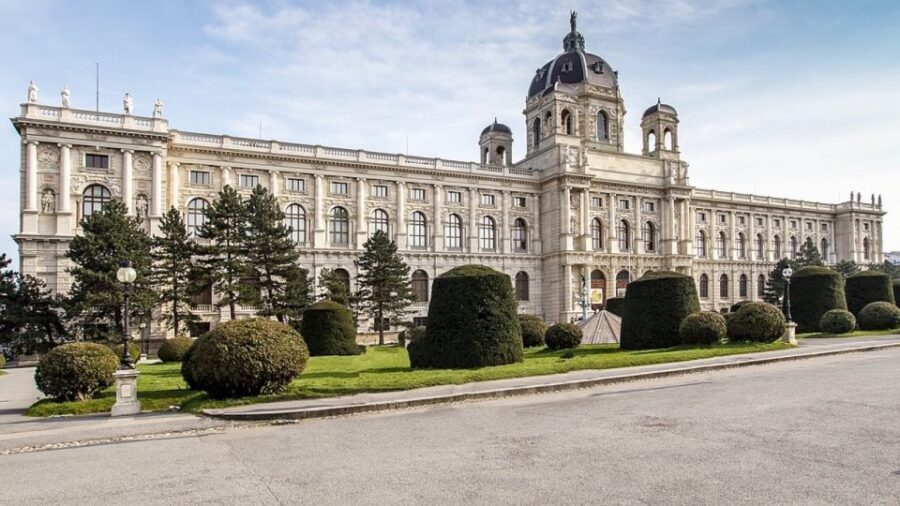
- Emperor Franz Josef’s demolition plan: why the city walls came down and what replaced them
- Tree-lined Ringstrasse design: separate paths for carriages, riders, and pedestrians
- Palais Ephrusi + The Hare with the Amber Eyes: a palace tied to a family’s dramatic fate
- A string of major landmarks: Votive Church, University, City Hall, Burgtheater, Parliament, and Heldenplatz
- Garden-and-statue breathing moments: Volksgarten stops plus statuary like Pallas Athene
- Opera finish: the route ends by the Opera House so you can place everything you just saw
Why the Ringstrasse Was Built as a Showpiece City
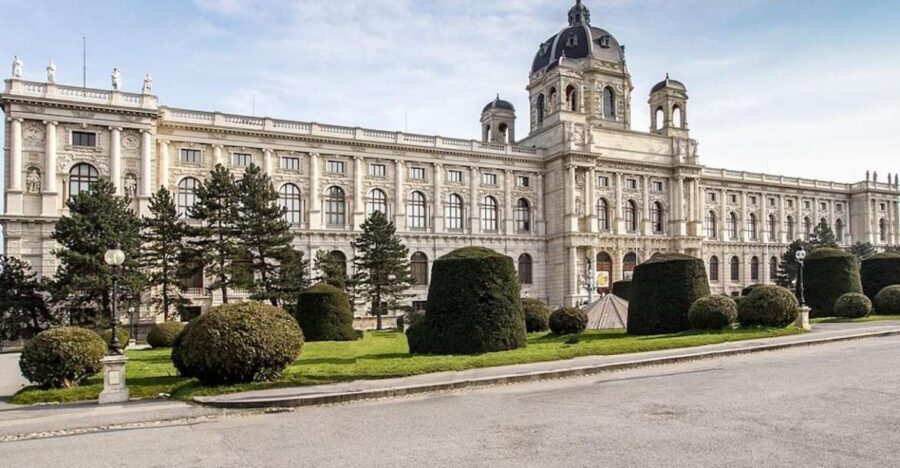
The story starts with an imperial “reset button.” About 150 years ago, Emperor Francis Josef ordered the demolition of the city walls. Instead of rebuilding the defensive edge of Vienna, he pushed for something new: a unified, statement-making boulevard lined with public buildings for culture and civic life.
That’s what you’re walking on: the Ringstrasse as a stage. The goal was to concentrate major institutions along the new route—think the opera and theater, museums, universities, the Academy of Fine Arts, parliament, and city hall. It wasn’t just urban planning. It was branding Vienna as a city of ideas, performance, learning, and government.
Then the private money arrived. Industrialists and bankers saw the opportunity to display wealth and, importantly, to acquire titles. That’s when you get the oversized palaces—buildings designed to be seen from the street, not hidden behind gates. And while the rich showed off, a huge workforce also came through, including poor people seeking work, laboring under difficult conditions. So as you walk, you’re seeing two sides of the same story: ambition and inequality, elegance and pressure.
Meeting by Liebenberg-Denkmal at Mölker Bastei
You start at the Liebenberg-Denkmal on Mölker Bastei (address: 1010 Wien). Give yourself a little buffer and arrive about 10 minutes early so you’re not rushing at the exact moment the tour begins. This matters because the opening segment sets the tone—how to “read” the Ring from street level.
Why this first stop is smart: the Ringstrasse can look like one long stretch of impressive facades. Starting with a monument point of reference helps you anchor the route. From there, you’ll gradually build a mental map as the tour moves from civic institutions to cultural venues and the palaces along the way.
Also note the practical side. This is a private group experience, designed for up to 8 people, and the guide can speak Polish, German, or English. That makes it easier to ask questions as you go, instead of waiting your turn in a giant crowd.
Palais Ephrusi and the Ephrusi Family Fate
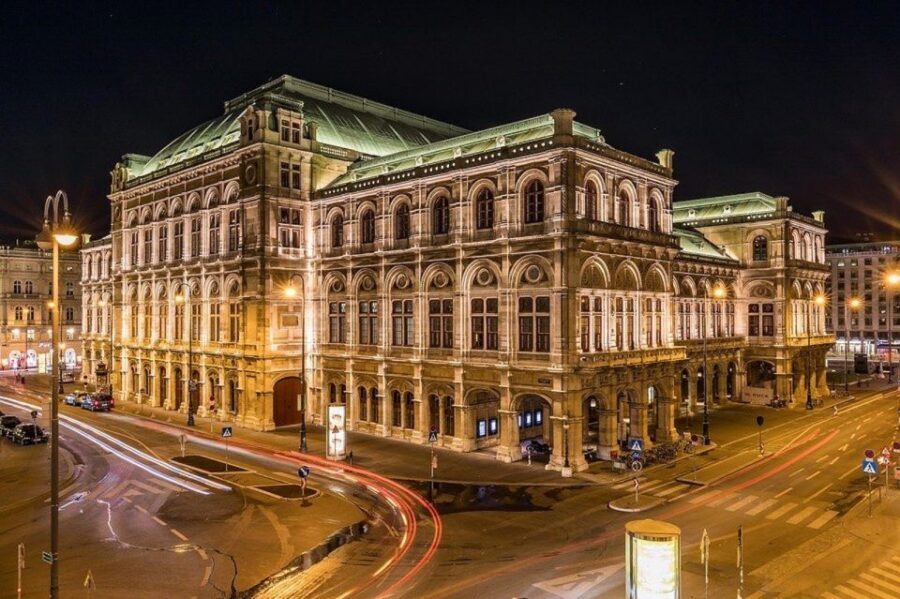
One of the main reasons to take this tour is Palais Ephrusi. It’s commissioned by the rich Jewish banker family—one of those “you can’t miss it” stops if you want the Ringstrasse to come alive beyond postcard views.
What I find especially compelling here is that the tour doesn’t just treat the palace like an object. It connects the architecture to human consequence. The family’s fate is described in The Hare with the Amber Eyes, which gives you an entry point to understand how a family could be celebrated for status and wealth and still face a far darker outcome.
Even if you’re not planning to read the book, this stop works because it changes your lens. Instead of just asking, “Is the building ornate?” you start asking, “What did it mean for the people who paid for it, and what happened to them later?” That’s a big shift, and it’s the kind of story-based context that turns architecture into something you can think about on the walk back.
Votive Church and University of Vienna: Civic Pride in Stone
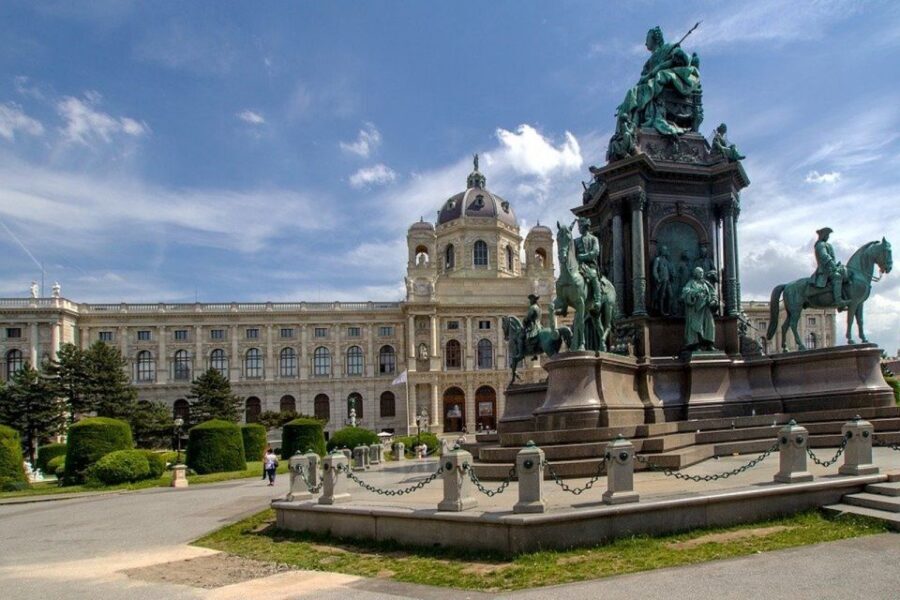
Next, you’ll run into the Votive Church and the main building of the University of Vienna. These stops underline that the Ringstrasse wasn’t built only for spectacle. It was built for public institutions tied to faith, education, and civic identity.
The Votive Church stands out as one of those buildings that feels like it has momentum even when you’re standing still. The University building adds a different flavor: learning as permanence. Together, they help you understand a key idea behind the Ring plan. Vienna wanted an ensemble, not scattered landmarks—so different public roles shared the same architectural language and the same boulevard setting.
Here’s a small practical tip: when you reach institutional buildings, don’t just look upward. Take a moment to scan the edges, entrances, and how the building faces the street. On this walk, the guide’s background information helps you see those choices as deliberate, not accidental.
City Hall, Burgtheater, and the Culture Belt of the Ring
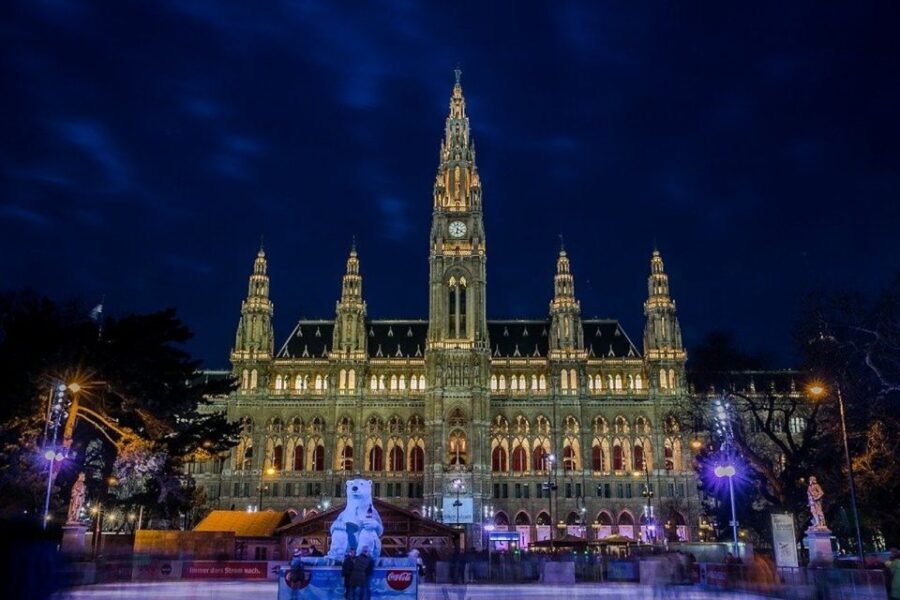
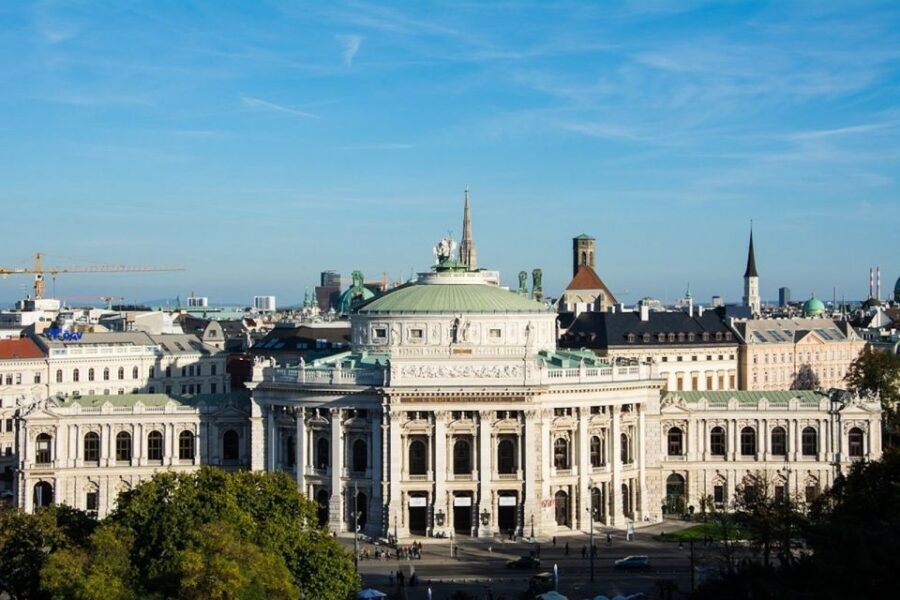
As the tour progresses, you’ll pass the City Hall and the Burgtheater. These are the kinds of sites that can overwhelm you visually, because they’re designed for attention. That’s why the tour’s structure matters: you need breaks and explanations, otherwise the Ring becomes one long blur of decorative details.
I like the way the tour pairs cultural landmarks with the “why” behind them. City Hall and Burgtheater weren’t only places you could visit. They were symbols of civic authority and artistic life lining the same grand promenade.
If you care about performance and public life, this is where you’ll feel the logic of the whole 19th-century project. The boulevard becomes a route connecting people to culture and government, all while showing off the city’s power to attract architects, artists, and planners from across Europe.
Parliament, Heldenplatz, and the Statues You’ll Actually Notice
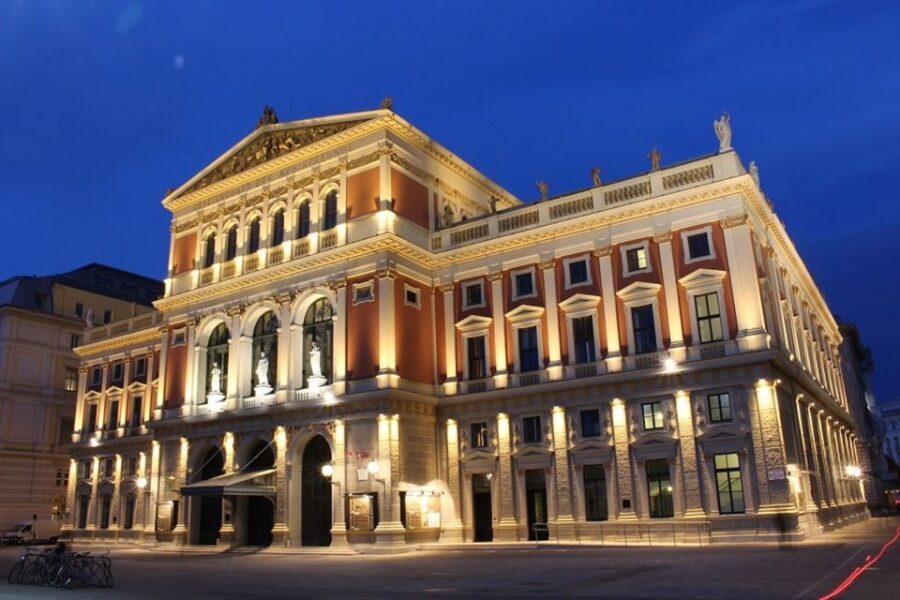
Then comes a stretch that’s hard to ignore: the Parliament and Heldenplatz. These spaces change the mood from architectural admiration to historical gravity. Parliament, in particular, is a reminder that the Ringstrasse was not only a display corridor—it was also a governance corridor.
Heldenplatz adds that sense of place and memory. This area is also where the tour leans into statuary details. You’ll encounter statues such as Pallas Athene and also the mayor Liebenberg connection linked to the beginning area.
The value of seeing these sculptures on a walking tour is simple: the guide helps you match name to meaning while you’re still close enough to look. If you try to do it on your own without context, it’s easy to treat statues like background decoration. With a guide, you start noticing how the city “speaks” through symbols.
Museums, Volksgarten, and the Garden Break You’ll Want
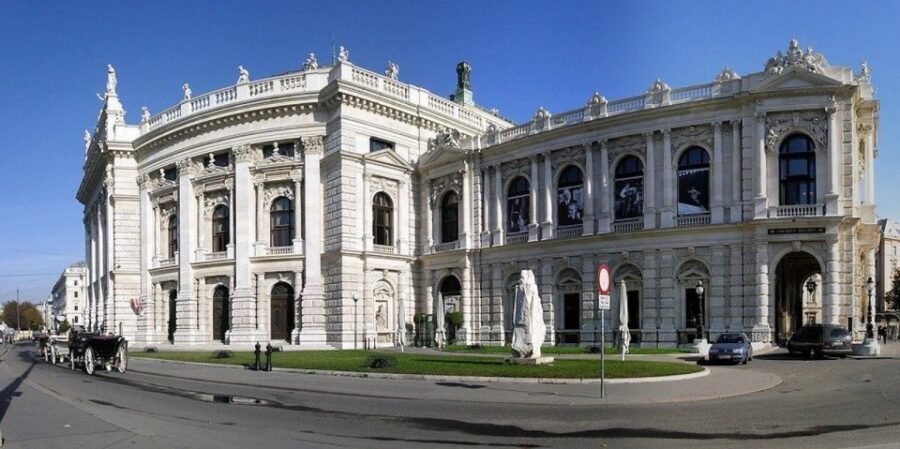
You’ll also reach the Museums area and the Volksgarten, where the tour includes short breaks in spacious gardens. This is more than a rest stop. It’s a reset button for your eyes and your attention.
On the Ring, you’re constantly in “look mode”: facades, ornament, rooflines. Gardens give you a new angle. You can see statues in a calmer setting and take in flower arrangements without the noise of constant street movement. It’s the kind of break that makes the next building feel fresh instead of repetitive.
If you’re traveling with anyone who gets tired of nonstop sightseeing, these garden segments help keep the experience enjoyable. The route is still efficient, but you get moments where you can breathe and actually enjoy the setting.
Ending Next to the Opera House: The Ring as One Story
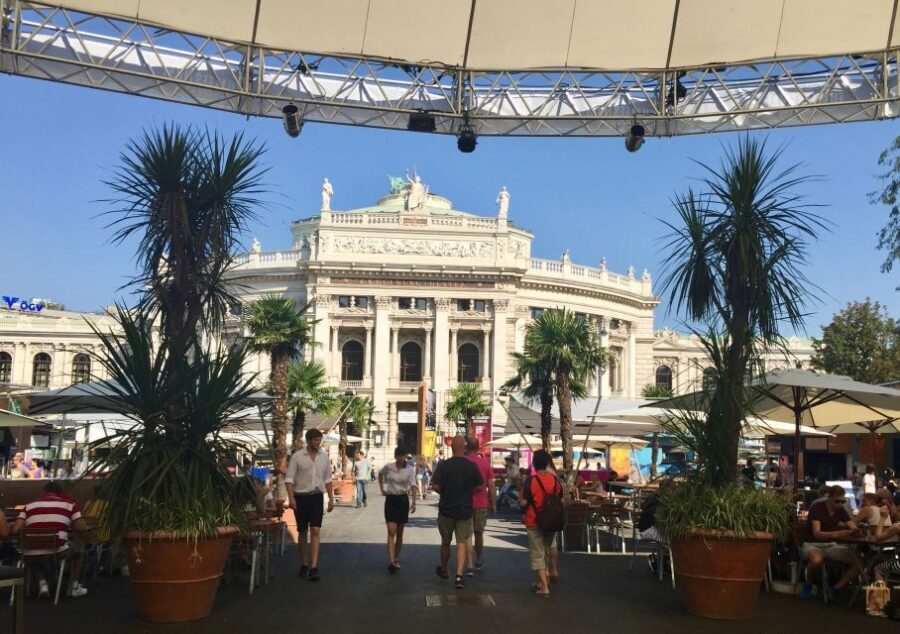
The tour ends next to the Opera House. That ending location is smart because it ties back to the original vision for the Ring: major cultural institutions along one grand boulevard.
By the time you reach the Opera, you’ve already seen civic buildings, educational landmarks, government spaces, museums, and palace-style wealth displays. So the final stop doesn’t feel random. It feels like the last scene in the same play.
If you want to keep the experience going after the walk, this is also a convenient place to continue on foot. Even if you’re just grabbing a coffee nearby, you’ll already understand the boulevard logic that brought you here.
Price and What You Get for $353 (Up to 8 People)
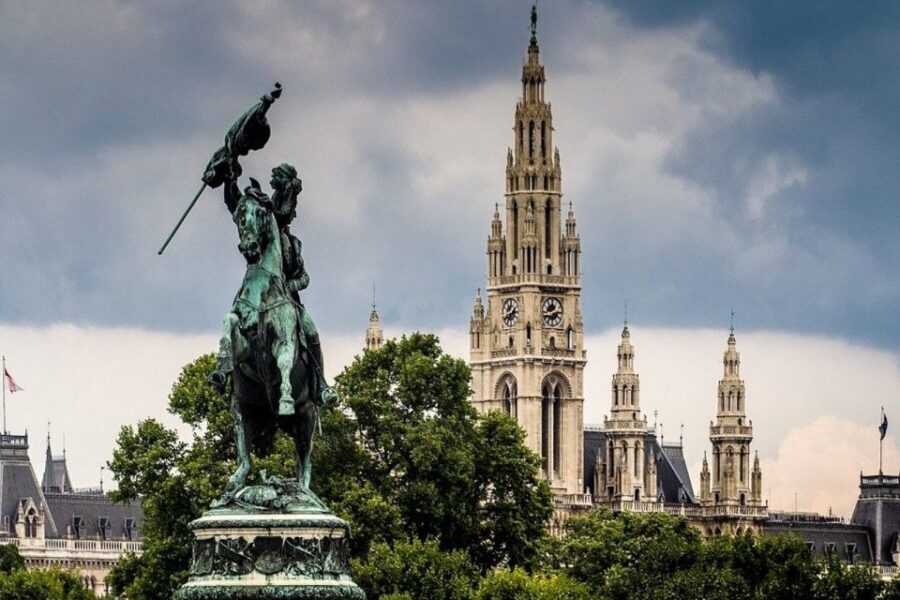
This tour costs $353 per group up to 8 for a 2-hour walk. That price format matters. You’re paying for a private guide for your group size, not a per-person ticket price that can jump if you travel with friends or family.
So the real value question is: are you the type who benefits from a guide pointing out details you’d miss? If yes, this tour makes sense because the highlights aren’t only “famous buildings.” They’re the connections—planning decisions, who came to Vienna for opportunity, and how wealth and hardship sat side by side along the same boulevard.
One more reason the price can feel fair: the tour includes an organized route covering multiple major stops, plus background stories designed to make the architecture understandable. On a self-guided walk, you’d still see the buildings, but you’d likely lose the narrative thread that helps you process what you’re looking at.
Who This Tour Suits Best
This is a strong fit if you want a high-impact overview of the Ringstrasse in a short window and you like learning the human side of architecture—patrons, artists, planners, and the workers who built the city even when conditions were harsh.
It also works well for:
- couples or small groups who prefer a private experience
- people who enjoy stories more than technical architectural jargon
- travelers who want to reach many landmarks but still have time to pause
If you’re after very specialized art-history or architecture deep dives for every building, you might find the pace and scope less satisfying. The tour is designed to be readable, not exhaustive.
Quick Practical Tips Before You Go
Bring a public transport ticket, since tram access isn’t included. If you plan to use transit before or after, make sure you’re covered so you’re not stuck figuring things out at the last minute.
The tour language can be Polish, German, or English, so choose the option that matches your comfort level. That small choice can make a big difference over a 2-hour walk, especially when the guide is sharing background stories.
And yes, weather matters. Like most European city walks, you’ll cover a lot of outdoor ground. A light rain should be manageable, but plan clothing accordingly.
Should You Book This Vienna Ringstrasse Walking Tour?
I’d book it if you want Vienna’s Ringstrasse to feel like a connected story instead of a checklist. The highlights—especially Palais Ephrusi, the garden breaks, and the way the guide threads together imperial planning, wealth, art, and worker hardship—make this tour more than scenic walking.
I’d think twice if you’re the kind of traveler who needs a long, ultra-detailed deep dive on each facade and you prefer slow pacing. The 2 hours are meant for breadth and clarity, not total immersion in every architectural detail.
If you’re visiting Vienna for a limited time, this is a good way to see the “representative part of the Ring,” understand why it exists, and finish with a landmark that anchors it all: the Opera House.
FAQ
How long is the Vienna Ringstrasse walking tour?
The tour lasts 2 hours.
Where does the tour start?
It starts at Liebenberg-Denkmal, Mölker Bastei 8, 1010 Wien.
What time should I arrive?
Arrive about 10 minutes before the activity starts.
What’s included in the price?
A guided city tour is included.
What’s not included?
Hotel pickup and drop off are not included, and a tram ticket is not included.
Is the tour wheelchair accessible?
Yes, it is wheelchair accessible.
How many people are in a group?
It’s a private group, up to 8 people.
What languages are available for the guide?
The guide is available in Polish, German, and English.
Can I get a refund if I cancel?
Yes. You can cancel up to 24 hours in advance for a full refund.
]]>This Wachau World Heritage hike swaps Vienna day-tour energy for guided walking through vineyards, forest paths, rock formations, and big river views around the medieval village of Spitz.
I especially like the small-group setup (only your group, with a maximum of 4 people) because Karin can adjust the pace to how you walk. You also get a true change of scenery: a 3-hour hike up and down through vineyards and woodland with stone oaks and pine trees, plus the kind of viewpoints you usually have to hike for, not bus for.
One thing to consider: this is medium difficulty and it’s weather-dependent, so you’ll want proper boots and comfort with uphill/downhill walking. And you’ll need cash for the optional wine tavern and for the short public bus ride in Spitz (card use is limited).
Key highlights you’ll actually feel on the day
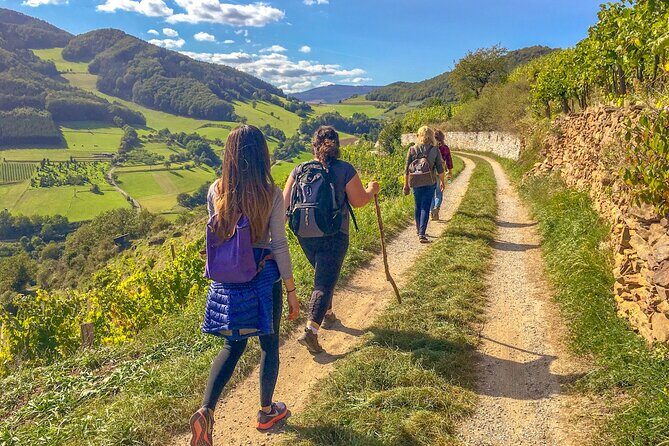
- A max of 4 people with Karin means the hike feels personal, not rushed
- World Heritage walking trails around Spitz with vineyards, stone-oak forest, and pine trees
- Danube River viewpoints built into the route, not saved for the last minute
- Optional Heurigen stop at the end for regional wine and local food
- Private round-trip transfer from Vienna (U4 Hütteldorf/bus terminal) plus a short public bus ride in Spitz
Why the Wachau World Heritage Trails are a smart escape from Vienna
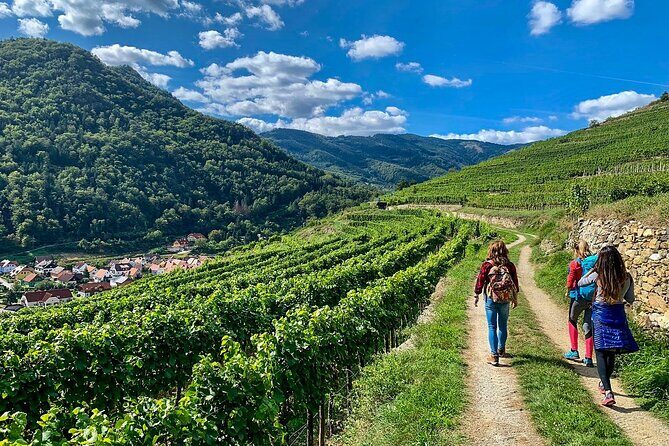
Vienna is gorgeous, but it can also feel like a lot in one day. This tour is designed for a slower rhythm: you leave the city drive time behind, then spend the bulk of the day outside on real paths.
The key reason this hike feels worthwhile is the setting. Wachau is a UNESCO-listed Wachau Cultural Landscape, and you’ll walk through the elements that make it what it is: vineyards by day, and quiet forest trails when you need a break from wide-open fields. The Danube is never far from your thinking here, because the route keeps turning your head back toward those river views.
I also like that the experience isn’t a vague nature walk. You have a professional hiking guide at all times, which matters when you’re on less obvious trails and want to feel confident where your feet land.
The end goal is simple: walk, look, breathe, then relax with a regional wine tavern option. If you’re the type who gets tired of only ticking sights off a list, this format tends to click fast.
Your day’s rhythm: transfers from Hütteldorf, a short bus in Spitz, then back to Vienna
From Vienna, the plan is straightforward. You start at the Vienna U4 Hütteldorf/bus terminal area, and you get round-trip private transfer included back to the same meeting point.
Once you’re in the Wachau area, you do a pleasant 3-hour hike (depending on your individual speed). There are breaks built in, and the walking time is what matters most: it’s long enough to feel like an outing, but not so long that you’re fried by lunchtime.
At the end, the tour includes a short public bus ride in Spitz. Budget about €4.10 per person for that bus ticket. Then you continue back to Vienna by car/transfer.
Total timing is comfortable but full. The hike portion is about 3 hours walking time, and the overall day runs around 7 hours. Also note the stated travel time: about 2.5 hours in transit from/to Vienna. This is a day trip, so you’re trading a late morning start and a full day for the payoff of getting far enough away from city crowds.
Stop 1: Wachau Cultural Landscape on World Heritage trails, not tourist sidewalks
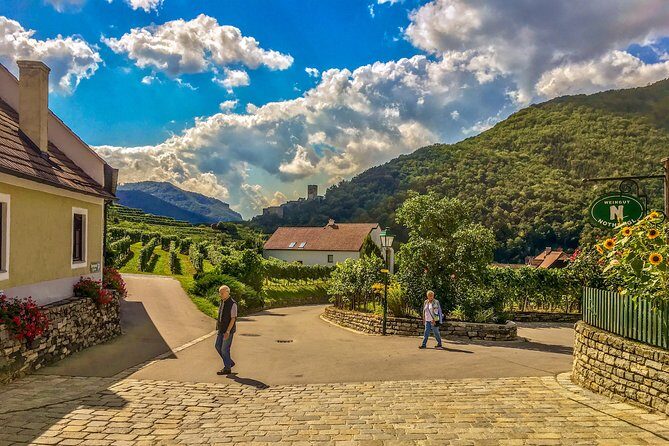
The first named stop is the Wachau Cultural Landscape, and what that means in practice is that you’re walking in the working scenery people come to admire from viewpoints, only you’re doing it at walking speed.
Expect that the route mixes open vineyard areas with woodland. The tour description calls out a progression you can feel underfoot: you go up and down as you move between vineyards and forests. Along the way you’ll pass rock formations and keep finding amazing views of the Danube.
This is where having a guide helps beyond basic navigation. Karin’s approach focuses on the trails themselves—using less crowded paths so you can actually hear the forest and notice the details you’d miss while staring from a bus window. If you’re someone who likes to observe plants and terrain as you go, this route is built for that.
One more practical benefit: starting with the Wachau context helps you understand why you’re walking in a specific kind of area. You’re not just doing exercise; you’re moving through a recognized cultural landscape shaped by the river and the vineyards.
The “drawback” for Stop 1 is also simple: if you want flat, easy strolling only, the up-and-down hiking through vineyards and forest won’t match your expectations. Bring the right footwear and you’ll be fine.
Stop 2: Spitz and the hike that strings vineyards, stone oaks, and Danube views together
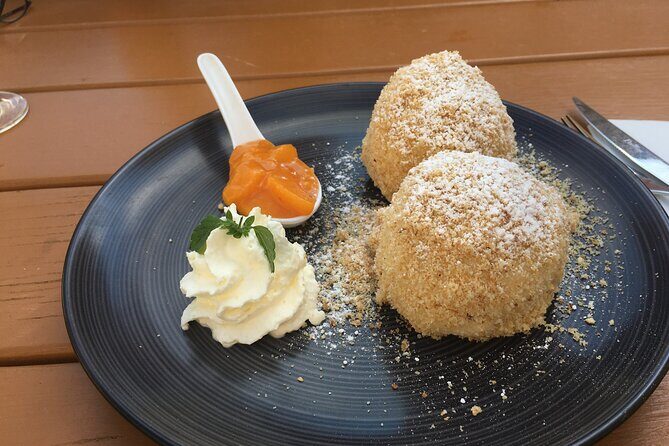
The second stop is Spitz, and it works well as the midpoint identity of the day. Spitz isn’t just a bus stop; it’s the medieval village reference point for where you’re walking from and back to.
The hike itself is described as a pleasant 3-hour trek that’s medium difficulty. You’ll spend time on paths that cross different textures of nature: vineyards, forests with stone oaks and pine trees, and stretches near beautiful rock formations. That mix matters because it keeps the hike from feeling repetitive.
It also explains why the guide matters. When you’re switching between open areas and more shaded trails, footing and pacing can change quickly. The tour notes that you should be sure-footed and enjoy walking, and I agree—that’s the difference between a relaxing day and a day that turns into careful edging.
I also like one detail that shows up in real feedback: Karin tends to take people onto off-the-path sections with great views, and there can be moments where you might even get chances to taste different fruits along the way. Even if you don’t expect a full picnic, that small connection to local growing seasons makes the day feel more lived-in.
At this stage you’re still not at the wine tavern yet. You’re still in walking mode, and that’s the point. The hike gives you time to arrive in Spitz with energy, not with exhaustion.
The Heurigen stop at the end: optional, local, and best with cash
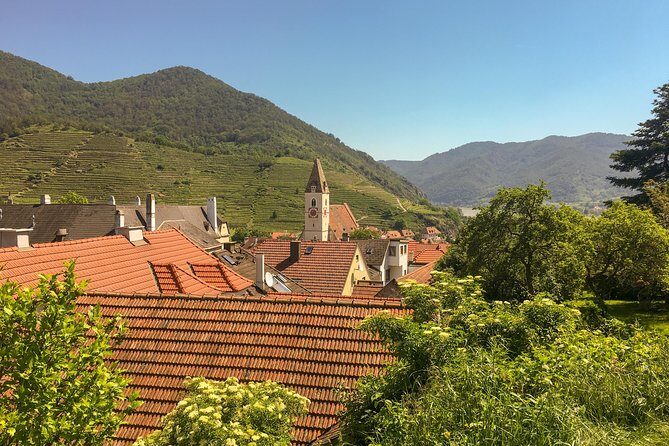
When the hiking portion finishes, you have an optional ending: a visit to a traditional wine tavern or inn (Heurigen). The tour keeps it flexible, so you can choose whether you want to make it part of your day.
Food and drinks aren’t included, so you’re paying for whatever you order. This is also where your cash planning matters. The tour specifically asks you to bring money in cash because card use is not reliable. It also says AMEX is not accepted, and credit cards often aren’t accepted either.
If you like local rhythm, this stop is a good match. After a walking day in vineyards and forest, sitting down with regional wine and local food feels like a natural way to close the loop instead of sprinting back to another attraction.
Also, don’t wait until the last minute to decide. If you know you want the Heurigen experience, bring the right amount of cash earlier so you’re not scrambling when the group is already moving.
The main downside is that this end stop depends on how you feel physically at the end of the hike. If you’re carrying fatigue or your walking pace is slower than average, you might want to skip it and just focus on the ride back.
Price check: what $301.03 covers and when it feels like a win
At $301.03 per person for a 7-hour day trip, this is not a bargain tour. But it also isn’t pretending to be one. You’re paying for a mix that usually costs more when booked separately: private round-trip transfer, a professional hiking guide, and a private/small group format capped at 4 people.
Here’s where the value gets real: you’re not sharing your day with a large group that forces you onto a generic pace. Small groups are often more expensive, but they make a difference for a medium-difficulty hike where the guide may help adjust your route choices and walking tempo.
You’re also paying for the “effort saved” from Vienna to the Wachau region. The day includes about 2.5 hours of travel time from/to Vienna, and the private transfer handles that without you needing to figure out connections.
The one cost you should plan for is food/drinks and the €4.10 Spitz bus ticket. Also plan for cash use at the end.
If you can travel with others (up to the small-group max) or you prefer guided walking over self-guided scrambling, the price tends to feel justified. If you want only the absolute cheapest way to see the Wachau, you may prefer another format.
One more heads-up: this kind of tour is booked fairly far ahead on average (around 144 days). If you have firm dates, booking sooner helps.
What to pack (and what will actually save your day)
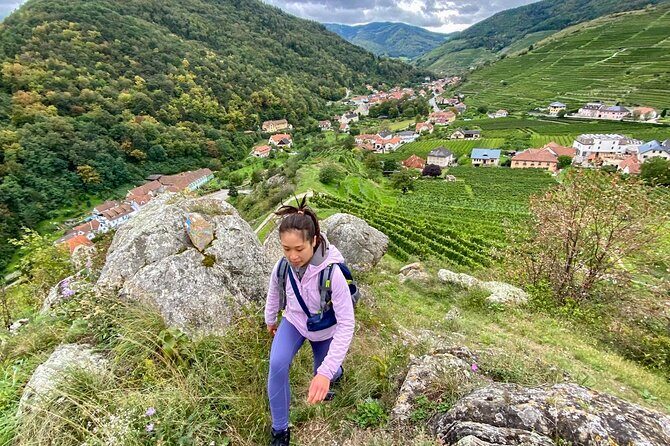
This tour is outdoors most of the day, so packing isn’t optional detail—it’s part of making the hike enjoyable.
I’d treat your packing list like a mini expedition:
- Hiking boots with good traction (the guide calls this out for a reason)
- Water minimum 1.5 litre plus a snack
- Sun and rain protection (bring both, because weather can change fast out in the valley)
- A day bag that holds essentials without making you feel over-laden
Clothing matters too. Even when the day feels mild at the start, the hike goes up and down through different terrain, so you’ll want layers that don’t trap you when you’re moving.
And please don’t ignore the payment reality. Bring cash for the restaurant and the bus ticket. The tour notes that credit cards are often not accepted and AMEX is never accepted. That’s not a suggestion; it’s a plan.
If you do this right, the tour becomes exactly what it promises: a guided walk where you can focus on pace, views, and the quiet parts of the Wachau.
Who this Wachau hike is best for (and who should choose another day)
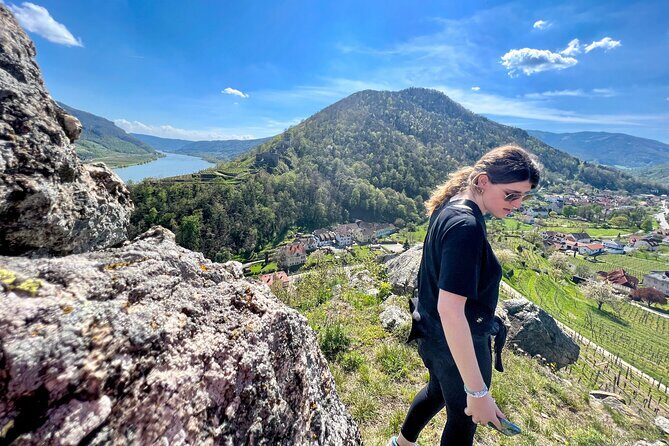
This is for adults 18+ who want a moderate physical day and are comfortable being on trails. The tour specifically describes the hike as medium difficulty and says you should be in good physical condition and sure-footed.
You’ll likely enjoy it if you:
- want to trade city sights for walking
- prefer small-group attention
- enjoy vineyards, forest paths, and getting river views from trail-level
- like the idea of ending with an optional Heurigen stop
You might skip it if you:
- need flat, fully accessible routes (the tour describes up-and-down hiking)
- can’t comfortably handle medium hiking effort
- hate dealing with cash (because the tour expects cash use)
Also, if you’re the type who only wants photos without time outside, the day’s design may feel like too much walking. But if you like moving through a place, this is the right kind of energy.
Should you book the Wachau World Heritage Hike?
I’d book this if you want an authentic Wachau day that feels guided, calm, and built around real terrain—not a hurried checklist. The standout strengths are the small group limit and the guide-led approach, paired with the route’s mix of vineyards, stone-oak and pine forest, rock formations, and Danube viewpoints. It’s also a great antidote to a week that’s heavy on buses, museums, and big-ticket sights.
I’d think twice if you’re not ready for a medium-difficulty day, or if weather changes would make you uncomfortable. The tour requires good weather, and it’s not set up like an indoor alternative.
One last practical note: because the tour can sell out well in advance, if you have dates that match your hiking window, don’t wait until the week of. Plan for boots, bring water, and keep some cash aside for the end.
FAQ
How long is the hike, and how long is the full tour?
The walking time is about 3 hours (excluding breaks), and the full experience is around 7 hours total.
Where does the tour start in Vienna?
It includes round-trip transfer to and from the Vienna U4 Hütteldorf/bus terminal area, with the meeting point listed as 57X6+3F Vienna, Austria.
Is this a private tour?
Yes. It’s a private/small group tour, and only your group participates. The groups are described as maximum 4 people.
What fitness level do I need?
The hike is listed as medium difficulty. You should have moderate physical fitness, be in good physical condition, and be sure-footed.
What transport is included, and is there an extra bus in Spitz?
Round-trip private transfer from/to Vienna is included. There’s also a short public bus ride in Spitz with a ticket cost of €4.10 per person.
What should I bring for the day?
Bring proper hiking gear, especially boots with good traction. Also bring a snack and at least 1.5 litres of water, plus sun and rain protection.
Is food or wine included?
Food and drinks are not included. There is an optional visit to a Heurigen at the end of the tour, but you’d pay there separately.
Do I need cash?
Yes. The tour asks you to bring money in cash for the restaurant and the bus ride, noting that CC is often not accepted and AMEX is never accepted.
What if the weather is poor?
The experience requires good weather. If it’s canceled due to poor weather, you’ll be offered a different date or a full refund.
Can I cancel for free?
Yes. Free cancellation is available up to 24 hours in advance for a full refund.
]]>You meet at Schutzengel Apotheke in Favoritenstraße, and then you head straight to the cellar experience. One thing to consider: since bottled water and snacks are not included, you may want to grab a drink before you start—especially if you’re doing this on a busy day in the city.
Key highlights (what makes this tour worth your time)
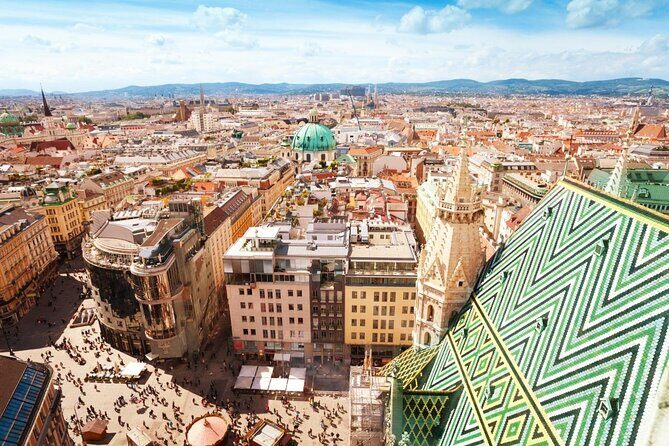
- Private access to an exclusively open historical pharmacy cellar
- Small group size with a maximum of 12 travelers for a more personal feel
- English-guided storytelling with humor and pharmacy-focused knowledge
- A memorable ending with the tour including a small sweet takeaway (their own bonbons)
- Simple meet-up at Schutzengel Apotheke, near public transportation
Price and what you get in Vienna pharmacy history terms
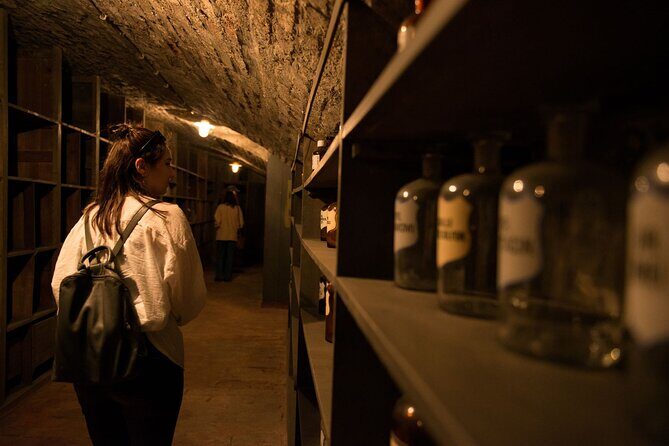
This Historical Pharmacy Cellar Guided Tour costs $38.53 per person for roughly an hour. On paper, it’s not a bargain like a free walking tour, but for Vienna, the pricing makes sense because you’re not just looking at exhibits behind glass. You’re getting entrance to private and hidden cellars, which is the big value piece here. That access is the product.
Also, the price is “clean.” It includes all fees and taxes and the cellar entrance. You’re not paying extra at the door for the main event. The only things you’d usually need to budget for are basic comforts: bottled water and snacks are not included.
One more practical point: it’s booked about 30 days in advance on average. That usually means it’s a popular slot, partly because the group size is capped at 12. If you’re traveling in high season or you have limited days in Vienna, it’s smart to reserve early so you don’t end up stuck with an inconvenient time.
Where you start: Schutzengel Apotheke in Favoritenstraße
Your tour meets at Schutzengel Apotheke, Favoritenstraße 11, 1040 Wien, Austria. The location matters because you’re not doing a long trek across town before the story even begins. This also means you’re close to public transportation, so you can plan around transit rather than relying on a car or taxis.
I like that the tour starts and ends back at the meeting point. It removes one of the common headaches with tours in Vienna: you don’t have to worry about where you’ll end up or how to get back after the cellar portion.
What to do when you arrive: give yourself a few minutes to orient yourself at the pharmacy entrance and confirm your group. You’ll be using a mobile ticket, so have it ready on your phone and keep an eye on the timing.
The experience: stepping into a private historical pharmacy cellar
The main event is straightforward: you visit an exclusively open and private historical pharmacy cellar. That single sentence is doing a lot of work, because it tells you what this tour is really about—access and atmosphere.
Unlike typical museum basement tours, a pharmacy cellar implies storage, ingredients, and the behind-the-scenes side of how medicine was handled. Even without extra details in the listing, the reviews hint at what the space feels like: moody, with a strong sense of place. If you like history that’s tied to real functions—how people prepared and stored remedies—this format tends to land better than a generic underground walk.
Here’s what you can expect from the tour flow during that hour:
- You’ll be guided through the cellar space, with the focus on pharmacy rather than architecture alone.
- The guide explains concepts in a way that connects the space to the people and practices behind it.
- The pacing is designed for a small group, so you’ll likely get chances to follow along without feeling lost in a crowd.
Because the cellar is private and hidden, the tour also feels less like you’re doing the same thing everyone else does. You’re there because the site is being opened specifically for this experience—not just because it’s a public attraction on a fixed route.
Guide energy matters: humor, know-how, and Julius’s storytelling
A big part of whether a short tour feels worth it is the guide. In the feedback, the guiding style shows up clearly. One guide highlighted by name is Julius, connected to the apotheke owners’ family. The tour experience paired his pickup and guidance with a sense of humor, plus real knowledge.
That combination is powerful in this kind of setting. Cellars can feel static if the story is dry. Humor and clear explanations keep you oriented, and they help you understand why certain details matter—like the practical reasons behind storage and how a pharmacy operated in the past.
Even when the guidance is described more generally as coming from an apotheke professional, the theme stays the same: the tour is described as interesting, short, and engaging, not overly technical. It sounds like the guide balances facts with delivery, which is exactly what you want if your time is limited.
The result: you leave with more than just a few visuals. You leave with a better mental picture of what a pharmacy cellar was for, and how it fits into the broader daily life of the apotheke.
The ending touch: their bonbons and a sweet takeaway
This tour doesn’t just stop when you walk back upstairs. One of the reviews mentions a small close-out perk: a bag of the pharmacy’s own bonbons. It’s not the reason to book, but it adds warmth to the experience.
Why do I like this kind of ending? It’s a simple way to connect the past with the present. The story is about pharmacy culture and what it means. A sweet takeaway makes that feel personal instead of purely transactional.
What to do before and after (so you enjoy the hour)
Since the cellar portion is about an hour, your best strategy is to treat this like a focused stop on your day rather than a time filler.
Before you go:
- Plan for a quick snack or drink on your own. Bottled water and snacks aren’t included.
- Dress for indoor conditions. Cellars tend to be cooler and a bit different in feel than Vienna streets, so comfortable layers make life easier.
After you finish:
- Use the fact that the tour ends back at the meeting point. From there, you can continue exploring the area without needing a new plan for pickup or transport.
- If you’re the type who likes to connect what you learn to what you see, consider pairing this with a nearby look at pharmacy-related history around the neighborhood. You’ll be in the right mindset to notice details.
Also, remember group size is capped at 12. That’s a plus, but it can mean timing matters. Get there on time so the group flow stays smooth.
How good is the value? My take on $38.53 in Vienna
Let’s talk value in a way that helps you decide fast.
You’re paying for three things:
- Entrance to a private cellar that’s not just publicly accessible.
- Guided interpretation in English, with storytelling that includes humor.
- A tightly timed experience (about one hour) that fits into a busy itinerary.
At $38.53, it’s not cheap, but it’s also not priced like a full-day specialty tour. The fact that it includes fees and taxes makes it easier to judge—you know what you’re paying up front.
If your ideal tour is a long multi-stop route with lots of locations, this one might feel narrow. But if you want a focused experience—one place, guided well, and worth the price because it’s private—that’s where it looks like strong value.
One more signal: the overall rating is 4.7, with 11 reviews, and 91% of people recommended it. That doesn’t automatically mean it’s perfect for everyone, but it does suggest the cellar visit and guide delivery consistently land well.
Who this tour suits best (and who might want to skip)
This is a great match if you:
- Like Vienna details and prefer stories tied to daily life, not just monuments
- Want something different from the standard palace and church circuit
- Enjoy short tours with a clear focus
- Are traveling with limited time and want a single “must-do” experience
It might be less ideal if you:
- Want a long, slow museum-style experience (this is about an hour)
- Are hoping for included water or snacks (you’ll need to bring or buy your own)
- Get impatient with indoor spaces or cooler settings, since the main portion is underground
The good news is that most people can participate. The tour is designed to be approachable, and it’s limited to 12 people, which helps keep it manageable.
Booking smart: when to reserve and how to plan your timing
Confirmation is received at booking, so you won’t be waiting around. You’ll also use a mobile ticket, which is convenient in a city where paper tickets can feel like extra hassle.
Because tours like this book around 30 days in advance on average, aim to reserve sooner rather than later. If you’re traveling during busy periods, early booking can be the difference between a schedule that works and one that forces you to stretch your day.
For timing, try to place this when you’re not already exhausted. Underground tours are fun, but you want your attention switched on for storytelling.
Should you book the Historical Pharmacy Cellar tour?
I’d book it if you want a short, high-impact Vienna experience focused on one special place: a private historical pharmacy cellar. The included cellar entrance plus the guide’s human touch—humor, knowledge, and a sense of how the pharmacy world worked—makes the hour feel like more than a quick peek.
Skip it if you want a multi-stop itinerary, included snacks and water, or a longer deep dive format. This tour is concentrated. It trades duration for access and storytelling.
FAQ
How long is the Historical Pharmacy Cellar Guided Tour?
It lasts about 1 hour.
What does the tour cost, and what’s included in the price?
The price is $38.53 per person, and it includes all fees and taxes plus entrance to the private and hidden cellars.
Where do I meet for the tour?
Meet at Schutzengel Apotheke, Favoritenstraße 11, 1040 Wien, Austria.
Does the tour start and end at the same place?
Yes. It ends back at the meeting point.
Is the tour offered in English?
Yes, it’s offered in English.
How big is the group?
There’s a maximum of 12 travelers.
Is bottled water or snacks included?
No. Bottled water and snacks are not included.
Where should I get my ticket?
You’ll receive a mobile ticket, and confirmation is received at booking.
Is free cancellation available?
Yes, you can cancel for a full refund up to 24 hours in advance of the experience’s start time.
]]>What I like most is the way the pace can be adjusted to your group—something guide Dusan Drca is specifically praised for. The plan also includes little comforts like soda/pop and parking, so you are not stuck hunting down basics. The main consideration: it is non-refundable, and lunch is not included (you’ll need to plan for it or add it on request).
Key things you should know before you go

- Pickup from anywhere in Vienna (and the airport) means you start relaxed, not commuting with luggage.
- Private group up to 8 people keeps the day flexible and less chaotic than big-group sightseeing.
- Air-conditioned vehicle + parking handled helps when Vienna’s streets slow you down.
- Admissions are included for major stops like Schönbrunn (including Sisi Museum & Kaiserappartements), St. Stephen’s, and Karlskirche.
- Guide flexibility is a standout; Dusan Drca is noted for helping match the day to your needs and even practical stuff like bags.
- You’ll see layered Vienna history: Roman ruins, imperial power, and Jewish history in one route.
Price and logistics: what $782.67 per group really means
This tour is priced at $782.67 per group, up to 8 people, running about 8 hours. That matters, because you are not paying per person in a way that suddenly changes at the cashier. If you fill the group, the math gets friendlier fast—at the maximum group size, you’re effectively at under $100 per person for the full guided day with private transport.
You also get real-world value in the details:
- Private transportation in an air-conditioned vehicle
- Parking fees taken care of
- Mobile ticket
- A guide who stays with you through the stops
- Admission prices included at key attractions (more on which ones below)
If your group is smaller than eight, it can still be a solid deal if you value the convenience of pickup and a driver who knows where to go. But if you’re traveling solo or as a couple and you’re price-sensitive, you might compare against shared tours.
The ride starts at your door: pickup, timing, and comfort
The tour offers pickup from anywhere in Vienna from your chosen address, plus pickup from Vienna Airport. Your driver contacts you when they arrive, so you’re not standing around guessing. The tour runs during broad daily hours (open 8:00 AM to 10:00 PM across the listed date range), so in practice you can often align your day with your flight, hotel, or energy level.
The big practical win here is that the itinerary is packed with major sights spread across Vienna. In a normal self-guided day, you burn time and patience on transit. Here, you keep that time for your tour stops—especially helpful if you’d rather walk less and see more.
Stop 1: Schloss Schönbrunn and what you’ll actually get inside

Schloss Schönbrunn is the star name most people know. This stop is about 1 hour, and you have the benefit of an admission ticket included. The included admissions specifically mention the Sisi Museum & Kaiserappartements, which is a strong combo if you want both the human story behind Empress Elisabeth and the official imperial settings.
Here’s how I’d think about this stop as a visitor:
- The time is limited, so focus on what you want most—Sisi’s story, the imperial apartments, or the overall palace vibe.
- Because you’re in a guided format, you can get your bearings quickly instead of wandering until the hour slips away.
A possible drawback: with only about an hour, you won’t have time for the entire palace complex like you would on a slower, full-day palace visit. If Schönbrunn is your top priority, treat this as the highlights version.
Stop 2: Hofburg Palace, imperial power, and quick hits
The second stop is the Hofburg, again with about 1 hour and admission ticket included. Hofburg matters because it represents the long, political center of Habsburg power, not just a pretty building.
This is a good stop if you like context. A cathedral can explain belief; a palace explains control, ritual, and administration. With a guide, you’re more likely to notice the small details that connect the building to the people who ran an empire.
The trade-off is the same theme you’ll see all day: it is not an extended deep dive through every wing. It’s a curated sweep meant to keep momentum without turning the day into a marathon.
Stop 3: St. Stephen’s Cathedral (Stephansdom) and why 1.5 hours works
Next is Stephansdom—about 1 hour 30 minutes with admission included. This stop gets extra time because it’s one of Vienna’s most iconic interiors and a place where there’s plenty to see and interpret.
With 90 minutes, you can do more than just look at the outside and walk in. You can slow down, take in architectural features, and still have time for the guide to connect what you’re seeing to Vienna’s bigger story.
Practical thought: churches can be visually intense. If you tend to get “museum fatigue,” this is the stop where you’ll appreciate having someone point out what matters so you’re not forced to choose between everything and nothing.
Stop 4: Michaelerplatz Roman ruins—Vienna’s older layer
Then comes Michaelerplatz, where you’ll see Roman ruins. This stop is listed as about 1 hour and admission ticket included.
This part of the day is especially valuable because it breaks the usual pattern of seeing only medieval and imperial Vienna. Roman remains remind you Vienna didn’t start with palaces and cathedrals. It started as a much older settlement layer that kept getting built over.
One consideration: Roman ruins can be easier to over-skim if you’re mentally still in cathedral mode. Give yourself permission to slow down here and treat it like a “different chapter,” not a quick pause.
Stop 5: Judenplatz Holocaust Memorial—meaningful, not a side quest
Next is the Judenplatz Holocaust Memorial, paired with Jewish Quarter & Judenplatz. This is about 1 hour and also marked with admission included.
This is one of those stops where the best experience comes from respectful pacing. The memorial is not entertainment, so your guide’s job is important: they help keep the visit grounded and provide the context that turns a location into understanding.
If your group includes people who prefer quieter moments, this is a place where you can pause and reflect without feeling like you’re falling behind schedule. It’s also a good moment to check in with your own comfort level—if you need extra time, you’ll want to say so early.
Stop 6: Heldenplatz and Neue Burg—grand exteriors with political muscle
Stop six is Heldenplatz & Neue Burg, about 1 hour 30 minutes, with admission ticket included.
This is where Vienna shifts back to big visuals: monumental spaces and imperial-era symbolism. The palace frontages and open plazas are the kind of sight where photos are easy, but interpretation makes the difference. A guide can help you connect the architectural language to the political messages it was built to send.
This is also a timing win. You’re coming from a heavy memorial stop; having time here lets you reset your eyes on scale and form without erasing what came before.
Stop 7: Karlskirche and Karlsplatz—Vienna’s Baroque punch
The final stop is Karlskirche and Karlsplatz, about 1 hour, with admission included.
Karlskirche is a different flavor from the Gothic feel of St. Stephen’s. It’s Baroque, with a dramatic silhouette and details that feel designed to pull you in from a distance. If you only visit one church today, St. Stephen’s is the name most people remember. If you visit both, your brain gets a better sense of how Vienna’s religious architecture evolved.
This last stop also helps the day land well: you finish with something visually satisfying, not just another building.
Lunch breaks (or not): how to handle food without wrecking the schedule
Lunch is not included. The good news: it is possible to include lunch on request, and the cost depends on the restaurant, with a guideline of about €50 per person.
Here’s the practical approach I recommend:
- If you want lunch, ask before the day so your guide can suggest a place that fits your timing.
- If your group has dietary needs, this is the right tour format to request help—there’s an emphasis (from guide experience) on making sure the restaurant owners are aware of needs.
If you skip lunch, plan on snacks. Even with soda/pop included, a long day with several interior visits can leave you hungry at the wrong moment.
How long it will feel: 8 hours, seven major stops
This route stacks a lot into one day: Schönbrunn, Hofburg, Stephansdom, Roman ruins at Michaelerplatz, Judenplatz Holocaust Memorial, Heldenplatz/Neue Burg, and Karlskirche. The planned durations are mostly around one hour per stop, with 1 hour 30 minutes at Stephansdom and Heldenplatz.
That schedule is a choice. It’s built for people who want a strong cross-section of Vienna without spending days on planning. If you like wandering and lingering, you’ll feel the time pressure; if you like efficient sightseeing with a human who can keep you on track, you’ll be in the sweet spot.
Private guide, real flexibility: what you get from Dusan Drca’s style
One of the most praised parts of this experience is the guide’s ability to customize. Dusan Drca is specifically noted for tailoring the trip to requirements like more driving and less walking, plus practical help—like handling bags and assisting with finding a place to eat that matches needs.
That’s not a small detail. In Vienna, walking between major sights can add up fast. Having a guide who can adjust the day changes how you experience the city: less fatigue, less stress, and more time looking at the actual places you came for.
Best for: who this Vienna city tour fits
You’ll likely enjoy this tour most if:
- You want Vienna highlights in one day: palaces, cathedrals, Roman ruins, and Jewish history.
- Your group includes different mobility needs and you prefer a route that can adapt.
- You value private transportation and included admissions to reduce decision-making.
- You want a guide who can help manage practical travel details, not just facts on a sign.
If you’re the kind of traveler who loves deep, slow museum time, you might still enjoy this—but expect it to feel like a curated overview rather than a full immersion day at one site.
Quick practical tips before you book this day
- Wear shoes you can stand in for interior stops. Even with private transport, the day includes multiple walk-ins.
- Bring a light layer. Churches and indoor spaces can feel cooler than the street.
- If you care about lunch, decide early. Adding lunch on request works best when it is not a last-minute scramble.
- Plan for a respectful day at Judenplatz Holocaust Memorial—give yourself mental space, not just time on the clock.
- Use the mobile ticket. Keep it accessible so check-in doesn’t slow the group.
Should you book this Grand Historical and Cultural Vienna City Tour?
I’d book it if you want a one-day Vienna plan that covers the most important sights without making you act like a logistics manager. The combination of pickup flexibility, private air-conditioned transport, and included admissions at several major stops is the kind of value that shows up in the end—not just on paper.
I’d think twice if your top priority is slow, comprehensive time in one palace or one museum. This tour is designed to hit key sites efficiently, and lunch is extra. Also, because it’s non-refundable and cannot be changed, it fits best if your dates are already locked in.
If you’re traveling with family, friends, or anyone who prefers comfort over long walks, this is a strong way to see Vienna’s big story in one day.
FAQ
How long is the Grand Historical and Cultural Vienna City Tour?
The tour runs for about 8 hours.
What size is the group for this private tour?
It is private, and only your group participates. The group limit is up to 8 people.
Is pickup included, and where can the driver pick you up from?
Yes. Pickup is offered from anywhere in Vienna, including Vienna Airport. You share your desired pickup address, and the driver contacts you when they arrive.
Which attractions have admission tickets included?
Admission tickets are included for Schloss Schönbrunn (including the Sisi Museum & Kaiserappartements), St. Stephen’s Cathedral (Stephansdom), and Karlskirche. The itinerary also lists admission ticket included for Hofburg and other listed stops.
Is lunch included in the tour price?
No. Lunch is not included, but it can be added on request. The cost depends on the restaurant, with a guideline of about €50 per person.
What language is the tour offered in?
The tour is offered in English.
]]>What I like most is the focus on the Viennese elite and their darker side, not just gossip for shock value. I also appreciate how the tour ties the taboo themes to everyday realities, from court-linked prostitution to what people paid for and why.
One consideration: this is not a light, kid-friendly stroll. If you’re uncomfortable with explicit adult topics and discussions of prostitution, you may want to pass.
Key Things You’ll Notice On This Walk
- Licensed local guide with real personality (Josef is highlighted for wit and charm)
- Taboo topics centered, not sprinkled
- Short, efficient 2-hour pacing so you don’t feel rushed
- Dark stories placed in Vienna’s social context
- A smaller-feeling group dynamic that leaves room for questions
What This Vienna Sex-Scandal Walk Really Covers
This tour is built around one idea: Vienna’s history includes sex, power, and private behavior—and those things show up in the city’s streets, institutions, and social life. You’re not getting a sanitized version. Instead, you’re guided through a “dark side” narrative that connects scandal to class, reputation, and money.
The adult content is the point. Expect kinky stories, prostitution history, and controversial anecdotes presented as part of Vienna’s cultural record. The tone is street-level and story-driven, so it doesn’t feel like a lecture, but it still aims to explain why these topics mattered to people at the time.
I also like that the tour mixes well-known shock stories with odd little side facts. That keeps it from becoming one-note. You’ll hear claims like Napoleon’s anatomy after his death, plus an offbeat line about how the sperm of geniuses tastes different. Whether you find that fascinating or ridiculous, it’s the kind of thing a normal tour won’t even touch.
Getting Started Under A Yellow PRIME TOURS Umbrella
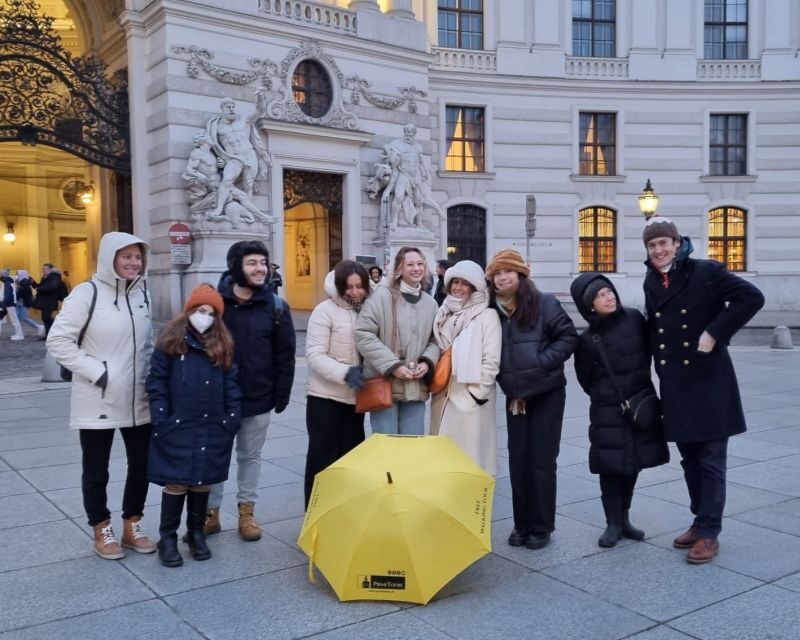
You’ll meet in Vienna’s center at the Memorial against war and fascism. Look for a yellow PRIME TOURS umbrella, and the guide will be nearby.
This matters more than it sounds. Meeting at a clear landmark helps you keep your bearings quickly, especially because this tour is 2 hours of walking and storytelling. You’ll also want to arrive on time. The guide won’t slow down for late arrivals, and you’ll want to catch the opening context that sets the tone for everything that follows.
The tour runs with a live guide in German. If your German is basic, you can still follow the structure, but you’ll get the most out of it if you’re comfortable listening.
How The Tour Keeps Vienna’s “Elite Scandal” In Focus
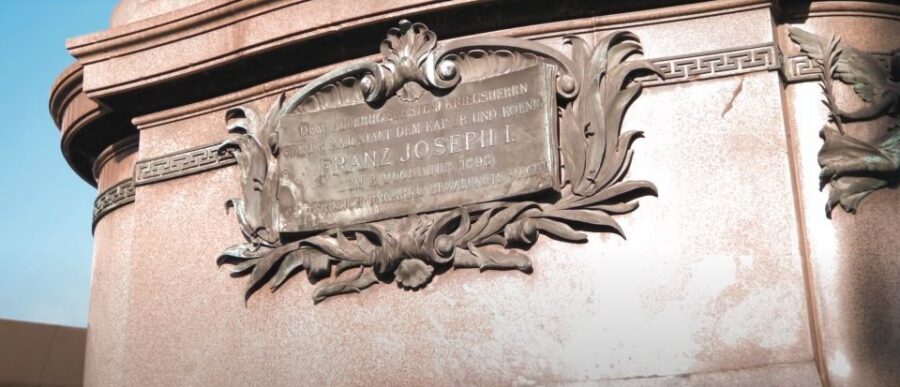
A lot of tours use adult themes as a gimmick. This one is more organized around Vienna’s social hierarchy. You’ll spend time on stories tied to the Viennese elite—people with status, influence, and the ability to hide what was going on behind closed doors.
The practical value here is context. Once you understand that taboo behavior wasn’t limited to a single class, Vienna starts to make more sense. The tour frames prostitution and sexual commerce as something that could connect to broader society, including court culture, rather than existing purely on the margins.
You’ll also hear about how people discussed these issues and what counted as scandal. That’s useful for travel because Vienna has a “public face” in its architecture and ceremonies. This tour gives you the private layer.
And yes, the stories include the kind of shock details you came for. But the guide’s job is to keep it coherent—so it feels like history, not random jokes.
Napoleon’s Story And Other Shock Topics You’ll Hear About
One of the headline anecdotes is Napoleon’s penis—presented as a famously cut off piece that was sold after his death. The tour doesn’t treat it like a joke; it uses it as a springboard into how societies trade in bodies, notoriety, and power narratives.
If you’re the type who hates bodily humor, this might feel too graphic for your taste. But if you’re okay with the darker end of historical storytelling, you’ll probably find the shock factor useful. It grabs your attention, then the guide pulls you back toward what these stories reveal about the era and human obsession with celebrity and control.
The same approach shows up with the stranger “science” claim: the sperm of geniuses tastes different. It’s unusual on purpose. You’re meant to walk away remembering Vienna as a city that produced both grand thinking and strange folklore—often tied to people trying to explain status, talent, and desire.
Court-Linked Brothels And The Real Social Map Of Prostitution
The tour also focuses on brothels that were popular in Vienna’s royal court. You’ll be shown where such establishments were part of the social atmosphere, and you’ll hear how prostitution could show up in everyday life across different social levels.
This is one of the more important themes for understanding the city. Vienna is full of grand buildings and carefully designed streets. The adult story side helps you connect those spaces to the people moving through them—especially when money, favor, and status mixed together.
You’ll also learn how prostitution functioned in practice: where sex workers could make their money best during the 19th century, and the methods used to attract clients. The tour uses these details to explain behavior and economics, not just scandal.
A quick warning: the topic is adult. The guide is talking about sex work directly, including the tactics involved. That’s part of the value, but it also means you should mentally prepare yourself before you arrive.
Where The “Everyday Life” Angle Makes It More Than Gossip
A big reason this tour works is that it doesn’t treat taboo history as a separate weird world. It shows how sexual commerce could be woven into mainstream life, even when society publicly pretended otherwise.
That shift changes how you view Vienna. Instead of thinking, “People were scandalous,” you start thinking, “People had systems.” Power relationships, social status, money, and reputation all show up in the story. You’ll come away with a clearer idea of how people navigated taboo topics while still participating in everyday society.
I like this because it’s not just entertainment. It helps you read the city with more nuance. When you return to a public square or pass a historic building, you’ll think about the private realities that ran alongside it.
The Pacing: Two Hours That Don’t Feel Like A Sprint
This experience is 2 hours of walking in Vienna’s center. That length is ideal for story tours because it’s long enough to build a narrative and short enough to stay energetic.
One thing that stands out from the experience you can expect: the group doesn’t feel like you’re being herded. Josef (a guide name you may recognize from feedback) is described as a true Viennese original, with wit and charm. That matters because the guide’s personality affects how the stories land. A good guide can keep the humor from becoming crude and keep the facts from turning dry.
Also, the group dynamic can be gentler than the typical bus-tour crowd. A smaller group feel helps for questions, and it usually means you’re not constantly catching up to the guide at each stop.
Guide Quality: Why Josef’s Style Matters
If you’re spending your time—and money—on taboo history, you want a guide who can handle tone. The tour’s best moments depend on delivery.
Josef is praised for competence and a sense of humor, plus the ability to go slightly off-topic when questions come up. That’s a real advantage. Vienna’s history is wide—politics, culture, social life. When a guide can answer questions without derailing, you get a tour that feels flexible and personal.
It also helps that the sex stories and scandals are kept as the centerpiece, not buried under vague background talk. You’re coming for the taboo topics. You’ll get them.
What You Should Bring For Comfort On A Walking Taboo Tour
Even though the content is spicy, the logistics are straightforward: you’ll be walking around Vienna’s center for two hours.
Bring:
- Water (especially if it’s warm)
- Closed-toe shoes
- Comfortable clothes for city walking
- Sunscreen
And keep in mind what’s not allowed: alcohol and drugs. That keeps the tone respectful and helps you focus on the stories.
If you have back problems or mobility limits, you should think carefully. The tour is described as wheelchair accessible, but it also says it’s not suitable for people with mobility impairments and back problems. That tells me the walking route and length may still be challenging for some bodies. If you’re unsure, choose a different option or contact the operator to ask what “accessible” means in practical terms for this specific walk.
Price And Value: Is $45 Worth It?
At $45 per person for 2 hours, you’re paying for a licensed local guide, live storytelling, and a niche theme you won’t find in standard Vienna sightseeing.
Here’s why it can be good value:
- It’s a guided walk with a real guide, not an audio route
- It targets a specific interest: scandal, taboos, prostitution history
- The 2-hour length is a sweet spot for keeping attention without dragging
So the value depends on your personal tolerance for the content. If you want light history and clean museum vibes, $45 will feel like a mismatch. But if you’re curious how power and taboo shaped Vienna’s social world, this tour gives you a concentrated dose in a short time.
Also, if you like asking questions, the tour’s small-group feel can make that $45 go further.
Who This Tour Fits Best (And Who Should Skip It)
This is best for:
- Adults who enjoy darker historical storytelling
- People interested in Vienna beyond palaces and concert halls
- Travelers comfortable with discussions of prostitution and taboo sexual behavior
- Anyone who likes a guide with personality and fast, story-based pacing (Josef style seems to hit the mark)
Skip it if:
- You’re easily uncomfortable with explicit adult topics
- You want a family-friendly, PG tour
- Walking 2 hours might be a problem for your body
And one more practical filter: the tour is in German. If language is your biggest barrier, you might struggle to catch details that make the stories click.
Should You Book This Vienna Sex-Scandal Tour?
I’d book it if you want Vienna to feel real—messy, complicated, and socially human. This isn’t about pretending the city was only elegance and virtue. It’s about understanding how sex, power, and scandal played into everyday life and court culture.
I wouldn’t book it if you want a gentle introduction to Vienna or if taboo adult content will make you tense. Also, if German listening is difficult for you, you might enjoy it less.
If you’re the type who likes your history with edges and you’re ready for a more adult Vienna, this 2-hour walk is a strong buy for the price.
FAQ
Is this tour a walking tour?
Yes. It’s a 2-hour walking tour in Vienna’s center.
How long is the tour?
The tour duration is 2 hours.
What is the price per person?
The price is $45 per person.
Where do I meet the guide?
Meet at the Memorial against war and fascism. Look for the yellow PRIME TOURS umbrella.
What language is the tour guide?
The live tour guide provides the tour in German.
Is the tour wheelchair accessible?
The tour is listed as wheelchair accessible, but it is also noted as not suitable for people with mobility impairments. If you have mobility concerns, consider checking with the operator before booking.
What should I bring?
Bring sunscreen, water, comfortable clothes, and closed-toe shoes.
Are alcohol and drugs allowed?
No. Alcohol and drugs are not allowed on the tour.
]]>I like two things a lot. First, the tour uses actual city stops like Karlsplatz and MuseumsQuartier, so the story feels grounded in place instead of floating in theory. Second, the guide style matters here, and you can feel it in names like Joseph and Cristina, plus Ángeles and Mia, who come through as strong explainers with plenty of stories to keep the pace moving.
One drawback to consider: the subject matter is dark and controversial. This isn’t a casual sightseeing stroll where you can tune out if you want happy vibes the whole time.
Key things I’d pencil in before you go
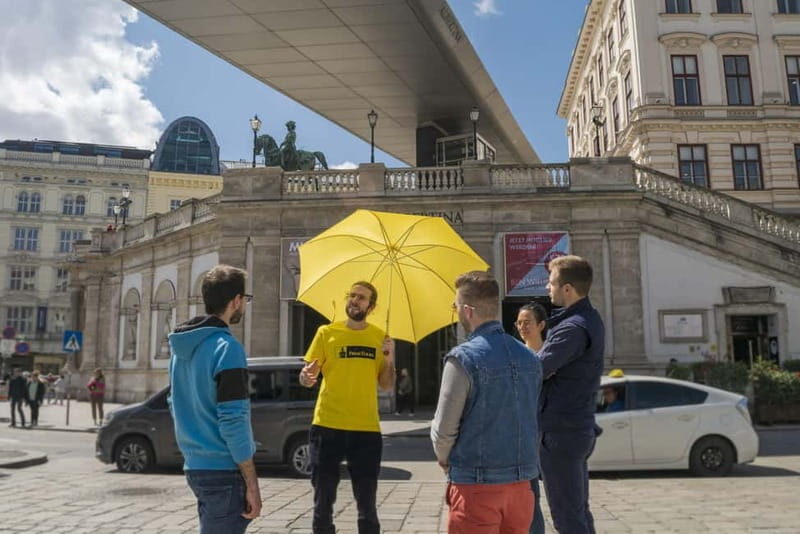
- Hitler’s early footsteps in Vienna put a real map to a notorious life story
- Karlsplatz and MuseumsQuartier connect street-level walking to art and culture changes
- Hidden spots and side stories help you go past the standard tourist checklist
- English live guide with plenty of anecdotes and scene-setting
- Reserved spot and instant confirmation reduce last-minute stress
Why this Vienna walking tour works (even when it gets uncomfortable)
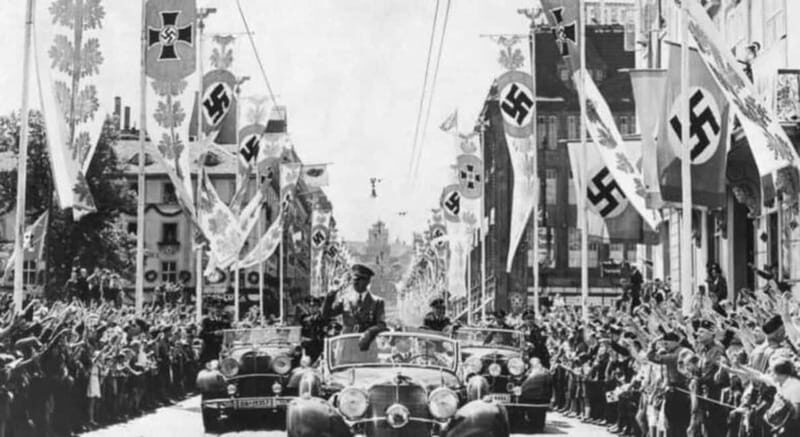
This tour is built on contrast. Vienna is known for music, museums, grand architecture, and coffeehouse culture. But the early 1900s also include political pressure, ideological thinking, and the kind of social tension that can shape a city for decades.
What makes the experience interesting is that it doesn’t treat history like a museum label. It uses the city as evidence. You look at streets, squares, and landmark districts, then your guide connects them to the broader shift from the Habsburg-era world to a modern, fast-changing metropolis. You’re not just hearing dates. You’re getting a sense of how people lived, argued, and created culture during that transition.
And yes, the “Hitler” part can feel heavy. A good guide keeps it factual and contextual, not sensational. If you’re the type who wants clean, cheerful stories only, this may not be your best match. But if you want to understand how a place can be both beautiful and consequential, it’s a strong use of your time.
Starting at the YELLOW Prime Tours umbrella: how the 2 hours flow
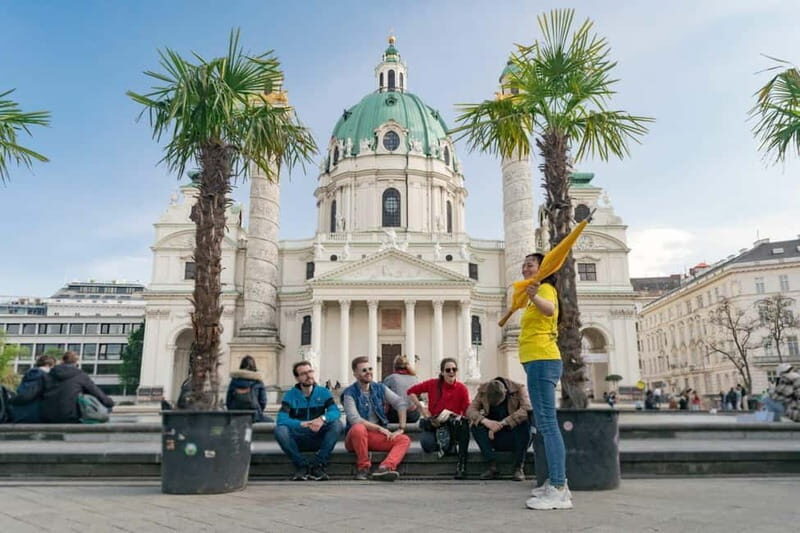
The tour meets at a very simple, easy-to-spot landmark: look out for the YELLOW PRIME TOURS UMBRELLA. That matters more than it sounds. Vienna is full of meeting points that blend into the background. Here, the color choice makes it easier to start on time.
It runs for 2 hours, and it ends back at the meeting point. That loop is practical. You can plan the rest of your day without guessing how far you’ll wander or where you’ll end up.
Language is English, and you’ll be walking through a set of historic sites in central Vienna. Since food and drinks aren’t included, I’d treat this like a smart mid-day or late-morning plan that fits around a meal before or after.
Also, the tour includes a reserved spot with your booking. That’s helpful when you’re traveling in peak season or your schedule is tight. No need to “hope” a guide still has room.
Hitler’s early years in Vienna: what you’re really learning
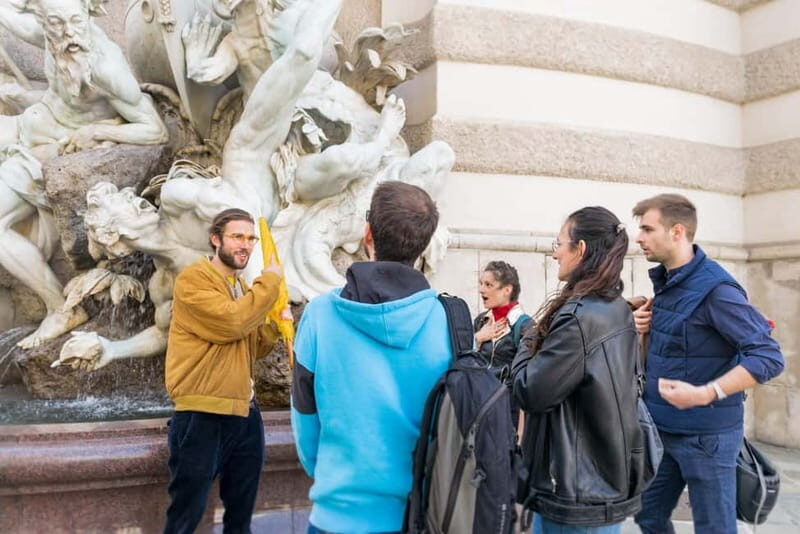
The big promise is following Hitler’s early footsteps through the city. That’s the headline, but what you’re likely to get is more than a timeline. You’ll connect his early presence in Vienna to the way the city at the time pulled people into cultural debates and political arguments.
Your guide frames it as cause-and-effect. You’ll hear how Vienna in the early 1900s wasn’t static. It was changing politically and culturally, and those shifts shaped how young people interpreted the world. That matters, because it helps you understand why Vienna influenced what happened later, without turning the tour into propaganda or a “fascination” detour.
The walking format helps here. When you move from one district to another, you start to sense the urban logic—how the city’s layout and landmark areas reflect its social layers. Instead of just reading about it later, you’ll remember the feeling of moving through those neighborhoods while the story explains what was at stake.
One practical note for your brain: if you’re sensitive to dark topics, you might want to mentally plan a decompress moment afterward. Vienna’s central streets can look glamorous, which can feel strange after a heavy subject. Build in a breather so the contrast doesn’t rattle you.
Karlsplatz: where the early-1900s story gets physical
One of the named stops is Karlsplatz, and it’s a smart choice for a tour like this. It’s central and recognizable enough to anchor the walk. More importantly, it’s the kind of place where the city’s layers show up in real time: the kind of spot people cross daily, where history sits under foot traffic.
On this tour, Karlsplatz isn’t only a “look here” moment. Your guide uses it to explain Vienna’s transformation during the early 1900s. That means you’ll likely connect the area to how the city’s public space functioned—how people gathered, moved, and consumed culture during periods of change.
What I like about using a stop like Karlsplatz is that it prevents a common problem with history tours: they can become a string of indoor facts. Here, your feet are on the ground, and the guide is constantly linking what you see to what was happening politically and culturally.
Possible drawback: you might find yourself wanting to slow down and explore Karlsplatz on your own after the tour. That’s not a bad thing. It just means you’ll need to protect time, because this area can pull you into extra wandering.
MuseumsQuartier: from imperial taste to modern culture
The tour also includes MuseumsQuartier, which gives the story a “then and now” angle without needing a museum ticket. MuseumsQuartier works well for walking tours because it’s a clear marker of modern Vienna’s cultural life.
On a tour like this, MuseumsQuartier is useful in a specific way: it helps you compare the city’s earlier cultural identity with the one you see today. Vienna has always been a city of art and ideas, but the early 1900s brought major shifts in how art was made, promoted, and interpreted.
Your guide connects this to the broader cultural revolution mentioned in the tour concept, pointing you toward figures in the arts world, including the orbit of Klimt and Wagner. You don’t need to be an art expert to benefit. What you get is a sense of why cultural movements mattered in the same streets where political tensions were building.
And you’ll likely come away thinking about art as more than decoration. In this period, culture often carried arguments. It shaped public mood. It influenced how people imagined society should work.
The big storyline: Habsburg Empire to a modern metropolis
A good walking tour doesn’t just point out places. It gives you a map of ideas. This one aims to show how Vienna shifted from its imperial roots into a modern city.
During the walk, you should hear connections between:
- architecture and identity (how buildings and streets communicate power and taste)
- historical events (how changes in politics ripple into culture and daily life)
- the city’s evolution (how Vienna kept reinventing itself)
That’s valuable because Vienna can confuse first-time visitors. You can stand in one spot and see beauty that feels timeless, while the story underneath it is anything but calm. The tour helps you hold both truths at once: Vienna is elegant, and it has a complicated past that shaped what came next.
Also, the tour’s structure helps you avoid the common “big history” trap. Instead of trying to master the whole early 1900s in one go, you get it in walkable chunks. Each stop ties back to the transformation theme, so the city starts making sense as a timeline you can actually walk through.
Hidden spots, side stories, and why local guides matter
The best part of any walking tour is the guide. Here, the emphasis is on insider knowledge: hidden spots and stories beyond the usual tourist routes. That makes a real difference in Vienna, where the classic sights are well documented and easy to find.
The guide-driven storytelling is also a big theme in the strongest feedback tied to this tour. Names that come up include Joseph and Cristina, with additional mention of Ángeles and Mia. What they have in common is clear explanations and lots of scene-setting detail. That matters because the topic can be heavy, and you want someone who can keep the narrative coherent while also keeping you engaged.
If you’re the kind of person who learns best when a local draws a line between what you see and what it meant, this tour fits that style. And if you prefer “just show me the facts,” you’ll still get value from the way the guide organizes the walking story.
One small practical tip: keep your phone charged. Even if you’re mostly listening, you’ll probably want to snap a few references after stops. The tour is designed to connect places to context, so visual reminders help cement it later.
Pace and comfort: walking matters, even when the sites are central
This is a walking tour, so comfortable shoes are not optional. The tour content is dense enough that you’ll want your body to cooperate.
The good news is that it’s listed as wheelchair accessible. That’s a helpful sign for mobility planning. Still, because the route specifics aren’t provided here, I can’t promise how smooth the sidewalks will be or how steep certain segments might feel. If you’re using a wheelchair, you’ll be smart to plan for streets that can change character block to block.
The tour also says participation is voluntary and the guides are self-employed and freelance, with limited liability for injuries. I’m glad that statement exists because it reminds you to treat this as an active city walk, not a guaranteed experience immune to real-world hazards.
Price and value: why $22 can make sense
At $22 per person, this isn’t a budget-buster, but it also isn’t a “throwaway” add-on. The value comes from what you get bundled into that price:
- a local expert guide
- a structured walking route through historic sites
- insider tips and recommendations
- reserved spot and instant booking confirmation
- the tour being 2 hours, which is long enough to matter but short enough to fit into a day
What you don’t get is just as important. Food and drinks aren’t included, and there are no promises about museum or attraction entrance fees after the tour. Translation: this is mostly a storytelling walk. You’re paying for interpretation and city context, not for entry tickets or meals.
That’s good value if you’re the type who likes learning from streets. It’s less ideal if you wanted museum access as the main event.
A quick strategy: plan your meal around the tour, then use any guide recommendations afterward to spend your money wisely in areas you might otherwise skip.
Who this tour is best for
This one is best for:
- you if you want history tied to real places, not just a lecture
- you if you like guided storytelling with political and cultural context
- you if you’re curious about early-1900s Vienna and how art and politics intersected
It may be a tougher fit if:
- you strongly prefer light, purely recreational sightseeing
- you want to avoid controversial topics altogether
- you’re uncomfortable processing dark history in public spaces
But if you can handle difficult subjects with respect and want a thoughtful way to understand Vienna’s evolution, this tour can be a smart use of time.
Should you book this Vienna historical walking tour?
I’d book it if your goal is to understand Vienna as a living place shaped by the early 1900s—politics, culture, and city form all in one walk. The stops at Karlsplatz and MuseumsQuartier give the story clear anchors, and the guide-driven approach, with standouts like Joseph and Cristina (and mention of Ángeles and Mia), suggests you’ll get strong explanations rather than a rushed script.
I would think twice if you’re seeking an upbeat tour with no heavy material, or if you want museum entrances included. Since food isn’t included and there’s a pure walking format, it’s best for travelers who enjoy walking and listening.
If that sounds like you, this tour is a good “two hours well spent” pick.
FAQ
How long is the Vienna walking tour?
It lasts 2 hours.
What is the price?
The price is $22 per person.
What language is the tour guide?
The live tour guide speaks English.
Where does the tour start?
You should look out for the YELLOW PRIME TOURS UMBRELLA at the meeting point.
Where does the tour end?
The activity ends back at the meeting point.
Is the tour wheelchair accessible?
Yes, it is listed as wheelchair accessible.
Is food or drink included?
No, food and drinks are not included.
Are museum or attraction entrance fees included?
No, entrance fees to museums or attractions after the tour are not included.
Is cancellation free?
Yes. You can cancel up to 24 hours in advance for a full refund.
Is reserved seating or a spot included?
Yes. Your booking includes a reserved spot, and you get instant booking confirmation.
]]>I really like two things here: the hunt format (you’re solving clues at 16 stops, not just listening), and the fact you don’t need any special knowledge—basic orientation, logic, and teamwork do the work. The game host meets you at the start, gets you going with the first tasks, and stays with you briefly so your team can find its rhythm.
One consideration: you’ll need a fully-charged smartphone for your team, plus comfortable shoes—this is an outdoor walk and it runs in all weather. Also, you must book with a minimum of 2 people, which matters if you’re traveling solo or as a pair with mismatched schedules.
Key points before you go
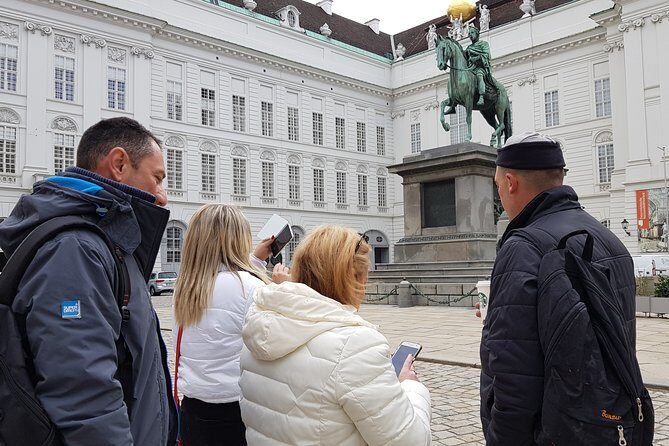
- Smartphone character + real host at the start: the game launches with a guide present for early tasks.
- 16 stops across Inner City: you’re moving through major areas like Stephansplatz, Hoher Markt, and Albertinaplatz.
- No special knowledge required: it’s built for logic, attention, and teamwork, not museum trivia.
- Planned group energy: the format naturally creates team spirit and shared problem-solving.
- Often includes extra activities: some groups reported picture/video tasks and even a wine tasting break mid-route.
- Runs in all weather: dress for rain and heat, and wear shoes that won’t punish you.
Why this Vienna treasure hunt feels different from a standard walk
Vienna is gorgeous, but it can also be easy to do it the lazy way: wander, take photos, and still feel like you didn’t really learn anything. This walk flips that. You’re not just looking around. You’re actively searching for answers.
The key is the structure: at each location, the smartphone sends you the next riddle, then you complete a challenge right there, and only afterward you get the story connected to that spot. That order matters. It keeps you focused on details as you walk, but it also avoids turning the experience into a lecture marathon.
I also like the balance of guided help and independent figuring-out. The host meets your team at the start point, explains how the game works, and accompanies you through the first couple of tasks. After that, you and your team take over, which is where the fun usually happens.
Michaelerplatz start: how the game is run (and why the first minutes matter)
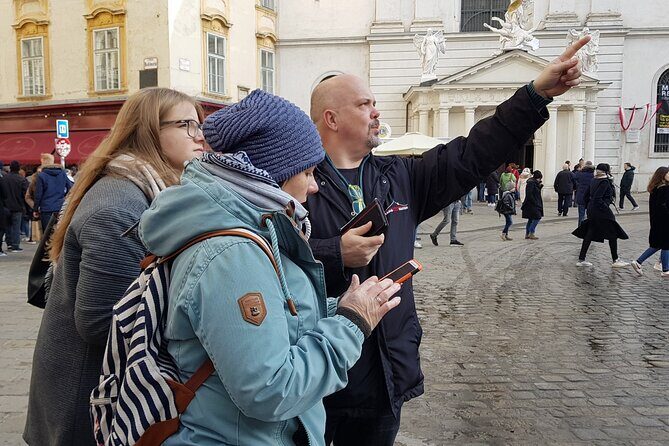
Your tour begins at Das Michaeler Bierhaus, at Reitschulgasse 4, 1010 Wien. That start point is convenient because it’s right in the City Center zone, and it’s designed for you to begin the hunt without a complicated transit puzzle.
Here’s how the experience usually kicks off:
- A game host greets you and explains the rules.
- You get what you need for the scavenger hunt.
- A special historical character runs the smartphone experience and sends the first riddle to get you to the first location.
- At each stop, you receive a challenge/task on arrival, then you learn the story tied to the place.
The practical takeaway: the first location stage is where teams can either click—or spend 20 minutes confused. Having the host with you for the first couple of tasks is a smart move. It helps you get your bearings fast, then you can focus on solving the hunt instead of decoding the interface.
Your 16-stop route through Inner City: what the walk feels like at each kind of location
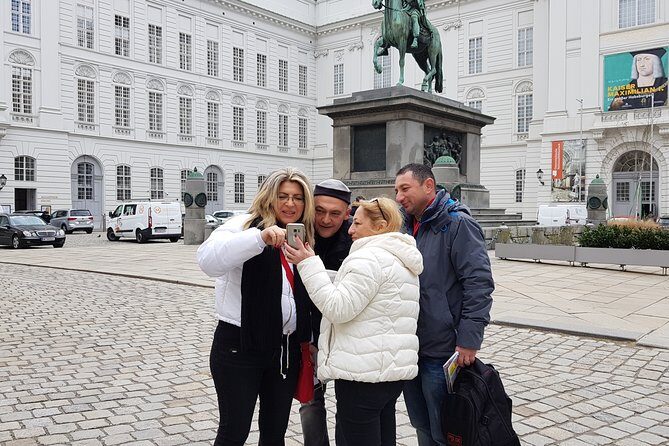
The route includes 16 stops through Vienna’s Inner City. Some of the named ones you can look forward to are Stephansplatz, Michaelerplatz, Minoriten Church, Hoher Markt, the Jewish quarter, and Albertinaplatz. Even without memorizing names ahead of time, you’ll get the sense of moving through different parts of central Vienna.
What makes each stop feel distinct isn’t that you’ll get the same generic activity everywhere. It’s the pattern:
1) smartphone clue arrives,
2) you move to the right spot,
3) you complete a local task,
4) you get a story moment related to where you are.
That’s the loop you repeat, and it’s what makes the city “stick” in your brain—because every story arrives right after you’ve earned it.
Michaelerplatz (Stop 1)
Since Michaelerplatz is your first stop, expect the early tasks to be more about getting comfortable with the format. This is where your team learns how to read the clue flow, how to manage the smartphone instructions, and how to divide problem-solving roles.
A small realism note: the more central the first area is, the more distractions you’ll have around you. That’s not a dealbreaker; just keep your team organized so you’re not chasing the wrong side of the street because everyone is staring at something pretty.
Stephansplatz
Stephansplatz is another named hub on the route. In practice, these larger, higher-foot-traffic areas are great for hunts because you can visually scan and compare details quickly. The downside is crowd noise. If your group tends to get flustered in busy spaces, assign one person to handle the phone while others watch for the exact location cues.
Minoriten Church
A church stop tends to slow your team down—mostly because these places invite you to be more careful and observant. You’ll likely feel more “listen before you act” here, since tasks often reward attention to what’s around you rather than rushing.
If your group is very chatty, use a simple team rule: one person reads the clue, one person tracks the location, and the rest solve the task. You’ll finish with less backtracking.
Hoher Markt
Market-area stops are useful for scavenger hunts because there’s plenty to look at while you solve. That said, it’s also where your team can overthink. When a clue is confusing, it helps to zoom in: focus on the next instruction step, not the whole puzzle at once.
The Jewish quarter
This is listed as one of the stops, and that alone makes the route more than just a scenic circuit. The hunt format means you’re not browsing passively—you’re answering prompts that point your attention to the area in a structured way.
The consideration here is respect. Keep your team aware of surroundings and any local rules. The activity is interactive, but it still happens in real public space.
Albertinaplatz
Albertinaplatz is another named finish-near feel stop (though the full route has multiple stops). By this stage, your team usually has a rhythm: you’re good at switching roles, and you’re less likely to get stuck. If you’re traveling with kids or newer puzzle-solvers, this is a good point to capitalize on their confidence.
Price and value: $34.84 per person for 3 hours of city sleuthing
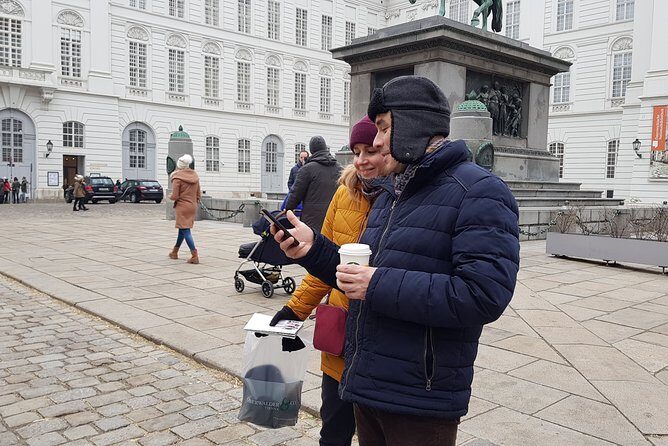
At $34.84 per person for about 3 hours, this can be very good value—if your group likes doing things together rather than just seeing landmarks. You’re paying for a guided route plus the hunt mechanic that keeps people engaged throughout the walk.
A simple way to think about value:
- You’re getting a structured route in central Vienna, not a loose self-guided idea.
- You’re getting a host at the start so you don’t waste time figuring it out.
- You’re getting built-in variety—riddles, tasks, and story moments—so attention doesn’t fade after the first 30 minutes.
If your group wants quiet sightseeing with minimal effort, you might prefer a traditional guide. But if you want something active and social, this hits the sweet spot.
Also note the “private tour” setup: only your group participates. That matters, especially for team-building events where mixed groups can be awkward.
Team-building energy: why the tasks are more than entertainment
One of the strongest themes in the experience is how it turns strangers into a team. People report it as fun, engaging, and well organized, with challenges that encourage teamwork.
Some groups specifically mentioned:
- image or video-style tasks during the hunt,
- a wine tasting break mid-game in at least one team-building setup,
- and hosts who bring extra local tips beyond the hunt itself.
I like that mix because it gives you two layers of value. First, the hunt keeps everyone moving and focused. Second, you might get actual Vienna recommendations that help after the 3-hour mark ends.
And there’s a real advantage for groups with different ages and comfort levels: since the tasks reward observation, logic, and coordination, it’s not a competition of who has the best travel vocabulary.
Host and guidance: what it’s like with Shushan and other support
Your host meets you at the start location and accompanies you through the first couple of tasks. That early guidance is what helps the hunt feel smooth rather than stressful.
One name that shows up in accounts is Shushan. In at least one family visit and one team-building event, she’s described as friendly and energetic, knowledgeable about Vienna, and willing to help even beyond the core game. That matters because the host isn’t just there to hand off a phone. They can also help you make the experience fit your group.
There’s also an important detail about pacing: one family found the hunt longer and more challenging in summer heat, but the host allowed breaks when needed. So if you’re building this into a busy day, plan to take short pauses without feeling like you’re falling behind.
Timing, pacing, and why 3 hours can feel both quick and complete
The tour duration is listed as about 3 hours, and it has 16 stops. That usually means you’ll be doing short bursts of problem-solving between places, then switching back to walking.
For planning, I suggest thinking of it like this:
- You’ll likely spend less time at each stop than a museum visit.
- The smartphone loop controls the flow, so you don’t have to make decisions about what to do next.
- Your team’s speed affects the total time more than the route itself does.
If you’re traveling with kids, or with anyone who tires quickly, keep a little buffer in your schedule before and after. The hunt is structured, but the human factor is real—team discussions take time.
Weather and what to wear: don’t let your outfit ruin the game
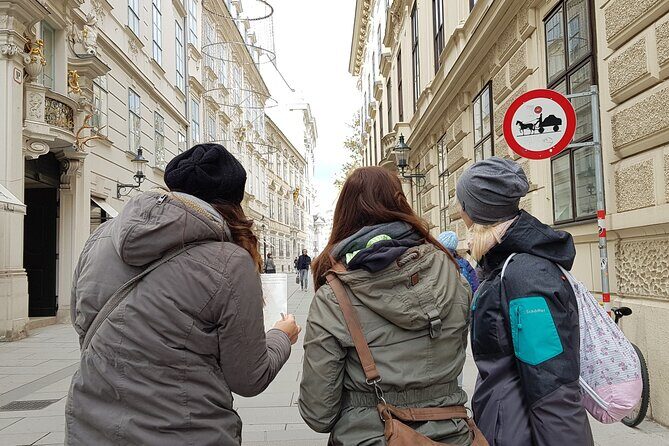
The hunt runs in all weather conditions. That sounds simple, but it’s actually a big practical advantage. You’re not forced to gamble on a sunny forecast for your whole day.
So dress for the conditions and bring comfort:
- Wear comfy shoes. You’ll be walking enough that blisters would be annoying at the exact moment you need to stay focused.
- If rain is likely, plan for wet ground and slippery sidewalks.
- Bring a little water, especially in warm months—solving riddles while feeling overheated is not a fun kind of difficulty.
Language options: English and German (and what to do if you need more)
The experience is offered in English and German. That covers many visitors, especially for a city-center activity where reading quick instructions matters.
One group noted French translation was available even though it wasn’t listed at booking time. If French (or another language) is important for your group, it’s smart to ask during booking so you’re not surprised when you get instructions.
Where you start and end: Das Michaeler Bierhaus, then back again
You start at Das Michaeler Bierhaus in Vienna’s center and the activity ends back at the meeting point. That round-trip ending is underrated. You don’t have to worry about a late finish far from transit, or splitting your group at the far end of a long walk.
It also helps if you’re meeting friends later. You have a clear reference point, right back at the beginning.
Should you book this Vienna historical treasure hunt?
Book it if:
- you want a hands-on way to explore Vienna’s Inner City,
- your group likes puzzles and teamwork,
- you’re traveling with people who need an activity to keep interest up for 3 hours,
- and you’re happy to rely on a smartphone-guided flow.
Skip it (or consider something else) if:
- your group hates tech-based instructions or you can’t reliably keep a phone charged,
- you want mostly quiet, slow sightseeing with minimal walking,
- or you’re going solo and can’t meet the minimum group requirement.
If you do book, come prepared to cooperate. Assign roles early. One person reads clues. Another handles navigation. Let the rest brainstorm. You’ll have a smoother time, and you’ll get more out of each story moment as the hunt unfolds.
FAQ
What is the duration of the Vienna private city discovery walk?
It runs for about 3 hours.
How much does it cost per person?
The price is $34.84 per person.
How many stops are in the historical treasure hunt?
There are 16 stops along the route.
What languages is the experience offered in?
It’s operated in English and German.
Do we need an admission ticket?
The information provided says the admission ticket is free.
Where do we meet, and when does it end?
You start at Das Michaeler Bierhaus (Reitschulgasse 4, 1010 Wien) and the activity ends back at the same meeting point.
Do we need a smartphone?
Yes. A fully-charged smartphone per team is required.
What weather conditions does it run in?
It operates in all weather conditions, so dress appropriately and wear comfortable shoes.
]]>You’ll get a smart run through Vienna’s big cultural drivers. One stand-out for me is the way the tour treats the Spanish Riding School as living heritage, not a postcard. If you hate walking or you need step-free access, treat this as a watch-out, since several stops are in older buildings and the tour is not suitable for visually impaired guests.
Guides such as Walter and David come through in the reviews for a reason: the stories feel connected to how Vienna works today, not just facts thrown at you. You’ll start at Graben 32 and end back there, and you’ll be on the move for about 2 to 8 hours depending on how you pace it.
Key things that make this Vienna tour worth your time
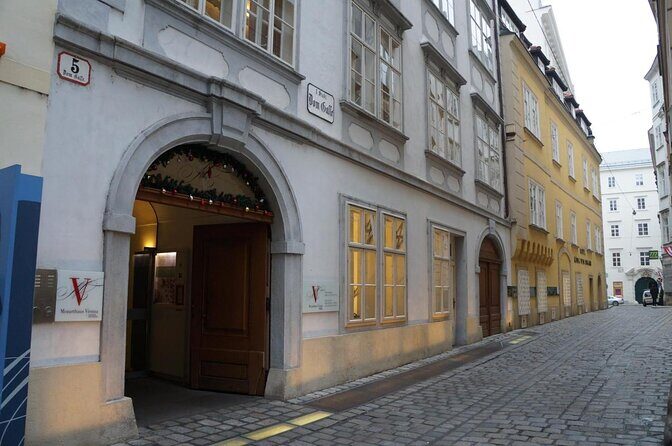
- Entrance tickets are included for many major sights, keeping the experience smooth and predictable.
- A composer-and-imperial storyline, linking Mozart, Beethoven, and the world of the Habsburgs.
- Spanish Riding School access to the stables and a film, plus a walk through old-town baroque streets.
- Hofburg Palace stops that include Sisi’s wedding church and the National Library.
- Ringstrasse architecture walk that helps you read Vienna’s grand public buildings like a map.
- Belvedere Palace gardens with Klimt context, so you see more than the postcard painting.
Where this tour starts (and how it feels once you’re moving)
The tour starts at Graben 32 in the city center (then you finish back at the same meeting point). That’s handy: you do not have to re-plan your day around a second drop-off.
Expect a rhythm of short visits followed by walking between viewpoints. Some stops are quick—think around 8 to 20 minutes—while the palace-focused parts are longer. The total duration can run from about 2 to 8 hours, so the key is to treat it like a guided city primer: you’re meant to leave with better bearings, not just check boxes.
Pickup may be offered, but private transportation is not included. So plan on walking and using nearby public transit connections if you’re coming from farther out. Also, coffee or tea is not included, so if you know you’ll need a mid-walk break, build one in yourself.
Stephansdom: Gothic south side, medieval frescoes, and the cathedral’s backstory
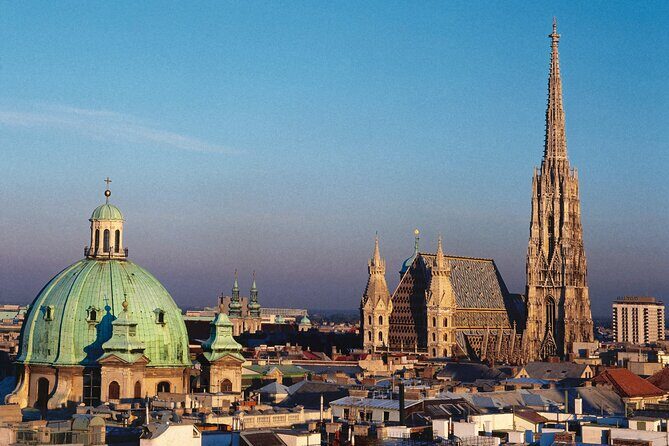
Stephansdom is the kind of landmark where first-timers usually only skim the obvious angles. This tour pushes past that. You get to see the ancient back of the cathedral, plus the Gothic south side and the famous tall tower story that ties to medieval Vienna’s ambitions.
What makes this stop work is the mix: medieval details plus baroque and later layers inside. You also get explanations about the interior that help you understand what you’re actually looking at, not just that it’s old and impressive. If you like buildings with visible “eras” (not just one style), you’ll appreciate how the guide connects the dots.
Practical note: this is a cathedral visit, so be ready for the usual amount of standing, looking up, and moving through the interior spaces at a pace set by your guide.
Mozarthaus Vienna: a composer route through music halls, opera, and Vienna’s stagecraft
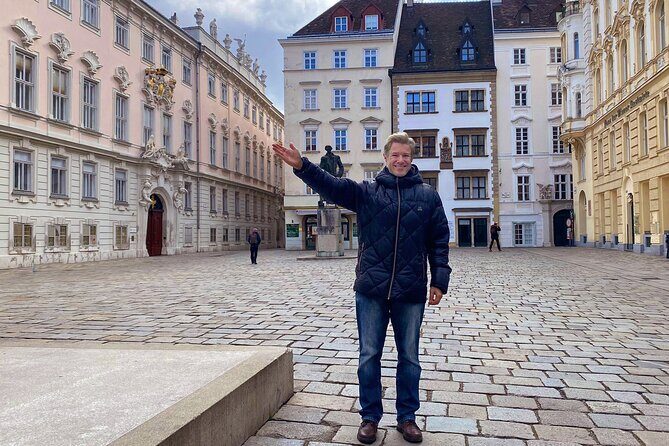
The Mozart-focused stop is not just a single house moment. It’s framed as a whole capital-of-classical-music story—starting with the Mozart House, then branching outward to key composer names like Beethoven, Brahms, and Schubert.
You also get pointers about Vienna’s performance world: the State Opera and important concert halls come up in the conversation. The result is useful even if you’re not planning to buy a concert ticket. You start recognizing Vienna’s musical geography—where the city performs its identity, and how those institutions became part of daily life.
This is a great segment if you want your sightseeing to feel anchored in people, not only architecture.
Spanish Riding School: UNESCO heritage, Lipizzan stables, and baroque streets afterward
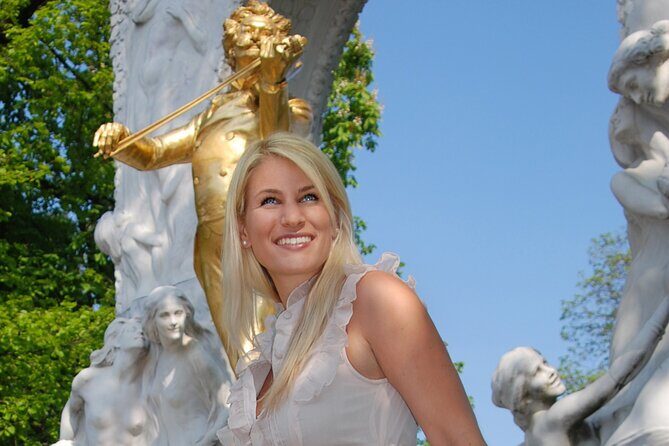
At the Spanish Riding School, the focus stays on the tradition itself. You see the baroque riding school and it’s treated as a UNESC0 world heritage site, which adds weight beyond the visitor photos.
You’ll visit the white Lipizzan stallions in their stables, watch a film about the baroque riding arena, and then transition into the surrounding old-town atmosphere. After the stables, you walk through baroque streets and explore original shop displays from the monarchy-era world—plus baroque churches along the way.
If you love horses and performance culture, this stop hits harder than a typical landmark stop. It’s also a nice contrast point: you go from the grandeur of Vienna’s music and power into something calmer and more ritual-based.
Time is short here (around 10 minutes), so if you want longer interaction, treat this as the introduction and plan to expand later on your own.
Hofburg Palace: Heroes’ Square, Sisi’s wedding church, and the National Library moment
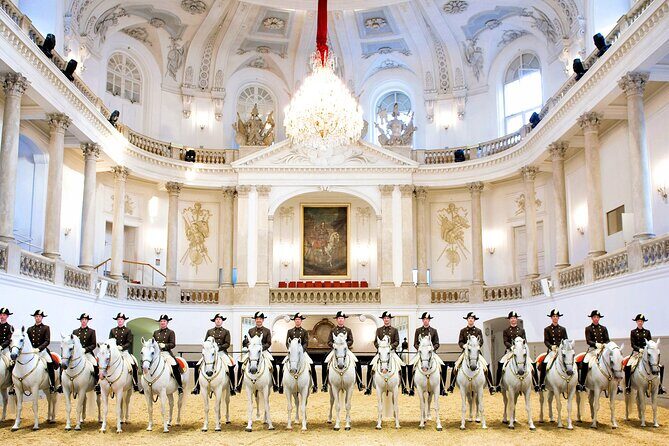
The Hofburg Palace stop is built for people who want Vienna’s royal core, not just a quick palace exterior.
You start around Heroes’ Square and its equestrian monuments, then move into the courtyard and get a sense of how the space carries medieval and later identities. There’s even a story thread tied to King Richard the Lionheart and imprisonment in Austria—details like that make courtyards feel less like empty stone.
From there, you see the palace from a beautiful side at Michaelerplatz and hear about what’s considered the first modern building in the world. That’s the kind of line that can sound dramatic until the guide explains the setting enough for it to click.
Then come the “this is why people come” stops:
- The National Library, considered one of the most beautiful in the world
- The church where Empress Sisi got married
- The heart of the imperial family, framed through what you can actually see
You also get a visit to the Albertina and time in the palace gardens. This is one of the strongest stops in terms of payoff because it ties together power, ritual, and art in a way that feels coherent.
Ringstrasse: reading Vienna’s public buildings like a story
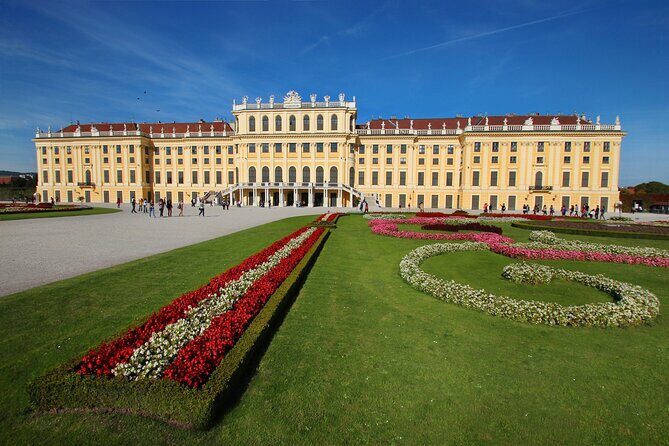
Ringstrasse is where Vienna flexes its civic identity. This segment is a guided walking loop along the boulevard’s grand buildings—museums, cathedrals, parliament, town hall, university, gardens, and palaces.
The value here is interpretation. Without context, Ringstrasse can feel like a long line of impressive facades. With the guide, it becomes a map of what Vienna chose to build for public life: education, government, worship, and culture all lined up along the ring.
It’s also a good stretch for photos and “pause and point” moments, because you’re outdoors and the guide can show you the visual logic.
Scottish Convent, Volksgarten roses, and a quick shift in mood
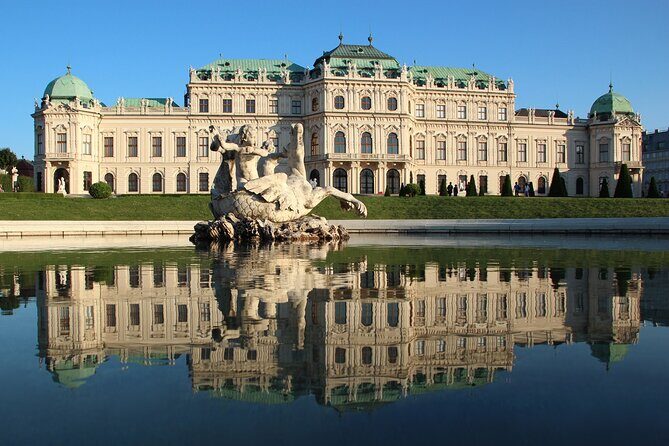
Not every Vienna tour includes this kind of variety. After the big palace-and-boulevard energy, you get a quieter stop at Museum Schottenstift.
You enter the Scottish Convent and see the green courtyard, then move to a Rococo church with depictions of the history of Vienna. The guide adds stories about the first monks, which helps you understand why religious institutions mattered to the city’s early rhythm.
Then you head to Volksgarten, described as the most beautiful rose garden in Central Europe. You’ll see monuments related to Empress Elisabeth, poets, and temples, with baroque ornaments and a focus on the way nature and design meet. Even if you’re not a “gardens person,” this makes the tour feel less like a museum marathon.
Greek Orthodox Cathedral: oriental architecture as a cultural contrast
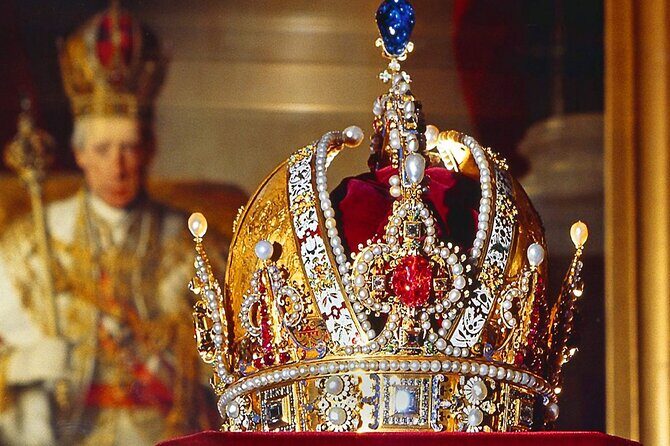
The stop at the Rumanisch-Orthodoxe Kirche in Wien brings a change of visual tone. You enter the Greek Orthodox Cathedral of the Greek Orthodox Bishop of Vienna, and the architecture is described as having an oriental feel.
This is a useful counterbalance. Vienna can sometimes feel like it’s only one religious and cultural storyline. Here, you’re reminded that the city has multiple identities in the same geographic space, and the guide explains enough to make the differences feel readable rather than random.
Belvedere gardens and Klimt: a view-first approach to the art
Belvedere starts outside, with a walk through old town sections—past Karls Church, squares, and gardens—on the way to the palace gardens. You meet Prince Eugen in the route as a historical anchor, and the guide uses that to frame why the palace matters.
Then you reach Belvedere Palace, where you have the chance to admire Gustav Klimt’s world-famous paintings. The trick is that you don’t see Klimt in isolation. You see the setting—palace gardens and the designed approach to the art—so it feels like the artwork lives inside a bigger environment.
Time here is brief (about a minute is listed for this segment), but the garden walk and the context can make that quick visit more meaningful than it sounds.
If you want more: Schönbrunn Gardens as a half-day add-on
If the tour schedule leaves you wanting one more major palace garden moment, Schönbrunn is the obvious upgrade.
There’s an option for a 1/2 day tour (5 hours for 180 Euro) or a separate 2-hour Schönbrunn tour (80 Euro). You’d see the Baroque Gardens of Schönbrunn with colorful floral ornaments, fountains, secrets, and monuments. You can also include the royal family’s baroque palace, historic imperial carriages, the palm house, and even the oldest zoo in the world.
At the highest point, you visit the Gloriette Pavilion and drink coffee with Viennese cake while taking in city views. If you’re interested in doing this add-on, you can reach out via [email protected].
Price and value: what $118.82 buys you in real terms
At $118.82 per person, this tour is priced for a mix of guided time plus practical savings.
The best value lever is that attraction entrance tickets are included for many stops. You still do the walking, and you pay for your own coffee or tea, but you avoid the common annoyance of paying small fees at multiple points. That matters more than it sounds on a city day when you’re also trying to stay oriented.
You also get something harder to price: a private guide for your group. That usually means your questions shape the pace. If you’re the type who asks why Vienna developed the way it did—through music institutions, imperial power, and civic planning—this format makes it easier to get answers without feeling awkward.
Pace, comfort, and who should plan this day
This is best for people who enjoy a guided walking format and want a coherent “Vienna in layers” story. You’re seeing cathedrals, music-related sites, royal spaces, civic architecture, gardens, and a church with distinct cultural architecture.
It may not suit everyone. The experience is not suitable for deaf and mute people and not suitable for visually impaired people, and it requires good weather. Also, because it runs long enough to include multiple short stops, comfortable shoes are non-negotiable.
If you hate structured time—like you prefer freedom to roam—this might feel too planned. If you like a plan that still leaves room to ask questions, it’s a strong fit.
Should you book this Vienna history and secrets tour?
Yes, if your goal is to leave Vienna with better context. This is not only about seeing famous places. It’s about understanding how composer life, imperial power, and city design connect, so the next time you pass a grand building or music venue, you’ll know what you’re looking at.
I’d book it if:
- you want a private guide who can answer your questions in real time
- you like combining big landmarks with smaller contrast stops (convent courtyard, rose garden, Orthodox cathedral)
- you want entrance fees handled for major sights so your day stays smooth
I’d think twice if:
- you’re very limited on walking or need step-free access
- you prefer open-ended exploring with no guided structure
- you want a heavy concentration on just one area (like only palaces or only museums)
If you want a single guided day that helps Vienna click, this one is a solid choice.
FAQ
How long is the Vienna tour?
The duration is listed as approximately 2 to 8 hours, and the total duration includes travel time.
What does the tour cost per person?
The price is $118.82 per person.
Does the tour include entrance tickets?
Many attraction entrance tickets are included. Some stops also have admission listed as free or included, depending on the location.
Is the tour private?
Yes. This is a private tour/activity, and only your group participates.
Is pickup available?
Pickup is offered, but private transportation is not included.
Where does the tour start and end?
It starts at Graben 32, 1010 Wien, Austria, and ends back at the meeting point.
What language is the tour offered in?
The tour is offered in English.
What happens if the weather is bad?
The experience requires good weather. If it’s canceled due to poor weather, you’ll be offered a different date or a full refund.
]]>I especially like how the tour uses the palace itself as part of the lesson, not just a pretty backdrop. You’ll also zero in on major works through an Austrian-identity lens, including Gustav Klimt’s famous The Kiss.
One thing to consider: the schedule is tight (about 2 hours 5 minutes inside, plus only a brief gardens stop), so you may not see every room at Belvedere at a relaxed pace.
Key points I’d bank on
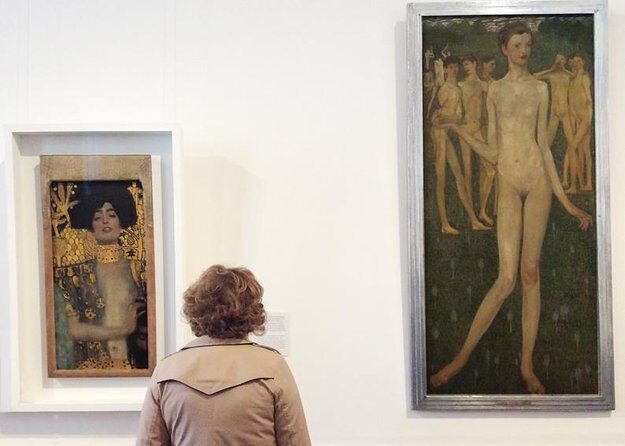
- Private, exclusively for your party: more time for questions and a calmer pace than group touring.
- Art historian narration: you’ll get meaning behind architecture and paintings, not just descriptions.
- Skip-the-line admission included: you lose less of your Vienna day to ticket lines.
- A guided route from Middle Ages to the 20th century: one continuous thread rather than disconnected highlights.
- The gardens view with symbolic meaning: quick, but it helps tie palace, power, and landscape together.
Belvedere Palace with an art-historian lens
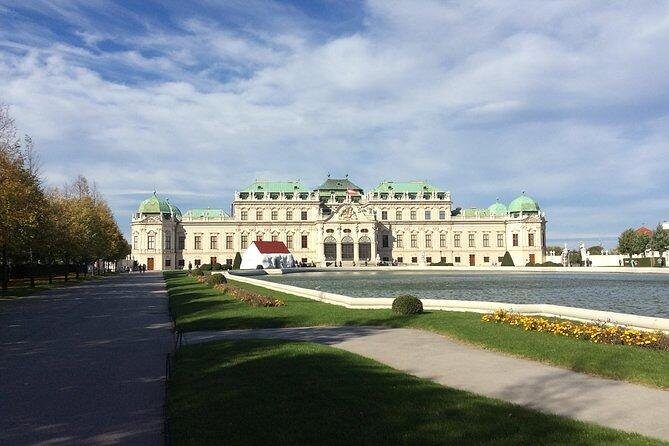
Belvedere Palace is one of those places where the building and the art argue together—in a good way. The palace isn’t only there to hold paintings. Its architecture and setting help explain why certain images were made, and who they were meant to speak to.
That’s the real value of this tour theme, Pictures of Austrian Identities. Instead of treating Belvedere like a checklist of famous works, the guide frames what you see as part of a broader conversation about Austrian culture and character—through centuries of change.
The private format matters more than you might think. If you’re the type who likes to ask what something symbolizes, or why an artist chose a particular style, this tour is built for that.
Private tour vs. “walk-through” museums
In a group tour, you often end up doing two things at once: listening and rushing. Here, you’re with your party only, which lets the tour settle into a proper rhythm.
Also, you’re not just picking a time slot. You’re hiring an art historian to connect dots across the collection. The tour’s structure is designed to keep those dots visible—starting with the palace and moving into the galleries, then finishing with a gardens moment that isn’t just a photo stop.
And if art isn’t your main hobby, this format still works because the guide’s job is to give you entry points: what to look for, why it matters, and how to read images without needing an art degree.
Skip-the-line tickets: how that helps your day
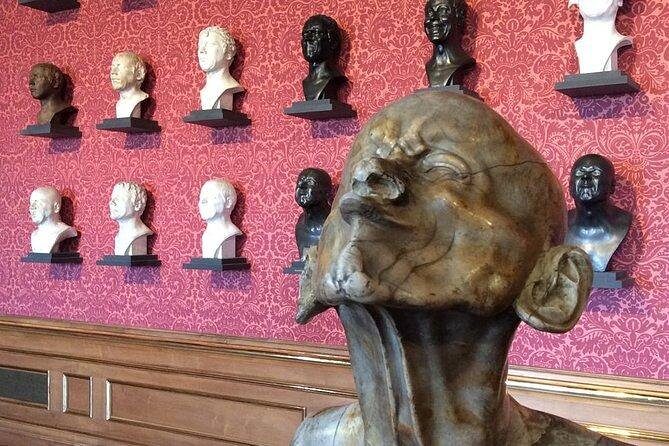
Skip-the-line sounds like a small perk until you’ve planned a Vienna day. Belvedere can eat up time fast—lines, ticket handling, crowd flow. With skip-the-line admission included, you’re more likely to start seeing the palace rather than your phone timer counting down minutes.
That’s especially useful because the tour itself is about 2 hours 15 minutes total. When time is limited, every saved minute becomes more art, more explanations, or just a calmer pace.
Stop 1: Upper Belvedere galleries, from Middle Ages to the 20th century
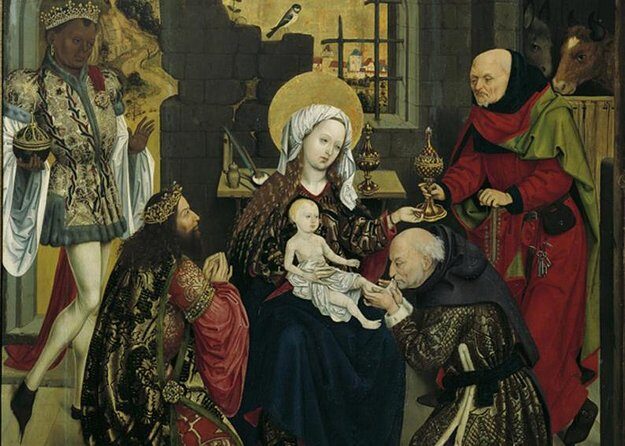
Your main visit happens at the Belvedere Museum in the Upper Belvedere. This is where you’ll spend about 2 hours 5 minutes with your guide, and where the “Austrian identities” story really gets rolling.
Here’s what makes this stop stand out:
- Architecture first, then art: you’ll look at the palace structure and history as part of the lesson.
- A long sweep of time: you’ll travel from Middle Age art through 20th-century paintings, rather than jumping randomly between eras.
- Clear anchors: the guide builds discussion around standout works, including Gustav Klimt’s The Kiss.
A practical note: with a route this focused, you’re not getting the “see everything” experience. You’re getting the “understand what you’re seeing” experience. If you want to linger in every room, plan to do that on your own after the tour.
Gustav Klimt’s The Kiss and the story behind it
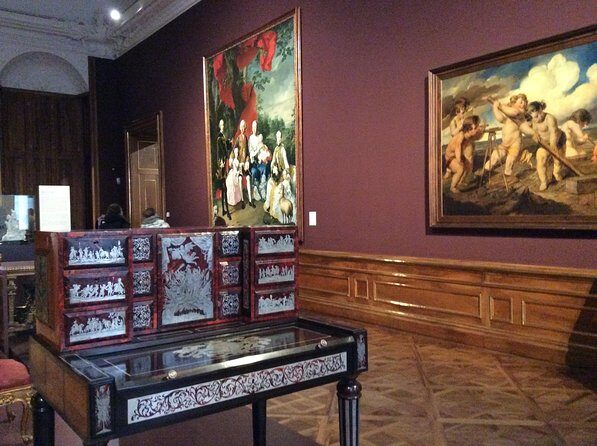
The Kiss is one of those works that most people already know by name, but a name isn’t the same as a reading. The point of having an art historian guide your attention is that you learn what to watch for and what themes might be hiding in plain sight.
In this tour, The Kiss isn’t treated as a standalone celebrity painting. It’s part of the guide’s larger thread—how artistic choices reflect shifting ideas of Austria, its society, and its identity over time.
What you can do during the viewing moment:
- Look at the details the guide highlights (often the parts people skip when they take the photo).
- Pay attention to how the guide connects the work to the palace setting and the broader collection.
- If anything feels confusing, this is the best moment to ask. In a private setup, you’re not stuck waiting for the group to catch up.
That’s also why the reviews’ theme is so consistent: people leave with a stronger sense of how context changes the way you see art.
Stop 2: Belvedere Gardens—views plus symbolism
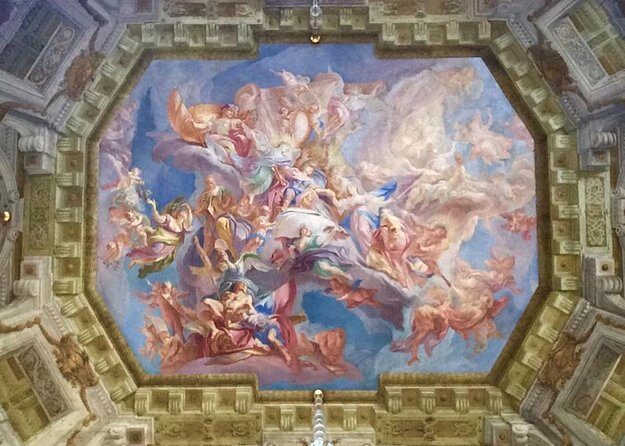
After the museum galleries, the tour moves to the Jardines de Belvedere. This is a shorter segment—about 5 minutes—but it’s not meaningless.
You’ll enjoy a view over Vienna and the historic center, and you’ll also learn the gardens’ symbolic meaning. Even in a brief window, that symbolism is useful because it links outdoor space to the palace’s story. In other words: the garden isn’t only for pretty; it helps explain how power, taste, and national identity were displayed.
Reality check: five minutes is short. Use it to get your bearings and grab photos if you want them, then consider returning later on your own if you want a slower walk.
How long you’ll be tied to the plan
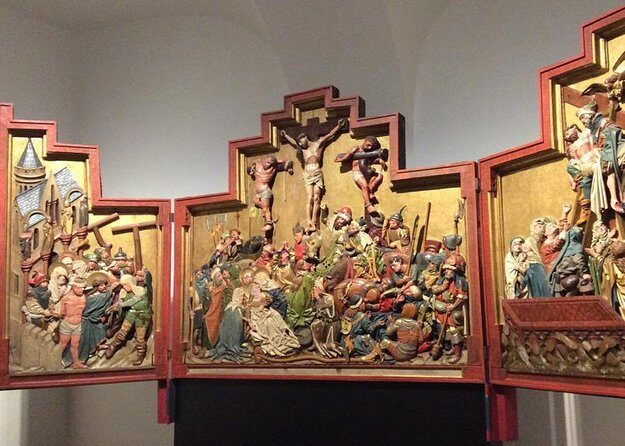
Total duration is listed at about 2 hours 15 minutes. Inside the museum you’ll have about 2 hours 5 minutes, then a brief garden stop.
That timing shape matters:
- You’ll get a guided experience with enough time to understand the “why,” not just the “what.”
- You won’t have the luxury to wander without direction.
- If you want to compare eras or revisit rooms, you’ll likely do that after the tour.
A smart strategy: treat the tour as your map. Then use your extra time later to test what you learned—go back to rooms you found most interesting and look again with a new set of eyes.
Finding the meeting point without stress

The tour starts at Austrian Gallery Belvedere, Prinz-Eugen-Straße 27, 1030 Wien, Austria (near the main entrance of the Upper Belvedere).
Here’s the helpful detail that can save you real time: your guide waits on the right side of the main entrance of the Belvedere Palace, as you look at the entrance. If you face the palace and it’s confusing, the instructions also give a simple check—if you see the breathtaking view of Vienna, you’ve found the right spot.
If you see the palace but not the city view, move to the entrance on the opposite side of the building. Look for signs marked Museum entrance. And if you get stuck, use the contact details in your confirmation/voucher.
This kind of clarity matters on your first visit to Belvedere, when streets and entrances can feel deceptively similar.
Price and value: what you’re paying for
The price is $228.91 per person for a private 2-hour-15-minute tour, with skip-the-line admission included.
Is it expensive? Yes, compared with group tours. But value isn’t only about raw cost; it’s about what you buy with that cost.
Here’s what you’re effectively paying for:
- Exclusive time with an art historian, not shared attention.
- Skip-the-line entry, which protects your time.
- A curated route that links architecture and art into one coherent story.
- A thematic focus on Austrian identity, not just famous names.
If your travel style is to learn as you walk—ask questions, connect visuals to history, and want context—this pricing can make sense. If you mainly want to stroll and browse at your own pace with no explanations, you might get more comfort from a self-guided visit.
Who this tour fits best
This tour is a great match if:
- You like art history but also want it explained in plain, practical terms.
- You’re curious about how culture shapes art, and art shapes culture.
- You want a Belvedere visit that feels like a conversation, not a lecture.
- You’d rather spend your limited time with strong guidance than “figure it out” on your own.
It’s also a fine pick for couples or small parties who want the museum to feel personal. Since it’s moderate physical fitness and mostly museum walking plus a quick garden moment, you shouldn’t need anything extreme—just comfortable shoes and attention to timing.
If you’re traveling with someone who truly doesn’t care about art, this tour can still work because the storyline pulls in architecture, society, and context. But if they want zero talking and maximum wandering, you may find the structure a bit much.
Making the most of Belvedere after the tour
One underrated benefit of a guided story is that it changes how you navigate afterward. Once you’ve got the “thread,” you’ll likely want to return to rooms and see how your understanding holds up when you’re on your own.
Practical move: after the tour, pick a couple of sections that stood out—especially parts tied to the eras the guide emphasized—and spend extra time there without feeling guilty about missing something.
Even if the gardens stop is brief, use it as your confidence builder. You’ll know where you are and what the gardens are meant to communicate, so a second visit feels more rewarding.
Should you book this private Belvedere tour?
If you’re the type who likes meaning as much as masterpieces, I’d book it. The private art historian format, the skip-the-line admission, and the “Austrian identities” theme work together to turn a famous museum visit into something more useful than photos and quick stops.
I’d skip (or consider another option) if your budget is tight or if you prefer a fully self-guided museum day where you can spend long stretches in whichever room you like, with no planned pacing.
FAQ
Is this tour private?
Yes. It’s a private tour/activity, and only your group participates.
How long is the Belvedere Palace private tour?
The duration is about 2 hours 15 minutes (approx.).
What’s included with the tour?
Skip-the-line admission tickets for the museum are included. Admission for the gardens is free.
Where does the tour start and end?
It starts at Austrian Gallery Belvedere, Prinz-Eugen-Straße 27, 1030 Wien, Austria and ends back at the meeting point.
Is the tour in English?
Yes, the tour is offered in English.
How long is the garden stop?
The gardens segment is about 5 minutes.
Where exactly should I meet the guide?
You meet at the main entrance of the Belvedere Palace (Upper Belvedere). Your guide waits on the right side of the main entrance as you face it, and you can also use the signs for the museum entrance. If you’re unsure, use the contact details on your confirmation/voucher.
Do I need to bring anything to the ticket check?
You can present either a paper or electronic voucher.
What physical effort level should I expect?
The tour notes moderate physical fitness is required.
Is public transportation nearby?
Yes, it’s noted as being near public transportation.
Can I cancel, and will I get a refund?
Free cancellation is available. You can cancel up to 24 hours in advance for a full refund.
]]>I especially like the time-saver of skipping public transport while still getting face-time with Vienna’s top symbols, from St. Stephen’s Cathedral to the palaces. I also like the down-to-earth setup: water and WiFi on board, plus a driver who gives useful, practical commentary before you go off on your own.
One drawback to consider: the quality depends heavily on your driver fit (English level, punctuality, and how much they truly explain). If you want deep cultural detail, you should be ready to ask questions and keep expectations aligned with a driver-led, not museum-guided, experience.
Key things I’d clock before you book

- Private car, hotel pickup/drop-off, and door-to-door ease so you spend less time crossing town.
- Driver as an informal local guide who sets context, then you explore independently.
- 20-minute stop rhythm at most landmarks, so you get photos and orientation fast.
- Ticketed highlights are your choice (Hofburg, Belvedere, Schönbrunn, Danube Tower, Vienna Wheel), not included.
- One-hour slot for the Vienna Wheel if you want a slower moment and skyline views.
- A tour quality reality check: English and pacing can vary by driver, so read reviews and communicate early.
Price and value: what $206.51 per person really covers
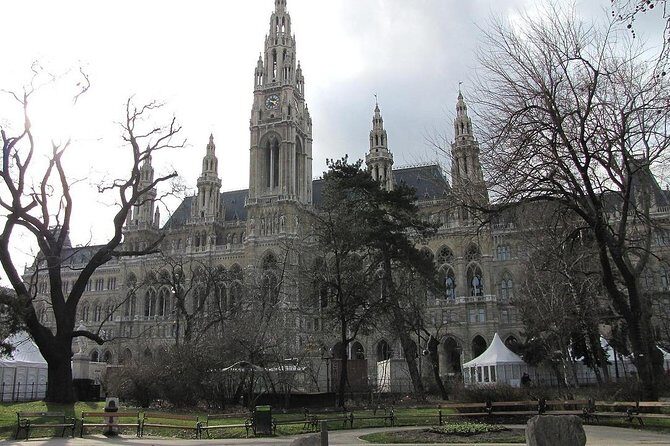
At $206.51 per person for about 4 hours, this tour is priced like a convenience product: you are paying for private chauffeured transport plus a driver who helps you make sense of what you are seeing. Most of Vienna’s big sights are included as stops, and many key exteriors are free to view—so your money goes mainly toward logistics and storytelling time.
The big “add-on” cost is admissions at several major stops. Based on the ticket prices listed for the stops, if you plan to enter every paid site, you are looking at roughly €90 per person in entry fees (Hofburg, Belvedere, Schönbrunn, Danube Tower, and Vienna Wheel). That means your true all-in cost can be closer to about $206 + admissions, depending on what you actually choose to go inside.
Where it feels like good value is when you hate wasting half your day riding trams, waiting in lines, and trying to map out timing between far-apart landmarks. If you are short on time, or you want your day to feel controlled, this private format usually pays off.
Your chauffeured setup: pickup, vehicle size, and the onboard comfort
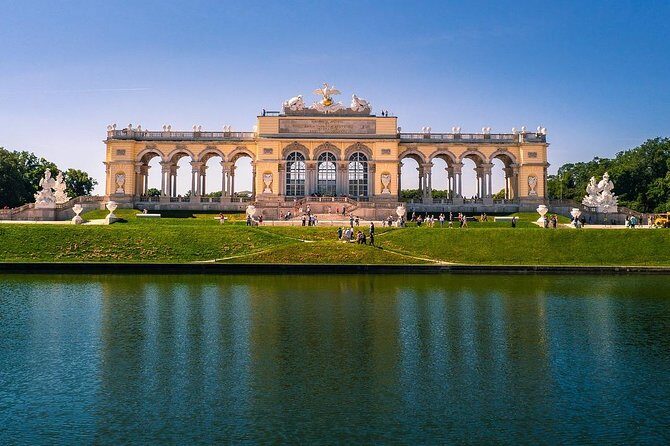
This is a private tour with only your group in the vehicle. For parties of 1–3 people, you get a comfortable sedan; for 4–8 people, you get a spacious minivan. That matters in Vienna, where some days feel like stop-and-go chaos, and it is nice not to squeeze everyone into a tiny car.
You also get hotel or custom pickup and drop-off, and you receive your driver’s details (name, phone number, and car information) before you ride. Once you are in the vehicle, you get WiFi and water, which sounds small until you are using your phone for maps, tickets, and photos all afternoon.
One more practical point: the driver acts as an informal guide during the ride, but drivers are not permitted to enter museums or archaeological areas with you. The trade-off is that you get their context up front, then you explore inside on your own with optional licensed guides if you want them.
How the 4-hour format works (and why the 20 minutes per stop matters)
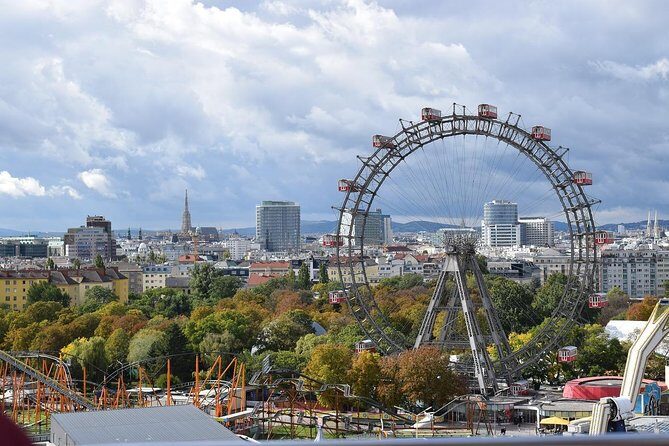
Most stops are scheduled for around 20 minutes, and the day is designed to keep you moving. That is perfect for orientation, quick photos, and deciding what you want to return to later.
But if you enjoy long museum hours, or you like to “slow-walk” every room, treat this as a highlights-and-structure day. You will not have time to fully go deep at every single venue during this one booking window.
Also, timing can shift. Some stops may be closed on your travel date due to public holidays, maintenance, or special events, and the operator will try to offer a suitable alternative. So keep a little flexibility in your plans, especially if you are traveling on a major holiday weekend.
Hofburg Palace: imperial power, today’s presidential setting
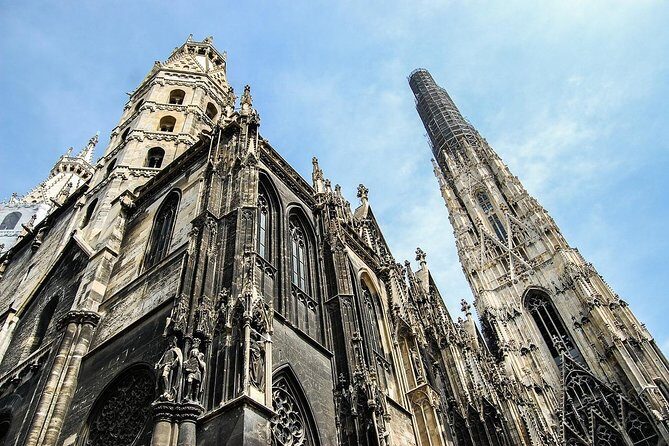
Your day often starts at the Hofburg complex, the former principal imperial palace of the Habsburg dynasty rulers. What makes this stop interesting is that the place is not only historic—it is still in use, serving as the official residence and workplace of the President of Austria.
Even if you are short on time, the Hofburg area is a strong “Vienna anchor.” It helps you understand why Vienna feels the way it does: grand institutions, ceremonial spaces, and a city shaped by court life.
The admission ticket is not included for the Hofburg, so decide before you go whether you want to spend your limited time inside. If you are into performance history, there is also a nice chance that your timing lines up with the Lipizzaner horses moving back after exercise, which some guides time for you when schedules allow. That kind of moment can turn a quick stop into a memory.
St. Stephen’s Cathedral and Vienna’s symbol you can read from far away
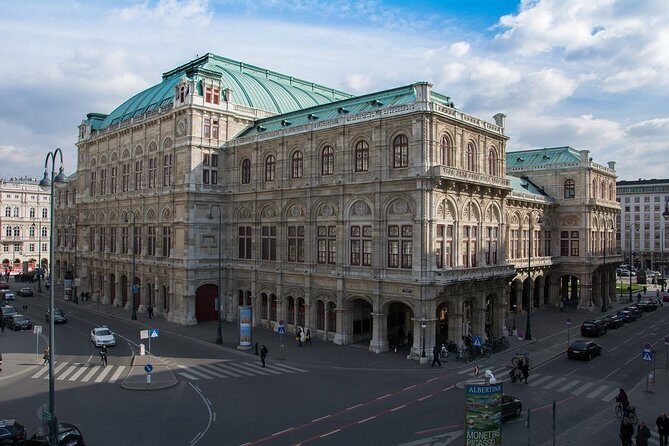
St. Stephen’s Cathedral is free to enter at least at the outside viewing level, and it is Austria’s most prominent national symbol. What you should look for is the intricately tiled roof—one of those details that makes people stop mid-walk like they just spotted a puzzle piece.
Another wow factor is the South Tower, which is close to 500 feet tall. Even if you do not climb it, you feel its scale, and it becomes a visual compass for the city.
Because this is a major landmark, expect it to be a magnet for crowds. The 20-minute stop is not for a full deep visit unless your day is running ahead of time. I like using this window to do three quick things: roof photos, a few minutes inside if open, and a short moment to absorb the space before you move on.
Opera, City Hall, and Parliament: the Ringstrasse’s big architectural statements
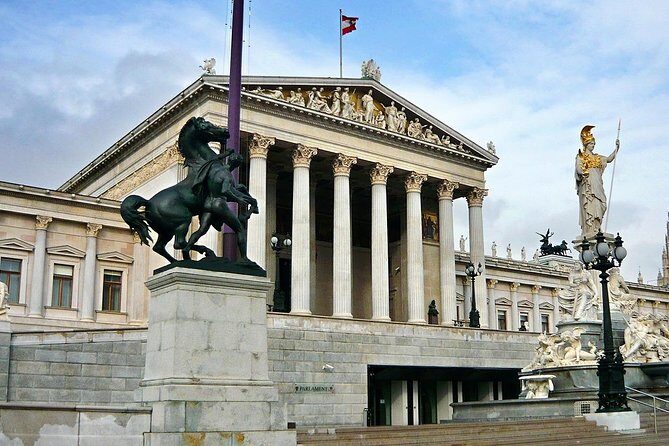
This tour packs several headline buildings that sit along the Ringstrasse area—Vienna’s grand boulevard of civic pride. You get quick visits to the Vienna State Opera, Vienna City Hall (Rathaus), and the Austrian Parliament.
The Vienna State Opera is considered one of the most important opera houses in the world, and it is known for having one of the largest repertoires. Even if you never catch a performance during your trip, the building gives you the scale of how seriously Vienna takes the arts.
Vienna City Hall is a Neo-Gothic statement constructed from 1872 to 1883, designed by Friedrich von Schmidt. It is the kind of place that makes you want to take a few steps back and frame the whole façade, not just shoot a single door.
Then there is the Austrian Parliament, designed by Theophil Hansen in a style inspired by ancient Greece. The result is a mix of classical ideas with 19th-century political confidence. This trio of stops works well because you can compare the languages of power—culture, government, and civic authority—without needing a lecture.
Belvedere and Schönbrunn: two palace styles, one efficient afternoon
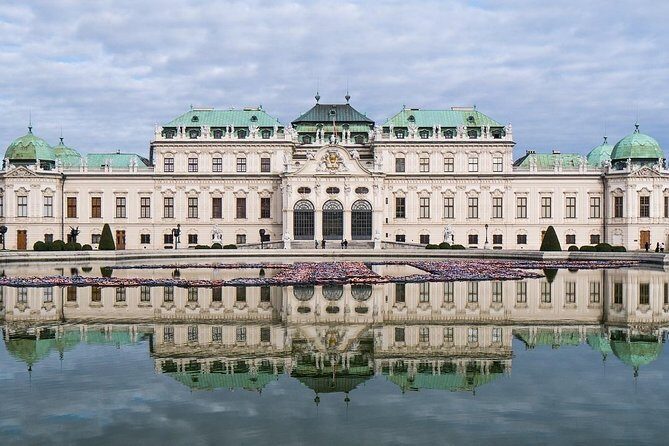
Belvedere Palace is split between an Upper and Lower complex, and tickets are not included. The upside is that it gives you options: if you only have time for one “palace mood,” you can choose where you spend your energy. This is a very Baroque-feeling stop, and it shows up in the way the grounds and main buildings line up.
Schönbrunn Palace is the heavy hitter: the 1,441-room Baroque palace that ranks as one of Austria’s most important cultural and historical monuments. Tickets are not included here too, and this stop can easily turn into a long day if you let it. During a tight 4-hour window, think of it like this: you are choosing between a fast exterior-orientation visit and a deeper interior plan that you might do on another day.
If you want maximum value from the palaces, pick one “go inside” priority and keep the other as a strong outside-and-gardens moment. That way you do not burn all your time on ticketing and entry queues.
Kahlenberg, Danube Tower, and the Vienna Wheel skyline payoff
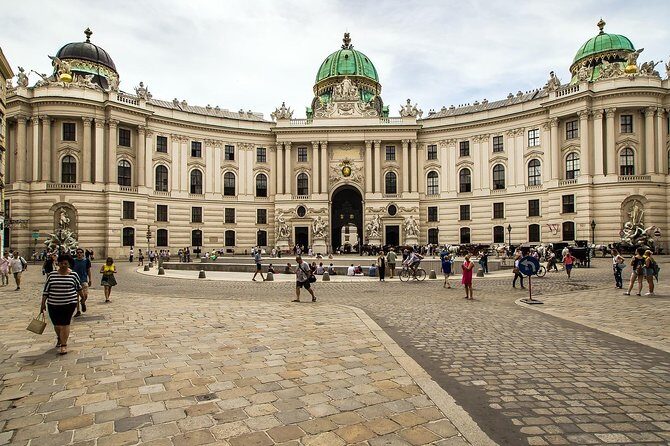
Then the day shifts from palace grandeur to views and modern landmarks.
Kahlenberg is one of Vienna’s best panoramic lookouts, with views over the city and the Danube River. It sits in the Vienna Woods area, and it is a popular excursion destination for locals. Even in a short stop, the point is simple: you get a sense of how Vienna spreads out, and you understand the geography behind the neighborhoods you saw earlier.
Next is the Danube Tower, called Donauturm, rising to 252 meters. It is not the oldest landmark in Vienna, but it gives you a clear “Vienna also looks forward” contrast. Tickets are not included here, so if you want the view from the top, plan for that cost in advance.
Finally comes the Vienna Wheel (Wiener Riesenrad), with a full one-hour stop. Tickets are not included, but this is the moment many people remember because it slows the pace down. The Ferris wheel symbolizes the district and the city in a very recognizable way, and one hour is enough to ride, take photos, and not feel rushed.
This trio is a smart finishing move because it turns your day from “grand buildings on paper” into “big-city scale in real life.”
What you gain most: the driver commentary and the customizable flow
This tour is designed around a practical idea: you do not need to be an expert to enjoy Vienna, but you do need context. Your driver provides stories, history, and local tips at each stop before you go explore. That is why a good driver feels like the difference between a checklist day and a meaningful day.
The best examples in real experiences include guides like Iva and Georgi, who were described as friendly, helpful, on time, and tuned into what the group wanted. Some guides also timed key sights so you could catch special moments like the Lipizzaner horses’ return after training, when schedules allow.
Still, quality can vary. I’ve seen reports where English was hard to understand, or where the driver felt more like a chauffeur than a guide, or where pacing slipped because calls took attention. So if your goal is deep cultural storytelling, bring a backup mindset and ask for specifics early—names, what to notice, and what matters most at each stop.
Tips to avoid the most common problems (20 minutes goes fast)
Before you go, decide how you will choose among ticketed stops. A 20-minute stop can be either a quick look or a rushed inside visit, depending on crowds and line length. If you have limited energy, choose one “must enter” and keep the rest as outside-focused moments.
Second: bring the patience to work with your driver’s style. Some drivers add extra stops if time allows, while others keep strictly to the plan. If you want something specific, tell your driver at pickup what you care about most.
Third: plan for short walking and quick photo moments. This is a car-based route, but you will still step in and out, and you will move between landmarks at a brisk pace.
Finally: check opening hours for your travel date. Some stops can close unexpectedly due to events or maintenance, and while alternatives are sometimes offered, you will have a better day if you already know what might be affected.
Who this tour fits best (and who should consider another plan)
This works best if you are:
- in Vienna for a short time and want fast orientation across the city
- traveling with kids, limited mobility, or anyone who does not want to hop between trams
- the type who likes to see a lot, then return later for the details that really grab you
It may not fit you as well if you:
- want a fully guided museum experience inside major attractions
- expect the driver to act as a professional in-museum guide
- need consistently strong English narration, no matter what
Also, if you are especially sensitive to punctuality or to driver communication, build in a little cushion. Vienna is never exactly predictable, and your experience will start on time only if your pickup goes smoothly.
Final call: should you book this private Vienna landmarks tour?
Book it if you value comfort, clear time-saving, and a route that gives you major “Vienna landmarks” in one controlled half-day. The hotel pickup, on-board comfort, and the ability to move between far-apart sights without transit stress make it a solid choice.
Skip it or pair it with other plans if your priority is long museum hours or you want a deeply scripted guide experience inside every attraction. In that case, you might do better with a smaller set of destinations and more time at each one.
If you book, my advice is simple: message your must-sees before the tour starts, pick your one inside-ticket priority, and use the driver’s commentary like an appetizer—not the whole meal. That way, you will leave with both photos and real understanding of what you just saw.
FAQ
How long is the private Vienna historical landmarks tour?
It runs for about 4 hours.
Is this tour private or shared with other groups?
It is private, meaning only your group participates.
What is included in the tour price?
Included items are hotel or custom pickup and drop-off, an English-speaking local driver/informal guide, fuel and tolls, all taxes and handling charges, WiFi on board, and water.
Are admission tickets included for all stops?
No. Tickets are not included for Hofburg Palace, Belvedere Palace, Schönbrunn Palace, Donauturm (Danube Tower), and the Vienna Wheel. St. Stephen’s Cathedral, Vienna State Opera, Vienna City Hall, Austrian Parliament, and Kahlenberg are listed as free.
What vehicle will I ride in?
For 1–3 people you get a comfortable sedan. For 4–8 people you get a spacious minivan.
Do I get hotel pickup and drop-off?
Yes, hotel pickup and drop-off are included. Airport pickup is not automatic, but an airport option may be available when booking.
What happens if a stop is closed on my travel date?
Some stops may be closed due to public holidays, maintenance, or special events. The operator recommends checking official opening hours, and if something is unexpectedly closed, they try to offer a suitable alternative.
Can I cancel for free?
Yes. You can cancel up to 24 hours in advance for a full refund.
]]>